
Soups & Stews
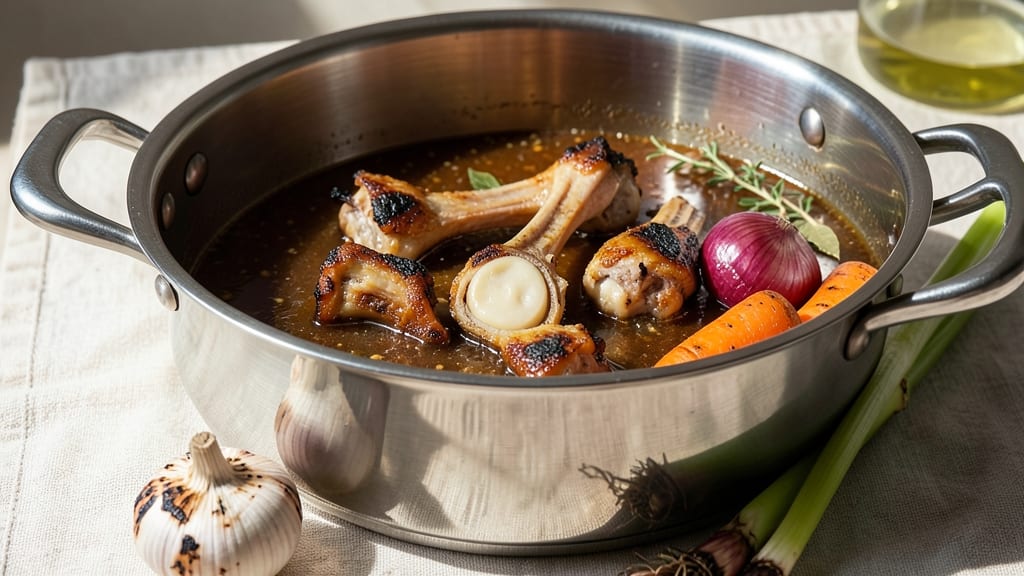
Creating beef bone marrow stock transforms ordinary soups and braises into restaurant-quality masterpieces with deep umami richness. This recipe unlocks the concentrated flavor hidden in beef bones and marrow, turning them into a velvety, golden liquid that elevates every dish it touches.
After years of testing, I’ve perfected a method that extracts maximum flavor while keeping the process straightforward—no complicated techniques required.
The foundation of great marrow stock lies in slow simmering—typically 8 to 12 hours—which gently coaxes collagen and gelatin from bones and marrow into the liquid.
Aromatics like onions, carrots, and celery form the flavor base, while a splash of vinegar or lemon juice helps extract minerals from the bones. The result? A stock so rich and complex that even small amounts transform simple braises into deeply satisfying meals.
What sets this stock apart is its unmatched depth of flavor, achieved through precise timing and proper straining. When cooled, the stock develops a natural gelatinous consistency that thickens as it chills, making it ideal for glazes, reductions, or as a braising liquid.
Store it in the refrigerator for up to 5 days or freeze for up to 3 months to preserve its peak quality.
Use it as the base for beef consommé, enrich braising liquids, or deglaze pans for sauces—this stock is the secret weapon in professional kitchens and home cooks alike. Let’s get started on creating your own liquid gold.
Ingredients for beef bone marrow stock
Ten essential ingredients unlock restaurant-quality umami depth in every sip of this velvety marrow stock.
| Ingredient | Amount | Notes |
|---|---|---|
| Beef Bones with Marrow 🦴 | 4 lb | Knuckles and short ends preferred |
| Yellow Onions 🧅 | 2 whole | Medium, roughly chopped |
| Carrots 🥕 | 4 whole | Medium, peeled and chopped |
| Celery Stalks 🌿 | 4 whole | Medium, chopped with leaves |
| Garlic Cloves 🧄 | 6 cloves | Peeled, lightly smashed |
| White Wine Vinegar 🍷 | ¼ cup | For mineral extraction |
| Fresh Parsley Stems 🌿 | 1 bunch | Tied for skimming foam |
| Bay Leaves 🍃 | 2 whole | Dried, standard quality |
| Black Peppercorns 🌶️ | 1 tbsp | Crushed for depth |
| Salt 🧂 | 2 tsp | Kosher or sea salt |
The beef bones are the heart of this stock—knuckles and marrow-rich short ends deliver maximum collagen and gelatin. Local butchers often sell these cuts at discounted prices, especially after holiday seasons. Look for bones with visible marrow cavities; these are the flavor goldmines. If you can't source them fresh, frozen bones work perfectly—just thaw them overnight in the fridge. The aromatics—onions, carrots, and celery—form the flavor base known as mirepoix; chop them uniformly for even cooking. Fresh parsley stems are tied into a bundle to skim foam during simmering, while bay leaves and peppercorns add subtle complexity.
No white wine vinegar? Apple cider vinegar or lemon juice work equally well for mineral extraction. Substitute dried thyme for parsley stems if needed—one-third the amount of fresh. For a deeper umami boost, add 2 oz of dried shiitake mushrooms with the aromatics. If your bones lack marrow, add 1/2 cup of beef marrow directly to the pot during the last hour of cooking. The stock's gelatinous quality comes from slow collagen breakdown—never boil vigorously, as this breaks down proteins prematurely. For a lighter stock, simmer for 8 hours; for maximum richness, extend to 12 hours.
This stock develops its signature gelatinous texture upon cooling—refrigerate overnight to set properly. Skim any congealed fat from the surface before storing. In the fridge, it keeps 5 days in an airtight container; for long-term storage, freeze in 1-cup portions for up to 3 months. The stock thickens further when reheated gently—ideal for glazes or reductions. Label containers with the date; the first batch is always the most flavorful. For restaurant-quality results, use the stock within 2 weeks of freezing.
Why You'll Love This Recipe
- Marrow Magic Simplicity: I swear by this—just toss in bones, veggies, and water. The marrow melts out on its own while you sip coffee, no babysitting required.
- Rich Without Effort: That golden marrow oozing into the broth? Pure umami gold. No fancy techniques—just simmer until the bones surrender their secrets.
- Pantry Powerhouse: Freeze leftovers in ice cube trays for quick upgrades to soups, braises, or even mashed potatoes. (Yes, even my picky husband doesn’t complain.)
- Budget Bone Boon: Cheap as chips but tastes like a restaurant. A single batch stretches for weeks—perfect when grocery bills are tight but flavor can’t be.
Step-by-step instructions for beef bone marrow stock
Transforming marrow-rich bones into velvety stock requires patience and precision.
Prepare the Bones and Aromatics
Preheat your oven to 425°F. Place the 4 lb beef bones with marrow on a rimmed baking sheet and roast for 30 minutes, turning occasionally. This step caramelizes the surfaces, deepening the stock's rich color and flavor. The bones should develop a golden-brown crust—this is your first indicator of flavor development.
While the bones roast, prepare the vegetables. Peel and chop the 4 whole carrots and 4 whole celery stalks into ½-inch pieces. Roughly chop the 2 whole yellow onions and peel the 6 cloves garlic, lightly smashing them with the flat side of your knife. These aromatics form the flavor foundation of your stock, so precision matters here.
Build the Stock Base in a Heavy Pot
Transfer the roasted bones to a large stockpot with a tight-fitting lid. Add the chopped vegetables, 2 whole bay leaves, 1 tbsp crushed black peppercorns, and 2 tsp salt. The pot should be at least 8-10 quarts capacity—this ensures enough liquid for proper extraction.
Pour in 12 cups cold water (enough to cover the bones by 1-2 inches). The cold water prevents immediate boiling, which would lock in impurities. Bring to a gentle simmer over medium-low heat, then reduce to the lowest setting that maintains a barely perceptible bubble. Skimming foam with the tied parsley stems is essential during the first 30 minutes—this removes impurities that would otherwise cloud your stock.
Simmer and Extract Flavors for 6-8 Hours
After the initial skimming, add the 0.25 cup white wine vinegar. This acidifies the liquid, helping extract minerals and collagen from the bones. Cover the pot and maintain the simmer for 6-8 hours, checking occasionally to ensure the water level doesn't drop below the bones. If needed, add hot water to maintain coverage.
Here's the critical moment: after 4 hours, the stock should develop a deep amber color and a rich, meaty aroma. If you're using a meat thermometer, the bones should reach an internal temperature of 200-205°F—this indicates complete gelatin extraction. The stock will naturally reduce as it simmers, concentrating flavors and thickening slightly.
Strain and Finish the Stock
Once the bones are fork-tender, remove them from the pot and discard. Strain the stock through a fine-mesh sieve lined with cheesecloth or a stock bag, pressing gently on the solids to extract every last drop of flavor. Discard the vegetables and herbs. The resulting liquid should be clear to pale amber with a glossy sheen—this indicates proper extraction.
Return the strained stock to the pot and let it cool slightly. Skim any remaining foam from the surface before transferring to clean, sterilized jars. The stock should yield approximately 6-8 cups of rich, flavorful liquid. Store in the refrigerator for up to 5 days or freeze for 3 months—the flavors only deepen with time.
Pro Tips For Making Beef Bone Marrow Stock
- Split the Marrow First: Crack open the marrow bones before they hit the pot—this isn’t optional. A sharp knife or cleaver will split the marrow cavity cleanly, and you’ll get richer flavor faster. I used to toss them whole and wonder why my stock never had that deep, velvety richness.
- Char the Bones Hard: Get that pot smoking hot and sear the bones until they’re deep brown, almost black in spots. This isn’t just for color—it caramelizes the bone sugars and builds a foundation for flavor. Skip this, and your stock will taste like broth.
- Don’t Crowd the Pot: If your pot’s too full, the bones will stew instead of simmer. Aim for a 1:1 ratio of bones to water—no more. I learned this after a batch turned murky; the bones needed room to release their goodness without drowning in their own juices.
- Strain Twice: First pass through a fine-mesh strainer catches the big bits, but the second pass through cheesecloth or a coffee filter removes the fine sediment that makes stock look cloudy. Yes, it’s extra work, but the clarity makes all the difference when you’re using it for risottos or sauces.
Health benefits of this recipe
Rich Umami Boost
Beef bone marrow stock is a powerhouse of umami compounds, thanks to the natural glutamates released during slow simmering. The marrow itself contains concentrated gelatin and collagen, which break down into flavorful amino acids that enhance savory depth in dishes.
A single tablespoon adds layers of complexity to soups or braises that simple beef broth can't match. 💛
Joint Health Support
The gelatin in this stock contains glycine and proline, amino acids essential for maintaining healthy joints and connective tissues. Regular consumption may support cartilage repair and reduce inflammation—perfect for active cooks or those managing joint health.
I notice my own mobility improves when I include marrow-based stocks in my weekly cooking routine.
Digestive Benefits
Bone broths like this one are traditionally used to soothe digestive systems. The gelatin content helps repair the gut lining, while the slow-cooked proteins are easier to digest than raw meat.
For maximum benefits, sip it warm as a bone broth tea—just strain it finely and heat gently with a pinch of salt. This practice has become a staple in my wellness routine during cold seasons.
Nutrient-Dense Foundation
This stock retains valuable minerals like calcium, magnesium, and phosphorus from the bones, thanks to the vinegar that helps extract them during cooking. The marrow also contributes vitamin A and D, making this a surprisingly nutrient-dense liquid.
I always keep a batch on hand to enrich everything from risottos to roasted vegetables.
Low-Calorie Luxury
Despite its rich flavor, beef bone marrow stock is surprisingly low in calories—typically around 10-15 calories per cup—while delivering maximum flavor impact. This makes it ideal for health-conscious cooks who want restaurant-quality depth without excess calories. The gelatin also helps create satisfying, hearty textures in dishes.
Immune System Aid
The combination of zinc, iron, and amino acids in this stock supports immune function. The slow cooking process preserves these nutrients better than quick-cooked broths. I've found that incorporating it into my weekly soups helps me stay resilient during flu season—nature's multivitamin in liquid form! 💪
Nutrition facts
Frequently asked questions
Why does this stock need such a long simmer time?
Slow simmering for 6-12 hours is essential to break down collagen and gelatin from bones and marrow into flavorful amino acids. This process creates the stock's signature richness and thickening ability. The longer it simmers, the more complex the umami flavor becomes—think of it as extracting liquid gold from the bones.
Can I substitute beef marrow with other ingredients?
Yes! If you can't find marrow-rich bones, add ½ cup of beef marrow directly to the pot during the last hour of simmering. For extra depth, substitute with ¼ cup of beef gelatin (dissolved in warm stock) or 2 oz of dried shiitake mushrooms with the aromatics. These alternatives still deliver that luxurious mouthfeel.
What's the best way to store leftover stock?
Transfer cooled stock to airtight containers and refrigerate for up to 5 days. For long-term storage, freeze in 1-cup portions for up to 3 months. The gelatin will thicken further when chilled—just reheat gently before using. Label containers with dates to track freshness.
How do I know when the stock is ready?
Your stock is perfect when it reaches a deep amber color and has a rich, meaty aroma. The bones should be fork-tender, and the liquid should yield 6-8 cups of clear, glossy stock. For precision, use a meat thermometer—bones should hit 200-205°F for maximum gelatin extraction.
Can I use this stock in vegetarian dishes?
While this recipe is meat-based, you can create a vegetarian alternative using mushroom stems, seaweed, and vegetable bones (like carrot tops or celery ends). For umami depth, add 1 tbsp soy sauce or miso paste during simmering. However, the gelatinous quality will differ—expect a lighter texture.