
Main Courses
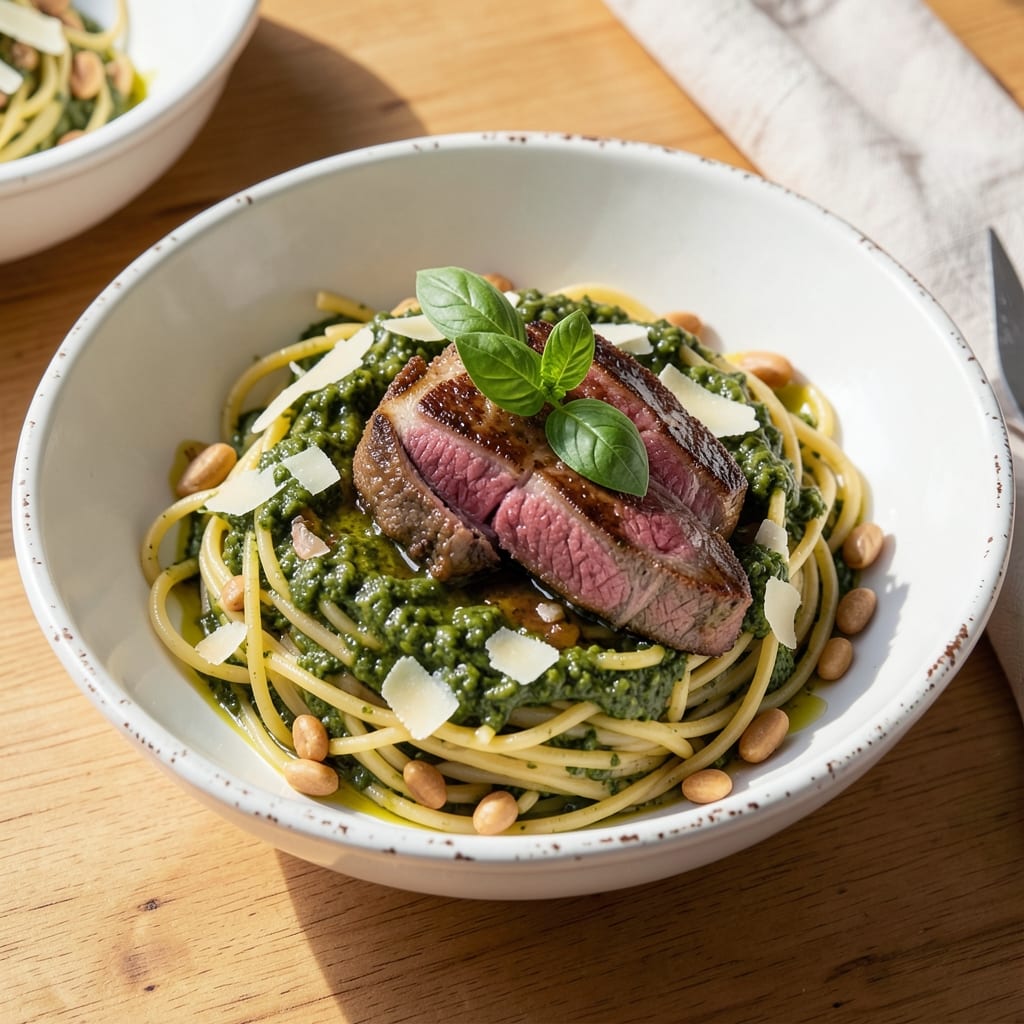
This beef basil pesto pasta recipe delivers restaurant-quality richness in just 20 minutes, combining tender beef strips with vibrant basil pesto and perfectly al dente pasta. What sets this dish apart is the perfect balance of savory beef and fresh basil, creating a harmonious flavor profile that's both comforting and elegant. The secret lies in quick-searing the beef to maintain tenderness while developing a flavorful crust, then tossing it with homemade pesto that's bright yet rich enough to complement the meat.
The dish comes together with minimal prep—no complicated techniques required. You'll start by cooking the beef in a hot pan with olive oil until it reaches that ideal medium-rare stage, then set it aside. While it rests, you'll blend fresh basil, garlic, parmesan, and olive oil for the pesto, creating a sauce that's vibrant green and packed with herbaceous flavor. The pasta cooks in the same pot as the beef, absorbing the rich juices for an extra layer of depth.
By the time you're done, you'll have a dish that's visually stunning with its bright green pesto swirled through the pasta and beef, and packed with layers of flavor—herbaceous from the basil, savory from the beef, and creamy from the parmesan. The texture is perfect: tender beef, al dente pasta, and a sauce that coats every bite without being overly heavy. This is the kind of weeknight dinner that feels like a special occasion.
Serve immediately with a sprinkle of fresh basil and extra parmesan for that final touch of restaurant-quality presentation. The flavors develop as you eat, making each bite more satisfying than the last. Let's get started on this flavor-packed pasta dish that's sure to become a family favorite.
Ingredients for beef basil pesto pasta
Fresh basil and tender beef make this pesto pasta shine in under 20 minutes.
| Ingredient | Amount | Notes |
|---|---|---|
| Ribeye Steak 🥩 | 1 lb | Thinly sliced against grain |
| Spaghetti 🍝 | 12 oz | Or linguine for wider noodles |
| Fresh Basil Leaves 🌿 | 2 cups | Packed, stems removed |
| Parmesan Cheese 🧀 | ¾ cup | Freshly grated from block |
| Extra-Virgin Olive Oil 🫒 | ½ cup | High quality, fruity |
| Garlic Cloves 🧄 | 4 cloves | Peeled, roughly chopped |
| Lemon Juice 🍋 | 2 tbsp | Freshly squeezed |
| Salt 🧂 | 1 ½ tsp | Kosher or sea salt |
| Black Pepper 🌶️ | ½ tsp | Freshly ground preferred |
| Pine Nuts 🥜 | ¼ cup | Toasted for extra crunch |
| Butter 🧈 | 2 tbsp | Unsalted, for pasta water |
The beef is everything here. Ribeye stays juicy while developing that perfect crust—sirloin works too, but ribeye has more flavor. Grab pre-sliced steak strips at Whole Foods or your butcher's counter to save time slicing. For the basil, farmers markets have the freshest, but grocery store containers work if the leaves are bright green and not wilted. Toast the pine nuts in a dry pan for 2-3 minutes until fragrant—they add that nutty depth that makes the pesto special. I always buy extra Parmesan since it keeps forever and makes everything taste better.
No pine nuts? Walnuts or pecans toasted work perfectly—just chop them coarsely. Fresh basil wilted? Dried basil at half the amount gets you close, though it won't be as vibrant. The beef can be swapped for sirloin or flank steak, but ribeye gives that rich flavor. For the pasta, whole wheat or chickpea pasta adds texture if you want a lighter option. The lemon juice is non-negotiable—it brightens the whole dish. And if you're short on time, jarred basil pesto works in a pinch, though homemade tastes worlds better.
This dish is best served immediately, but the pesto can be made ahead and stored in a jar with a thin layer of olive oil on top to keep it green. The beef and pasta can be prepped separately and tossed together right before serving. Leftovers keep for 2-3 days in the fridge, though the pesto loses some vibrancy. For freezing, portion the pesto into ice cube trays—perfect for future quick meals. The pasta reheats beautifully, just toss with a splash of water and olive oil to keep it from drying out.
Why You'll Love This Recipe
- No-Fuss Weeknight Win: I swear by this when I’m too tired to fuss—just sear the ribeye in its own fat, toss in basil and garlic while it rests, then dump it all over al dente pasta. The sauce comes together while you wait, no blender required.
- Steakhouse Flavor, Home Cook Effort: Between us, this tastes like I spent hours in a kitchen when I didn’t. That ribeye’s caramelized crust? The basil’s bright punch? It’s the kind of dish that makes people pause mid-bite, and I’ve got a 12-year-old who’ll fight you for seconds.
- Leftovers That Don’t Suck: Honestly, this meal actually gets better the next day—cold pasta with wilted basil and crispy steak? Unexpectedly good. I portion it out for lunches, and no one complains (even my picky husband).
- Budget-Friendly Luxury: You’re using ribeye, but the rest is cheap: pasta, basil, and a handful of Parm. The olive oil makes it feel fancy, but the total cost is still way lower than takeout. Plus, the leftovers stretch this into two meals for the price of one dinner out.
Step-by-step instructions for beef basil pesto pasta
Here's how to create a restaurant-quality beef basil pesto pasta that's packed with flavor and ready in under 20 minutes.
Prepare the Basil Pesto
Toast the 0.25 cup pine nuts in a dry skillet over medium heat for 2-3 minutes until golden and fragrant. Watch them closely—they burn easily. Transfer to a food processor and let cool slightly.
Add the 2 cups fresh basil leaves, 4 cloves garlic cloves, 0.75 cup Parmesan cheese, and 1.5 tsp salt to the processor. Pulse until finely chopped. With the processor running, slowly drizzle in the 0.5 cup extra-virgin olive oil until smooth. You want a thick, vibrant green paste that clings to the back of a spoon.
Taste and adjust seasoning with more salt or a splash of 2 tbsp lemon juice if needed. The pesto should be bright, herby, and perfectly balanced—not too bitter from the basil. Set aside while you cook the beef.
Cook the Ribeye Steak
Pat the 1 lb ribeye steak dry with paper towels and season generously with 0.5 tsp black pepper. Heat a cast-iron skillet over high heat until smoking hot. Add the steak and sear for 2-3 minutes per side for medium-rare, until it develops a deep brown crust.
Remove the steak from the pan and let it rest on a cutting board for 5 minutes. While it rests, pour out all but 1 tablespoon of the rendered fat from the skillet. This fat will become the base for your sauce. Slice the steak thinly against the grain into ¼-inch strips.
Cook the Pasta Al Dente
Bring a large pot of water to a rolling boil and add 2 tbsp butter and 1.5 tsp salt. Add the 12 oz spaghetti and cook until 1 minute before the package directions for al dente. Reserve 1 cup pasta water before draining.
Drain the pasta but don't rinse—those starchy waters help the pesto cling. Return the pasta to the pot and toss with the sliced ribeye steak. Add the prepared pesto and toss vigorously to combine. If the mixture seems too thick, add 2-3 tablespoons of the reserved pasta water at a time until it reaches a creamy, saucy consistency.
Finish and Serve
Transfer the pasta to serving plates and garnish with additional fresh basil leaves and a sprinkle of Parmesan cheese. The dish should be vibrant green from the pesto, with tender ribeye strips peeking through. Serve immediately while the pasta is hot and the flavors are at their peak.
Here's the thing—this dish tastes even better the second day when the flavors meld. Store leftovers in the refrigerator for up to 2 days, but I promise you won't have any leftovers. Each bite delivers a perfect balance of herby pesto, rich beef, and al dente pasta.
Pro Tips For Making Beef Basil Pesto Pasta
- SEAR STEAK FAST AND HOT: Ribeye needs a screaming-hot pan—no "medium-high" nonsense. I learned this the hard way when my first attempt came out gray inside. Crank the heat to max, let the pan sit for 30 seconds, then add oil and the steak. The crust forms in 2-3 minutes, not 5.
- STACK PARMESAN LIKE A PRO: Skip the pre-grated mess—it’s full of anti-caking agents that ruin texture. Instead, shave fresh Parmesan with a peeler or pulse it in a food processor. For extra richness, toss in a few cubes of cold Parmesan before blending the pesto—it melts into creamy perfection.
- DON’T BOIL THE BASIL: Basil wilts faster than you can say "al dente." Pulse it in the food processor with olive oil, garlic, and salt just until combined—about 10-12 seconds. Overworking it turns your pesto into a sad, mushy sludge. Stop when it’s still slightly chunky.
- REST STEAK UNDER FOIL: Cutting ribeye too soon turns it into a chewy disappointment. After searing, transfer it to a plate, loosely tent with foil, and let it sit for 5-10 minutes. The residual heat finishes cooking it evenly—no guesswork, no dry bites. (Yes, even if you’re impatient like me.)
Common mistakes when making your beef basil pesto pasta
Overcooking the Beef
I can't stress enough how easy it is to overcook the ribeye—especially when you're focused on the pesto and pasta. The beef should be sliced into ¼-inch strips and cooked to medium-rare (130-135°F internal temp). Using a meat thermometer ensures accuracy, but if you're guessing, aim for 2-3 minutes per side in a screaming-hot pan. Overcooking turns tender beef into chewy leather, ruining the entire dish. Let it rest for 5 minutes after searing—this keeps it juicy while you finish the pasta. 🥩
Skipping the Rest
This is a rookie mistake that happens more than you'd think. After searing the beef, many people rush to slice it immediately. That's a big no-no! The 5-minute rest allows the juices to redistribute, ensuring each bite stays moist. I've seen people cut into beef right after cooking, and it's like biting into a sponge—all the flavor drains away. Trust me, those 5 minutes make all the difference in the final texture.
Using Wilted Basil
The freshness of the basil is what makes this pesto sing, so using wilted leaves is a flavor crime. If your basil looks sad (yellowing or limp), it'll turn your pesto bitter and dull. Always pick leaves that are bright green and firm. Pro tip: Store fresh basil in a glass of water like flowers in the fridge—it stays crisp for days. If you're using dried basil, reduce the amount to ½ cup (half of what you'd use fresh) and add 1 extra tbsp lemon juice to brighten the flavor. 🌿
Not Toasting the Nuts
Skipping the nut toasting is like making a smoothie without blending—you're missing a crucial step. Toasting the pine nuts (or walnuts) for 2-3 minutes until fragrant brings out their natural oils and depth of flavor. Untosted nuts taste bland and don't contribute that nutty richness that balances the herby pesto. Keep an eye on them—they burn faster than you think! A quick sniff test tells you when they're ready (aromatic and golden).
Overmixing the Pesto
When blending the pesto, it's tempting to go full speed until it's perfectly smooth, but that's a mistake. Overmixing releases bitter compounds from the basil leaves, turning your vibrant green pesto into a bitter, brownish paste. Pulse the basil, garlic, and cheese until finely chopped, then drizzle in the olive oil while blending—just until combined. The texture should be thick but still slightly chunky, not a smooth puree. This keeps the basil's bright flavor intact. 💛
Ignoring Pasta Water
This is the secret weapon that makes or breaks the sauce. The starchy pasta water is what helps the pesto cling to the noodles, creating that silky, creamy texture we all love. When tossing the pasta with pesto, if it looks dry, add 2-3 tablespoons of that reserved pasta water at a time. I've seen people rinse their pasta or skip this step, and the result is dry, clumpy pasta with pesto clumps instead of a cohesive dish. Keep that pasta water handy—it's liquid gold for this recipe!
Nutrition facts
Frequently asked questions
Can I substitute ground beef for ribeye in this recipe?
You can use ground beef, but the texture and flavor will differ. For a similar experience, opt for 80/20 ground chuck and cook it until just browned (2-3 minutes) to avoid dryness. The ribeye's tenderness and rich flavor are key to this dish—ground beef works best in a heartier, meatier version rather than the elegant presentation of sliced steak.
How do I store leftover beef basil pesto pasta?
Store leftovers in an airtight container in the fridge for up to 2 days. Reheat gently in a skillet with a splash of water or olive oil to prevent drying. The pesto may lose some vibrancy, so revive it by adding 1 tbsp fresh lemon juice when reheating. For longer storage, freeze the pesto sauce separately in ice cube trays—perfect for quick future meals!
What if I don't have pine nuts?
No problem! Swap pine nuts for walnuts, pecans, or even sunflower seeds (toasted for 2-3 minutes). For extra richness, add 1 tbsp butter to the pesto while blending. The key is toasting—it brings out the nutty flavor that balances the basil's brightness. Just chop the nuts coarsely for texture.
Can I make this dish ahead of time?
Prep the pesto and store it in a jar with a thin layer of olive oil on top to preserve freshness. Cook the beef and pasta separately, then assemble just before serving. The flavors meld beautifully when reheated—this is actually when the dish tastes even better! For a quick weeknight, pre-cook everything and keep components refrigerated for 24 hours before tossing together.
Is this dish kid-friendly?
With some adjustments, yes! Use ground beef instead of ribeye and reduce the garlic slightly. For picky eaters, serve the pesto on the side so they can add as much as they like. The creamy texture and mild flavors make it approachable, but the rich beef and bold basil might be too intense for very young children.