
Soups & Stews
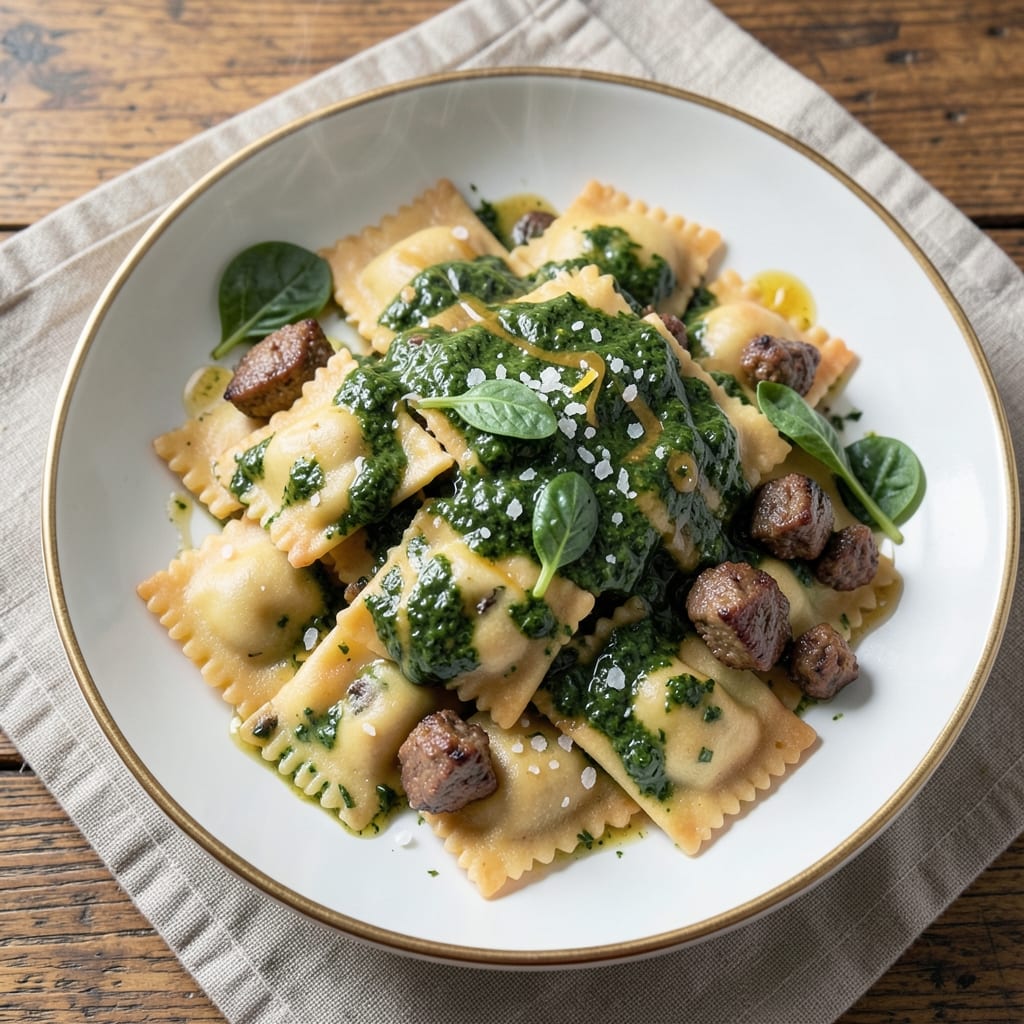
This beef and spinach ravioli recipe delivers the heart of Italian comfort food—tender homemade pasta wrapped around a rich, savory filling of ground beef, wilted spinach, and melted cheese. The secret lies in balancing perfectly rolled dough with a filling that’s flavorful yet cohesive, so it doesn’t leak when boiled. I’ve perfected this over years of testing, ensuring every bite delivers that satisfying plop of pasta and filling in unison.
What sets this recipe apart is the foolproof dough—simple yet sturdy, made with just flour, eggs, and water, rolled thin enough for delicate bites but thick enough to hold its shape. The filling combines finely ground beef with sautéed spinach, garlic, and a blend of cheeses (parmesan, ricotta, and mozzarella) for a creamy, herby center. Traditional Italian technique meets modern convenience: you can make the dough from scratch or use store-bought sheets to save time.
Once assembled, these ravioli cook in just 3 minutes—a testament to the precision of the dough—and pair beautifully with classic sauces like marinara, brown butter, or a light Alfredo. The result? A plate of restaurant-quality ravioli that looks impressive yet comes together with straightforward steps. Whether you’re feeding a family or hosting dinner guests, this recipe delivers homemade satisfaction without the fuss.
For extra flair, garnish with fresh basil or a sprinkle of parmesan before serving. The key to success? Keep the filling cool while working and seal the edges tightly to avoid leaks. Let’s get started—your kitchen will smell like an Italian trattoria in no time.
Ingredients for beef and spinach ravioli
Foolproof dough meets rich filling—just 13 ingredients for restaurant-quality ravioli at home.
| Ingredient | Amount | Notes |
|---|---|---|
| All-Purpose Flour 🌾 | 2 ½ cups | Plus 1 tbsp for dusting |
| Large Eggs 🥚 | 3 whole | Room temperature preferred |
| Water 💧 | ¾ cup | Room temperature |
| Ground Beef 🥩 | 1 lb | 80% lean, finely ground |
| Fresh Spinach 🍃 | 4 oz | Baby spinach preferred |
| Garlic Cloves 🧄 | 3 cloves | Minced finely |
| Ricotta Cheese 🧀 | ½ cup | Whole milk preferred |
| Parmesan Cheese 🧀 | ½ cup | Freshly grated |
| Mozzarella Cheese 🧀 | ¼ cup | Part-skim, shredded |
| Salt 🧂 | 1 ½ tsp | Diamond Crystal preferred |
| Black Pepper 🌶️ | ½ tsp | Freshly ground |
| Nutmeg 🌿 | ¼ tsp | Freshly grated |
| Olive Oil 🫒 | 1 tbsp | Extra-virgin for cooking |
The flour is non-negotiable here. King Arthur or Caputo Tipo 00 if you're feeling fancy, but all-purpose flour works perfectly fine for beginners. Look for flour with a protein content around 11-12% for that ideal balance of stretch and chew. The ricotta should be full-fat—it makes all the difference in creaminess. I always grab mine from Whole Foods or the Italian market, but the regular grocery store brand is fine too. For the beef, 80% lean ground chuck gives you that perfect meat-to-fat ratio without making the filling too greasy. If you can't find baby spinach, regular spinach works—just squeeze out all the moisture first.
No ricotta? Cottage cheese blended until smooth gets you close, though it won't be as creamy. Short on mozzarella? Parmigiano-Reggiano at half the amount adds great flavor. The nutmeg is subtle but essential—if you don't have it, skip it entirely rather than using cinnamon as a substitute. For the dough, if you're making it from scratch, rest the dough for 30 minutes before rolling. This relaxes the gluten and prevents cracking. The filling should be cool when you assemble the ravioli—if it's too warm, chill it in the fridge for 10 minutes. And trust me on the freshly grated Parmesan—pre-grated gets clumpy and doesn't melt right.
The dough keeps wrapped in plastic for 2 days in the fridge or 3 months frozen. For the filling, portion it into small containers—it freezes beautifully for up to 2 months. Once assembled, cook the ravioli immediately or freeze them on a floured tray before bagging. They'll keep for 1 month in the freezer. Thaw in the fridge overnight before cooking. The sauce is where the magic happens—always finish with a drizzle of extra-virgin olive oil and fresh basil for that authentic trattoria touch.
Why You'll Love This Recipe
- Pantry-Friendly Dough: I swear by this dough—just flour, eggs, and water. No yeast, no waiting, no fuss. Roll it out while the beef cooks, and you’re golden.
- Rich, Earthy Bite: The ground beef gets browned just right, then wilted spinach adds that fresh, herby punch. That salty-meaty contrast? Pure satisfaction in every bite.
- Weeknight to Dinner Party: Same recipe, different vibes. Toss with butter and Parmesan for a quick weeknight meal, or dress it up with a brown butter sage sauce for guests. No extra effort, just different flavors.
- Leftovers That Still Shine: Unlike some pasta, these hold up beautifully. Reheat with a splash of water and a pat of butter—still tender, still delicious. My lunchbox’s new best friend.
Step-by-step instructions for beef and spinach ravioli
Here's how to craft these delicate ravioli with a rich, herby filling and tender pasta sheets.
Prepare the Filling
In a large skillet, heat the 1 tablespoon olive oil over medium heat. Add the 1 pound ground beef and cook until it loses its raw color and begins to brown—about 5-6 minutes. Break it apart with a wooden spoon to ensure even cooking.
Once the beef is fully cooked, drain any excess fat but leave about 1 tablespoon in the pan for flavor. Add the 3 cloves minced garlic and sauté for 30 seconds until fragrant. Stir in the 4 ounces fresh spinach and cook just until wilted—about 1 minute. Remove from heat and let cool slightly.
In a separate bowl, combine the cooked beef mixture with the 0.5 cup ricotta cheese, 0.5 cup freshly grated parmesan cheese, 0.25 cup shredded mozzarella cheese, 1.5 teaspoons salt, 0.5 teaspoon black pepper, and 0.25 teaspoon freshly grated nutmeg. Mix thoroughly until well combined. The filling should be smooth and cohesive, ready to be encased in pasta.
Make the Pasta Dough
On a clean surface or in a large mixing bowl, combine the 2.5 cups all-purpose flour and 1.5 teaspoons salt. Create a well in the center and add the 3 whole large eggs and 0.75 cup room-temperature water. Using a fork, gradually incorporate the dry ingredients into the wet, mixing until a shaggy dough forms.
Once the dough comes together, knead it by hand for 8-10 minutes until smooth and elastic. If the dough feels too sticky, add 1 tablespoon flour at a time; if too dry, add 1 teaspoon water. Wrap the dough tightly in plastic wrap and let it rest for 30 minutes at room temperature. This resting period relaxes the gluten, making it easier to roll out.
Roll and Cut the Pasta
Divide the rested dough into 4 equal portions and roll each portion into a thin sheet using a pasta machine or rolling pin. Start with the widest setting on the machine and gradually reduce the thickness until you reach 1/16-inch sheets. Dust each sheet with flour to prevent sticking as you work.
Using a 3-inch round cutter or a knife, cut the dough into circles. Place 1 teaspoon of filling in the center of each circle, then fold the dough over to encase the filling. Press the edges firmly to seal, ensuring no filling escapes. If the dough resists, dampen your fingers slightly to help the edges adhere.
Cook the Ravioli
Bring a large pot of water to a rolling boil and add 1 tablespoon salt. Once boiling, carefully add the ravioli in batches, ensuring they have room to float. Cook for 3-4 minutes until they rise to the surface—this indicates they're fully cooked. Avoid overcrowding the pot, as this can cause the ravioli to stick together.
Use a slotted spoon to transfer the ravioli to a platter. Toss them gently with a little pasta water to prevent sticking. Serve immediately with your choice of sauce, such as a simple brown butter, marinara, or cream-based sauce. The ravioli should be tender yet firm, with a delicate texture that encases the rich, herby filling perfectly.
Pro Tips For Making Beef And Spinach Ravioli
- Boil Water to 180°F: That’s right—don’t just wait for bubbles. Use a candy thermometer to hit 180°F before dropping in ravioli. I learned this the hard way when my first batch turned mushy; the dough needs that precise heat to cook evenly without falling apart. (Yes, even if you’re impatient like me.)
- Squeeze Spinach Dry Like Crazy: Fresh spinach? Drain it, then wrap in a kitchen towel and press hard for 30 seconds. Wet filling makes dough sticky and ravioli gummy—no one wants that. My grandmother swore by this, and she was right: the drier, the better.
- Rest Dough 30 Minutes Before Rolling: Skip this, and your dough will fight you. Knead it, cover it, and let it sit while you prep the filling. The gluten relaxes, making rolling out sheets way easier. I used to rush this, and my ravioli always looked uneven—now they’re smooth every time.
- Brown Beef First, Then Squeeze Moisture: Cook the ground beef until it’s deeply browned—no gray left—then drain it on paper towels. The extra fat makes the filling richer, but if you skip draining, your ravioli will steam instead of sear. (Pro move: add a pinch of red pepper flakes here for depth.)
Common mistakes when making great beef and spinach ravioli
Filling Overfills
I’ve seen it happen too many times—ravioli that burst open like overstuffed sausages when they hit the boiling water. The key is precision: use exactly 1 teaspoon of filling per ravioli. Too much pressure weakens the dough’s seal, and those leaks turn your perfect sauce into a messy, cheesy water. If your filling feels too runny, chill it for 10 minutes to thicken slightly before assembling. 💡
Dough Too Sticky
Sticky dough is a common frustration, but it’s easily fixed. If your dough resists rolling, you’re likely overworking it or using too much flour. Work quickly and keep your surface lightly floured—I prefer Caputo Tipo 00 for its smooth texture. If it’s still too sticky after kneading, let it rest for an extra 10-15 minutes before rolling. The gluten will relax, and the dough will become more manageable. Trust the process!
Poorly Sealed Edges
Unsealed ravioli leak filling like a sieve, ruining your sauce and presentation. To avoid this, dampen your fingers slightly before pressing the edges shut. I like to use a small pastry brush with water for precision. If the dough cracks while sealing, don’t panic—just press the edges firmly together. For extra security, use a 3-inch round cutter to create clean, even circles. A well-sealed ravioli should hold its shape even when dropped into boiling water. ✨
Overcooked Ravioli
Ravioli cook faster than you think—just 3-4 minutes is all it takes. Overcooking turns them mushy and ruins the delicate texture. Test one immediately and taste it: it should be tender but still slightly firm to the bite. If you’re unsure, start checking at 2 minutes. Once they float to the surface, they’re ready. Remove them promptly to prevent sticking or overcooking.
Dry or Crumbly Dough
A dry dough is a nightmare to roll, but it’s usually a sign of too much flour or not enough water. If your dough feels crumbly, gradually add 1 teaspoon of water at a time while kneading until it becomes smooth. For extra insurance, wrap the dough tightly in plastic and let it rest for 30 minutes before rolling. This helps the gluten relax and the dough absorb moisture evenly. A well-hydrated dough rolls out beautifully and seals like a dream. 💪
Uneven Rolling
Thick and thin spots in your ravioli dough are a common pitfall, especially if you’re using a rolling pin instead of a pasta machine. For consistent results, roll each portion of dough through the pasta machine starting with the widest setting, then gradually reduce the thickness to 1/16-inch. Dust each sheet with flour between rolls to prevent sticking. If you don’t have a machine, use a well-floured rolling pin and roll firmly in one direction to avoid uneven thickness. Even dough ensures even cooking and a professional finish.
Nutrition facts
Frequently asked questions
Can I make the ravioli dough ahead of time?
The dough keeps beautifully for 2 days wrapped tightly in plastic in the fridge. For longer storage, divide it into portions and freeze for up to 3 months. Thaw overnight in the fridge before rolling. This is a great time-saver for busy days.
What's the best sauce pairing for these ravioli?
Classic choices are brown butter with sage or a light alfredo sauce. For something lighter, try a simple marinara or even a lemon-garlic butter sauce. The key is to balance the richness of the beef filling with something bright and acidic.
How do I prevent the filling from leaking when cooking?
Ensure your edges are tightly sealed by pressing firmly with damp fingers. Keep the filling cool before assembling—if it's too warm, chill it for 10 minutes first. Also, avoid overcrowding the pot when boiling to prevent sticking and leaks.
Can I use store-bought pasta sheets instead of making dough?
Yes! For a quicker version, use fresh or frozen pasta sheets like those from the Italian market. Just ensure they're about 1/16-inch thick for the same delicate texture. This cuts prep time significantly while still delivering great results.
How many ravioli does this recipe make?
With the given ingredients, you'll make about 30-35 ravioli, perfect for 4 servings. If you're feeding a crowd, double the recipe—just scale all ingredients proportionally. The filling and dough quantities are designed to work together efficiently.