
Soups & Stews
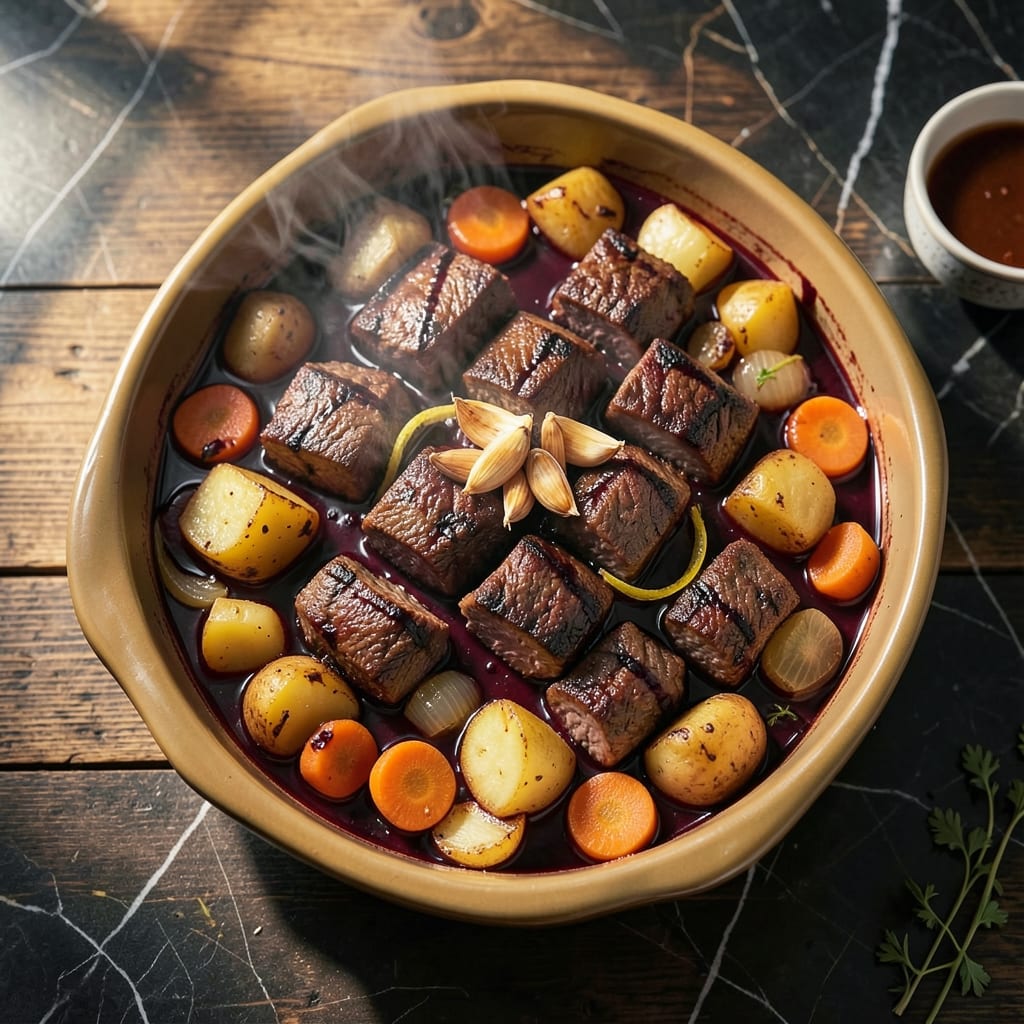
This beef and red wine casserole delivers restaurant-quality depth with tender beef and rich, wine-braised flavors in one comforting dish. The secret lies in searing the beef first to build flavor, then deglazing with red wine for a velvety sauce that tenderizes the meat as it simmers. Every bite combines melt-in-your-mouth beef with perfectly caramelized vegetables and potatoes.
What sets this recipe apart is the balance of techniques—browning the beef creates a flavorful crust, while the red wine reduces into a concentrated sauce that coats every ingredient. The slow oven cooking transforms tough cuts into fork-tender pieces, and the wine's acidity cuts through the richness for a perfectly balanced dish. This is comfort food elevated.
The result is a hearty casserole with layers of texture: crisp edges on the potatoes, tender beef that falls apart, and a sauce so rich it clings to every bite. The wine's depth transforms what could be ordinary into something special, making this perfect for family dinners or holiday gatherings. The best part? It comes together in one pot for minimal cleanup.
Pair with crusty bread to soak up every last drop of that wine-infused sauce, or serve alongside a simple green salad for balance. The flavors only improve with time, so this casserole tastes even better the next day. Let's create this showstopper for your table.
Ingredients for beef and red wine casserole
Six hearty ingredients transform into a rich, wine-braised beef masterpiece that tastes even better the next day.
| Ingredient | Amount | Notes |
|---|---|---|
| Chuck Roast 🥩 | 2 ½ lb | Pre-cut into 1-inch cubes |
| Red Wine 🍷 | 1 cup | Bold, dry variety like Cabernet |
| Yellow Onion 🧅 | 1 whole | Diced into 1/2-inch pieces |
| Carrots 🥕 | 4 medium | Peeled and cut into chunks |
| Russet Potatoes 🥔 | 2 lb | Cut into 1-inch cubes |
| Garlic Cloves 🧄 | 4 cloves | Minced for depth of flavor |
| Beef Broth 💧 | 2 cups | Low-sodium preferred |
| Tomato Paste 🍅 | 2 tbsp | For richness and depth |
| All-Purpose Flour 🌾 | 2 tbsp | For thickening sauce |
| Dried Thyme 🌿 | 1 tsp | Or 1 tbsp fresh thyme |
| Ground Black Pepper 🌶️ | 1 tsp | Freshly cracked |
| Kosher Salt 🧂 | 1 ½ tsp | Adjust to taste |
| Olive Oil 🫒 | 2 tbsp | For searing beef |
| Fresh Parsley 🌿 | ¼ cup | Chopped for garnish |
The chuck roast is non-negotiable here—it's the star that delivers that melt-in-your-mouth tenderness. Costco or Walmart usually have it pre-cubed, which saves you time, but if you're feeling ambitious, grab a whole roast and cube it yourself. Look for good marbling—those white streaks of fat are what make the meat juicy. The wine? Any bold, dry red works here—Cab Sauv, Merlot, whatever's open. If you're worried about the cost, Trader Joe's has solid options that won't break the bank. And trust me on the full-fat version of the beef broth—it adds so much more depth than low-fat versions.
No red wine? Beef broth with a splash of balsamic vinegar gets you close, though you'll lose some of that wine complexity. Fresh thyme is ideal, but dried works at one-third the amount—just make sure it's not ancient dust in your spice rack. The tomato paste can be the squeeze tube kind from Trader Joe's if you're lazy, but if you've got a can, that works too. For the carrots and potatoes, baby carrots and fingerling potatoes add a nice visual touch, but regular old russets and medium carrots work just fine. The key is cutting them evenly so they cook at the same rate.
This casserole tastes even better the next day, so make extra—it reheats beautifully. Store leftovers in the fridge for up to 4-5 days or freeze for 3 months. I like to portion mine into individual containers before freezing so I can grab one for a quick lunch. The sauce gets even more concentrated overnight, so if you're short on time, make it a day ahead. The parsley can wait until serving—it's just for garnish, but it adds that fresh pop of color that makes everything look restaurant-worthy.
Why You'll Love This Recipe
- One-Pan Magic: I swear by this recipe when I’m too tired to wash pots—just brown the chuck roast, toss in chopped veggies and wine, and let it slow-cook. The onions caramelize right in the pan, so no extra prep or cleanup.
- Rich, Deep Satisfaction: That first sip of red wine deglazing the pan? Pure flavor gold. The slow simmer turns tough chuck into melt-in-your-mouth beef, while the potatoes soak up the sauce until they’re creamy and tender—no dry bites here.
- Leftovers for Days: Between us, this casserole tastes better the next day. I make a big batch on Sunday, and it lasts through lunches—reheated with a splash of broth to loosen the sauce. My kids actually ask for it.
- Budget-Friendly Feast: Chuck roast and russets are cheap, but they feel like a fancy dinner. A bottle of red wine (even a mid-range one) elevates everything, and you’re left with a hearty meal that feeds four for under $15. Win.
Step-by-step instructions for beef and red wine casserole
Here's how to create a hearty, wine-braised masterpiece that delivers melt-in-your-mouth beef every time.
Sear the Chuck Roast for Maximum Flavor
Heat a large Dutch oven over medium-high heat and add the 2 tablespoons olive oil. Once shimmering, add the 2.5 lb chuck roast cut into 1-inch cubes in a single layer. Let them sear undisturbed for 3-4 minutes until deep golden brown on all sides.
I press down gently on the beef cubes during the first minute—this prevents them from curling and ensures even contact with the pan. Once browned, transfer the beef to a plate and set aside. You want those caramelized bits (fond) to stay in the pan for the sauce later.
Build the Wine-Braised Foundation
In the same Dutch oven, add the diced yellow onion and cook for 3 minutes until softened. Stir in the 4 cloves minced garlic and cook for 30 seconds until fragrant. Add the 2 tablespoons tomato paste and stir for 1 minute to deepen the flavor.
Pour in the 1 cup red wine and scrape up all those browned bits from the bottom with a wooden spoon. Let it simmer for 3-4 minutes until reduced by half. This step creates the rich, velvety base that makes this casserole so special.
Thicken and Layer the Vegetables
Sprinkle the 2 tablespoons all-purpose flour over the wine mixture and stir vigorously for 1 minute to remove any lumps. Gradually whisk in the 2 cups beef broth until smooth. Season with the 1.5 teaspoons kosher salt, 1 teaspoon dried thyme, and 1 teaspoon ground black pepper.
Return the seared beef to the Dutch oven and add the 4 medium carrots cut into chunks and 2 lb russet potatoes cut into 1-inch cubes. Stir gently to combine, making sure the vegetables are coated in the sauce but not overmixed.
Braise Until Tender and Irresistible
Cover the Dutch oven and transfer to a preheated 325°F oven. Braise for 2 hours until the beef is fork-tender and the potatoes are easily pierced with a knife. If the sauce looks too thin after 1 hour, uncover and simmer for 10 minutes to reduce it slightly.
I check for doneness by piercing the largest beef cube—it should slide off the fork with minimal resistance. The potatoes should be soft when pressed with a fork, but still hold their shape. The aroma should be rich and wine-forward, with a deep, savory complexity.
Finish and Serve with Fresh Herbs
Remove the casserole from the oven and let it rest for 10 minutes before serving. This resting period allows the flavors to meld and the juices to redistribute throughout the beef and vegetables.
Garnish with the 0.25 cup chopped fresh parsley just before serving. The bright green parsley provides a beautiful contrast to the deep red wine sauce and adds a fresh finish to each bite. Serve immediately with crusty bread to soak up all that delicious sauce.
Pro Tips For Making Beef And Red Wine Casserole
- Sear the Chuck Roast: DESCRIPTION:
- Dice Onions Like a Pro: DESCRIPTION:
- Deglaze with Wine Immediately: DESCRIPTION:
- Potatoes Last, Not First: DESCRIPTION:
Storing and reheating this beef and red wine casserole
Fridge Storage Tips
Let your casserole cool completely before transferring to an airtight container—I use glass Pyrex with snap-on lids for best results. Store at 40°F or below for up to 4-5 days, though I find the flavors actually deepen overnight as the wine and beef juices meld. The sauce becomes even more concentrated, making leftovers taste even richer than the first serving. 💫
Freezer-Friendly Prep
For longer storage, portion the casserole into quart-sized freezer bags (remove excess air to prevent freezer burn) or glass containers with 1-inch headspace for expansion. It keeps well for 3 months without losing texture. I label each bag with the date—this helps track freshness. Thaw overnight in the fridge before reheating for best results. ❄️
Stovetop Reheating
My preferred method is stovetop because it maintains the best texture. Transfer the casserole to a heavy-bottomed pot and heat over medium-low heat for 10-15 minutes, stirring occasionally. Add ¼ cup beef broth if the sauce looks dry—this prevents sticking and keeps everything moist. Taste and adjust seasoning after reheating, as the flavors can concentrate during storage. 🔥
Microwave Shortcuts
For quick meals, use the microwave on 70% power in 2-minute intervals, stirring between each interval. Cover with a damp paper towel to retain moisture, and stop when the internal temperature reaches 165°F. Add a splash of water if the sauce thickens too much during reheating. This method works best for individual portions. ✨
Oven Refresh
If you prefer oven reheating, transfer the casserole to a baking dish, cover loosely with foil, and bake at 350°F for 20-25 minutes until heated through. The oven method is ideal for reheating the entire dish at once, especially if you're serving a crowd. It also helps restore that golden crust on the potatoes that often softens during initial cooking. 💛
Sauce Salvation
If the sauce separates after reheating, stir in 1 tablespoon cold water and heat gently until smooth. For extra richness, add 1 teaspoon butter or a splash of red wine to restore depth. The key is patience—don't rush the reheating process, or the beef may dry out. A little extra time ensures every bite is as tender and flavorful as the first serving. 💡
Nutrition facts
Frequently asked questions
Can I substitute red wine with something else?
If you don't have red wine, use 1 cup beef broth + 1 tablespoon balsamic vinegar for depth. For a non-alcoholic version, try 1 cup cranberry juice or grape juice. The key is maintaining acidity and richness—just avoid sweet wines like dessert wines, as they'll alter the flavor balance.
What's the best cut of beef for this recipe?
Chuck roast is ideal because it's affordable and becomes incredibly tender when slow-cooked. If you can't find it, try stew beef or shoulder roast—both work well. Avoid lean cuts like sirloin, as they won't stay juicy during the long cooking time. Pre-cut cubes save time, but a whole roast works if you're feeling ambitious.
Why does the beef need to be seared first?
Searing creates a flavorful crust (fond) that dissolves into the sauce, adding depth. Without it, the dish will taste flat. The high heat also helps tenderize the beef by breaking down fibers. If you're short on time, sear in batches—just don't overcrowd the pan, or the beef will steam instead of brown.
Can I make this in a slow cooker?
Yes! Brown the beef first, then transfer everything to the slow cooker. Cook on low for 7-8 hours or high for 4-5 hours. The texture will be slightly different (more saucy), but still delicious. For best results, use a 6-quart slow cooker and add ½ cup extra broth to prevent drying out.
How do I fix tough beef after cooking?
If the beef is tough, it likely didn't cook long enough. The fix? Return the casserole to the oven at 325°F for 30-60 more minutes until fork-tender. For immediate results, shred the beef and mix it back into the sauce—it'll absorb the flavors beautifully. Always check doneness by piercing the largest piece with a fork before serving.