
Soups & Stews
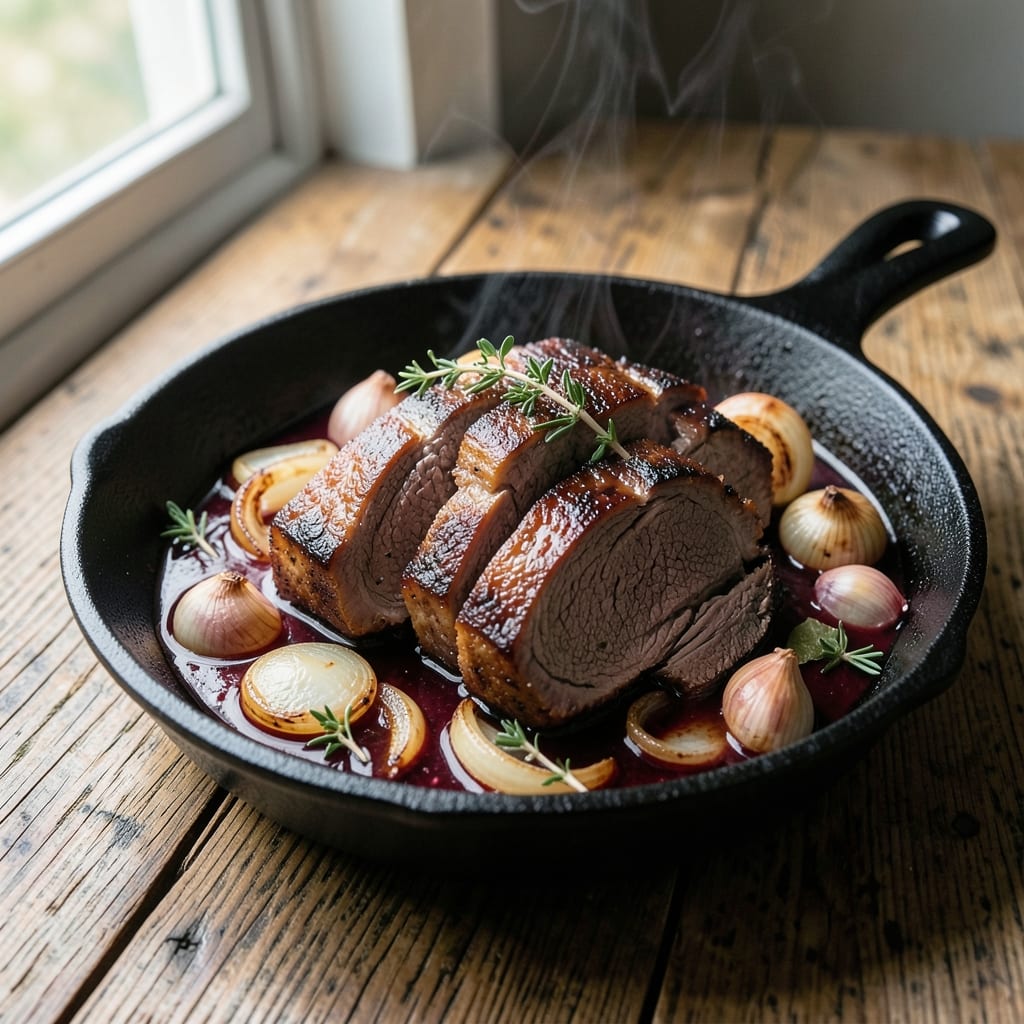
This beef au vin recipe transforms tough beef into melt-in-your-mouth tenderness through slow wine braising—a technique that builds rich, complex flavors over hours. The secret lies in proper searing and deglazing, where caramelized bits dissolve into red wine, creating a sauce that's both elegant and deeply satisfying. I've perfected this classic French dish to deliver restaurant-quality results at home, with earthy mushrooms and aromatic herbs elevating every bite.
The process begins with searing beef chuck until deeply browned, then simmering it in red wine, beef broth, and a bouquet of garlic, thyme, and bay leaf until fork-tender. The mushrooms absorb the wine's depth while the onions caramelize for natural sweetness. What you'll end up with is beef that falls apart easily, swimming in a velvety sauce that's bold yet balanced, with just the right acidity from the wine.
This dish pairs beautifully with creamy mashed potatoes, crusty baguette, or roasted green beans to soak up every drop of that luxurious sauce. The aroma alone—warm spices, red wine, and caramelized onions—will have everyone gathered at your table. It's the kind of meal that feels special without requiring fancy ingredients or techniques.
Perfect for weeknight dinners or weekend gatherings, this beef au vin delivers comfort food at its finest. The slow cooking process means minimal effort during the actual meal prep, just waiting for that incredible aroma to fill your kitchen. Let's get started on creating this timeless classic.
Ingredients for beef au vin
The backbone of this classic French dish starts with rich beef and bold wine.
| Ingredient | Amount | Notes |
|---|---|---|
| Beef Chuck Roast 🥩 | 2 ½ lb | Pre-cut into 1.5-inch cubes |
| Dry Red Wine 🍷 | 1 ½ cups | Bold Cabernet Sauvignon preferred |
| Yellow Onions 🧅 | 1 whole | Sliced into 1/2-inch wedges |
| Garlic Cloves 🧄 | 6 cloves | Smashed but not minced |
| Fresh Thyme 🌿 | 2 tbsp | Leaves only, stems removed |
| Bay Leaves 🍃 | 2 whole | Dried, standard size |
| Beef Broth 💧 | 1 ½ cups | Low-sodium preferred |
| Cream 🥛 | ½ cup | Heavy cream for richness |
| Mushrooms 🍄 | 8 oz | Cremini or baby bella |
| All-Purpose Flour 🌾 | 2 tbsp | For dredging beef |
| Olive Oil 🫒 | 2 tbsp | Extra-virgin for searing |
| Salt 🧂 | 1 ½ tsp | Diamond Crystal kosher |
| Ground Black Pepper 🌶️ | 1 tsp | Freshly cracked |
| Unsalted Butter 🧈 | 2 tbsp | For sauce finishing |
The beef chuck is non-negotiable here—it needs that marbled fat for tenderness. Look for cuts with good marbling at your local butcher or the meat department at Whole Foods or Kroger. Pre-cut cubes save time, but if you're buying a whole roast, ask for it to be cubed in-store. For the red wine, Cabernet Sauvignon or Merlot work best—they've got enough body to stand up to the beef. Avoid sweet wines or anything under $10; you want bold, dry, and preferably from a reputable vineyard. The mushrooms? Cremini or baby bella hold their shape better than white mushrooms and have more earthy flavor. If you can't find them, white mushrooms will work, but they'll absorb more of the wine's liquid.
No red wine? Beef broth with a splash of balsamic vinegar mimics the acidity and depth, though it won't taste identical. Fresh thyme is ideal, but dried thyme at half the amount works in a pinch. For the flour, King Arthur or Gold Medal brands are reliable, but any all-purpose will do. The butter matters at the end—unsalted is key so you control the seasoning. If you're short on butter, olive oil works, but the sauce won't be quite as velvety. The beef broth should be low-sodium; if yours isn't, reduce it by half and add extra salt at the end. For the mushrooms, wipe them with a damp paper towel first to remove any dirt, but don't rinse—it makes them soggy.
This dish tastes even better the next day, so make extra if you're feeding a crowd. Store leftovers in an airtight container in the fridge for up to 5 days, or freeze for 3 months. The sauce thickens as it cools, so reheat with a splash of broth or water to loosen it. For serving, I like to keep the beef and sauce separate until ready to plate—it stays hotter longer. The aroma alone will have everyone rushing to the table. If you're prepping ahead, sear the beef and onions the day before, then finish cooking on the actual serving day. Just store them in the fridge and proceed from the deglazing step.
Why You'll Love This Recipe
- One-Pot Magic: I swear by this—just sear the beef, toss in onions and garlic, pour the wine, and let it simmer. No extra pans, no fuss, and honestly? That rich red sauce practically cooks itself while you sip your glass of the same wine.
- Wine-Infused Richness: Between us, the beef gets so tender it melts, while the wine reduces into a glossy, slightly sweet sauce that clings to every bite. That thyme? It’s the quiet hero—earthy, bright, and impossible to resist.
- Leftovers That Shine: This dish actually improves the next day. I’ll be real: my freezer is packed with reheated slices on toast, in wraps, or straight from the pot. The flavors deepen, and no one ever guesses it’s not fresh.
- Budget-Friendly Luxury: A chuck roast stretches farther than you’d think, and a decent bottle of wine makes the whole meal feel special—without breaking the bank. Here’s what sold me: it’s the kind of dinner that tastes like a splurge, but costs like a weeknight.
Step-by-step instructions for deep wine-braised beef with earthy mushroom richness
Here's how to create a restaurant-worthy beef au vin with tender beef and velvety wine sauce.
Sear the Beef Until Deeply Browned
Pat the 2.5 lb beef chuck roast dry with paper towels—this ensures maximum browning. Heat 2 tablespoons olive oil in a large Dutch oven over medium-high heat until shimmering. Working in batches if needed, add the beef cubes and sear undisturbed for 3-4 minutes per side until deeply browned. You're building flavor here, so don't rush this step.
Transfer the browned beef to a plate as it cooks. The browned bits that remain in the pot will form the rich foundation for your sauce. While the beef rests, sprinkle it with 1.5 teaspoons salt and 1 teaspoon freshly cracked black pepper, pressing gently to adhere. This seasoning will penetrate during the braising process.
Build the Flavor Base with Aromatics
In the same Dutch oven, add 1 whole yellow onion sliced into ½-inch wedges and the 8 oz mushrooms. Cook over medium heat for 5-6 minutes until the onions soften and mushrooms release their moisture. Add the 6 smashed garlic cloves and 2 tablespoons fresh thyme leaves, stirring for 30 seconds until fragrant.
Sprinkle the 2 tablespoons all-purpose flour over the vegetables and stir vigorously for 1 minute to cook out the raw flour taste. This creates a roux that will thicken your sauce beautifully. Pour in the 1.5 cups dry red wine, scraping up all the browned bits from the bottom of the pot with a wooden spoon. Let this simmer for 3-4 minutes until reduced by half.
Braise the Beef Until Fork-Tender
Return the seasoned beef to the Dutch oven along with any accumulated juices. Add the 2 whole bay leaves, 1.5 cups beef broth, and bring to a gentle simmer. The liquid should come about halfway up the beef cubes. Cover tightly with a lid and transfer to a preheated 325°F oven.
Braise for 2-2.5 hours until the beef is fork-tender. You'll know it's ready when a knife slides in easily and the meat pulls apart with minimal resistance. The sauce should have thickened significantly and coat the back of a spoon. If it's too thin, uncover and simmer for an additional 10-15 minutes to reduce further.
Finish with Cream for Richness
Remove the beef from the braising liquid and transfer to a serving platter. Strain the braising liquid through a fine-mesh sieve into a clean saucepan, discarding the solids. Return the strained liquid to medium heat and stir in the 0.5 cup heavy cream and 2 tablespoons unsalted butter. Simmer gently for 2-3 minutes until the sauce thickens slightly and coats the back of a spoon.
Taste and adjust seasoning with additional salt and pepper if needed. The sauce should be rich, slightly tangy from the wine, and balanced with the earthy mushroom flavor. Spoon the sauce over the beef and serve immediately with crusty bread or mashed potatoes to soak up every delicious drop.
Pro Tips For Making Beef Au Vin
- Sear the Chuck First: I learned this the hard way—skipping the sear means flavorless beef. Hit the roast with a hot pan and 2 tablespoons of oil until deep brown on all sides. That crust locks in juices and turns your wine into a rich sauce instead of a sad one.
- Deglaze Immediately: As soon as you remove the beef, pour in that red wine right away—don’t let the fond burn. Scrape every bit off the bottom with a wooden spoon. I used to walk away for "just a second," and the flavor would suffer. No second chances here.
- Use Thyme Stems: Don’t toss those thyme stems—they’re packed with flavor. Tie a few sprigs together, add them to the pot, and remove before serving. It’s an easy upgrade that makes the sauce smell like a French bistro.
- Simmer Low and Slow: After browning, drop the heat to a gentle simmer—no boiling. Too much heat turns your wine into vinegar and makes the beef tough. Cover loosely and let it cook until the meat falls apart. Patience here guarantees tender, melt-in-your-mouth beef.
Regional styles of this beef au vin
Classic French Version
This is the original recipe you'll find in French bistros, where red Burgundy wine is the star. The French use beef chuck cut into 1.5-inch cubes and braise it with shallots instead of onions for a more delicate flavor. I've found that adding 1 sprig of parsley at the end brightens the sauce beautifully. The key is using a Dutch oven—it's non-negotiable for even heat distribution. 🍷
Americanized Twist
American home cooks often simplify by using Merlot or Cabernet Sauvignon instead of Burgundy, which is more accessible. I like adding 1 cup of beef broth—instead of just wine—to deepen the flavor without overpowering it. Some versions even include tomato paste—about 1 tablespoon—for a touch of sweetness that balances the acidity of the wine. This makes the dish more approachable for those who prefer a slightly sweeter profile.
Italian-Inspired Adaptation
For an Italian touch, swap the thyme for rosemary and add 1 teaspoon of dried oregano to the sauce. Use Chianti instead of Burgundy, and finish with ½ cup of whole milk instead of cream for a lighter texture. This version pairs wonderfully with polenta instead of potatoes. The acidity of Chianti cuts through the richness beautifully, giving it a fresh twist. 🌿
Quick Weeknight Version
If you're short on time, you can use pre-cut beef stew meat (about 2 lbs) and reduce the braising time to 1.5 hours. I also recommend using pre-minced garlic and onion powder to save prep time. For the wine, a $10 bottle of Malbec works perfectly—it's bold and affordable. This version is just as flavorful but cuts the active cooking time in half. 💪
Vegetarian Adaptation
For a vegetarian take, replace the beef with extra-firm tofu or king oyster mushrooms cut into similar-sized pieces. Marinate the tofu in 1 tablespoon soy sauce and 1 teaspoon smoked paprika for 30 minutes before cooking. Use the same braising method but reduce the time to 1 hour. The mushrooms will absorb the wine beautifully, creating a rich, earthy sauce. This version is perfect for those looking for a hearty, meat-free option. 🍄
Nutrition facts
Frequently asked questions
Can I use any red wine for this beef au vin?
While you can technically use any dry red wine, Cabernet Sauvignon or Merlot work best due to their bold flavors that complement the beef. Avoid sweet wines or anything under $10—they won't have enough depth. For a budget-friendly option, a $10 bottle of Malbec works perfectly while keeping the dish flavorful.
How do I know when the beef is fully tender?
The beef is ready when it's fork-tender—meaning a knife should slide in easily and the meat should pull apart with minimal resistance. If you're unsure, cut into a piece and check for even tenderness. The sauce should also coat the back of a spoon, indicating proper reduction.
Can I make this recipe in a slow cooker?
Yes! Sear the beef first, then transfer everything (including the wine and broth) to a 6-quart slow cooker. Cook on low for 6-8 hours or high for 4-5 hours. The slow cooker will handle the braising, but you'll still need to finish with the cream and butter on the stovetop for the best texture.
Why did my sauce turn out too thin?
A thin sauce usually means the liquid wasn't reduced enough. Next time, simmer uncovered for 10-15 extra minutes to thicken it. If it's still too thin, mix 1 tablespoon cornstarch with 1 tablespoon cold water and stir it in until thickened. Avoid using flour directly—it can make the sauce cloudy.
What's the best way to reheat leftovers?
Reheat leftovers gently in a saucepan over medium-low heat with a splash of beef broth or water to loosen the sauce. Avoid microwaving—it can make the beef tough. For extra richness, stir in 1 tablespoon butter while reheating. Leftovers taste even better the next day!