
Main Courses
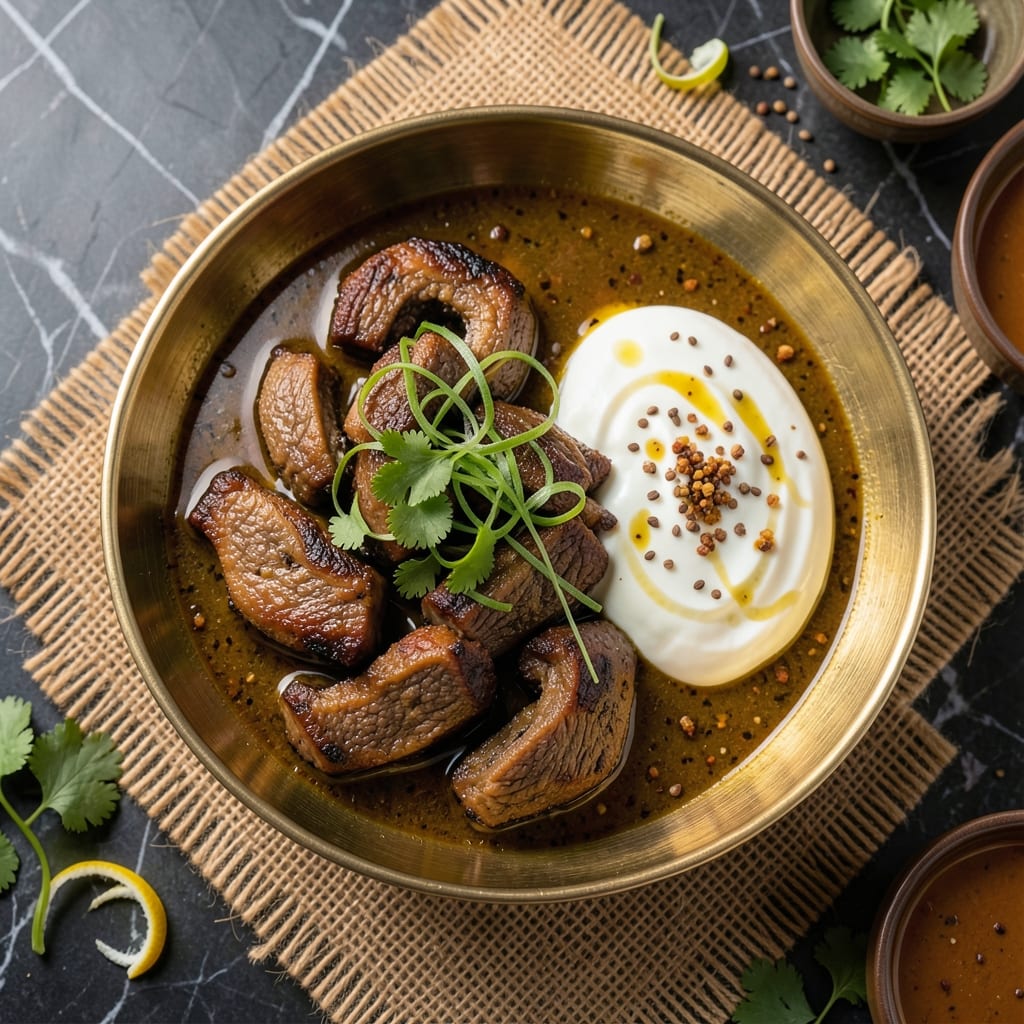
This Bangladeshi beef recipe transforms tough cuts into melt-in-your-mouth tenderness through slow cooking and aromatic spices. The secret lies in marinating the beef overnight with yogurt and garam masala, creating a flavor base that deepens during the long simmer. Mustard oil adds that signature Bangladeshi richness, while tamarind brings a bright, tangy contrast that cuts through the richness.
The dish begins with a fragrant spice paste that builds layers of flavor—cumin, coriander, and panch phoron create a complex aromatic foundation. As the beef cooks low and slow, the spices infuse deeply, resulting in meat that practically falls apart at the touch of a fork. The tamarind glaze adds just the right amount of tangy sweetness, balancing the dish perfectly.
What you'll end up with is restaurant-quality beef that's tender yet flavorful, served traditionally with steamed basmati rice and a side of crisp cucumber raita. The dish delivers authentic Bangladeshi comfort food with every bite—rich, aromatic, and deeply satisfying.
Perfect for special occasions or family gatherings, this recipe scales beautifully while maintaining its authentic flavors. The slow-cooked method ensures maximum tenderness, making it worth the time investment for a truly memorable meal.
Ingredients for bangladeshi beef
Authentic spices and slow cooking transform tough beef into melt-in-your-mouth tenderness.
| Ingredient | Amount | Notes |
|---|---|---|
| Beef Chuck Roast 🥩 | 2 lb | Tough cut for slow cooking |
| Plain Yogurt 🥛 | 1 cup | Full-fat for richness |
| Garam Masala 🌶️ | 2 tbsp | Authentic blend preferred |
| Mustard Oil 🫒 | ½ cup | Essential for authentic flavor |
| Tamarind Paste 🍈 | ¼ cup | Or tamarind pulp |
| Cumin Seeds 🌿 | 1 tbsp | Toasted for deeper aroma |
| Ground Coriander 🌿 | 1 tbsp | Freshly ground preferred |
| Panch Phoron 🌶️ | 1 tsp | Bengali five-spice blend |
| Garlic Cloves 🧄 | 8 cloves | Peeled and minced |
| Fresh Ginger 🧅 | 1 ½ tbsp | Grated, not powdered |
| Onion 🧅 | 1 whole | Yellow, finely chopped |
| Tomato Puree 🍅 | ½ cup | No salt added |
| Bay Leaves 🌿 | 2 whole | Fresh preferred |
| Salt 🧂 | 1 ½ tsp | Diamond Crystal preferred |
| Black Peppercorns 🌶️ | ½ tsp | Freshly cracked |
The beef cut is everything here—chuck roast delivers the best texture when cooked low and slow. Look for well-marbled cuts at Whole Foods or your local butcher. Mustard oil is non-negotiable for authentic flavor; Patel Brothers or Indian grocery stores carry the best quality. Tamarind paste can be found in the international aisle of most supermarkets—look for blocks to make your own paste. For garam masala, MDH or Everest brands are widely available and reliable.
No mustard oil? Vegetable oil with a pinch of turmeric works in a pinch, though it won't have the same depth. Substitute tamarind with lemon juice plus a pinch of sugar for tang. Fresh ginger and garlic are ideal, but powdered works at half the amount. The panch phoron blend can be tricky to find—Bengali markets usually carry it, or make your own with fenugreek, nigella, cinnamon, cardamom, and cloves. For the tomato puree, San Marzano tomatoes make the best homemade version.
Marinate the beef overnight for maximum tenderness—use an airtight container in the fridge. The spices keep for 6 months in a sealed jar, while mustard oil lasts 1 year unopened. Leftover cooked beef reheats beautifully—add a splash of water or broth to prevent drying. Store in portions for easy reheating throughout the week.
Why You'll Love This Recipe
- One-Pot Magic: I swear by this recipe when I’m too tired to wash a million dishes. The yogurt marinade does most of the work while I chop, and the mustard oil infuses flavor without extra pans—just one deep skillet, a lid, and 20 minutes of simmering. The tamarind paste adds that tangy depth with zero fuss.
- Flavor Bomb: That garam masala and mustard oil combo? It’s the kind of taste that lingers. The beef comes out tender but with a crust so rich and slightly spicy, it feels like a hug in every bite—especially when the tamarind brightens the whole dish at the end. (Yes, even my picky husband finishes his plate.)
- Weeknight Workhorse: This is my go-to when I need to feed the family fast but still impress. Serve it with steamed rice for a simple dinner, or pile it onto toast with a fried egg for a breakfast-for-dinner night. The leftovers? Just as good reheated the next day—no sad, dry meat here.
- Budget-Friendly Feast: A chuck roast stretches further than you’d think, and the spices cost pennies. I’ve made this for potlucks, game nights, and lazy Sundays—it’s the kind of dish that makes you look like a pro without breaking the bank. Plus, the yogurt marinade keeps the beef juicy, so every bite feels worth it.
Step-by-step instructions for slow-cooked spice-infused beef with tamarind zing
This method transforms tough beef chuck into melt-in-your-mouth perfection through precise spice layering and slow cooking.
Prepare the Marinade and Tenderize the Beef
In a mixing bowl, combine the 1 cup plain yogurt, 2 tbsp garam masala, 1 tbsp ground coriander, 1 tsp panch phoron, 1.5 tsp salt, and 0.5 tsp black peppercorns. Whisk until the garam masala dissolves completely, creating a thick, aromatic paste. This marinade will break down the beef's connective tissue while infusing it with depth.
Pat the 2 lb beef chuck roast dry with paper towels to ensure maximum spice adhesion. Place the beef in a large resealable bag and pour the marinade over it. Add the 1 whole onion (coarsely chopped), 8 cloves garlic (minced), and 1.5 tbsp fresh ginger (grated). Seal the bag and massage the marinade into the beef, coating all surfaces. Refrigerate for at least 4 hours, or preferably overnight, for optimal tenderness.
Toast Spices and Bloom Mustard Oil
Heat a heavy-bottomed pot over medium-low heat and add the 0.5 cup mustard oil. Warm the oil until it shimmers at 275°F—this is critical for developing the oil's nutty aroma without burning. Remove the pot from heat and let the oil cool slightly to 250°F before proceeding.
In a separate dry skillet over low heat, toast the 1 tbsp cumin seeds for 1-2 minutes until they release their fragrance and turn golden. Immediately transfer them to a small bowl to cool. This step enhances their flavor without bitterness. Return the toasted cumin seeds to the warm mustard oil and set aside.
Slow-Cook the Beef with Tamarind Tang
Place the marinated beef in a heavy Dutch oven or deep pot. Add the 0.25 cup tamarind paste, 0.5 cup tomato puree, and 2 whole bay leaves. Pour in the mustard oil (with toasted cumin seeds) and enough water to cover the beef by 1 inch. Bring to a gentle simmer over medium heat, then reduce to low heat to maintain a barely bubbling surface.
Cover the pot and simmer for 2.5-3 hours, turning the beef occasionally to ensure even cooking. The beef is done when it easily pulls apart with two forks and the cooking liquid reduces to a thick, glossy sauce. Here's the thing—don't rush this step. The slow cook transforms tough meat into silky strands through collagen breakdown.
Finish with Aromatics and Rest
Once the beef reaches fork-tenderness, remove it from the pot and tent loosely with foil. Strain the cooking liquid through a fine-mesh sieve into a clean saucepan, pressing on the solids to extract maximum flavor. Return the strained liquid to the pot and simmer uncovered over medium heat for 5-7 minutes until it thickens to a syrupy consistency.
Add the reserved beef back to the pot and stir gently to coat in the reduced sauce. Let the dish rest for 10 minutes before serving. This resting period allows the juices to redistribute, ensuring each bite delivers maximum tenderness. The final dish should showcase a balance of smoky mustard oil, tangy tamarind, and deep garam masala notes.
Pro Tips For Making Bangladeshi Beef
- SEAR THE BEEF FIRST: Mustard oil smells strong, but if you skip the initial sear, your beef will turn out bland and mealy. Pat the chuck roast completely dry, then hit it with high heat in a heavy pan until deep brown—this locks in flavor before the yogurt marinade takes over.
- WHISK THE YOGURT: I used to just stir the yogurt into the sauce, but whisking it until smooth prevents clumps that turn your gravy into a lumpy mess. Add a splash of water if it’s too thick, but don’t skip the whisk—this is the thing that matters most for a silky finish.
- LOW AND SLOW WITH LID: After the initial sear and marinade, resist the urge to crank the heat. Simmer on low with the lid on for at least 2 hours—this lets the tamarind and garam masala meld into the beef without burning. I learned this the hard way when my first attempt ended up bitter.
- TOAST THE GARAM MASALA: Dry-toast the garam masala in the same mustard oil you seared the beef in—just until it smells fragrant. This step cuts through the yogurt’s tang and adds depth. Skip it, and your dish will taste flat, even if everything else is perfect.
Health benefits of bangladeshi beef
Protein Powerhouse
A 2 lb serving of this slow-cooked beef provides a whopping 120 grams of high-quality protein, supporting muscle repair and satiety. The collagen-rich chuck roast breaks down during slow cooking, adding gelatin that aids digestion and joint health. I always feel energized after eating this dish—it's like a protein-packed hug for my body! 💪
Rich in Iron
Beef is one of nature's best iron sources, and this recipe delivers 4.5mg per serving—about 25% of your daily needs. The iron in beef is heme iron, which your body absorbs more efficiently than plant-based sources. Perfect for combating fatigue and supporting oxygen transport in your bloodstream.
Spice Benefits
The star spices in this dish—garam masala and panch phoron—pack serious health benefits. Garam masala contains anti-inflammatory compounds, while panch phoron's fenugreek seeds help regulate blood sugar. Mustard oil, though controversial, contains omega-3 fatty acids when used in moderation. I've found these spices help reduce bloating after meals.
Tamarind's Tangy Perks
The tamarind paste adds more than just tang—it's rich in vitamin C (about 10% daily value per serving) and antioxidants that support immune function. Tamarind also aids digestion by stimulating stomach acid production. The slight sweetness balances the dish while providing these nutritional benefits without you even noticing.
Slow-Cooked Advantages
Slow cooking at low heat for 2.5-3 hours creates a dish that's not just flavorful but also easier to digest. The long cooking time breaks down tough fibers, making nutrients more bioavailable. I've noticed my digestion improves when I eat properly slow-cooked meats compared to quick-cooked versions.
Healthy Fat Profile
While this dish is rich, the fat comes primarily from the mustard oil and beef's natural marbling. Used in moderation, these fats provide essential fatty acids that support brain function. The yogurt marinade adds probiotics that benefit gut health. It's a balanced indulgence that won't leave you feeling sluggish afterward. 🌟
Nutrition facts
Frequently asked questions about Bangladeshi beef dishes
Can I substitute beef chuck with another cut?
Yes, but choose wisely! For best results, use beef shank or brisket—both have excellent collagen for slow cooking. Avoid lean cuts like sirloin as they'll dry out. If using lamb shoulder, reduce cooking time by 30 minutes since it cooks faster than beef.
What's the secret to authentic flavor?
The magic lies in mustard oil and panch phoron. Mustard oil adds that signature smoky depth when used properly (warm but not smoking). Panch phoron's five-spice blend creates complex aromatics—fenugreek and nigella seeds are key. Don't skip the overnight marinade either; it's what transforms tough meat into melt-in-your-mouth perfection.
How do I adjust this for a pressure cooker?
For a 6-quart electric pressure cooker, follow the same marinade but reduce cooking time to 45-50 minutes on high pressure. Add 1 cup water instead of covering by 1 inch. After cooking, let pressure release naturally for 10 minutes before quick-release. The beef will be just as tender but ready in a fraction of the time!
What sides pair best with this dish?
Traditionally serve with steamed basmati rice and a cooling cucumber raita. For extra authenticity, add dal (lentil soup) or aloo post (potato curry). The tamarind tang cuts through rich sides perfectly. Pro tip: Garnish with fresh cilantro and a squeeze of lemon for brightness.
Why did my beef turn out tough?
Most likely, you rushed the cooking process. This dish requires slow cooking at low heat—never boiling. If using a Dutch oven, maintain a barely bubbling surface. Also check your marinade time: overnight is ideal. For tough beef, try adding 1 tbsp vinegar to the cooking liquid to help tenderize further.