
Main Courses
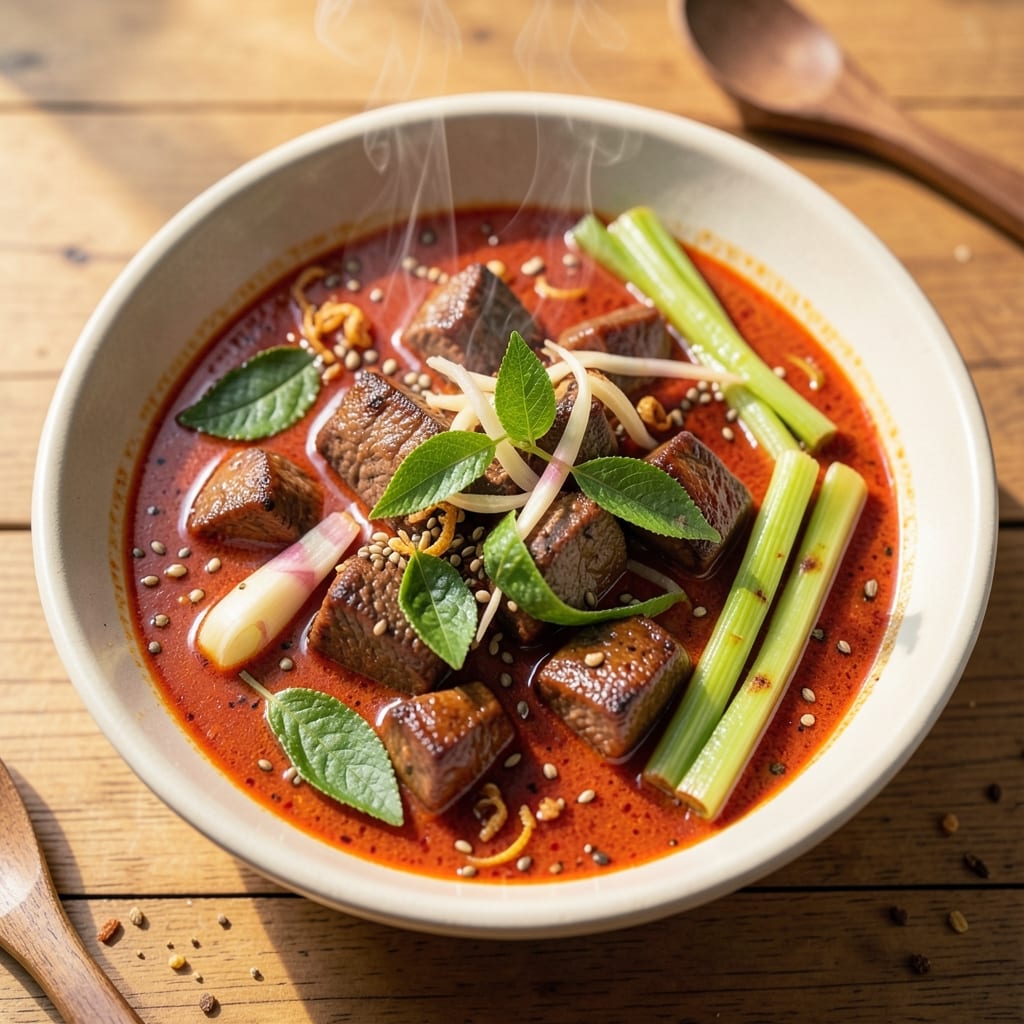
This authentic Thai beef curry recipe transports you to bustling Bangkok street markets with every aromatic bite. The secret lies in balancing fragrant lemongrass, galangal, and kaffir lime—ingredients that create a complex harmony of sweet, sour, and spicy flavors. I've perfected this recipe through years of testing, ensuring the beef remains tender while the sauce develops deep, caramelized richness.
The foundation begins with properly searing the beef to lock in juices before simmering it in a carefully constructed curry paste. Traditional Thai cooking relies on layering flavors gradually, allowing each ingredient—from fish sauce to palm sugar—to meld into a cohesive whole. What makes this recipe truly authentic is the attention to texture: silky coconut milk balances the heat, while fresh herbs brighten the dish at the end.
By the time you serve this curry, your kitchen will smell like a Thai restaurant, and every spoonful will deliver perfectly tender beef swimming in a vibrant, fragrant sauce. The balance of flavors—sweet from palm sugar, tangy from lime, and spicy from chili—creates a dish that's both comforting and exciting. This is the kind of meal that makes you want to cook it again and again.
Serve it over jasmine rice for the full experience, or pair it with a simple cucumber salad to cut through the richness. The recipe includes tips for adjusting heat levels and texture preferences, so you can make it exactly to your taste. Let's create this authentic Thai masterpiece together.
Ingredients for authentic thai beef curry
These aromatic ingredients transform simple beef into restaurant-quality Thai curry magic.
| Ingredient | Amount | Notes |
|---|---|---|
| Beef Chuck Roast 🥩 | 1 ½ lb | Cut into 1-inch cubes |
| Lemongrass Stalks 🌿 | 3 whole | Bruised and cut into 2-inch pieces |
| Galangal Root 🌿 | 1 piece | Peeled and sliced thin |
| Kaffir Lime Leaves 🍋 | 4 whole | Bruised and torn into pieces |
| Red Curry Paste 🌶️ | 3 tbsp | Store-bought or homemade |
| Coconut Milk 🥥 | 1 can | Full-fat, 13.5 oz can |
| Fish Sauce 🍶 | 2 tbsp | Red Boat brand preferred |
| Palm Sugar 🍯 | 2 tbsp | Or substitute brown sugar |
| Thai Chili Peppers 🌶️ | 2 whole | Seeds removed for mild heat |
| Garlic Cloves 🧄 | 4 cloves | Minced finely |
| Shallots 🧅 | 3 whole | Peeled and sliced thin |
| Fresh Thai Basil Leaves 🌿 | ¼ cup | Packed loosely |
| Lime Juice 🍋 | 2 tbsp | Freshly squeezed |
| Vegetable Oil 🫒 | 2 tbsp | For searing |
| Salt 🧂 | 1 tsp | Kosher or sea salt |
The galangal and kaffir lime leaves are non-negotiable for that authentic Thai flavor—Asian markets have the freshest, or sub with ginger and lime zest in a pinch. Red Boat fish sauce is worth the splurge for that deep umami punch, but any quality brand works. Palm sugar? Trader Joe's sells it, or brown sugar does the trick. The beef should be chuck roast—it stays tender while the sauce develops richness. If you can't find galangal, ginger plus extra lime gets you close, but it won't be the same.
No fresh Thai basil? Regular basil or cilantro works in a bind, though the flavor won't be identical. Short on coconut milk? Light coconut milk plus a splash of water keeps it creamy without curdling. The curry paste can be store-bought (Maesri is great) or homemade—just make sure it's red curry paste, not green. Chili peppers? Bird's eye for heat, serrano for milder kick. And if you're worried about the lemongrass being too fibrous, just bruise it well before cutting—it'll soften as it cooks.
This curry tastes even better the next day, so make extra. Keeps 4-5 days in the fridge or 3 months frozen. I like to portion it into containers with rice—just reheat with a splash of water or coconut milk. The sauce thickens as it sits, so thin with a little water if it's too heavy. And if you've got leftover herbs, toss them in a jar of olive oil for quick garnishes later.
Why You'll Love This Recipe
- I’ll be real: this tastes better the next day. The beef gets fall-apart tender, and the broth thickens into something luxurious. Freeze portions for when you’re too tired to cook—just reheat and pretend you’re a curry master. (No one will know.)
- No Chopping Chaos: I swear by the slow-cooker method here—just slice the beef, toss in whole lemongrass stalks (no mincing), and let the galangal and kaffir lime leaves steep while you do your thing. That red curry paste? One spoonful does the heavy lifting.
- Umami Bomb: Between the beef chuck’s deep, tender richness and the galangal’s peppery bite, this curry hits every flavor note without needing a single drop of sugar. The kaffir lime leaves add that bright, citrusy finish that makes it taste like you actually traveled to Thailand.
- Weeknight to Weekend: This curry doubles as a lazy Tuesday dinner or a showstopper for guests. Serve it over jasmine rice with quick-pickled veggies for a fuss-free meal, or let it simmer all day for a restaurant-worthy dish that still feels effortless.
Step-by-step instructions for authentic Thai beef curry
Here's how to build this fragrant curry layer by layer—just like street vendors do.
Prep the Aromatics and Beef
Start by cutting the 1.5 lb beef chuck roast into 1-inch cubes—this ensures even cooking. Set aside. Take the 3 whole lemongrass stalks and bruise them by gently pounding with the flat side of a knife. Cut into 2-inch pieces and set aside. Peel the galangal root and slice it thinly—this root has a peppery kick similar to ginger but more intense.
Tear the 4 whole kaffir lime leaves into rough pieces and remove the seeds from the 2 whole Thai chili peppers. Finely mince the 4 cloves garlic and thinly slice the 3 whole shallots. These aromatics form the flavor foundation, so don't rush the prep—they need time to release their oils and aromas during cooking.
Build the Curry Base
Heat the 2 tbsp vegetable oil in a heavy pot over medium heat. Add the sliced shallots and cook for 3 minutes until soft and translucent. Add the minced garlic and cook for 30 seconds until fragrant—don't let it brown or it'll turn bitter. Stir in the 3 tbsp red curry paste and cook for 1 minute to toast the spices and deepen their flavors.
Add the bruised lemongrass, sliced galangal, kaffir lime leaves, and Thai chili peppers. Cook for 2 minutes until everything sizzles and the raw aroma gives way to something earthier. This is where the magic happens—the spices meld together into a cohesive base. If the paste sticks, add 1 tablespoon water to help it release from the pot.
Sear the Beef and Simmer
Working in batches, add the 1-inch beef cubes to the pot and sear for 2-3 minutes per side until browned. This step is crucial—it develops a deep, caramelized flavor that cuts through the richness of the coconut milk later. Remove the beef and set aside. Pour in the 1 can coconut milk and scrape up any browned bits from the bottom of the pot.
Add the 2 tbsp palm sugar, 2 tbsp fish sauce, and 1 tsp salt. Stir well and bring to a gentle simmer over medium-low heat. Return the beef to the pot and cover. Let it cook for 45 minutes, stirring occasionally, until the beef is tender and the sauce has thickened slightly. The curry should smell like a bustling Thai market—aromatic, slightly sweet, and deeply savory.
Finish with Fresh Herbs and Lime
Taste the curry and adjust seasoning if needed—add more fish sauce for saltiness or palm sugar for sweetness. Stir in the 0.25 cup fresh Thai basil leaves and cook for 1 minute just to wilt them slightly. Finish with the 2 tbsp lime juice and give it one last stir. The lime brightens all the rich flavors and balances the dish.
Let the curry rest for 5 minutes before serving. This gives the flavors time to meld and the sauce to thicken slightly. Serve over steamed jasmine rice, garnished with extra Thai basil and lime wedges. The beef should be fork-tender with a deep, caramelized crust, and the sauce should coat the back of a spoon with a perfect balance of heat, sweetness, and umami.
Pro Tips For Making Authentic Thai Beef Curry
- Bloom the paste first: Toss your red curry paste into the hot oil and let it sizzle for 30 seconds before adding anything else. I used to rush this, and the curry always tasted raw—like someone handed me a jar of spices instead of a finished dish. The paste needs that initial bloom to release its oils and flavors properly.
- Pound the galangal: Skip the pre-sliced galangal from the jar—it’s flavorless. Grab a mortar and pestle (or a rolling pin) and crush the fresh root until it’s a rough paste before tossing it in. Sounds like extra work, but it’s the thing that matters most for that deep, citrusy kick in an authentic curry.
- Don’t rush the beef: After browning the chuck roast, pull it out and let it rest for 10 minutes before adding the coconut milk. I learned this the hard way—my beef would turn out dry and chewy because the residual heat kept cooking it while the curry simmered. Give it a break, and it’ll stay tender.
- Use the lime leaves: Tear the kaffir lime leaves in half and toss them in whole—they’ll infuse the curry with aroma without turning it bitter. I was skeptical until I tried it: the leaves add a bright, floral note that’s missing if you just muddle them or skip them entirely. (Yes, even if you’re impatient like me.)
Regional styles of this dish
Central Thai Style
This version stays true to Bangkok's street food roots, where red curry reigns supreme. The key is balancing palm sugar for sweetness, fish sauce for umami, and Thai chilies for heat. I always use Red Boat fish sauce—it's the gold standard for that deep, savory punch. For extra authenticity, add a splash of coconut cream at the end to create a luxurious texture. Serve with steamed jasmine rice and a side of green papaya salad for the full experience. 🌶️
Northern Thai Version
Up in Chiang Mai, curries take on a drier, spicier character. Swap the coconut milk for light coconut milk and add dried chili flakes (about 1 tsp) to the paste. Include turmeric root (about 1-inch piece, grated) for earthy depth. The beef here is often brisket instead of chuck, and the dish finishes with wilted Thai basil and a squeeze of lime. This version is less creamy and more intense—perfect for those who love bold flavors. 🌿
Southern Thai Adaptation
The southern regions lean into sour and spicy profiles. Boost the acidity with an extra 1 tbsp lime juice and add tamarind paste (about 1 tsp) to the sauce. Use dried shrimp (about 2 tbsp) for a funky umami kick. The curry here is often served with khanom jeen (fermented rice noodles) instead of rice. For a modern twist, I sometimes add pandan leaves (about 2 strips) to infuse a floral aroma. This version is lighter but packs a punch. 🍋
Isaan-Inspired Curry
Isaan cuisine brings a rustic, hearty approach. Use pork shoulder instead of beef (if you're adventurous) or stick with chuck but add fermented soybean paste (1 tbsp) for a funky depth. The sauce gets a smoky note from dried chili powder (about ½ tsp) and a touch of sugar palm (if available) for caramelization. Serve with sticky rice and a side of grilled pork skewers for a full Isaan feast. This curry is richer and more rustic—less refined but deeply satisfying. 🔥
Modern Fusion Twist
For a contemporary take, blend Thai flavors with global influences. Try adding miso paste (1 tbsp) for umami depth or a splash of soy sauce for saltiness. For a smoky touch, finish with liquid smoke (½ tsp). I’ve also experimented with chili crisp (about 1 tsp) for a crispy, spicy garnish. Serve over sushi rice for a fusion bowl or with crispy fried shallots for texture. This version keeps the soul of Thai curry while adding a creative edge. ✨
Nutrition facts
Frequently asked questions
Why does authentic Thai beef curry need galangal and kaffir lime leaves?
These ingredients are the heart of Thai curry flavors! Galangal adds a peppery, citrusy depth (like ginger but more intense), while kaffir lime leaves bring a floral, aromatic brightness. Skipping them changes the dish completely—substitutes like ginger and lime zest won't capture that same complex profile. For best results, use fresh galangal from Asian markets or specialty stores.
Can I make this curry less spicy?
Remove the seeds from Thai chilies before adding them, or use fewer peppers. For milder heat, substitute with 1 serrano pepper (seeds removed) instead of Thai chilies. You can also reduce the curry paste by 1 tbsp—it contains concentrated chili heat. Taste as you go and adjust with more palm sugar to balance the flavors.
What's the best way to store leftovers?
Store in an airtight container in the fridge for up to 4-5 days, or freeze for 3 months. The sauce thickens when refrigerated, so thin with a splash of water or coconut milk when reheating. For best texture, reheat gently on low heat—never microwave directly from frozen. Garnish with fresh basil and lime before serving to revive the flavors.
Can I substitute beef with chicken or shrimp?
Yes, but cooking times change! Chicken thighs work best (cook for 25-30 minutes after adding to the sauce), while shrimp cooks in just 5-7 minutes—add them at the very end to avoid overcooking. For shrimp, use 1 lb large shrimp and remove them from the curry before the final 5 minutes of cooking to keep them tender. The sauce will still be delicious, but the texture will differ.
How do I know when the beef is perfectly tender?
The beef should be fork-tender with no resistance when pierced—it should fall apart easily but still hold its shape slightly. Test a piece after 40 minutes of simmering. If it's tough, cook for another 10-15 minutes covered. Overcooking can make it dry, so aim for the 45-minute mark as a guideline. The sauce should coat the back of a spoon and cling to the beef.