
Main Courses
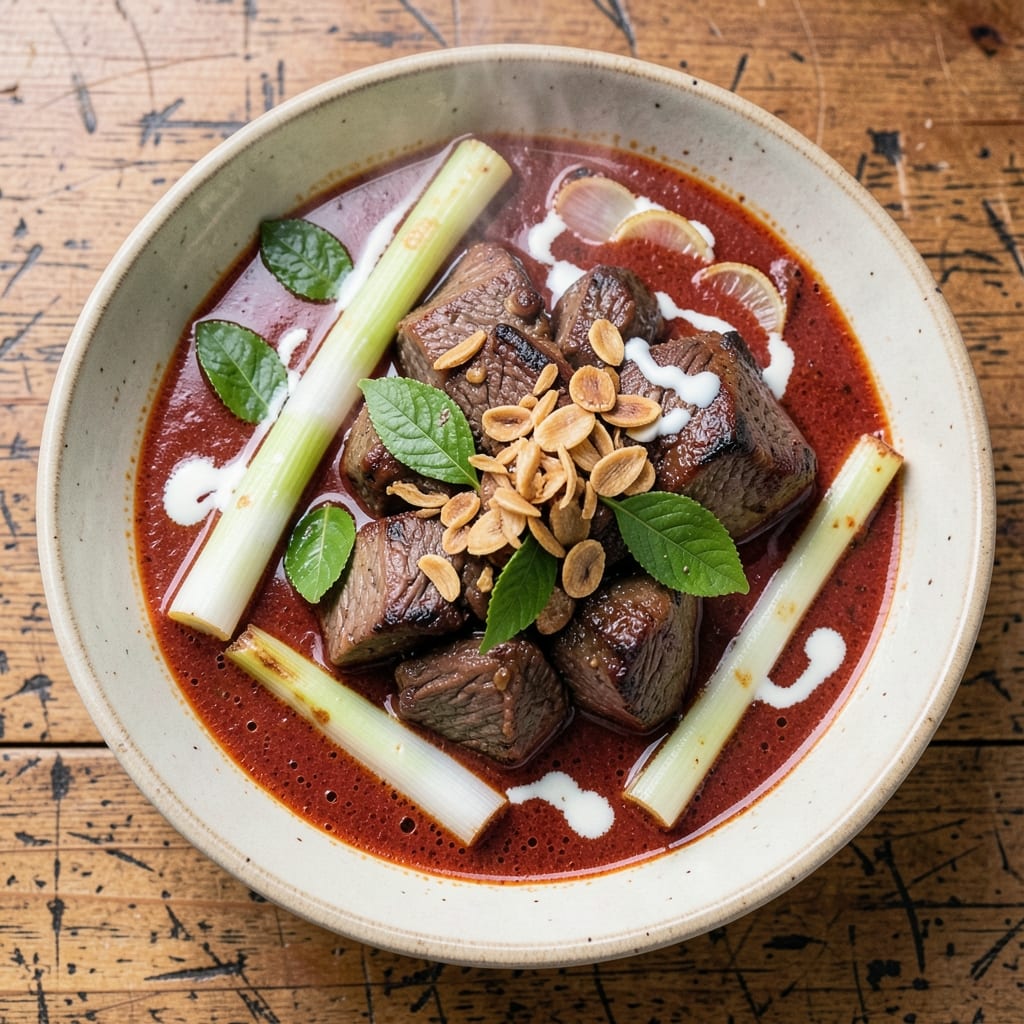
This authentic Thai red beef curry recipe delivers the bold, aromatic flavors of street-side Thai cuisine in your own kitchen. The secret lies in balancing sweet, sour, and spicy notes through a proper red curry paste, coconut milk, and tender beef that melts in your mouth. I've perfected this dish over years of testing, ensuring every spoonful delivers that signature Thai complexity without shortcuts.
The foundation starts with a proper sear on the beef—this builds deep, caramelized flavor that forms the base of the curry. Then comes the red curry paste, simmered with coconut milk until it reaches that perfect velvety texture, neither too thin nor too thick. Traditional aromatics like lemongrass, galangal, and kaffir lime leaves infuse the dish with layers of aroma that transport you straight to Bangkok.
What you'll end up with is a rich, fragrant curry where tender beef pieces swim in a vibrant red sauce that's perfectly balanced—spicy enough to tingle but sweet enough to satisfy. The sauce clings to jasmine rice, creating each bite into a harmonious blend of textures and flavors. This is the kind of dish that transforms a simple weeknight dinner into an authentic Thai feast.
Serve it with steamed jasmine rice, fresh cilantro, and lime wedges for that complete restaurant experience. The best part? Every element works together to create a curry that's as impressive as it is delicious. Let's get cooking—your taste buds are in for a treat.
Ingredients for authentic thai red beef curry
Here's everything you need to bring Bangkok flavors to your kitchen—authentic and bold.
| Ingredient | Amount | Notes |
|---|---|---|
| Beef Chuck Roast 🥩 | 1 ½ lb | Cut into 1-inch cubes |
| Red Curry Paste 🌶️ | 3 tbsp | Authentic Thai brand preferred |
| Coconut Milk 🥥 | 1 can | 13.5 oz full-fat preferred |
| Lemongrass 🌿 | 1 whole | Bruised and cut into 2-inch pieces |
| Galangal 🌿 | 1 piece | About 3 inches, peeled and sliced |
| Kaffir Lime Leaves 🍋 | 4 whole | Bruised for aroma |
| Thai Eggplant 🍆 | 1 whole | About 8 oz, sliced lengthwise |
| Bell Peppers 🌶️ | 1 whole | Red or green, sliced |
| Fish Sauce 💧 | 2 tbsp | Red Boat brand recommended |
| Brown Sugar 🍚 | 1 tbsp | Light or dark preferred |
| Jasmine Rice 🍚 | 1 ½ cups | Uncooked, long-grain |
| Fresh Cilantro 🌿 | ¼ cup | Chopped, for garnish |
| Lime 🍋 | 1 whole | Juiced, for serving |
| Vegetable Oil 🫒 | 2 tbsp | For searing beef |
| Salt 🧂 | 1 tsp | Kosher or sea salt |
The beef is non-negotiable—chuck roast breaks down beautifully into tender pieces. Grab it from the butcher counter if possible, or use pre-cubed from the grocery store's frozen section. Red Boat fish sauce is the gold standard, but any good-quality brand works. For the curry paste, Maesri or Thai Kitchen are my go-tos—avoid the watered-down stuff in tubes. Lemongrass and galangal can be tricky to find; Asian markets usually have them fresh. If you can't find galangal, ginger works in a pinch (though it's not the same).
No kaffir lime leaves? Substitute lime zest plus a bay leaf—it won't be identical, but it's better than skipping. Thai eggplant is the star here, but regular eggplant or zucchini will do if you're in a bind. The bell peppers can be swapped for snap peas or green beans if you prefer. Brown sugar adds depth, but white sugar or coconut sugar work just as well. For the coconut milk, full-fat is a must—light versions won't give you that creamy texture. And trust me, don't skip the bruising on the lemongrass and lime leaves—it releases those amazing aromatics.
Store your curry paste in the fridge for up to 3 months or freeze it for 6 months—it's worth making extra. The beef can be prepped ahead and kept in the fridge for 2 days before cooking. Fresh cilantro stays bright for 5 days if you wrap the stems in damp paper towels and seal in a bag. This curry tastes even better the next day as the flavors meld, so make extra—it reheats beautifully. Serve over jasmine rice for that perfect Thai meal experience.
Why You'll Love This Recipe
- One-Pot Magic: I swear by this recipe—just chop the beef into chunks, toss it in a single pot with the red curry paste, and let the coconut milk do the heavy lifting. No extra dishes, no stress.
- Deep, Balanced Heat: That galangal and lemongrass? They’re the secret weapons here. The curry starts with a fiery kick from the paste, then softens into this creamy, aromatic hug—like a warm blanket with a little spice.
- Crowd-Pleaser Any Day: Serve it over rice for a weeknight dinner, or pile it high on steamed jasmine for guests. (Yes, even the picky eaters in my family ask for seconds.) The beef gets so tender, it practically melts.
- Budget-Friendly Feast: A chunk of chuck roast stretches far, and the curry paste lasts for ages. Make a double batch, freeze half, and you’ve got a restaurant-quality meal without the price tag.
Step-by-step instructions for authentic Thai red beef curry
Here's how to build this rich, aromatic curry with layers of spice and coconut cream.
Prepare the Aromatics and Beef
First, prep all your aromatics while the rice cooks. For the lemongrass, bruise the stalk by pounding it gently with the flat side of a knife to release its oils, then cut into 2-inch pieces. Peel the galangal and slice it into ¼-inch rounds. Bruise the kaffir lime leaves by rolling them between your palms to release their citrusy aroma.
Cut the 1.5 lb beef chuck roast into 1-inch cubes. Heat the 2 tbsp vegetable oil in a large pot or deep skillet over medium-high heat. Add the beef in batches and sear until deeply browned on all sides—about 3-4 minutes per batch. This step develops the deep, meaty flavor that forms the base of your curry. Remove the beef and set aside, leaving the rendered fat in the pot.
Build the Curry Base
Reduce the heat to medium and add the 3 tbsp red curry paste, stirring constantly for 1-2 minutes until it darkens slightly and releases its aromatic oils. This is where the magic happens—the paste's complex spices begin to toast and meld together.
Add the sliced galangal, lemongrass pieces, and bruised kaffir lime leaves to the pot. Stir for another 30 seconds to let these aromatics bloom. Pour in the 2 tbsp fish sauce and 1 tbsp brown sugar, stirring to combine. The fish sauce adds umami depth while the sugar balances the heat and enhances the coconut milk's sweetness later.
Simmer the Curry
Return the seared beef to the pot along with the sliced Thai eggplant and bell peppers. Pour in the 1 can coconut milk, stirring gently to incorporate. Bring the mixture to a gentle simmer, then reduce heat to low. Cover and let it cook for 45-50 minutes, stirring occasionally, until the beef is fork-tender and easily pulls apart.
Here's the thing—don't rush this step. The coconut milk needs time to fully infuse with the spices and beef juices. You'll know it's ready when the curry has thickened slightly and the beef is so tender it nearly falls apart at the touch. If the curry gets too thick before the beef is done, add ¼ cup water to loosen it.
Finish and Serve
Once the beef is perfectly tender, remove the lemongrass pieces and kaffir lime leaves (they've served their purpose). Taste and adjust seasoning if needed—you might want to add a bit more fish sauce for saltiness or brown sugar for balance. Stir in the 1 tsp salt and let the curry sit uncovered for 5 minutes to thicken slightly.
Serve the curry hot over the cooked 1.5 cups jasmine rice, garnished with the 0.25 cup chopped fresh cilantro. Squeeze the juice from the whole lime over each serving to brighten the flavors. The curry should be rich, spicy, and deeply aromatic with tender beef swimming in creamy coconut sauce. This is the kind of dish that tastes even better the next day as the flavors meld further.
Pro Tips For Making Authentic Thai Red Beef Curry
- Bloom the Paste First: Toss your red curry paste into a dry, hot pan for 30 seconds before adding oil—this releases the aromatics and prevents a bitter, raw taste. I used to skip this and wondered why my curry always tasted underdeveloped; now it sings from the first bite.
- Slice Galangal Thin: Galangal’s knobby texture means you’re not slicing—you’re hacking. Use a sharp knife and cut parallel to the root’s ridges, making paper-thin layers. Thick chunks turn to mush and ruin the dish’s bright, citrusy kick.
- Simmer Low and Slow: After adding coconut milk, drop the heat to a bare simmer and let it cook uncovered for 45 minutes. Rushing this step makes the curry greasy; patience lets the flavors meld and the milk thicken naturally.
- Use Two Cans of Milk: Split the coconut milk—add one can to bloom the paste, then reserve the other for later. This prevents curdling when the paste hits the milk, and the second batch keeps the sauce rich without overpowering it. (Yes, it’s extra work, but the result is worth it.)
Storing and reheating this recipe
Refrigerator Storage
Let your curry cool completely before transferring to an airtight container—I use glass Pyrex with tight-sealing lids. Store it in the fridge for up to 4 days, but trust me, it tastes even better the next day as the flavors meld. The coconut milk actually thickens slightly, creating a richer texture. Always keep it covered to prevent absorbing fridge odors, which can ruin the delicate balance of spices. 🥥
Freezer Storage
For longer storage, freeze your curry in quart-sized freezer bags or glass containers, leaving 1 inch of headspace for expansion. It keeps well for 3 months without losing its vibrant color or flavor. When ready to reheat, thaw overnight in the fridge—never microwave from frozen. I like to portion it into individual servings before freezing so I can grab exactly what I need. Label with the date to track freshness. ❄️
Stovetop Reheating
My preferred method is stovetop reheating—it preserves the best texture. Pour the curry into a pot over medium-low heat and add 2-3 tablespoons of water or coconut milk to prevent sticking. Simmer gently for 10-15 minutes, stirring occasionally, until heated through (165°F internal temperature). If it thickens too much, add more liquid. The gentle heat helps restore that creamy, velvety consistency. 🔥
Microwave Reheating
For quick reheating, transfer curry to a microwave-safe dish and cover loosely with a microwave-safe lid or damp paper towel. Heat on 50% power in 1-minute intervals, stirring between each, until hot (165°F). Avoid full power—it can make the coconut milk separate. If the sauce looks too thick, add a splash of water or coconut milk to restore its silky texture. This method works best for single servings. ⏰
Rice Pairing Tips
Always reheat your jasmine rice separately—microwaving it with the curry can make it soggy. Spread the rice on a plate and cover with a damp paper towel, then microwave for 30 seconds. The contrast of warm, fluffy rice with reheated curry makes every bite perfect. For extra authenticity, serve with quick-pickled cucumbers or a side of Thai basil salad to cut through the richness. 🍚
Flavor Refresh
After reheating, give your curry a final boost by adding a splash of fresh lime juice (about 1 tablespoon) and a sprinkle of chopped cilantro. This brightens the flavors and makes it taste almost as good as fresh. If the heat has mellowed, add a pinch of red pepper flakes or a dash of fish sauce to restore balance. The key is to adjust while it's still hot so the flavors meld properly. ✨
Nutrition facts
Frequently asked questions
Why does authentic Thai red curry need galangal if ginger works?
Galangal has a unique citrusy, peppery aroma that's more complex than ginger. While ginger can substitute in a pinch, it lacks that signature Thai flavor profile. For authentic results, use galangal—it's the aromatic backbone of red curry paste. If you must substitute, use equal parts ginger plus a pinch of lime zest for brightness.
Can I make this curry without coconut milk?
Traditionally, no—but you can adapt it! Replace coconut milk with 1 cup heavy cream + ½ cup water for richness, or use 1 cup chicken broth + 2 tbsp cornstarch to thicken. The texture will be lighter, but the spice balance remains. For authenticity, though, coconut milk is essential—it carries the curry's signature creaminess.
How do I adjust the spice level for kids or sensitive eaters?
Start by reducing the curry paste to 1.5 tbsp (half the recipe). After simmering, taste and add 1 tsp brown sugar to balance any residual heat. For extra mildness, stir in 2 tbsp coconut milk at the end. Serve with extra rice to dilute the spice further. The key is to adjust gradually—don't skip the tasting step!
What's the best way to store leftover curry paste?
Store unused paste in an airtight container in the fridge for up to 3 months or freeze for 6 months. For freshness, press plastic wrap directly on the surface before sealing. When reheating paste, warm it gently in a dry pan for 30 seconds to reactivate the spices—never microwave it directly, as it can make the oils separate.
Why does my curry taste too sweet or sour?
Sweetness likely means too much brown sugar—balance it with ½ tsp fish sauce. Sourness usually comes from excess lime or unripe tomatoes. Fix it by adding ½ tsp more brown sugar** to round out the flavors. Always taste as you go! The ideal curry should have all three elements—sweet, sour, and spicy—in perfect harmony.