
Main Courses
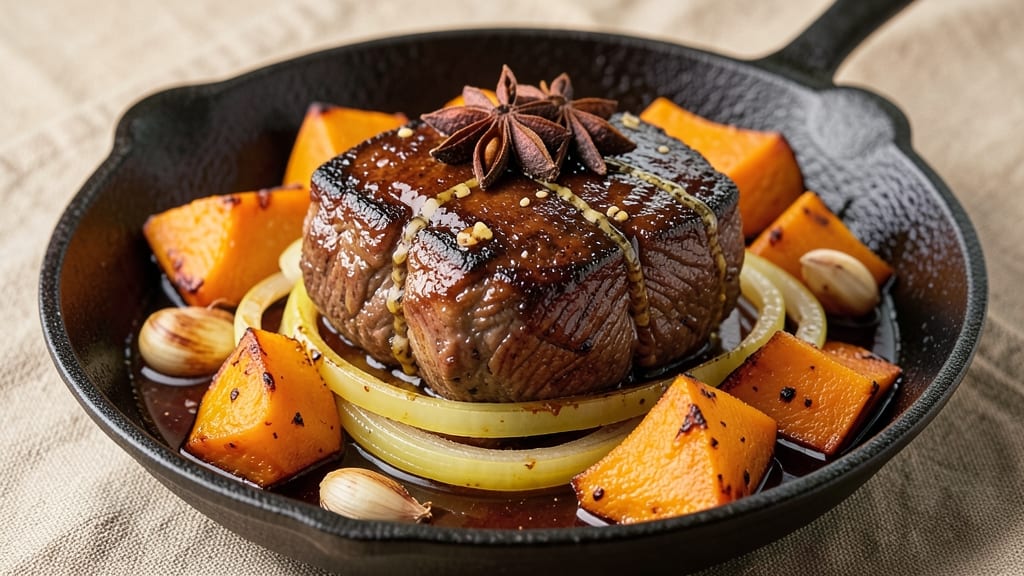
This squash beef recipe transforms tough beef into melt-in-your-mouth tenderness while embracing the natural sweetness of winter squash. The slow-braising process creates a rich, velvety sauce that coats every bite, making this dish perfect for chilly evenings when you crave hearty comfort.
I developed this method after realizing that squash and beef share a natural affinity—both benefit from slow cooking, where flavors deepen and textures become luxurious.
The key to success lies in proper searing and layering flavors through aromatics like garlic, ginger, and star ankyze, which form the aromatic base before the beef and squash join the pot.
This method delivers restaurant-quality results without requiring specialized equipment—just patience and attention to timing. The beef emerges fork-tender while the squash achieves that coveted silky texture that defines perfect braising.
What you'll achieve is a dish that balances rich beef flavors with the natural sweetness of squash, creating a harmonious blend that's both comforting and sophisticated. The sauce thickens beautifully as it simmers, clinging to the beef and squash in a way that makes every bite satisfying.
This recipe serves equally well as a standalone main course or paired with crusty bread to soak up every last drop of that flavorful sauce.
Perfect for meal prep or last-minute entertaining, this squash beef recipe proves that slow cooking can be both impressive and practical. The flavors only improve with time, making it ideal for preparing ahead and reheating when ready to serve.
Let's create this hearty, flavorful masterpiece that will become a staple in your winter repertoire.
Ingredients for squash beef
Just 14 ingredients for deep, velvety comfort that tastes like a hug in a bowl.
| Ingredient | Amount | Notes |
|---|---|---|
| Chuck Roast 🥩 | 2 lb | Cut into 1.5-inch cubes |
| Butternut Squash 🎃 | 2 lb | Peeled, cut into 1-inch cubes |
| Yellow Onion 🧅 | 1 whole | Chopped into half-moons |
| Garlic Cloves 🧄 | 6 cloves | Smashed with side of knife |
| Fresh Ginger 🌿 | 2 tbsp | Grated, packed measurement |
| Star Anise 🌟 | 2 whole | Lightly crushed |
| Beef Broth 💧 | 3 cups | Low-sodium preferred |
| Dry Red Wine 🍷 | 1 cup | Bold variety like Cabernet |
| Tomato Paste 🍅 | 2 tbsp | Squeeze tube preferred |
| Olive Oil 🫒 | 2 tbsp | Extra-virgin for richness |
| Salt 🧂 | 1 ½ tsp | Kosher or sea salt |
| Black Pepper 🌶️ | ½ tsp | Freshly ground preferred |
| Bay Leaves 🌿 | 2 whole | Fresh if available |
| Thyme Leaves 🌿 | 1 tbsp | Fresh or dried |
The chuck roast is your secret weapon here—look for well-marbled cuts at the butcher counter or pre-cut beef section. Costco or Whole Foods usually carry good quality, but the regular grocery store beef works too. For the squash, smaller butternuts (2-3 lbs) are easier to peel and cook evenly. I always grab two—one for this recipe, one to roast later. Fresh ginger is a game-changer (the brown knobby kind from the produce section), but if you've only got the pale stuff, it'll still work. Star anise? Asian markets have it in bulk bins, but most grocery stores carry it near the spices.
No red wine? Substitute extra beef broth—just add 1 tbsp balsamic vinegar for depth. Fresh thyme? Dried works at half the amount, but fresh has that bright aroma. The tomato paste can be the squeeze tube kind (Trader Joe's has great ones) or the canned stuff—just drain it first. Running low on star anise? 1 cinnamon stick gives similar warmth. For the squash, acorn or kabocha work too—they just need slightly more cooking time. The beef broth? Homemade is ideal, but even the bouillon cubes work in a pinch.
This dish tastes even better the next day—make extra and freeze portions for up to 3 months. Store leftovers in the fridge for 5 days, covered with sauce to keep moist. I like to portion it into glass containers for easy reheating. The squash will soften further when reheated, so it's perfect for cold winter days. If you're prepping ahead, braise the beef first, then add the squash later—keeps everything from getting mushy.
Why You'll Love This Recipe
- One-Pan Magic: I swear by this trick—just toss everything in one pot. The chuck roast and squash slow-cook together while I prep the rest of dinner, and the onions caramelize into sweet, jammy pockets without any extra work. (Yes, even on a Tuesday night.)
- Umami Bomb: That ginger and garlic? They’re the secret weapons here. The chuck roast gets tender and rich, while the squash soaks up all the savory depth—like a hug for your taste buds. Honestly, the first bite makes me want to skip dessert.
- Meal Prep MVP: This keeps perfectly for four days in the fridge. I’ll make a big batch on Sunday, and by Wednesday, I’m still pulling out leftovers that taste just as good as day one—great for lunches or a lazy dinner when I’m not in the mood to cook.
- Budget-Friendly Feast: Chuck roast is cheap, squash lasts forever, and you’re not wasting a single scrap. Between us, this feeds six people for under $20, and the flavors are so satisfying, no one will guess it’s a budget dish. My daughter picks out the squash, but still asks for seconds.
Step-by-step instructions for slow-braised squash beef
This rich, silky dish transforms tough cuts into melt-in-your-mouth perfection.
Sear the Chuck Roast for Deep Flavor
Heat a heavy Dutch oven over medium-high heat until hot. Add the 2 tablespoons olive oil and swirl to coat the bottom. Working in batches to avoid crowding, add the 2 lb chuck roast cut into 1.5-inch cubes. Let each piece sear undisturbed for 3-4 minutes until deeply browned on all sides—this creates the flavor foundation.
Here's the thing—don't rush this step. You'll know it's ready when the meat releases easily from the pan and has developed a rich, caramelized crust. Transfer the seared beef to a plate as you work, leaving all the browned bits in the pot. This is pure flavor gold that will dissolve into your braising liquid.
Build the Aromatic Base
In the same Dutch oven, add the 1 whole yellow onion chopped into half-moons and cook for 5-6 minutes until softened and lightly golden. Add the 6 cloves garlic smashed with the side of your knife and the 2 tablespoons fresh ginger (packed measurement) and cook for 1 minute until fragrant—you should smell that pungent, fresh aroma.
Stir in the 2 whole star anise lightly crushed, 2 whole bay leaves, and 1 tablespoon thyme leaves. Pour in the 1 cup dry red wine and scrape up all those delicious browned bits from the bottom with a wooden spoon. Let the wine simmer for 2-3 minutes until reduced by half—this concentrates the flavors beautifully.
Combine and Braise to Tender Perfection
Return the seared beef to the pot. Stir in the 2 tablespoons tomato paste and cook for 1 minute to toast its rich flavor. Pour in the 3 cups beef broth, add the 1.5 teaspoons salt and 0.5 teaspoon black pepper, then stir everything together. Bring to a gentle simmer, then add the 2 lb butternut squash cut into 1-inch cubes.
Here's where the magic happens: cover the pot and transfer to a preheated 325°F oven. Braise for 3-3.5 hours until the beef is fork-tender and pulls apart easily. The squash should be silky soft when pierced with a fork. If the liquid reduces too much before the beef is done, add a splash of water or broth to maintain the proper braising level.
Finish and Rest for Maximum Richness
Once everything is tender, remove the pot from the oven and let it rest uncovered for 10 minutes. This resting period allows the flavors to meld and the juices to redistribute throughout the beef and squash—critical for that melt-in-your-mouth texture.
Taste and adjust seasoning if needed. The squash should be silky and sweet, while the beef should be rich and falling-apart tender. Serve this incredible dish family-style straight from the pot, letting everyone scoop up the delicious braising liquid along with their portions. The combination of tender beef and sweet squash creates a symphony of flavors that's simply irresistible.
Pro Tips For Making Squash Beef
- SEAR THE ROAST FIRST: Chuck roast needs a proper crust to stay juicy, so don’t skip the sear—get that pan screaming hot and let it brown 3-4 minutes per side before anything else touches it. I used to rush this and ended up with dry beef, so crank the heat and give it time.
- PEEL THE GINGER THINLY: Fresh ginger loses its kick when grated too finely, so slice it paper-thin with a sharp knife instead of mincing. This keeps the texture bright and the flavor balanced—no need to overpower the squash with too much heat.
- DON’T CUT THE SQUASH TOO SMALL: Big chunks (2-3 inches) caramelize better and hold their shape, so resist the urge to dice it like a potato. Smaller pieces turn to mush, and you’ll end up with a sauce instead of tender squash.
- USE THE ONION’S BASE: Save the dark, stringy bottom of the onion—it’s packed with flavor and adds depth without extra work. Toss it in with the garlic and ginger for a free, flavorful boost that makes the whole dish taste richer.
Common mistakes when making great squash beef
Overcrowding the Pot
One of the biggest mistakes I see is overcrowding the Dutch oven during searing. When you pack too many beef cubes in at once, they'll steam instead of sear, resulting in pale, flavorless meat.
Work in batches—no more than 2-3 pieces at a time—to give each piece room to develop that crucial caramelized crust. I've learned this the hard way: once, I rushed and ended up with beef that tasted more like boiled meat than seared. 🔥
Skipping the Wine Reduction
The red wine isn't just for flavor—it's for building depth. Many cooks pour it in and immediately add the broth, but letting it reduce by half (2-3 minutes of simmering) concentrates its richness and removes the harsh alcohol notes.
Without this step, your sauce will taste flat and one-dimensional. I always make time for this reduction—it's what transforms good braising liquid into something extraordinary.
Underestimating Cook Time
Patience is key with braising, but I've seen people pull beef out too soon because they're impatient. The chuck roast needs 3-3.5 hours at 325°F to become fork-tender. If you cut into it early and it's still tough, don't just add more time—you'll end up with mushy beef.
Use a meat thermometer: aim for 203°F internal temperature for perfect tenderness. The squash will soften further during resting, so don't worry if it's not perfectly silky when you remove it from the oven.
Ignoring the Resting Phase
After braising, many people skip the 10-minute rest and dive right into serving. This is a huge mistake! Resting allows the juices to redistribute throughout the beef and squash, preventing dry, stringy meat.
I've seen dishes where the beef was fork-tender but pulled apart into dry shreds because it wasn't rested. Trust the process—those 10 minutes make all the difference between good and exceptional results. 💫
Using Low-Quality Ingredients
Don't skimp on the beef or broth. I've used pre-cut chuck roast from the grocery store, but I always check for good marbling—look for fat streaked throughout the meat, not just on the surface.
The same goes for beef broth: low-sodium versions work best because you can control the salt level. Once, I used a bouillon cube broth as a shortcut, and while it worked, the flavor lacked depth. Invest in quality ingredients—they're what elevate this dish from good to restaurant-worthy.
Not Adjusting Liquid Levels
Some recipes call for specific liquid measurements, but braising is forgiving if you monitor the liquid level. If it reduces too quickly, the beef and squash will dry out.
Keep an eye on the pot and add ¼ cup water or broth whenever the liquid level drops below halfway up the beef and squash. I usually check every 30-45 minutes during the braising process.
This simple step prevents tough, dry meat and ensures that silky squash texture we all love.
Nutrition facts
Frequently asked questions
Can I substitute butternut squash with another variety?
Acorn or kabocha squash work beautifully—they just need 10-15 minutes longer cooking time to reach that perfect silky texture. Avoid delicate varieties like spaghetti squash, as their texture won't hold up to braising. The key is choosing a firm, sweet winter squash that can withstand slow cooking.
What's the best cut of beef for this recipe?
Chuck roast is ideal because its marbling and connective tissue break down beautifully during braising. For a leaner option, try beef short ribs or even well-marbled flank steak cut into chunks. Avoid tender cuts like sirloin—they'll turn tough if cooked too long. Look for "USDA Choice" or better for maximum flavor.
Can I make this recipe in a slow cooker?
Yes! Transfer the seared beef, aromatics, and braising liquid to a 6-quart slow cooker and cook on low for 7-8 hours or high for 4-5 hours. The squash will absorb more liquid, so you may need to add ½ cup broth after 3 hours. The texture will be slightly softer but still delicious.
How do I prevent the beef from drying out?
Never let the liquid reduce completely—keep it at least halfway up the beef and squash. Check every 30-45 minutes and add ¼ cup water or broth as needed. The Dutch oven's lid should stay slightly ajar if steam builds up too quickly, which can turn the beef tough.
What are the best sides to serve with this dish?
Crusty bread is a must for soaking up the rich sauce, but you can also serve it with mashed potatoes, wild rice pilaf, or roasted Brussels sprouts. For a lighter option, try a simple green salad with balsamic dressing to balance the richness. The sweetness of the squash pairs beautifully with tangy elements.