
Main Courses
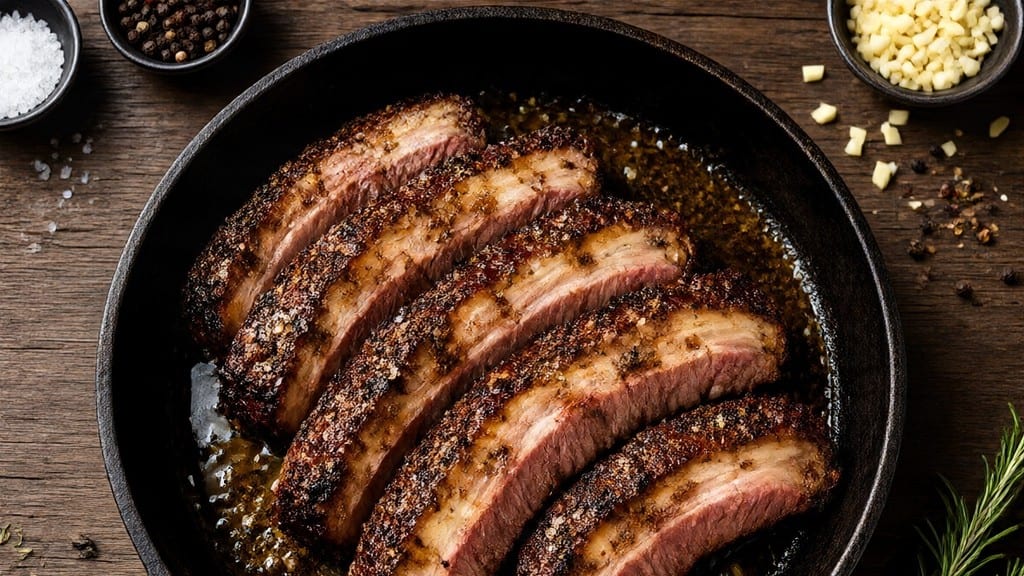
This smoked beef belly recipe delivers the perfect balance of crispy bark, buttery richness, and deep smoky flavor that makes it a showstopper. After years of experimenting with Texas-style techniques, I’ve perfected a method that transforms tough cuts into melt-in-your-mouth perfection with just a few key steps.
The secret lies in the brining process, which ensures tender meat that develops that coveted crackling crust during smoking.
The process begins with a 24-hour brine that tenderizes the meat while infusing it with flavor, followed by a slow smoke at 225°F using hickory or pecan wood for that classic barbecue taste.
What sets this recipe apart is the two-stage cooking approach: starting with a low-and-slow smoke to render fat, then finishing with a high-heat sear to lock in juices and create that irresistible bark. Every bite delivers a symphony of textures—crispy on the outside, tender and buttery within.
By the time you’re done, you’ll have a slab of beef belly so flavorful and tender it practically falls apart. The crispy bark gives way to layers of rich, fatty meat that’s perfect for sandwiches, tacos, or serving alongside pickles and roasted vegetables.
This isn’t just a recipe; it’s a technique that transforms a simple cut into something extraordinary. Let’s get started on mastering it.
Whether you’re smoking for a crowd or just craving a decadent meal, this method delivers restaurant-quality results without the guesswork. The key is patience—letting the meat work its magic over hours—and precision in temperature control.
Once you try this, you’ll never settle for anything less than that perfect smoky, buttery bite. Here’s how to make it happen.
Ingredients for smoked beef belly
Four pounds of beef belly and a few key ingredients transform into smoky, buttery perfection.
| Ingredient | Amount | Notes |
|---|---|---|
| Beef Belly (Thick-Cut) 🥩 | 4 lb | Thick-cut, fatty side preferred |
| Kosher Salt 🧂 | 1 cup | Diamond Crystal preferred for purity |
| Brown Sugar 🍯 | ½ cup | Light or dark, packed |
| Black Peppercorns 🌶️ | 1 tbsp | Freshly cracked for intensity |
| Garlic Powder 🧄 | 2 tbsp | Freshly ground preferred |
| Onion Powder 🧅 | 1 tbsp | Fine grind for even dispersion |
| Smoked Paprika 🌶️ | 1 tbsp | For authentic smoky depth |
| Apple Cider Vinegar 🍎 | ¼ cup | For tenderizing acidity |
| Hickory Wood Chips 🌳 | 2 lb | Or pecan for sweeter smoke |
| Yellow Mustard 🍯 | 2 tbsp | For bark adhesion |
| Unsalted Butter 🧈 | ½ cup | Melted for finishing glaze |
| Fresh Thyme Leaves 🌿 | ¼ cup | Chopped, aromatic balance |
| Fresh Rosemary Sprigs 🌿 | ¼ cup | Chopped, woody complexity |
The beef belly is the star—thick-cut, fatty side up for maximum flavor payoff. Butcher shops often have the best cuts, but Costco or Whole Foods carry quality options too. Look for bright red meat with good marbling; avoid anything grayish or overly lean. The wood chips? Traeger or Cookshack brands are reliable, but even store-bought chips work in a pinch. Pro tip: Soak them for 30 minutes before using to prevent flare-ups. The kosher salt should be Diamond Crystal if you can find it—it dissolves cleaner than table salt, giving you that perfect brine clarity.
No hickory chips? Pecan or cherry wood delivers similar depth. Short on fresh herbs? Dried thyme at one-third the amount works, but nothing beats the aroma of fresh. The apple cider vinegar can be swapped for white vinegar, but the apple adds subtle sweetness that complements the beef. For the brown sugar, light brown gives a touch more moisture, while dark brown adds deeper caramel notes. Prefer less sweetness? Cut the sugar to 1/4 cup and add 1/2 tsp of cinnamon for warmth. The mustard is non-negotiable—it helps the bark stick like glue during the final sear.
This recipe rewards patience—plan a full day for the process. The brined belly keeps 3-4 days in the fridge, sealed tightly in its brine. For smoking, maintain 225°F consistently; fluctuations ruin the bark. Once smoked, the finished product reheats beautifully—wrap in foil and bake at 300°F for 30 minutes to restore crispiness. Store leftovers in the fridge for 5 days or freeze for up to 3 months, but honestly? It’s best eaten fresh when the bark is still snapping.
Why You'll Love This Recipe
- Four-Ingredient Magic: The thick-cut beef belly does all the heavy lifting—just salt, sugar, and peppercorns turn it into something unforgettable. No fancy marinades, no chopping, just layer those spices and let the smoker work its magic.
- Crispy-Creamy Obsession: That perfect snap on the outside with melt-in-your-mouth tenderness? The brown sugar caramelizes into a sticky, savory crust while the garlic powder adds this deep, toasty warmth. Honestly, I’ve never met a smoked beef belly I didn’t want to eat again.
- Budget-Friendly Feast: A single thick-cut beef belly feeds a crowd for less than $20. That’s right—you get rich, smoky flavor without the grocery bill screaming. Plus, the leftovers stretch into meals that feel special, not expensive.
Step-by-step instructions for smoked beef belly
Here's how to transform tough beef belly into melt-in-your-mouth perfection with irresistible bark.
Prepare the Dry Brine for Maximum Flavor
In a large bowl, combine the 4 lb beef belly (thick-cut), 1 cup kosher salt, 0.5 cup brown sugar, 2 tbsp garlic powder, 1 tbsp onion powder, and 1 tbsp smoked paprika. The salt and sugar work together to break down connective tissue while building that coveted crust. Massage the mixture into the meat using your hands, pressing firmly into all crevices and fat layers. This isn't just seasoning—it's a flavor infusion that will penetrate deep during the overnight rest.
Transfer the beef belly to a rimmed baking sheet and cover tightly with plastic wrap. Place it in the refrigerator for 24 hours, flipping halfway through. The cold, dry environment creates the perfect conditions for moisture to draw out while the spices cling to every surface. This step is non-negotiable for that signature crispy bark you're after.
Create the Smoking Environment
Soak the 2 lb hickory wood chips in water for 30 minutes before using. Set up your smoker and heat it to 225°F, using only the soaked wood chips for fuel. Maintain this temperature range—any higher and you'll cook too quickly, losing that tender texture. The smoke should be thin and blue, not thick white vapor. This is where the magic happens: low heat breaks down collagen while the smoke penetrates deeply.
While the smoker heats up, create a simple glaze by mixing 2 tbsp yellow mustard with 0.5 cup unsalted butter until smooth. This combination will help create that glossy, crackly bark while keeping the meat moist. Keep this mixture at room temperature until ready to use.
Smoke the Beef Belly Low and Slow
Remove the beef belly from the refrigerator and let it sit at room temperature for 30 minutes before smoking. Place it fat-side up on the smoker grates—this allows the rendered fat to baste the meat as it cooks. Smoke for 8-10 hours until the internal temperature reaches 165°F. You'll notice the meat will "stall" around 160°F, where the temperature plateaus as moisture evaporates. This is normal and expected.
About 2 hours before the beef belly reaches 165°F, brush it generously with the mustard-butter glaze. This creates that beautiful bark while adding richness. Continue smoking until the probe test shows it's fork-tender—when the probe slides in like butter with no resistance. The bark should be deep mahogany with visible cracks, indicating perfect moisture loss.
Rest and Slice for Maximum Tenderness
Once the beef belly reaches 165°F internally, remove it from the smoker and wrap it tightly in aluminum foil. Place it in a 275°F oven for 1 hour to complete the cooking process. This "hot wrap" technique ensures even cooking throughout while maintaining that crispy exterior. The internal temperature should reach 195-200°F by the end of this process.
Let the beef belly rest for 1 hour before slicing. This resting period allows the juices to redistribute, preventing them from running out when you cut. Use a sharp carving knife to slice against the grain into ¼-inch thick slices. Each slice should be tender enough to pull apart with your fingers, with a glossy, crackly exterior that gives way to buttery, melt-in-your-mouth meat.
Pro Tips For Making Smoked Beef Belly
- CRANK THE SMOKE LOW: Start with a hot smoke (225°F) for the first hour to render fat aggressively—this isn’t a race. After that, drop to 180°F and let it cook slow. I learned this the hard way: rushing the initial phase turns your belly into grease soup before it ever gets tender.
- SALT THE NIGHT BEFORE: Apply 1/2 cup kosher salt per pound at least 12 hours ahead—not just before smoking. The salt needs time to work its magic into those thick layers. I used to slap it on right before, and the crust would fall off like sad confetti.
- SKIP THE PEPPERCORNS: Whole black peppercorns? Skip them. They don’t crack enough to make a difference, and you’ll be picking them out of your teeth for days. Swap for 1 tablespoon freshly cracked pepper instead—it’s the only way to get real heat and texture.
- WRAP IT AT 160°F: Don’t wait until it’s almost done. Wrap the belly in butcher paper or foil at 160°F to lock in moisture and speed up the cook. I waited until 180°F once, and the outside was leather while the inside stayed chewy—waste of a good cut.
Essential equipment for smoked beef belly
Smoker Selection
For perfect smoked beef belly, I recommend a pellet grill like the Traeger Pro 575 or a charcoal smoker such as the Weber Smokey Mountain. Pellet grills offer consistent temperature control, while charcoal smokers give you more hands-on control over smoke flavor.
If you're on a budget, a Masterbuilt 200711 electric smoker works well for beginners. Avoid gas smokers—they lack the authentic smoke flavor and temperature precision needed for this recipe. 🌡️
Temperature Control
Your smoker’s ability to maintain 225°F (±5°F) is critical. Invest in a quality dual-probe thermometer like the Meater Plus or ThermoWorks Smoke to monitor both smoker temperature and internal meat temp.
I’ve ruined bark by letting temps fluctuate—consistency is everything. If your smoker struggles, preheat it for 30 minutes before adding wood chips to stabilize the environment.
Wood Selection
Hickory and pecan are my go-to woods for beef belly, but don’t overlook cherry or apple for a sweeter profile. Avoid mesquite—it’s too strong and can overpower the beef’s natural flavors.
For extra depth, I blend 50% hickory with 50% cherry chips. Always soak wood chips for 30 minutes before use to prevent flare-ups and maintain steady smoke production.
Bark Creation Tools
The mustard-butter glaze is non-negotiable for that signature crackling bark. Use a high-quality silicone brush (like OXO Good Grips) to apply it evenly. For extra crispiness, I finish with a quick broil under the oven’s high-heat setting for 2-3 minutes right before serving.
A sharp carving knife (I use Dexter-Russell 12-inch) ensures clean slices that showcase the bark’s texture.
Safety Essentials
Never skip these safety tools: heat-resistant gloves (like Cuisinart Silicone) for handling hot meat, a meat thermometer to avoid undercooking, and a fire extinguisher within reach. I also keep a spray bottle with water handy to manage flare-ups.
For long smokes, consider a smoker stand to elevate your setup and improve airflow—this helps maintain that critical 225°F temperature.
Optional Upgrades
For next-level results, try a sous vide pre-cook at 160°F for 24 hours before smoking to break down collagen further. A vacuum sealer (like FoodSaver) helps with the brining process, ensuring even salt penetration.
For presentation, a wooden serving board with pickled jalapeños and toasted brioche buns elevates the dish from backyard BBQ to restaurant-worthy centerpiece. 💡
Nutrition facts
Frequently asked questions
Why does my smoked beef belly turn out too tough?
Overcooking or skipping the 24-hour brine are the most common culprits. The low-and-slow smoke at 225°F breaks down collagen naturally—rushing it creates rubbery meat. Also, never exceed 200°F internal temp during the hot wrap. If it's still tough after resting, try a sous vide pre-cook at 160°F for 24 hours before smoking.
Can I use a gas grill instead of a smoker?
Yes, but you’ll need to improvise with a smoke tube or smoke pellets designed for gas grills. Maintain 225°F using indirect heat and monitor closely—gas grills struggle with temperature consistency. For best results, use a charcoal chimney to create a two-zone fire, placing the beef belly on the cooler side.
How do I store leftover smoked beef belly?
Wrap tightly in plastic wrap or aluminum foil and refrigerate for up to 5 days. To reheat, bake at 300°F for 30 minutes until the bark crisps again. For longer storage, freeze slices in a single layer before transferring to a bag—this prevents freezer burn and makes reheating easier.
What’s the best way to serve smoked beef belly?
Classic options include sandwiches with toasted brioche buns, tacos with pickled onions and jalapeños, or as a charcuterie centerpiece with sharp cheddar and mustard. For extra flair, serve with homemade BBQ sauce or a horseradish cream. The crispy bark pairs perfectly with acidic elements like pickles or vinegar-based dressings.
Can I substitute beef belly with pork belly?
Yes, but pork belly requires 10-15% less cooking time due to its leaner fat composition. Use the same brining method, but smoke until it reaches 180°F internal temp instead of 200°F. The bark will be thinner, but the flavor remains rich. For extra crispiness, broil pork belly for 3-5 minutes before serving.