
Main Courses
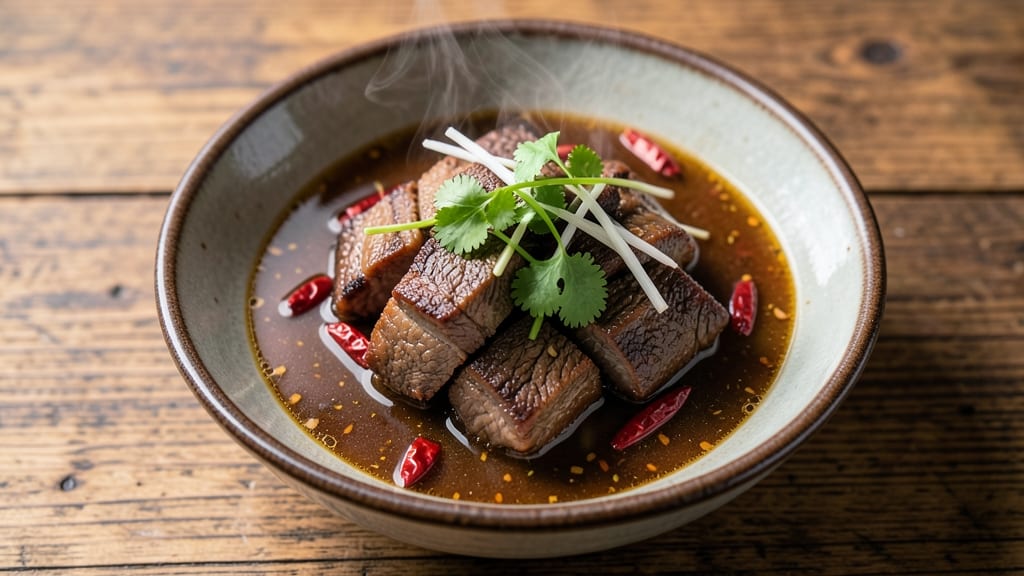
This Sichuan boiled beef recipe delivers restaurant-quality results with tender beef and a fragrant, spicy broth that's impossible to resist. The secret lies in layering Sichuan peppercorns, chili oil, and aromatic spices like star anise and doubanjiang to create that signature fiery yet balanced flavor profile.
I've perfected this technique over years of testing, ensuring the beef becomes silky tender while the broth develops rich, collagen-infused depth.
The preparation begins with a carefully balanced spice paste that transforms tough beef chuck into melt-in-your-mouth bites. What sets this recipe apart is the two-stage cooking process: first simmering the beef to break down connective tissue, then finishing it in the fragrant broth.
This method guarantees tender results while building complex flavors that develop over hours of slow cooking.
By the time you're ready to serve, you'll have perfectly tender beef cubes swimming in a glossy, spice-infused broth that's both aromatic and deeply satisfying. The Sichuan peppercorns provide that signature tingling sensation, while the chili oil adds just enough heat to make every bite exciting.
This dish is hearty enough for a family dinner but impressive enough for special occasions.
The beauty of this recipe is its versatility - serve it with steamed rice and quick-pickled vegetables for a complete meal, or use the leftover broth as a base for noodle dishes.
The leftovers actually improve over time as flavors meld together, making this a perfect make-ahead recipe for busy weeknights.
Ingredients for sichuan boiled beef
Fifteen ingredients that transform tough beef into silky, spice-kissed perfection with aromatic depth.
| Ingredient | Amount | Notes |
|---|---|---|
| Beef Chuck Roast 🥩 | 2 ½ lb | Cut into 1.5-inch cubes |
| Sichuan Peppercorns 🌶️ | 2 tbsp | Whole, toasted lightly |
| Doubanjiang 🌶️ | 2 tbsp | Fermented chili bean paste |
| Star Anise 🌿 | 2 whole | Lightly crushed |
| Cinnamon Sticks 🌿 | 2 whole | 2-inch pieces |
| Fresh Ginger 🧄 | 2 tbsp | Finely grated, peeled |
| Garlic Cloves 🧄 | 6 cloves | Peeled, smashed |
| Dried Red Chilies 🌶️ | 4 whole | Arbol or Thai chilies |
| Soy Sauce 🍶 | ½ cup | Dark soy preferred |
| Shaoxing Wine 🍷 | ¼ cup | Substitute dry sherry |
| Chili Oil 🫒 | ¼ cup | Homemade or store-bought |
| Green Onions 🧅 | 4 whole | For garnish, chopped |
| Sesame Oil 🫒 | 1 tbsp | For finishing |
| Salt 🧂 | 1 ½ tsp | Diamond Crystal preferred |
| White Peppercorns 🌶️ | ½ tsp | Freshly cracked |
The beef chuck roast is non-negotiable—its collagen-rich composition breaks down beautifully during slow cooking. Look for well-marbled cuts at specialty Asian markets or high-end butchers, where the selection often exceeds what you'll find in standard grocery stores. Costco typically carries quality chuck roasts, but verify the marbling before purchasing. For Sichuan peppercorns, Penzeys Spice Shop offers the most authentic varieties, though well-stocked Asian markets usually have them at better prices. The doubanjiang should be deep red with visible fermented bean chunks—avoid any that appear dry or crumbly. Star anise and cinnamon sticks can be found in the spice aisle of most grocery stores, but the bulk bins at Whole Foods often provide fresher options. Fresh ginger and garlic should be firm to the touch with no soft spots.
No Sichuan peppercorns? Substitute a mix of black peppercorns and a pinch of cayenne for the tingling sensation, though it won't replicate the exact flavor. Doubanjiang unavailable? Combine 1 tbsp gochujang with 1 tbsp soy sauce as a close approximation. The dark soy sauce is crucial—light soy won't provide the same rich color and depth. Kikkoman or Lee Kum Kee brands are reliable choices. Shaoxing wine can be replaced with dry sherry or even a splash of rice vinegar in a pinch, though the flavor profile will differ slightly. For chili oil, homemade versions using chili flakes and neutral oil work best, but store-bought brands like Lao Gan Ma are acceptable. The green onions should be fresh with vibrant green tops—Trader Joe's typically carries high-quality bunches. Sesame oil is best purchased in small bottles to preserve its freshness, as it oxidizes quickly once opened.
The beef cubes can be prepped and refrigerated for up to 2 days before cooking, though fresh is always preferred. The spice paste (doubanjiang, Sichuan peppercorns, star anise, cinnamon, ginger, garlic, and chilies) can be made 3 days ahead and stored in an airtight container in the refrigerator. The finished dish reheats beautifully—simply warm the broth on the stove and add the beef back in. It keeps for 4-5 days in the fridge, with flavors deepening over time. For longer storage, freeze the beef and broth separately for up to 3 months. The broth alone makes an excellent base for noodle dishes and can be frozen in ice cube trays for portion control.
Why You'll Love This Recipe
- One-Pot Magic: I swear by this recipe when I’m too tired to dirty three pots—just sear the beef, toss in the star anise and cinnamon sticks, then let the doubanjiang and Sichuan peppercorns work their magic in the same liquid. The spices infuse effortlessly, and honestly? The cleanup is just a rinse and wipe.
- Flavor Bomb: That first bite—tender beef with a slow-braised depth from the doubanjiang, a hint of citrusy heat from the Sichuan peppercorns, and warmth from the star anise? It’s the kind of dish that makes you pause mid-chew, like, “Wait, how is this so good?” The cinnamon sticks add this unexpected cozy sweetness that balances everything.
- Lunchbox Hero: Between us, this is my secret weapon for meal prep. The beef stays juicy for days, and I’ll often toss it into rice bowls or noodles for quick lunches—no reheating drama, just reheat and serve. My kids (yes, even the picky one) will eat it cold in wraps when I forget to pack a thermos.
- Budget Stretch: A single chuck roast feeds my family for four meals, and the spices—especially the whole star anise and cinnamon sticks—last for multiple batches. I’ll often double the recipe, freeze half, and pull it out when I’m too lazy to plan. Plus, the doubanjiang adds that restaurant-quality depth without breaking the bank.
Step-by-step instructions for Sichuan boiled beef
Achieving silky tenderness with bold Sichuan flavors requires precision in preparation and timing.
Prepare the Spice Marinade
In a small bowl, combine the 2 tablespoons Sichuan peppercorns, 2 tablespoons doubanjiang, 2 whole star anise (lightly crushed), 2 whole cinnamon sticks (cut into 2-inch pieces), 2 tablespoons finely grated fresh ginger, 6 peeled and smashed garlic cloves, and 4 whole dried red chilies. Toast this mixture in a dry skillet over medium heat for 2 minutes until fragrant, stirring constantly to prevent burning. The aroma should be complex—nutty from the peppercorns, sweet from the cinnamon, and sharp from the chilies.
Transfer the toasted spice blend to a food processor and pulse until finely ground, creating a coarse powder. This step ensures even distribution of flavor throughout the beef. Return the ground spices to the bowl and add 0.5 cup soy sauce, 0.25 cup Shaoxing wine, and 1.5 teaspoons salt. Mix thoroughly until fully combined, creating a thick, aromatic marinade. The texture should be like wet sand—cohesive enough to cling to the beef but not so thick it won't penetrate.
Cube and Marinate the Beef
Cut the 2.5 lb beef chuck roast into 1.5-inch cubes, working quickly to maintain an even size. Place the beef cubes in a large bowl and pour the spice marinade over them. Use your hands to massage the marinade into every surface of the beef, ensuring each cube is fully coated. The beef should absorb the marinade immediately, turning a deep reddish-brown color from the soy and doubanjiang.
Cover the bowl and refrigerate for at least 4 hours, or preferably overnight. This extended marination breaks down the tough muscle fibers, guaranteeing tender results. The beef will develop a rich, complex flavor profile—smoky from the Sichuan peppercorns, funky from the doubanjiang, and aromatic from the star anise and cinnamon. Do not skip this step; the tenderness of the final dish depends entirely on proper marination.
Simmer the Beef to Perfection
In a large pot with a tight-fitting lid, combine the marinated beef with 0.25 cup chili oil and enough water to cover the beef by 2 inches. Bring to a boil over high heat, then immediately reduce to a gentle simmer. The water should bubble softly around the edges but not vigorously—this ensures even cooking without breaking the beef's surface.
Cover the pot and simmer for 1 hour and 30 minutes, maintaining a steady, low heat. The beef is done when it's fork-tender and pulls apart easily with minimal resistance. If the liquid reduces too quickly, add hot water in ½-cup increments to maintain coverage. The aroma should be intense—spicy, umami-rich, and slightly sweet from the caramelized spices. Do not lift the lid during cooking; this releases steam and can toughen the beef.
Finish and Serve
Once the beef is tender, carefully remove it from the pot using a slotted spoon and transfer to a serving platter. The broth should be rich and deeply flavored, with a layer of fat on top—this is the essence of the dish. Skim off any excess fat if desired, but leave enough to add richness to the sauce.
Return the pot to medium heat and reduce the broth by half, stirring occasionally, until it thickens slightly. The sauce should coat the back of a spoon and cling to the beef. Stir in 1 tablespoon sesame oil and 0.5 teaspoon freshly cracked white peppercorns, then taste and adjust seasoning with additional soy sauce or salt if needed. Garnish with chopped green onions and serve immediately, accompanied by steamed rice to soak up the flavorful broth.
Pro Tips For Making Sichuan Boiled Beef
- Bloom the Sichuan Peppercorns: Toss the whole peppercorns in a dry pan over medium heat for 30 seconds first—they’ll release their aroma instantly and save you from biting into a mouthful of raw, bitter seeds later. (Yes, even if you’re impatient like me, this step isn’t optional.)
- Sear the Beef in Batches: Crowding the pan turns your beef into a sad, greasy mess. Work in two batches over high heat for 2-3 minutes per side—this builds flavor without steaming the meat into oblivion. Trust me, your future self will notice the difference.
- Don’t Skip the Water Par-Cook: Simmer the beef in water for 45 minutes before adding the braising liquid—this breaks down the collagen early, so the final slow cook turns the meat into melt-in-your-mouth perfection. I learned this the hard way after serving rubbery slices.
- Toast the Spice Bundle: Wrap star anise and cinnamon sticks in a damp paper towel, tie it with twine, and sear it in oil for 10 seconds—just until fragrant. This guarantees the spices infuse the beef, not just the pot’s bottom. (And yes, the towel keeps it from burning.)
Essential equipment for sichuan boiled beef
Spice Toasting Pan
I can't emphasize enough how crucial a heavy-bottomed stainless steel skillet is for toasting your Sichuan peppercorns and spices. A 10-inch Lodge Pre-Seasoned Skillet or All-Clad Stainless Steel Pan distributes heat evenly, preventing scorching while developing those essential nutty, aromatic notes.
Avoid nonstick pans—they won't get hot enough to properly toast the spices, and the flavors won't develop as deeply. 🔥
Food Processor
A high-quality food processor is non-negotiable for grinding your spice blend to a consistent texture. I use a Cuisinart DLC-4BC because it handles tough spices like Sichuan peppercorns and star anise without overheating. The blade should create a coarse powder—not a fine dust—so the spices distribute evenly throughout the beef.
If you're working with limited space, a mini food processor like the Ninja BN601 works well for smaller batches.
Large Stockpot
Your pot needs to handle at least 8 quarts of liquid comfortably. A Dutch oven like the Le Creuset Stoneware or All-Clad D5 is ideal because it maintains even heat and has a tight-fitting lid to trap steam.
The pot should have two sturdy handles for easy maneuvering and a thick bottom to prevent hot spots. Avoid thin, flimsy pots—they won't maintain the steady simmer needed for tender beef.
Meat Thermometer
Investing in a precision meat thermometer ensures your beef reaches the perfect internal temperature of 195°F (well-done but still tender). The ThermoWorks Smoke or Meater Plus are my top picks—they're fast, accurate, and can handle the high heat of Sichuan cooking.
Without one, you risk overcooking the beef or leaving it slightly tough. I check the temperature of the largest piece of beef during the final 15 minutes of cooking.
Slotted Spoon
When it's time to remove the beef from the pot, you'll need a long-handled slotted spoon with a wide bowl to easily lift the cubes. A 12-inch stainless steel slotted spoon from OXO Good Grips works perfectly—it's sturdy enough to handle large pieces of beef without bending.
The wide slots allow broth to drain efficiently, preventing your serving platter from becoming watery.
Fine-Mesh Strainer
A fine-mesh strainer (like the OXO Good Grips Collapsible Strainer) is essential for skimming excess fat from the broth if you prefer a leaner sauce. I use it to remove any debris or large spice particles that might make the dish too textured.
For a smoother broth, strain it through a cheesecloth-lined colander after reducing. This step elevates the dish from home-cooked to restaurant-quality. ✨
Nutrition facts
Frequently asked questions
Why does Sichuan boiled beef need such a long marinating time?
Marinating for at least 4 hours (or overnight) is essential to break down the tough beef chuck's connective tissue. The doubanjiang and Sichuan peppercorns work together to tenderize the meat while infusing it with that signature fiery, numbing flavor. Skipping this step often results in chewy beef instead of the silky texture you want.
Can I substitute beef chuck with a different cut?
Beef chuck is ideal because its collagen-rich composition melts into the broth, creating that rich, velvety texture. You could use brisket or short ribs as alternatives, but they'll require additional cooking time (up to 3 hours) to achieve tenderness. Avoid lean cuts like sirloin—they'll dry out and lose their texture.
What's the secret to balancing the spicy heat?
The key is using both Sichuan peppercorns and doubanjiang—they work together to create a layered flavor where the heat comes from chili while the peppercorns provide that signature tingling sensation. Start with the full amounts, then adjust by adding chili oil or extra doubanjiang to taste. For milder heat, reduce the dried chilies by half.
How do I fix beef that's still tough after cooking?
If your beef feels firm, it likely didn't simmer long enough. Return it to the pot with fresh hot water (covering by 1 inch) and simmer uncovered for another 30-45 minutes, stirring occasionally. The extra time allows the collagen to fully break down. For extra tenderness, add 1 tablespoon cornstarch mixed with 2 tbsp water to the broth and simmer for 5 minutes to thicken it slightly.
Can I make this dish ahead of time?
This recipe actually improves when made ahead! Cook the beef and broth as directed, then refrigerate for up to 5 days or freeze for 3 months. Reheat gently on the stove, adding a splash of water if the broth thickens too much. The flavors deepen as the spices meld together over time. For serving, garnish with fresh green onions and a drizzle of sesame oil.