
Main Courses
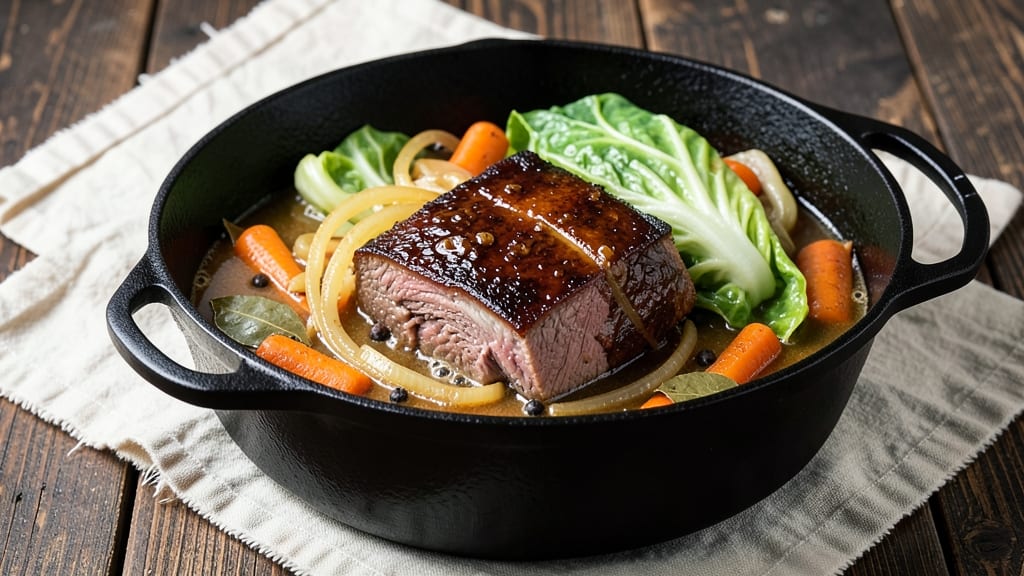
This old fashioned corned beef and cabbage recipe delivers the hearty, comforting flavors of a classic Irish-American meal, where perfectly tender meat meets buttery, caramelized cabbage.
The slow-simmering process transforms tough cuts into melt-in-your-mouth perfection, while the cabbage absorbs rich, savory juices for a dish that feels like a warm hug on a chilly day.
I’ve refined this method over years, balancing tradition with practical shortcuts—like using pre-cooked brisket—to ensure your table gets this showstopper without sacrificing authenticity.
The secret lies in the slow cooking, which breaks down the meat’s connective tissue while infusing the cabbage with deep, smoky flavors.
You’ll start with a simple brine (or skip it if using pre-cured corned beef) and let everything simmer together until the meat is fork-tender and the cabbage is just shy of falling apart.
This isn’t just a side dish—it’s a centerpiece that pairs beautifully with creamy mashed potatoes, buttery carrots, or even a crisp green salad to balance the richness.
By the time you serve this dish, your kitchen will smell like a cozy pub, and every bite will reward you with layers of flavor: tender beef, slightly sweet cabbage, and a broth so rich it deserves its own bowl.
The best part? It’s a foolproof method that works whether you’re feeding a crowd or treating yourself to a Sunday supper. Let’s get started on a recipe that’s as much about tradition as it is about comfort.
For those who love it extra hearty, I’ll share tips on crisping the cabbage edges for texture or swapping in sauerkraut for a tangy twist. And don’t forget the drinks—an Irish stout or a cup of herbal tea cuts through the richness perfectly.
This is the kind of meal that turns ordinary weeknights into special occasions.
Ingredients for old fashioned corned beef and cabbage
Six hearty ingredients, slow-simmered to perfection for a classic Irish-American meal.
| Ingredient | Amount | Notes |
|---|---|---|
| Corned Beef Brisket 🥩 | 4 lb | Pre-cured or raw, bone-in preferred |
| Green Cabbage 🥬 | 2 lb | Green or purple, cut into wedges |
| Yellow Onions 🧅 | 2 whole | Medium, peeled and halved |
| Carrots 🥕 | 4 whole | Medium, peeled and halved |
| Bay Leaves 🍃 | 2 whole | Dried, for depth of flavor |
| Black Peppercorns 🌶️ | 1 tbsp | Crushed, freshly ground preferred |
| Salt 🧂 | 1 tsp | Kosher or sea salt, for seasoning |
| Water 💧 | 8 cups | Enough to cover meat |
| Beef Broth 🍲 | 2 cups | Low-sodium preferred |
| Butter 🧈 | 4 tbsp | Unsalted, for cabbage |
| Fresh Parsley 🌿 | ¼ cup | Chopped, for garnish |
| Garlic Cloves 🧄 | 4 cloves | Minced, for aroma |
| Mustard Seeds 🌶️ | 1 tsp | Optional, for subtle kick |
The corned beef is the star, so choose wisely. Pre-cured brisket is a game-changer—it’s already seasoned and ready to cook, cutting prep time in half. If you’re using raw, grab a 4-pound bone-in brisket from the butcher section; the bones add depth to the broth. Costco or Whole Foods often carry high-quality pre-cured options, but check the spice blend—look for cloves, peppercorns, and bay leaves already in the mix. For cabbage, green or purple varieties work, but avoid wilted heads. Trader Joe’s has great pre-cut wedges if you’re short on time. The onions and carrots should be firm and fresh—no rubbery stems or soft spots. Mustard seeds are optional but add a subtle tang that pairs perfectly with the richness of the beef.
No pre-cured beef? Use raw brisket with a homemade brine—just water, salt, peppercorns, and bay leaves for 24 hours. Swapping cabbage? Sauerkraut works too, but add it later to avoid over-softening. Short on carrots? Skip them or use baby carrots—they’ll cook faster. The beef broth can be homemade or store-bought; just check the sodium. For extra richness, swap half the water for Guinness or stout. Fresh parsley is ideal, but dried works in a pinch (use half the amount). The butter in the cabbage is non-negotiable—it’s what makes it buttery and tender. Brown the butter first for even deeper flavor.
This dish tastes even better the next day, so plan ahead. Store leftovers in the fridge for up to 5 days or freeze for 3 months. For serving, I like to crisp the cabbage edges in a hot pan with a pat of butter—just 2 minutes per side. Garnish with fresh parsley and a sprinkle of black pepper. The broth? Pour it into a gravy boat and serve it on the side—it’s liquid gold. Double the recipe and freeze half; it’s perfect for lazy Sundays. And if you’ve got extra cabbage, toss it with a little apple cider vinegar and olive oil for a quick side salad.
Why You'll Love This Recipe
- One-Pot Magic: I swear by this—just toss the brisket, cabbage, onions, and carrots into a pot with the spices, add water, and walk away. No fancy techniques, no multiple pans, just boom, done in one container. The bay leaves infuse that deep, earthy aroma while you’re doing whatever else needs doing.
- Salty-Sweet Symphony: That first bite? Chef’s kiss. The corned beef’s tender, juicy center gives way to a crispy edge, while the cabbage softens into buttery, slightly sweet layers. The onions caramelize just enough to add a natural sweetness that balances the salt—it’s like a hug in a bowl, honestly.
- Leftovers That Don’t Suck: Between us, this recipe begs for seconds. The brisket stays moist for days, and the cabbage? Even better reheated—it gets that perfect wilted-crisp texture. I’ve turned this into sandwiches, hash, or even a loaded baked potato topping, and no one ever complains. (Yes, even on a Tuesday night.)
- Budget-Friendly Feast: A single brisket feeds my whole family for days—think lunch, dinner, and everything in between. Cabbage and carrots are cheap, onions are a pantry staple, and you’re not sacrificing flavor for the price tag. It’s the kind of meal that makes grocery day feel like a win. Plus, the leftovers stretch into meals without breaking the bank.
Step-by-step instructions for slow-simmered corned beef and cabbage
Here's how to create melt-in-your-mouth corned beef alongside perfectly tender cabbage.
Prepare the Corned Beef Brisket
Place the 4 lb corned beef brisket in a large, heavy pot that can hold all the ingredients. Cover it completely with the 8 cups water and add the 2 whole bay leaves, 1 tbsp black peppercorns, 1 tsp salt, and 1 tsp mustard seeds. I like to use a Dutch oven for this—it distributes heat evenly and prevents boiling over.
Bring everything to a full rolling boil over high heat. As soon as it boils, reduce the heat to low and let it simmer gently. The key here is patience—you want the water to maintain just a few bubbles breaking the surface, never a vigorous boil. This slow simmer is what makes the meat tender and flavorful.
Add Vegetables and Simmer
While the corned beef simmers, peel and halve the 2 whole yellow onions and the 4 whole carrots. Cut the 2 lb green cabbage into wedges, removing any wilted outer leaves. After the corned beef has simmered for about 1 hour, add the onions, carrots, and cabbage to the pot.
Here's the thing—don't rush this step. The vegetables need time to soften and absorb all those delicious flavors from the meat and broth. Return the heat to medium-low and continue simmering for another 2 to 2½ hours. You'll know it's done when a fork slides easily through the corned beef and the cabbage is tender but still holds its shape.
Prepare the Cabbage Butter
While the meat and vegetables simmer, melt the 4 tbsp butter in a small skillet over medium heat. Add the 4 cloves minced garlic and cook for about 30 seconds until fragrant—don't let it brown or it'll turn bitter. Remove from heat and set aside.
This butter mixture is what transforms ordinary cabbage into something extraordinary. The garlic adds depth, while the butter creates a rich, velvety finish that coats every bite. I like to make this step early so it's ready when the corned beef is finished cooking.
Finish and Serve
Once the corned beef is fork-tender and the vegetables are perfectly cooked, carefully remove the meat to a cutting board and let it rest for 10 minutes. This resting period allows the juices to redistribute, ensuring each slice stays moist and flavorful.
Return the broth and vegetables to the pot and stir in the garlic butter. Taste and adjust seasoning with additional salt if needed. To serve, slice the corned beef against the grain into ½-inch thick slices and arrange on a platter with the cabbage and carrots. Garnish with the 0.25 cup chopped fresh parsley for a pop of color and freshness.
Pro Tips For Making Old Fashioned Corned Beef And Cabbage
- Parboil the Brisket: Drop the raw brisket into simmering water for 10 minutes before adding it to the pot. I learned this the hard way—skipping this step means the meat absorbs too much liquid early on, leading to a watery, bland result instead of that rich, tender texture we’re after.
- Core the Cabbage: Cut the cabbage head in half, remove the tough core, and slice it into eighths before shredding. The core’s just a fibrous pain point—no one’s eating it, and it makes the cabbage cook unevenly if left in. (Yes, even if you’re impatient like me.)
- Don’t Crowd the Pot: Layer the brisket, onions, and carrots in a single layer at the bottom of the pot before adding the cabbage on top. I used to dump everything in at once, and the cabbage would steam instead of caramelize. This way, the veggies get that golden, slightly crisp edge we all love.
- Simmer, Don’t Boil: Keep the heat low enough that you see tiny bubbles breaking the surface—no rolling boil. After burning three batches, I finally figured out that a gentle simmer is what turns the brisket tender without shredding it. (Your future self will thank you.)
Troubleshooting this recipe
Meat Too Tough
If your corned beef turns out tough instead of tender, you likely didn’t simmer it long enough or cooked it too aggressively. The key is maintaining a gentle simmer—just a few bubbles breaking the surface—over low heat for the full 3 hours.
I’ve found that using a Dutch oven helps maintain even heat distribution. If you’re short on time, try the pressure cooker method: cook on high pressure for 90 minutes, then natural release for 15 minutes.
This cuts cook time by nearly half while keeping the meat fork-tender. 💡
Cabbage Too Soft
Overcooked cabbage loses its texture and becomes mushy. To prevent this, add the cabbage wedges only after the corned beef has simmered for 1 hour, then cook for just 1½ to 2 hours total.
For extra-crisp edges, transfer the cooked cabbage to a skillet with 1 tbsp butter and sear for 2 minutes per side before serving. If your cabbage still turns out too soft, try Napa cabbage—it holds up better to long cooking times. 🥬
Broth Too Watery
A thin, watery broth can ruin the dish’s richness. To thicken it, remove the corned beef and vegetables, then simmer the broth uncovered for 10-15 minutes to reduce. For extra depth, stir in 1 tbsp cornstarch mixed with 2 tbsp cold water and simmer until thickened.
If you’re using pre-cured beef, the broth may lack flavor—boost it by adding 2 cups beef broth or ½ cup Guinness at the start. 🍲
Meat Too Salty
Pre-cured corned beef is already heavily salted, so avoid adding extra salt to the pot. If your meat tastes overly salty, balance it with acidic elements: stir in 1 tbsp apple cider vinegar or serve with creamy mashed potatoes and a tangy side salad.
For homemade brined beef, reduce the salt in the brine to ½ tsp per cup of water—this gives you more control over the final flavor. 🧂
Cabbage Not Absorbing Flavor
If your cabbage tastes bland, it didn’t soak up enough of the meat’s juices. To fix this, add the cabbage wedges 30 minutes before the meat is done and stir the pot occasionally to distribute the flavorful broth.
For extra richness, toss the cooked cabbage with the garlic butter from Step 3 in the instructions. Another trick? Add 1 tsp smoked paprika or ½ tsp ground mustard to the pot when you add the vegetables. 🌶️
Pot Boiling Over
An overflowing pot is a common issue with large cuts of meat. To prevent this, use a pot with a tight-fitting lid and keep the heat at a low simmer.
If it still boils over, reduce the heat further or add 1 extra cup of water to create more headspace. For extra insurance, place a wire cooling rack over the pot before adding the lid—this creates space for steam to escape without letting in too much heat. 🔥
Nutrition facts
Frequently asked questions
How long should I cook the corned beef for perfect tenderness?
For a 4 lb brisket, plan for 3 hours of slow simmering after adding the vegetables. The key is maintaining a gentle simmer—just a few bubbles breaking the surface. If using a pressure cooker, 90 minutes on high pressure with a natural release works beautifully.
Can I use pre-cooked corned beef to save time?
Simply slice the pre-cooked beef and add it to the pot with the cabbage and carrots during the last 30 minutes of cooking. This keeps the meat tender while allowing the cabbage to absorb all the rich flavors. Just reduce the initial simmer time to 2 hours total.
What’s the best way to crisp the cabbage edges?
After cooking, transfer the cabbage wedges to a skillet with 1 tbsp butter and sear for 2 minutes per side over medium-high heat. This creates a delicious contrast between the crispy edges and tender interior. For extra flavor, add a pinch of garlic powder or smoked paprika.
Can I make this dish in a slow cooker?
Yes! Place the corned beef in the slow cooker with water, bay leaves, and spices. Cook on low for 8-10 hours or high for 5-6 hours. Add the vegetables in the last 2 hours to prevent overcooking. The slow cooker’s gentle heat ensures tender meat and perfectly cooked cabbage.
What’s the secret to keeping the meat moist?
Let the corned beef rest for 10 minutes after cooking before slicing. This allows the juices to redistribute, preventing dryness. Also, avoid overcrowding the pot—use a Dutch oven with enough space for the meat to move freely.