
Main Courses
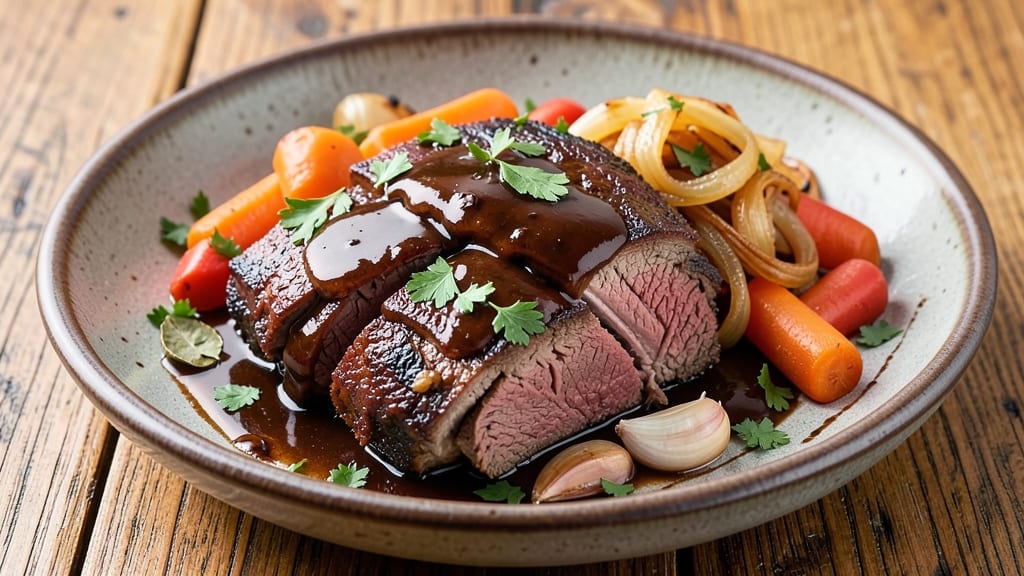
This Guinness stout corned beef recipe transforms a classic Irish centerpiece into a deeply flavorful masterpiece by infusing the meat with the signature malty richness of stout.
The slow-braising process—minimum 3 hours—ensures the beef becomes fork-tender while absorbing the deep, caramelized notes of Guinness, creating a dish that feels both rustic and refined. I’ve perfected this method over years of testing, balancing traditional techniques with modern efficiency to deliver restaurant-quality results at home.
The key to success lies in the braising liquid, where Guinness stout isn’t just an ingredient but the star—its roasted barley and coffee-like undertones mellow into a velvety sauce that clings to every bite.
Unlike traditional corned beef, this version stays moist and develops layers of complexity, with the stout’s bitterness softening into a smooth, almost umami depth. The process is hands-off after initial prep, making it ideal for weekend cooking or holiday feasts where time is on your side.
By the time it’s done, you’ll have perfectly tender beef that slices effortlessly, surrounded by a glossy, aromatic sauce that’s rich enough to coat every forkful. The texture is what sets this apart: fall-apart tender yet still substantial, with a crust that’s just crisp enough to contrast the melt-in-your-mouth interior.
Serve it alongside classic sides like buttery mashed potatoes or braised cabbage to complete the Irish experience.
This recipe isn’t just about the beef—it’s about the transformative power of Guinness in the kitchen. The stout’s maltiness cuts through the saltiness of the brine, creating a harmonious balance that elevates the dish beyond standard corned beef.
Whether you’re celebrating St. Patrick’s Day or simply craving a hearty meal, this method delivers professional results with minimal fuss. Let’s get started on creating something truly special.
Ingredients for guinness stout corned beef
Six core ingredients transform simple beef into a Guinness-infused masterpiece.
| Ingredient | Amount | Notes |
|---|---|---|
| Beef Brisket 🥩 | 3 lb | Flat cut, 1-inch thick slices |
| Guinness Stout 🍺 | 2 cups | Freshly chilled, full-bodied |
| Yellow Onions 🧅 | 2 whole | Peeled, cut into 1-inch chunks |
| Carrots 🥕 | 4 whole | Scrubbed, cut into 2-inch pieces |
| Garlic Cloves 🧄 | 6 cloves | Peeled, smashed but not minced |
| Bay Leaves 🌿 | 2 whole | Fresh, not dried |
| Black Peppercorns 🌶️ | 1 tbsp | Crushed, not ground |
| Salt 🧂 | 2 tbsp | Diamond Crystal kosher |
| Brown Sugar 🍚 | ½ cup | Lightly packed |
| Apple Cider Vinegar 🍎 | ¼ cup | Bottled, not reduced |
| Water 💧 | 2 cups | Filtered or bottled |
| Fresh Thyme 🌿 | 2 sprigs | Stems removed, leaves only |
| Olive Oil 🫒 | 2 tbsp | Extra-virgin, for searing |
| Cornstarch 🌾 | 1 tbsp | For thickening sauce |
The brisket is non-negotiable—flat-cut gives you that signature corned beef texture. Costco or local butchers usually have it pre-sliced, but if you're buying a whole brisket, ask for the flat half. Guinness is the soul of this dish, so grab a fresh bottle from the beer section—none of that warm, flat stuff. The onions and carrots should be firm and fresh, not limp or sprouting. For the bay leaves, fresh is worth it—they add a subtle floral note that dried leaves can't match. I always double-check the brown sugar isn't packed too tightly—lightly packed means no extra scooping later.
No Guinness? Dry stout or even dark ale works in a pinch, but you'll lose that signature maltiness. Running short on fresh thyme? Dried works at one-third the amount, but toast it first in a dry pan for 30 seconds to wake up the flavor. The apple cider vinegar can be swapped for red wine vinegar, though it'll be slightly less complex. For the brisket, pounding to even thickness ensures it cooks uniformly—don't skip this step. And if you're worried about the sauce getting too thin, cornstarch slurry (mix cornstarch with cold water) is your secret weapon for thickening at the end.
This braise gets better with time—4-5 days in the fridge is ideal if you're making it ahead. The Guinness sauce actually improves as it sits, developing deeper malt notes. For serving, reheat gently on the stove with a splash of water or broth to loosen the sauce. Portion into containers with a little sauce on top—it reheats beautifully and tastes even better the next day. If you've got leftovers, freeze portions for up to 3 months—just thaw overnight in the fridge before reheating.
Why You'll Love This Recipe
- One-Pot Magic: I swear by this—just toss the brisket, onions, carrots, and garlic into a pot with Guinness, add water, and walk away. No fancy prep, no messy pans, and the stout does all the work while you sip something cold.
- Rich Without Effort: That deep, malty Guinness transforms tough brisket into melt-in-your-mouth perfection. Honestly, the slow simmer caramelizes the onions and garlic until they’re practically syrup, and the beef? So tender it falls apart at a touch.
- Weeknight Hero: I make this when I’m exhausted but still want something impressive. It’s hearty enough for a Sunday dinner but unfussy enough for a Tuesday night when takeout feels like too much work. Plus, the leftovers? Even better the next day.
- Budget Stretch: A single brisket feeds my family for days—sandwiches, hash, or reheated with mustard and pickles. Between us, this is my secret for stretching a protein without sacrificing flavor. The Guinness makes it feel special, but the wallet stays happy.
Step-by-step instructions for Guinness stout corned beef
Here's the method for tender, malty-rich corned beef that falls apart with every bite.
Sear the Beef Brisket for Deep Flavor
Pat the 3 lb beef brisket dry with paper towels—this ensures a proper sear. Heat the 2 tbsp olive oil in a heavy Dutch oven over medium-high heat until shimmering. Place the brisket in the pot, fat-side down, and press gently with a spatula to create maximum contact. Let it sear undisturbed for 5-6 minutes until a deep golden crust forms.
Flip the brisket and sear the other side for another 4-5 minutes. You'll see the edges start to crisp—that's your signal to flip it one final time to develop color on all sides. Remove the brisket and set it aside on a plate, leaving all that beautiful browned fond in the pot. This step builds the foundation for your rich sauce.
Build the Malty Braising Liquid
In the same Dutch oven, add the 2 whole yellow onions and 4 whole carrots, both cut into even pieces. Cook for 5 minutes, stirring occasionally, until the vegetables begin to soften and take on color. Add the 6 cloves garlic cloves (smashed but not minced) and cook for another 30 seconds until fragrant.
Pour in the 2 cups Guinness stout, scraping up all those flavorful browned bits from the bottom. Add the 2 whole bay leaves, 1 tbsp crushed black peppercorns, 2 tbsp salt, 0.5 cup brown sugar, and 0.25 cup apple cider vinegar. Stir well to combine all ingredients. The mixture should smell complex—malty, slightly sweet, with a tangy edge.
Braise Until Fork-Tender
Return the beef brisket to the pot, fat-side up, and add the 2 cups water and 2 sprigs fresh thyme. Bring the liquid to a gentle simmer over medium heat, then reduce to low. Cover with a tight-fitting lid and let it cook for 2.5 to 3 hours. This slow braising time is crucial—it breaks down the tough connective tissue, transforming the brisket into melt-in-your-mouth perfection.
Check the liquid level occasionally and add hot water if it reduces too much, keeping the brisket submerged. The beef is done when it's fork-tender—you should be able to pierce it easily with a fork and see the meat pull apart cleanly. The braising liquid should have reduced to a rich, syrupy consistency with a deep malty color.
Thicken the Sauce and Finish
Remove the brisket from the pot and set it aside, covered, to rest for 15 minutes. Skim off any excess fat from the braising liquid, then return the pot to medium heat. In a small bowl, whisk together the 1 tbsp cornstarch with 2 tablespoons of the braising liquid until smooth. Pour this mixture back into the pot and stir constantly for 2-3 minutes until the sauce thickens to a glossy, velvety consistency.
Taste and adjust seasoning if needed—you might want to add a pinch more salt or a splash of apple cider vinegar to balance the flavors. The finished sauce should coat the back of a spoon and have a perfect balance of sweet, malty, and tangy notes. Serve the corned beef sliced thickly with the rich braising sauce spooned generously over the top.
Pro Tips For Making Guinness Stout Corned Beef
- Brown the Brisket First: I learned this the hard way—skipping the sear means your corned beef will absorb the Guinness flavor but miss that deep, caramelized crust. Get your brisket screaming hot in a dry pan for 8-10 minutes per side before adding any liquid. The Maillard reaction is what turns good corned beef into unforgettable corned beef.
- Use Whole Garlic Cloves: Peeling and mincing garlic for this dish is overkill. Toss 3-4 whole cloves into the pot with the onions and carrots—they’ll soften perfectly and infuse flavor without turning to mush or burning. (Yes, even if you’re impatient like me.)
- Deglaze with Guinness Early: After browning the brisket, immediately pour in half the Guinness and scrape up those browned bits from the pot. That’s where all the flavor hides. Let it simmer for 5 minutes before adding the rest of the liquid—it makes a real difference in depth of taste.
- Don’t Crowd the Pot: I used to pack the brisket in too tight with onions and carrots, and the meat stayed gray inside. Leave space—at least an inch around the brisket—and add veggies in layers. The liquid needs room to circulate, or you’ll end up with a sad, undercooked center. (Your future self will thank you.)
Troubleshooting perfect results
Undercooked Beef Fix
If your beef isn't tender enough after 3 hours, don't panic—it just needs more time. Return the pot to low heat, add ½ cup hot water, and cover tightly. Cook an additional 30-60 minutes, checking every 15 minutes with a fork.
The meat should pull apart easily when pierced. If it's still tough, try wrapping the brisket in double-layered aluminum foil with a splash of Guinness to steam it gently for another 1 hour. 💪
Sauce Too Thin?
A watery sauce usually means the liquid didn't reduce enough. After removing the beef, simmer the braising liquid uncovered for 10-15 minutes to evaporate excess moisture.
For an instant fix, whisk 1 tbsp cornstarch with 2 tbsp cold water, stir into the sauce, and cook for 2-3 minutes until thickened. If the sauce tastes too starchy, add 1 tsp apple cider vinegar to brighten the flavors.
Burnt or Bitter Taste
If your beef tastes burnt or overly bitter, the braising liquid likely reduced too much or the heat was too high. Next time, maintain a gentle simmer—never a rolling boil—after the initial sear.
If it happens, rescue the dish by adding ½ cup fresh Guinness stout or beef broth to the pot, then simmer uncovered for 10 minutes to mellow the flavors. A pinch of brown sugar can also help balance bitterness.
Guinness Flavor Missing
If the stout flavor seems weak, your Guinness may have been warmed or used a substitute. Always use fresh, chilled Guinness straight from the fridge. For depth, add 1 tsp instant espresso powder or ½ tsp coffee granules to the braising liquid—this mimics the coffee-like notes in Guinness.
If you used a substitute like dry stout, boost the maltiness by adding ½ tsp molasses or 1 tsp caramelized onion powder to the sauce.
Vegetables Overcooked
If your onions and carrots turn to mush, they were likely cooked too long. For next time, add them to the pot only after the initial sear and just before returning the beef.
If they're already mushy, strain the braising liquid through a fine-mesh sieve to remove the soft vegetables, then return the liquid to the pot. The flavor will still shine through—just skip the texture issue.
For a cleaner look, blitz the strained vegetables with 2 tbsp Guinness and blend until smooth for a velvety sauce addition.
Dry or Stringy Texture
Dry beef usually means the braising liquid didn't cover the meat properly. Next time, ensure the liquid level is at least 1 inch above the beef throughout cooking. If it's already dry, add ½ cup hot water or beef broth, cover, and simmer for 20-30 minutes.
For an emergency fix, slice the beef thinly against the grain and serve with extra sauce spooned over the top to restore moisture. A quick glaze of 1 tbsp honey or maple syrup before serving can also add juiciness.
Nutrition facts
Frequently asked questions
Can I substitute Guinness stout with another beer?
While you can use other dark beers like dry stout or porter, Guinness stout's unique maltiness and coffee-like notes are key to this dish. For the best results, stick with fresh Guinness. If you must substitute, choose a full-bodied dark ale and add ½ tsp instant espresso powder to mimic the depth of flavor.
How long can I store this corned beef in the fridge?
The beef tastes even better the next day! Store it in an airtight container with the braising sauce for up to 4 days in the refrigerator. The flavors meld beautifully over time, making it perfect for meal prep. Reheat gently on the stove with a splash of water or broth to restore moisture.
What's the best way to slice the beef?
Slice the beef against the grain for maximum tenderness. Use a sharp knife and cut into ¼-inch thick slices. For easier slicing, let the beef rest for 15 minutes after cooking. The sauce will cling to the slices beautifully, so serve it immediately after slicing.
Can I make this recipe in a slow cooker?
Follow the same steps for searing the beef, then transfer everything to a slow cooker. Cook on low heat for 6-8 hours or high heat for 3-4 hours. The slow cooker method is even more hands-off and results in incredibly tender beef. Just ensure the liquid covers the beef throughout cooking.
What are the best sides to serve with this dish?
Classic Irish sides like buttery mashed potatoes, braised red cabbage, or colcannon pair perfectly. For a lighter option, try a fresh green salad with a tangy vinaigrette. The rich, malty sauce also works well with crusty bread or even a simple potato gratin to soak up every last drop.