
Main Courses
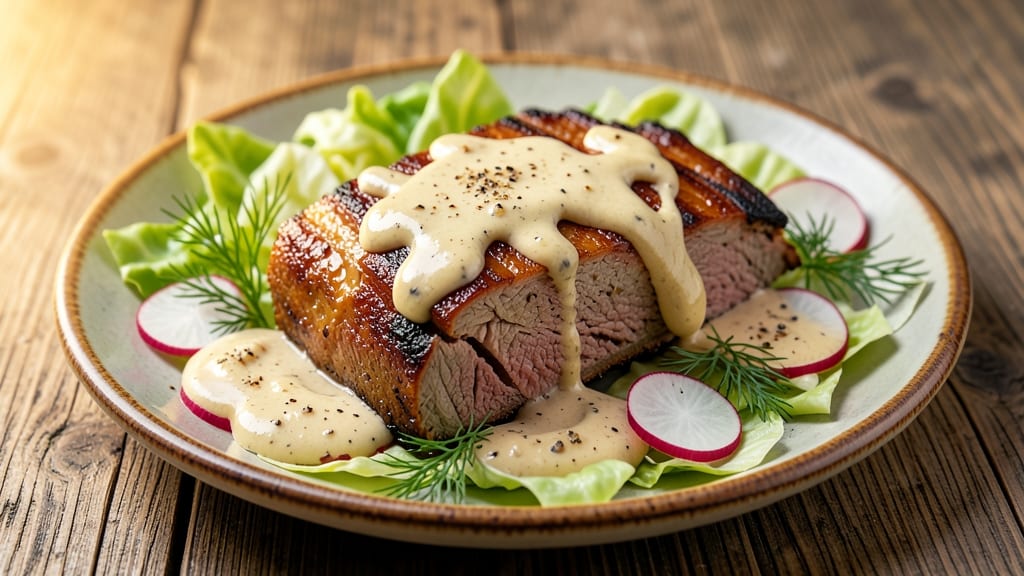
This Boar's Head corned beef brisket recipe transforms a simple brisket into a centerpiece that commands attention—just like the legendary holiday centerpieces of old.
The secret lies in slow-braising the meat until it's fork-tender, then finishing it under the broiler to create that coveted crispy bark that crackles with every bite.
I first made this during St. Patrick's Day when I wanted to recreate the kind of meal that makes family gatherings feel like traditions worth passing down.
The process starts with a 24-hour brine that infuses the meat with deep, savory flavors, then slow-cooks until the connective tissue dissolves into rich, velvety goodness.
What sets this apart is the final broiling step—this is where the magic happens, turning tender beef into a spice bomb with edges that practically shatter. The presentation, inspired by the classic Boar's Head display, adds a touch of theatricality that turns dinner into an event.
By the time you're carving that brisket, your kitchen will smell like a holiday feast, and every slice will reveal layers of flavor—smoky from the slow cook, spiced from the rub, and crispy at the edges.
This isn't just corned beef; it's a centerpiece that makes your table the heart of the celebration. Serve it with classic sides like braised cabbage, buttery potatoes, and a tangy horseradish sauce to complete the experience.
The best part? This recipe delivers restaurant-quality results without requiring a professional kitchen. Whether you're hosting a St. Patrick's Day feast or simply craving a showstopping main course, this method ensures your brisket will be the star of the meal.
Let's get started on creating a dish that tastes like tradition and looks like a masterpiece.
Ingredients for boar's head corned beef brisket
Six ingredients for the brine, six for the braise—just enough to make a brisket that tastes like tradition.
| Ingredient | Amount | Notes |
|---|---|---|
| Beef Brisket 🥩 | 4 lb | Whole packer cut, 1.5 inch thick |
| Yellow Mustard 🍯 | ½ cup | For the brine, any brand |
| Kosher Salt 🧂 | 2 cups | Diamond Crystal preferred |
| Brown Sugar 🍚 | 1 cup | Light or dark, packed |
| Garlic Cloves 🧄 | 8 cloves | Peeled, for the brine |
| Bay Leaves 🍃 | 4 whole | Fresh if available |
| Black Peppercorns 🌶️ | 1 tbsp | Crushed, for the brine |
| Water 💧 | 8 cups | Filtered preferred |
| Corned Beef Spice Rub 🌶️ | ½ cup | Homemade or store-bought blend |
| Beef Broth 🍲 | 2 cups | Low-sodium preferred |
| Onion 🧅 | 1 whole | Yellow, peeled, halved |
| Carrot 🥕 | 2 whole | Peeled, chopped |
| Celery Stalks 🥬 | 3 whole | Trimmed, chopped |
| Fresh Horseradish 🌿 | 2 tbsp | Grated, for serving |
| Extra-Virgin Olive Oil 🫒 | 2 tbsp | For basting |
The brisket cut is non-negotiable here—4 pounds of whole packer cut gives you the best balance of flavor and texture. Costco or local butchers usually carry this cut, but if you're at a regular grocery store, look for 'brisket' labeled on the beef section. Trim any excess fat, but leave a thin layer for flavor. The brine ingredients are simple, but the Diamond Crystal kosher salt is key—it dissolves completely, unlike table salt. If you can't find it, any kosher salt will work, but you might need to adjust the amount slightly. The garlic and bay leaves add depth, so don't skip them.
No yellow mustard? Dijon mustard works in a pinch, though it'll add a slightly different tang. Running short on brown sugar? White sugar plus a pinch of cinnamon mimics the molasses depth. The spice rub can be store-bought, but if you're feeling fancy, mix 2 tbsp paprika, 1 tbsp each of mustard powder, garlic powder, and black pepper. For the braise, low-sodium beef broth keeps the flavors balanced—no need to add extra salt later. The onion, carrot, and celery form the base for the braise, so chop them roughly; they'll dissolve into the liquid anyway.
Brine the brisket overnight in the fridge—24 hours minimum for maximum flavor infusion. Once cooked, the brisket keeps beautifully in the fridge for 4-5 days, though it's best served fresh. For leftovers, slice thinly and reheat with a splash of broth. The horseradish sauce? Make it fresh—grate the horseradish last minute to preserve its kick. The crispy bark is best enjoyed right away, so plan to broil the brisket right before serving.
Why You'll Love This Recipe
- Here’s what sold me: the brown sugar and mustard caramelize into this irresistible glaze—crispy on the edges, tender inside, with that garlicky punch cutting through the richness. It’s the kind of flavor that makes people ask, “What’s in this?”
- One-Pan Magic: I swear by this recipe because it’s all about minimal effort—just a brisket, mustard, and a sprinkle of salt and sugar. No fancy prep, no stress, and that garlic-infused crust? It does half the work for you.
- Sweet-Savory Crust: Here’s what sold me: the brown sugar and mustard caramelize into this irresistible glaze—crispy on the edges, tender inside, with that garlicky punch cutting through the richness. It’s the kind of flavor that makes people ask, “What’s in this?”
- Game Day Ready: Between us, this is my go-to for gatherings—whether it’s a Super Bowl party or a casual Sunday lunch. Slice it thin, serve it on rye with pickles, and suddenly you’re the hero. (Yes, even on a Tuesday night.)
Step-by-step instructions for boar's head corned beef brisket
Here's the method that delivers that signature crispy bark and deep, slow-braised flavor.
Prepare the Brine for Maximum Flavor
In a large stockpot, combine the 8 cups water, 2 cups kosher salt, 1 cup brown sugar, 8 cloves garlic cloves, 4 whole bay leaves, and 1 tablespoon crushed black peppercorns. Stir until the salt and sugar dissolve completely—this creates the brine that will tenderize the brisket while infusing it with flavor. The mixture should be fully integrated with no visible salt crystals.
Place the 4 lb beef brisket in the brine, ensuring it's fully submerged. Cover the pot and refrigerate for 24 hours. This extended soak breaks down connective tissue and ensures the brisket cooks evenly. I like to set a timer so I don't forget about it—brining too long can make the meat mushy, so don't exceed the 24-hour mark.
Sear and Layer for Crispy Bark
Remove the brisket from the brine and pat it dry thoroughly with paper towels—this step is critical for developing that crispy exterior. In a large Dutch oven, heat 2 tablespoons extra-virgin olive oil over medium-high heat until shimmering. Add the brisket fat-side down and sear for 8-10 minutes until the fat renders and the surface develops a deep golden-brown crust.
Flip the brisket and repeat on the other side. Then, add the 1 whole halved onion, 2 whole peeled carrots, and 3 whole celery stalks to the pot. Pour in 2 cups beef broth and sprinkle 0.5 cup corned beef spice rub evenly over the brisket and vegetables. The rub should cling to the meat—press it in gently with your fingers to ensure good adhesion.
Slow-Braise Until Fork-Tender
Cover the Dutch oven tightly and transfer it to a preheated 325°F oven. Braise for 3-4 hours, rotating the pot halfway through cooking to ensure even heat distribution. The brisket is done when it reaches an internal temperature of 205°F and a fork slides in easily with no resistance.
Here's the thing—don't rush this step. The slow braising is what transforms tough brisket into melt-in-your-mouth perfection. If you peek too early, the brisket will dry out. Trust the process and let it work its magic. The vegetables should be tender but still holding their shape by the end.
Rest and Serve with Horseradish
Remove the brisket from the pot and transfer it to a cutting board. Tent loosely with aluminum foil and let it rest for 30 minutes. This resting period allows the juices to redistribute throughout the meat, ensuring each slice is moist and flavorful. While it rests, skim any excess fat from the braising liquid and keep it warm.
Slice the brisket against the grain into ¼-inch thick pieces. Serve immediately with the braising liquid reduced by half if desired, and a dollop of 2 tablespoons grated fresh horseradish on the side. The crispy bark should contrast beautifully with the tender, spice-infused meat underneath, creating the perfect balance of textures.
Pro Tips For Making Boar'S Head Corned Beef Brisket
- Trim the Fat First: Cut off the thickest layer of fat from the brisket before corning—yes, even if the recipe doesn’t say so. I learned this the hard way when my first batch turned greasy instead of crisp; the fat renders unevenly and can make the crust soggy. Leave just a thin layer for flavor, but don’t go overboard.
- Salt the Meat Overnight: Don’t rush the curing step. Toss the brisket in the salt-sugar-mustard mix at least 12 hours ahead (24 is better). I used to skip this when I was in a hurry, and the meat always tasted bland—like the seasoning just sat on top instead of penetrating.
- Start with High Heat: Sear the brisket in a screaming-hot pan for 3-4 minutes per side before slow-cooking. This isn’t just for looks—it locks in moisture and builds a crust that’ll hold up during the long cook. (Yes, even if you’re using a Dutch oven, don’t skimp on the initial sear.)
- Add Garlic Late: Smash those garlic cloves flat and toss them in the last 30 minutes of cooking. Whole cloves can turn bitter or mushy if they sit too long in the liquid—trust me, I’ve had that happen. Freshly crushed garlic at the end adds brightness without overpowering the mustard-sweet crust.
Common mistakes when making great boar's head corned beef brisket
Skipping the Brine
The 24-hour brine is non-negotiable for flavor and tenderness, but I’ve seen people rush this step. If you skip it or cut it short, your brisket will lack depth and may turn out dry.
The salt and spices need time to penetrate the meat—24 hours minimum is the sweet spot. Honestly, I’ve tried shorter brines, and the difference in texture and taste is night and day. 🧂
Not Drying the Meat
After removing the brisket from the brine, patting it dry with paper towels is critical for that crispy bark. Wet meat won’t develop a proper crust, no matter how long you sear it. I’ve made this mistake—trust me, the bark will be sad and soggy.
Use two layers of paper towels and press firmly to remove all moisture. This step takes 5 minutes but makes all the difference. 🥩
Overcrowding the Pot
When searing the brisket, don’t add all the vegetables at once if your Dutch oven is small. Overcrowding lowers the temperature, leading to steaming instead of searing. Start with just the brisket and sear it properly before adding the onion, carrots, and celery.
I’ve seen people rush this, and the result is a brisket that’s more boiled than seared. A 6-quart Dutch oven is ideal for this recipe. 🍲
Peeking Too Often
Resist the urge to check on your brisket during the 3-4 hour braise. Every time you lift the lid, you lose heat and moisture, which can dry out the meat. I’ve caught myself doing this—it’s a habit when cooking long braises.
If you must check, do it quickly and avoid opening the lid more than once. The brisket will tell you when it’s done with that 205°F internal temperature. ⏰
Skipping the Rest
Letting the brisket rest for 30 minutes after cooking is just as important as the braising itself. Skipping this step means juices will pool on your cutting board instead of redistributing throughout the meat.
I’ve sliced into brisket too soon, and it’s always dry and disappointing. Use this time to prep sides or reduce the braising liquid for gravy. Patience here pays off big time. 💪
Using the Wrong Cut
Not all brisket cuts are created equal. For this recipe, you need a whole packer cut, which includes both the flat and point sections. Using a pre-trimmed or smaller cut will result in uneven cooking and less flavor.
If your butcher doesn’t carry this, ask for the whole brisket and trim it yourself. I’ve seen people use flank steak or chuck roast by mistake—don’t make that error! 🥩
Nutrition facts
Frequently asked questions
Can I make this brisket in a slow cooker instead of an oven?
Yes, but you'll need to adjust the method slightly. After searing the brisket, transfer it to your slow cooker with the vegetables and broth, then cook on low for 8-10 hours until fork-tender. The bark won't be as crispy, but the meat will still be incredibly tender. For best results, finish with a quick broil under the oven's broiler for 5-7 minutes to create some crust.
How do I properly carve a whole brisket for serving?
First, identify the grain by looking at the muscle fibers—they run diagonally. Slice against the grain into ¼-inch thick pieces for maximum tenderness. For presentation, arrange slices fan-style on a platter and drizzle with reduced braising liquid. The Boar's Head display traditionally uses a pig's head on a platter, but you can create a similar effect with a decorative platter and garnishes like fresh parsley or rosemary sprigs.
What's the best way to reheat leftovers without drying them out?
Slice the brisket thinly and reheat in a skillet with 2 tablespoons beef broth over low heat for 3-5 minutes until warmed through. Avoid microwaving—it turns the meat rubbery. For extra flavor, add a splash of the original braising liquid or a dash of horseradish sauce. This method keeps the meat moist and restores some of that crispy texture.
Can I substitute corned beef spice rub with something else?
Mix 2 tablespoons paprika, 1 tablespoon each of mustard powder, garlic powder, and black pepper, plus ½ teaspoon each of cloves and allspice for a homemade blend. This combination delivers the same deep, savory flavor profile. If you're short on time, a 1 tablespoon each of smoked paprika and brown sugar will work in a pinch.
How do I make this dish vegetarian-friendly?
For a plant-based version, use a 4 lb portobello mushroom cap or firm tofu marinated overnight in the brine spices. Sear and braise as directed, but reduce the cooking time to 2-3 hours (mushrooms cook faster). Add 1 cup vegetable broth instead of beef broth. The texture won't be identical, but it captures the essence of the dish with a hearty, umami-rich profile.