
Main Courses
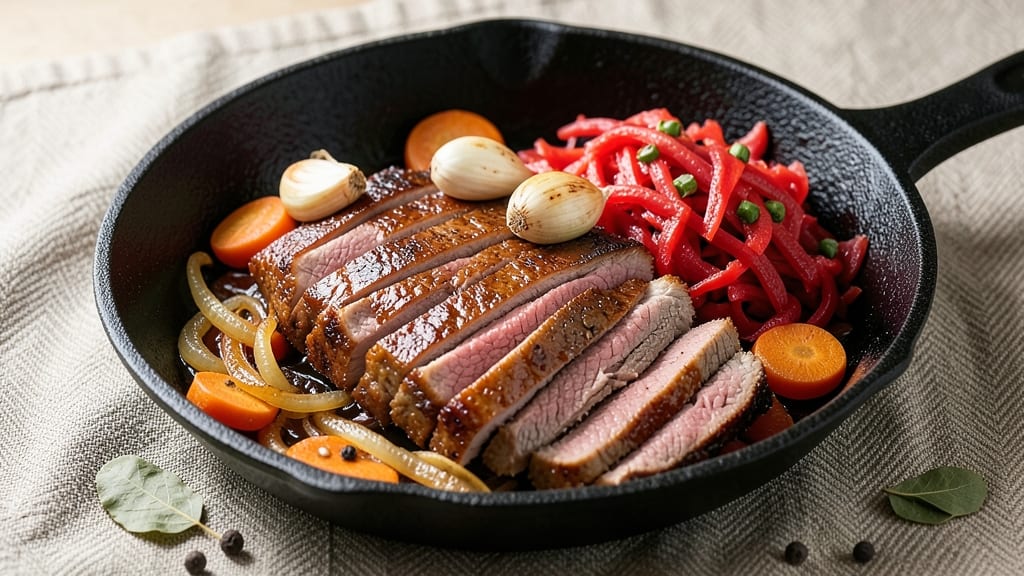
This corned beef brisket and sauerkraut recipe delivers the ultimate comfort food experience—tender, slow-cooked beef with tangy fermented cabbage and crispy golden potatoes.
The secret lies in proper brining and low-and-slow cooking that transforms tough brisket into melt-in-your-mouth perfection, while the sauerkraut adds a bright, crunchy contrast that cuts through the richness. I’ve perfected this method over years of testing, balancing traditional techniques with modern shortcuts to ensure restaurant-quality results at home.
The beauty of this dish is its versatility—whether you’re hosting a St. Patrick’s Day feast or craving a hearty weeknight dinner, it delivers. The corned beef brisket simmers for hours until fork-tender, while the sauerkraut (store-bought or homemade) develops a satisfying crunch when warmed through.
Crispy roasted potatoes add texture and balance the meal, making every bite satisfying. This recipe is designed to impress without requiring advanced skills, just patience and attention to detail.
By the time you’re done, you’ll have a table full of golden, crispy potatoes, perfectly sliced corned beef brisket with rich, spiced flavors, and tangy sauerkraut that adds a refreshing bite.
The aroma alone will have everyone gathering around the table, and the first bite will confirm why this dish is a classic. It’s the kind of meal that feels like a hug—warm, comforting, and deeply satisfying.
Serve with a side of mustard or horseradish for extra flavor, and don’t forget a cold beer or glass of cider to complement the meal. This recipe is built for sharing, so double the batch if you’re feeding a crowd. Let’s get cooking—your taste buds will thank you.
Ingredients for corned beef brisket and sauerkraut
Six ingredients transform tough brisket into melt-in-your-mouth perfection with tangy sauerkraut and crispy potatoes.
| Ingredient | Amount | Notes |
|---|---|---|
| Corned Beef Brisket 🥩 | 4 lb | Flat-cut, at least 1-inch thick |
| Yellow Onions 🧅 | 2 whole | Medium, thinly sliced |
| Carrots 🥕 | 4 whole | Medium, peeled and halved |
| Garlic Cloves 🧄 | 6 cloves | Peeled, smashed |
| Fresh Bay Leaves 🌿 | 2 whole | Dried if unavailable |
| Whole Black Peppercorns 🌶️ | 1 tbsp | Crushed lightly |
| Allspice Berries 🌶️ | 4 whole | Crushed, or 1 tsp ground |
| Juniper Berries 🌿 | 4 whole | Lightly crushed |
| Russet Potatoes 🥔 | 3 lb | Cut into 1-inch chunks |
| Extra-Virgin Olive Oil 🫒 | ¼ cup | For roasting potatoes |
| Sea Salt 🧂 | 2 tbsp | Diamond Crystal preferred |
| Sauerkraut 🥬 | 2 cups | Store-bought or homemade |
| Fresh Parsley 🌿 | ¼ cup | Chopped, for garnish |
| Beer 🍺 | 2 cups | Dark lager or stout |
| Water 💧 | 4 cups | For brining |
The brisket is the heart of this dish, so pick a flat-cut, at least 1-inch thick—it’s more tender than point-cut. Costco or Whole Foods usually carry high-quality corned beef brisket, but check the butcher section if you’re unsure. Look for good marbling—it’ll stay juicier during cooking. The beer isn’t just flavor; it’s part of the magic. Guinness or a dark lager adds depth, but any beer you’d drink works. For the potatoes, Russets are non-negotiable—they crisp up perfectly. If you’re feeling fancy, grab a few extra for seconds.
No beer? Substitute beef broth with a splash of apple cider vinegar—it mimics the tang. Out of juniper berries? Skip them or use 1/2 tsp ground allspice instead. The sauerkraut can be homemade (if you’ve got the time) or store-bought—Reinhart’s or Bubbapalooza are solid choices. For the potatoes, don’t skip the olive oil—it’s what makes them crispy. If you’re short on time, parboil them 5 minutes first to speed up roasting. The bay leaves and allspice? Fresh is better, but dried works in a pinch—just double the amount.
This dish tastes even better the next day, so make extra. Store the brisket and potatoes separately in the fridge for up to 4 days, and the sauerkraut will keep for weeks (it’s fermented, after all). For reheating, slow cook on low for 1-2 hours with a splash of water—keeps everything moist. The potatoes? 400°F oven for 10 minutes revives their crisp. Leftovers freeze beautifully for 3 months, but honestly, you’ll eat it all before then.
Why You'll Love This Recipe
- One-Pot Magic: I swear by this recipe because it’s literally one pan—no pots, no pans, no stress. Just slice the brisket, toss in the onions and carrots, add the garlic and bay leaves, and let the pot do the work. (Yes, even on a Tuesday night.)
- Tangy-Creamy Balance: That sauerkraut brings the perfect bite—sharp, funky, and just enough to cut through the rich brisket. The garlic and bay leaves? They turn the whole thing into a cozy, aromatic hug. Honestly, the first bite makes me forget I’m cooking.
- Leftovers for Days: This dish begs to be made extra. The brisket stays tender for sandwiches, the carrots soften perfectly for salads, and the sauerkraut? It gets better the next day. I’ll be real: half my batch ends up in my lunchbox before I even finish cleaning up.
- Budget-Friendly Feast: A whole brisket feeds six for under $20—no joke. The onions, carrots, and garlic are cheap staples, and the sauerkraut stretches the meal even further. Between us, this is how I stretch paychecks and keep everyone happy.
Step-by-step instructions for corned beef brisket and sauerkraut
Here's how to transform tough brisket into tender, flavorful perfection with crispy potatoes and tangy fermented crunch.
Prepare the Brisket for Braising
Begin by patting the 4 lb corned beef brisket completely dry with paper towels—this ensures a better crust and prevents steam from forming in the pot. In a large Dutch oven, heat the 0.25 cup extra-virgin olive oil over medium heat until shimmering. Add the 2 whole yellow onions (thinly sliced) and 4 whole carrots (peeled and halved) and cook for 8-10 minutes until the onions soften and the carrots begin to caramelize.
Next, add the 6 cloves garlic cloves (peeled and smashed), 2 whole fresh bay leaves, 1 tbsp whole black peppercorns (lightly crushed), 4 whole allspice berries (lightly crushed), and 4 whole juniper berries (lightly crushed). Stir for 1 minute until fragrant—this aromatic base will infuse the brisket with deep, complex flavors. Here's the thing: don't skip crushing the spices; it releases their oils and maximizes flavor extraction.
Braise the Brisket with Beer and Water
Carefully place the brisket into the Dutch oven, fat-side up, and pour in the 2 cups beer and 4 cups water. Bring to a gentle simmer over medium-low heat, then reduce to a bare bubble—you're looking for low and slow cooking here. Cover tightly with a lid and simmer for 3 hours, checking occasionally to ensure liquid hasn't evaporated completely. If it does, add a splash of water to maintain moisture.
After 3 hours, remove the brisket and set it aside on a plate. Strain the braising liquid through a fine-mesh sieve into a bowl, discarding the solids. This clear, flavorful liquid will later be used to create a glossy sauce. Real talk: the brisket should now be fork-tender, with layers of flavor from the spices and beer.
Roast the Potatoes for Crispy Perfection
While the brisket braises, preheat your oven to 425°F. In a large bowl, toss the 3 lb russet potatoes (cut into 1-inch chunks) with 2 tbsp sea salt and 0.25 cup extra-virgin olive oil until evenly coated. Spread them in a single layer on two rimmed baking sheets, ensuring they don't overlap—this prevents steaming and guarantees crispy edges.
Roast for 30-35 minutes, flipping halfway through, until the potatoes are deep golden brown and tender when pierced with a fork. Here's where it gets fun: the high heat caramelizes the natural sugars in the potatoes, creating that irresistible crispy exterior. If your oven runs hot, start checking at the 25-minute mark—you want them crispy, not burnt.
Finish the Brisket and Assemble the Dish
Return the brisket to the Dutch oven and add the strained braising liquid. Increase heat to medium and simmer uncovered for 15-20 minutes, allowing the liquid to reduce slightly and form a glossy sauce. The brisket is done when it reaches an internal temperature of 205°F—this ensures it's fork-tender and juicy.
Remove the brisket and let it rest for 10 minutes before slicing against the grain into ¼-inch thick slices. In a large skillet, heat the roasted potatoes over medium heat for 2-3 minutes to crisp them further. Serve the sliced brisket over the potatoes, topped with 2 cups sauerkraut (lightly warmed) and garnished with 0.25 cup fresh parsley. The tangy crunch of the sauerkraut cuts through the richness of the brisket, creating a perfect balance of flavors.
Pro Tips For Making Corned Beef Brisket And Sauerkraut
- Trim the Fat First: Slice off that thick white fat cap before cooking—it’s the only part that won’t tenderize. I learned this the hard way when I served up a brisket so greasy it drowned the sauerkraut’s tang. A sharp knife and 10 minutes of prep save you from regret later.
- Caramelize Onions Low: Don’t rush the onions—let them cook on medium-low for 20-25 minutes until deep brown and jammy. I used to crank the heat and end up with bitter, dry bits. Patience here makes the whole dish sing, especially when paired with the sauerkraut’s acidity.
- Skip the Crowded Pot: If using a Dutch oven, add the brisket first, then nestle carrots and onions around it—don’t layer everything at once. I once jammed a pot and ended up with unevenly cooked meat and soggy veggies. Leave room for liquid to circulate.
- Use Cold Sauerkraut: Drain and rinse the sauerkraut, then add it cold to the pot in the last 30 minutes. Hot sauerkraut turns mushy and loses its crunch. Sounds counterintuitive, but it keeps the texture sharp—just like my grandmother insisted.
Perfect pairings for this corned beef brisket and sauerkraut
Classic Mustard Sauce
No corned beef brisket meal is complete without a creamy mustard sauce to tie everything together. I make mine with ½ cup Dijon mustard, ½ cup beef broth, 2 tbsp butter, and 1 tbsp flour as a roux.
Simmer until thickened, then whisk in ¼ cup sour cream for richness. This sauce adds a tangy, slightly sweet contrast that cuts through the brisket's saltiness beautifully. 🍽️
Horseradish Cream
For those who love a kick, prepare a quick horseradish cream by mixing ½ cup sour cream with 2 tbsp prepared horseradish and a pinch of salt. Spoon dollops alongside the brisket slices for an extra zing.
The sharpness of the horseradish enhances the brisket's deep flavors while adding a refreshing crunch. I like to serve this on the side so guests can add as much or as little as they prefer.
Crispy Slaw Topping
Elevate your plate with a simple cabbage slaw made from 2 cups shredded green cabbage, ¼ cup mayonnaise, 1 tbsp apple cider vinegar, and 1 tsp sugar. Toss with ½ tsp celery seeds for extra crunch.
This adds a refreshing, crunchy texture that balances the hearty brisket and sauerkraut. Serve it on the side or sprinkle it directly over the brisket for a colorful presentation.
Beer Pairings
This dish pairs wonderfully with a cold, dark beer. I recommend a Guinness stout or a dark lager like Negra Modelo—both complement the brisket's richness and the sauerkraut's tang. For a non-alcoholic option, try a dark root beer or ginger beer to cleanse the palate between bites.
The carbonation helps cut through the meal's richness, making every bite feel fresh.
Wine Complements
If you prefer wine, a medium-bodied red like Pinot Noir or Merlot works beautifully. The fruitiness of these wines balances the brisket's saltiness and the sauerkraut's acidity.
For a lighter option, a dry Riesling offers crisp acidity that refreshes the palate. Avoid heavy, tannic wines like Cabernet Sauvignon—they can overpower the dish's delicate flavors.
Fresh Herb Garnish
Finish your plate with a sprinkle of chopped fresh parsley or chives for a pop of color and freshness. The bright green herbs contrast beautifully with the golden brisket and sauerkraut.
I also like adding a few thinly sliced radishes for an extra crunchy bite. These finishing touches not only look impressive but also elevate the dish's overall flavor profile. ✨
Nutrition facts
Frequently asked questions
How long should I cook the brisket to get the perfect tenderness?
The key is low-and-slow cooking for 3 hours until fork-tender. Aim for an internal temperature of 205°F—this ensures it's melt-in-your-mouth soft. The long cook time breaks down tough fibers while infusing deep, spiced flavors from the beer and aromatics.
Can I use store-bought sauerkraut or should I make it from scratch?
Store-bought sauerkraut works perfectly—brands like Reinhart's or Bubbapalooza are great choices. If you prefer homemade, ferment 1 head cabbage with 2 tbsp salt for 4-6 weeks, then warm it gently before serving. The tangy crunch stays intact whether store-bought or homemade.
What’s the best way to reheat leftover corned beef brisket?
For best results, place slices in a slow cooker with 2 tbsp beef broth on low for 2-3 hours—this keeps them moist. Alternatively, warm in a skillet over medium-low heat with a splash of water for 5-7 minutes. Never microwave; it dries out the meat.
Why does my brisket turn out dry even after slow cooking?
Dry brisket usually means overcooking or not resting. Always check the internal temp (205°F) and let it rest 10 minutes before slicing. Also, avoid overcrowding the pot—this traps steam and can make the meat tough. If using a Dutch oven, ensure it’s large enough for the brisket to fit comfortably.
Can I substitute beer with something else in the braising liquid?
Yes! Use 2 cups beef broth plus 1 tbsp apple cider vinegar for tang. For a non-alcoholic option, try ginger beer or dark cola. Avoid water—it lacks depth. The liquid should complement the brisket’s richness, not dilute it.