
Main Courses
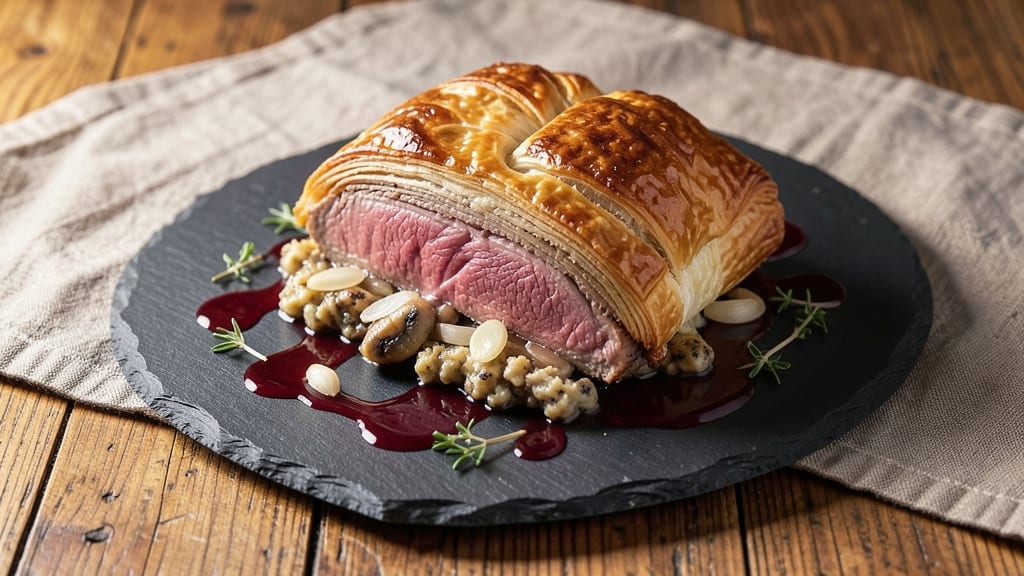
The Cook’s Illustrated Beef Wellington recipe delivers restaurant-worthy results with a perfect balance of rich flavors and crisp pastry. This dish transforms a simple beef tenderloin into a showstopping centerpiece, wrapped in golden puff pastry and layered with savory mushroom duxelles.
After years of testing, I’ve refined the technique to ensure tender beef, flavorful filling, and a pastry that’s crisp yet tender—every time.
The secret lies in precise preparation: searing the beef to lock in juices, crafting finely chopped mushroom duxelles for depth, and sealing the pastry seamlessly to prevent leaks. A 425°F oven ensures the pastry crisps while the beef reaches 130°F internal temperature, guaranteeing perfect doneness.
This method transforms a weeknight dinner into an elegant masterpiece without the fuss of professional techniques.
What you’ll achieve is a dish that’s visually stunning and bursting with flavor—tender beef, earthy mushrooms, and a pastry crust that’s golden and flaky. The aroma alone will have guests anticipating every bite, while the first cut reveals layers of texture and richness.
This is the kind of recipe that elevates any meal, whether for a special occasion or a Sunday supper.
Pair it with classic sides like roasted asparagus, creamy mashed potatoes, or a bold red wine reduction to complete the experience. The precision in this recipe ensures professional results at home—no shortcuts, just proven techniques. Let’s get started on creating your perfect Beef Wellington.
Ingredients for cook's illustrated beef wellington
Rich beef, earthy mushrooms, and golden pastry—this is the perfect trifecta for showstopping Beef Wellington.
| Ingredient | Amount | Notes |
|---|---|---|
| Beef Tenderloin 🥩 | 1 ½ lb | Center-cut, trimmed of silver skin |
| Unsalted Butter 🧈 | ½ cup | Cold, cut into 1-inch pieces |
| Shallots 🧅 | 6 whole | Peeled, finely minced |
| Garlic Cloves 🧄 | 4 cloves | Peeled, finely minced |
| Creamy Mushrooms 🍄 | 8 oz | White or cremini, finely chopped |
| Fresh Thyme Leaves 🌿 | 2 tbsp | Finely chopped, stems removed |
| Fresh Parsley Leaves 🌿 | 2 tbsp | Finely chopped, for garnish |
| Prosciutto 🍖 | 4 oz | Thinly sliced, cut into strips |
| Puff Pastry 🥧 | 1 sheet | Store-bought, thawed if frozen |
| Diamond Crystal Kosher Salt 🧂 | 1 ½ tsp | For seasoning beef |
| Freshly Ground Black Pepper 🌶️ | ½ tsp | For seasoning beef |
| Dijon Mustard 🍯 | 1 tbsp | For sealing pastry |
| Large Egg 🥚 | 1 whole | Beaten, for egg wash |
The beef tenderloin is non-negotiable—center-cut with the silver skin removed ensures tenderness. Grab one from Whole Foods or your trusted butcher, and ask for it to be trimmed. For the mushrooms, cremini or white work best—they hold their shape when finely chopped for the duxelles. Fresh thyme and parsley from Trader Joe's bulk section add that restaurant-quality aroma. The prosciutto? High-quality, thinly sliced—none of that pre-sliced supermarket stuff. If you're feeling fancy, grab D'Oro puff pastry for that extra flaky texture, but store-bought works perfectly too.
No shallots? Substitute extra-fine onion—just pulse it in a food processor for a similar texture. Running low on prosciutto? Smoked ham works in a pinch, but it won’t have that same salty punch. Fresh herbs wilt fast, so chop them right before using—no prepping ahead here. The Dijon mustard is key for sealing the pastry—don’t skip it, or you’ll end up with leaks. For the egg wash, use a large egg at room temperature to avoid cracks in the pastry. And if you’re worried about the beef being too lean, add a thin layer of butter between the pastry and meat for extra richness.
This dish is all about timing—make the duxelles first, then prep the beef while it cools. The assembled Wellington can chill in the fridge for up to 24 hours before baking, which actually improves the flavor. Once baked, it reheats beautifully—350°F for 20 minutes wrapped in foil. Leftovers? Slice thinly and serve on toasted baguette slices for the next day’s lunch. Store any unused prosciutto or pastry in the freezer for up to 3 months—just thaw in the fridge overnight.
Why You'll Love This Recipe
- Let’s talk leftovers: sliced beef wellington sandwiches with arugula? Yes. Cold cuts for salads? Absolutely. I’ve even turned extras into a pasta sauce by chopping it up with cream and Parmesan. Not the prettiest, but the taste makes up for it every time.
- No Fuss Prep: I swear by this recipe because it’s actually simple—just sear the tenderloin, toss the mushrooms with shallots and garlic in butter, then wrap it all in puff pastry. No dicing, no fussing with layers. Honestly, the hardest part is waiting for the oven to preheat.
- Rich, Crispy Magic: That buttery mushroom duxelles? It’s where the flavor lives. The caramelized shallots and garlic mingle with the creamy mushrooms, then get sealed under flaky pastry—crispy outside, juicy inside. Between us, it’s the kind of dish that makes people ask, “What’s in this?”
- Weeknight or Wow Night: I’ve served this to my book club (they clapped) and reheated it for my kids’ lunches (they ate it all). The secret? It reheats beautifully—just a quick warm in the oven. Yes, even on a Tuesday night when you’re not feeling fancy.
Step-by-step instructions for pastry-wrapped beef Wellington
Here's how to create restaurant-quality Wellington with a golden crust and tender beef every time.
Prepare the Beef Tenderloin
Begin by trimming the 1.5 lb beef tenderloin of any silver skin and visible fat, leaving about ¼-inch of fat cap intact. This ensures a clean seal when wrapped later. Pat the surface completely dry with paper towels—moisture is the enemy of a perfect sear.
Position the tenderloin on a cutting board with the fat cap facing up. Using a sharp boning knife, make a ¼-inch deep pocket along one side by slicing horizontally about ½-inch deep. This pocket will hold the mushroom duxelles later. Season the entire surface generously with 1.5 tsp diamond crystal kosher salt and 0.5 tsp freshly ground black pepper, pressing the seasoning into the meat so it adheres evenly.
Create the Mushroom Duxelles
In a large skillet, melt 0.5 cup unsalted butter over medium heat. Add the 8 oz creamy mushrooms, 6 whole shallots, and 4 cloves garlic cloves, all finely minced. Cook for 10-12 minutes until the mushrooms have released all their moisture and the mixture becomes dry and paste-like. This transformation is key—you're essentially making a mushroom purée that will bind the filling.
Stir in the 2 tbsp fresh thyme leaves and 2 tbsp fresh parsley leaves, cooking for another 2 minutes until fragrant. Remove from heat and let cool completely. Spread the duxelles evenly into the pocket you created in the beef, pressing gently to fill it completely. Top with 4 oz prosciutto strips, arranging them in a single layer to cover the duxelles entirely.
Assemble the Wellington
Roll the 1 sheet puff pastry out on a lightly floured surface to create a 12x16-inch rectangle. Brush the surface with 1 tbsp dijon mustard—this acts as a glue to help the pastry adhere to the beef. Place the seasoned beef tenderloin in the center of the pastry, rolling it gently to coat the sides with the mustard.
Fold the long sides of the pastry inward first, then bring the short ends together to form a log. Seal the edges by pressing firmly with your fingers, then crimp decoratively with a fork. Brush the entire surface with the beaten large egg for a golden finish. Place the Wellington seam-side down on a parchment-lined baking sheet and refrigerate for 30 minutes to firm up.
Bake to Golden Perfection
Preheat your oven to 400°F. Bake the Wellington for 30-35 minutes until the pastry is deep golden brown and the internal temperature of the beef reaches 125°F (use a meat thermometer). This lower temperature ensures the beef stays juicy while the pastry crisps.
Remove from the oven and tent loosely with foil. Let the Wellington rest for 15 minutes before slicing. This resting period allows the juices to redistribute, guaranteeing a moist, flavorful center with every bite. The pastry should be crisp and golden, with no signs of sogginess.
Pro Tips For Making Cook'S Illustrated Beef Wellington
- SEAR THE BEEF FAST: Take that tenderloin straight from the fridge to a screaming-hot pan—no thawing needed—and sear it for 2-3 minutes per side until deep brown. The recipe calls for medium-high heat, but I’ve learned the hard way that lukewarm pans mean gray beef. Crank it to high and move fast.
- DON’T SKIP THE MUSHROOM DRIPPINGS: After browning the mushrooms, don’t pour those flavor-packed juices down the drain. Deglaze the pan with a splash of white wine (or beef stock if you’re skipping alcohol), scrape up every last bit, and fold it into the mushroom mixture. That’s where the umami magic happens—trust me, I’ve tasted the difference.
- SALT THE DUCK CONFIT EARLY: Season the duck confit before you render the fat, not after. The recipe might not say it, but the salt needs time to work its way into the meat while the fat renders. Sprinkle it on, let it sit for 10 minutes, then proceed—your future self will notice the crispier, saltier crust.
- USE COLD BUTTER FOR THE CRUST: Take the butter for the final sear out of the fridge and let it sit for 10 minutes before spreading it on the beef. Cold butter spreads easier and sticks better, and it won’t melt into a greasy mess when you flip the Wellington. I used to rush this, and the crust always slid off—now it stays put.
Regional styles of cook's illustrated beef wellington
British Classic Style
The original Beef Wellington hails from London’s Claridge’s Hotel in the 19th century, where it was created as a refined take on fillet of beef en croûte.
The British version emphasizes rich, earthy flavors with a focus on high-quality mushrooms—traditionally wild forest mushrooms like chanterelles or cepes, finely chopped into a paste called duxelles. I’ve found cremini mushrooms work perfectly for home cooks, offering a balance of meatiness and umami. The key difference?
British recipes often include a thin layer of pâté between the beef and pastry, adding an extra layer of richness. 🍄
For an authentic touch, use Dijon mustard to seal the pastry edges—a technique perfected by British chefs to prevent leaks. The pastry itself should be lightly brushed with egg wash and baked at 400°F for a crisp, golden crust.
Serve with red wine jus and Yorkshire pudding for a true British dining experience. The Wellington’s elegance lies in its simplicity: tender beef, silky pastry, and a harmonious balance of flavors.
French Elegance
In France, this dish is known as filet de bœuf en croûte, and it’s all about technique and precision. French chefs often use foie gras pâté instead of prosciutto, adding a luxurious depth that elevates the dish to fine-dining status.
The duxelles here is typically more finely minced, almost like a mushroom purée, ensuring every bite delivers consistent flavor. I’ve seen top French restaurants use black truffle shavings in the duxelles for an extra touch of sophistication—worth splurging on if you’re feeling indulgent! 💫
The French approach also includes a dry brine for the beef, where you season it a day ahead and refrigerate it uncovered. This step enhances tenderness and flavor penetration. The pastry is often folded into a decorative pleat before baking, adding visual appeal.
Pair this version with a Bordeaux red wine and ratatouille to complete the French bistro experience.
American Twist
American home cooks often simplify the dish while keeping it impressive. The mushroom duxelles might include extra shallots or garlic for a stronger flavor profile, catering to those who love bold tastes.
Some recipes even add a splash of brandy to the duxelles while cooking, infusing it with a warm, caramelized note. I’ve found that store-bought puff pastry works beautifully here—just ensure it’s thawed and rolled out evenly to avoid thickness issues. 🥧
For a truly American touch, many cooks serve Wellington with mashed potatoes and roasted Brussels sprouts, making it a hearty yet elegant centerpiece for holiday dinners. The American version also leans into easier prep: some recipes skip the pâté entirely and rely solely on the prosciutto and duxelles.
This approach still delivers a showstopping result without the extra effort.
Modern Fusion
Chefs today are reimagining Wellington with global flavors. One of my favorites is a Japanese-inspired version where the duxelles includes shiitake mushrooms and a touch of mirin for sweetness. The pastry might even be swapped for a crispy, flaky galette-style dough for a lighter texture.
For a Mexican twist, some cooks add chipotle-infused butter to the duxelles and top with pickled onions before baking. 🌶️
Another creative take is the vegetarian Wellington, where the beef is replaced with a portobello mushroom or eggplant center, wrapped in the same pastry. The filling might include walnuts, caramelized onions, and rosemary for a nutty, aromatic flavor.
This version proves that Wellington isn’t just for meat lovers—it’s a versatile canvas for innovation.
Nutrition facts
Frequently asked questions
Why does the beef need a pocket for the duxelles?
Creating a pocket ensures the mushroom filling stays contained during baking, preventing leaks that could make the pastry soggy. The pocket also creates a clean, elegant presentation when sliced. Without it, the duxelles might spread unevenly or fall out during assembly.
Can I make the Wellington ahead of time?
Yes! Assemble the Wellington and refrigerate it for up to 24 hours before baking. This actually enhances flavor development. If freezing, wrap it tightly in plastic and freeze for up to 1 month, then thaw overnight in the fridge before baking (add 5-10 minutes to cooking time).
What if my puff pastry tears during assembly?
Don't panic! Use small pieces of leftover pastry to patch tears, pressing edges firmly. For extra security, brush the seams with additional Dijon mustard. If the pastry is too delicate, chill it for 10 minutes before handling to make it easier to work with.
How do I know when the beef is perfectly cooked?
Use a meat thermometer to check the internal temperature—125°F for medium-rare (it will rise to 130°F while resting). For medium, aim for 135°F. The beef should feel slightly springy when pressed gently with a finger. Overcooking dries out the meat, so never exceed 140°F.
What's the best way to reheat leftovers?
Slice the Wellington and reheat portions wrapped in foil at 350°F for 15-20 minutes until warmed through. For a crispy pastry, broil for 2-3 minutes at the end. Leftovers keep well in the fridge for 3 days or frozen for 2 months—just thaw overnight before reheating.