
Main Courses
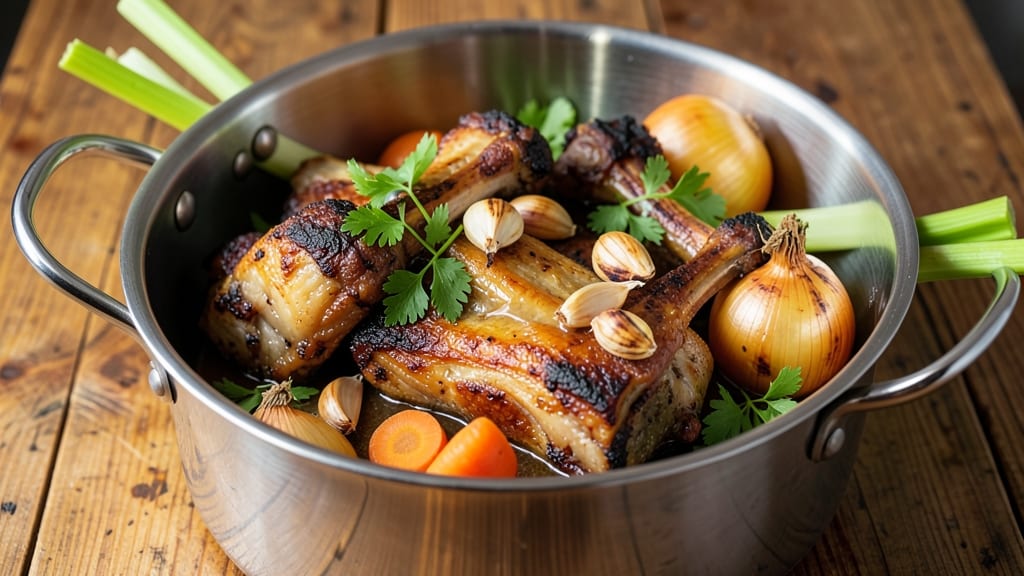
Alton Brown’s beef stock recipe transforms simple bones and herbs into liquid gold—packed with deep umami flavor and restaurant-quality depth. The secret lies in roasting bones to unlock their natural sugars, then slow-simmering them with aromatics until the broth becomes velvety and rich.
I’ve perfected this method over years of testing, ensuring every batch delivers the same professional results you’d expect from a chef’s kitchen.
This isn’t just stock—it’s a flavor foundation that elevates everything from braised short ribs to creamy risottos. The process is methodical but straightforward: roast, simmer, strain, and reduce.
No shortcuts here, just science-backed technique that guarantees a broth so concentrated it reduces beautifully for sauces or stands alone as a sipping broth. The key? Patience and precision at every step.
By the time you’re done, you’ll have a deep, caramelized stock with layers of savory complexity—thanks to the Maillard reaction from roasted bones and the aromatic herbs. Store it in the freezer for up to six months, ready to transform any dish with a single ladle.
This is the kind of stock that makes homemade meals taste like they belong on a fine-dining menu.
Use it in braises for tender meat, as a base for velvety soups, or even as a finishing touch for risottos. The possibilities are endless, but the method is foolproof. Let’s get started on creating your own umami-rich masterpiece.
Ingredients for alton brown beef stock
Roast bones first, then simmer with aromatics for deep umami-rich beef stock perfect for braises and sauces.
| Ingredient | Amount | Notes |
|---|---|---|
| Beef Bones 🦴 | 4 lb | Knuckle or marrow bones preferred |
| Yellow Onion 🧅 | 1 whole | Quartered, skin on |
| Carrot 🥕 | 2 whole | Large, roughly chopped |
| Celery Stalk 🥬 | 3 whole | Cut into 2-inch pieces |
| Garlic Cloves 🧄 | 6 cloves | Smashed, not minced |
| Fresh Parsley Stems 🌿 | 4 whole | Tough stems only, no leaves |
| Fresh Thyme Sprigs 🍃 | 4 whole | Stems only, no leaves |
| Fresh Bay Leaves 🌿 | 2 whole | Dried if fresh unavailable |
| Black Peppercorns 🌶️ | 1 tbsp | Crushed lightly |
| Kosher Salt 🧂 | 2 tbsp | For roasting bones |
| Cold Water 💧 | 16 cups | Filtered preferred |
| Apple Cider Vinegar 🍎 | 2 tbsp | Brightens flavor |
| Extra-Virgin Olive Oil 🫒 | 2 tbsp | For roasting |
The bones are everything here—knuckle or marrow bones from a butcher give the richest flavor, but grocery store chuck bones work too. Look for bones with good meat still attached (the good stuff). Costco or local butchers often have them pre-cut, saving time. If you're buying whole bones, ask for beef knuckles—they're worth the extra effort. Roast them until deeply caramelized (about 45 minutes at 425°F), which unlocks their natural sugars for that restaurant-quality depth. No need to scrub them—just pat dry and roast. The darker the better.
No fresh herbs? Dried thyme and parsley work at half the amount, but fresh is ideal for that bright, aromatic punch. Short on bay leaves? Two dried leaves equals one fresh. The apple cider vinegar might seem odd, but it cuts through any bitterness and brightens the broth—substitute lemon juice if that's what you've got. For the aromatics, char them slightly in the roasting pan before adding to the pot (just 2-3 minutes). It adds a smoky depth that transforms this from good stock to great stock. The olive oil is just for roasting—don't skimp on the good stuff here.
This stock keeps for up to 6 months in the freezer—just portion into 1-cup containers for easy use. Thaw overnight in the fridge, then reheat gently. For immediate use, reduce it by half on the stovetop for a concentrated sauce base. The first batch will always be the best—save the bones for another round. If you're feeling fancy, strain through a fine-mesh sieve for ultra-smooth results. Store any leftovers in the fridge for 5 days—it only gets better with time as flavors meld.
Why You'll Love This Recipe
- No-Fuss Prep: I swear by this method—just toss the bones in a pot with onions, carrots, and celery (the holy trinity), then let the slow simmer do the work. No fancy chopping, no measuring by the gram, just good bones and patience.
- Umami Bomb: That caramelized onion base? Deep. The garlic? Rich. The beef bones? Pure flavor gold. One sip and you’ll understand why this stock is the backbone of my best soups and sauces—it’s like liquid comfort.
- Weeknight Magic: Freeze half the batch for future meals. Use the rest to make a quick beef bourguignon or stretch it into a hearty pasta sauce. Honestly, I’ve never had a stock that works harder for me.
- Budget Game-Changer: Beef bones are cheaper than you think, and this recipe stretches them into gallons. I’ve fed my whole family for days with just one batch—no takeout, no stress, just flavor on repeat.
Step-by-step instructions for alton brown-inspired beef stock
Here's the method that unlocks deep, rich flavor from every bone—no shortcuts, just pure technique.
Roast the Bones for Maximum Flavor
Preheat your oven to 450°F and position a rack in the middle position. Arrange the 4 lb beef bones on a rimmed baking sheet in a single layer. Drizzle them evenly with the 2 tbsp extra-virgin olive oil and sprinkle with the 2 tbsp kosher salt. Toss gently to coat all surfaces.
Roast for 30 minutes, flipping the bones halfway through, until they develop a deep golden-brown crust. This step caramelizes the proteins and fats, creating the foundation for your stock's umami depth. The bones should smell toasty and slightly smoky when you open the oven door—this is your cue that the Maillard reaction is working its magic.
I like to work in batches if my oven is small, but don't rush this step. The flavor difference between roasted and unroasted bones is night and day. If you're short on time, you can skip roasting and use raw bones, but the stock will be noticeably less complex.
Sear the Vegetables and Build the Base
While the bones roast, prepare a large stockpot with high sides. Add the 1 whole yellow onion (quartered with skin on), 2 whole carrots (roughly chopped), 3 whole celery stalks (cut into 2-inch pieces), and 6 smashed garlic cloves. These vegetables form the aromatic trifecta that gives stock its signature depth.
Once the bones are done roasting, transfer them to the stockpot along with the prepared vegetables. Add the 4 whole fresh parsley stems, 4 whole fresh thyme sprigs, 2 whole fresh bay leaves, and 1 tbsp crushed black peppercorns. The herbs and peppercorns will infuse subtle earthy notes that elevate the stock beyond basic beef flavor.
Pour in the 16 cups cold water and bring everything to a boil over high heat. As soon as it reaches a rolling boil, reduce the heat to medium-low to maintain a gentle simmer. Skim off any foam or impurities that rise to the surface during the first 10 minutes—this ensures a crystal-clear stock.
Simmer Low and Slow for Deep Extraction
After the initial skimming, add the 2 tbsp apple cider vinegar. This brightens the stock and helps extract collagen from the bones, which will later gel when cooled. The vinegar also balances the richness of the beef.
Cover the pot and let it simmer gently for 3-4 hours, maintaining a temperature between 180-200°F. You'll know it's ready when the bones can be easily separated from the meat and the stock has reduced by about 1/3. The longer you simmer, the more gelatin and flavor you'll extract, but don't exceed 5 hours or the stock may become bitter.
I like to check periodically and add a splash of water if the liquid level gets too low. The stock should always be partially covered—this prevents evaporation and helps maintain a steady simmer. The aroma should be rich, meaty, and slightly sweet by the end of cooking.
Strain and Finish for Crystal-Clear Perfection
Once the stock is fully developed, remove the pot from heat and let it sit for 15 minutes. This resting period allows any remaining solids to settle. Line a fine-mesh strainer with cheesecloth or a coffee filter if you want an extra-clear stock, but a regular strainer will work fine for most uses.
Strain the stock through the prepared strainer into a large bowl or clean pot, pressing gently on the solids to extract every last drop of flavor. Discard the bones and vegetables—they've given everything they've got. The resulting stock should be deep amber in color with a rich, meaty aroma that makes your kitchen smell like a professional restaurant.
For best results, let the stock cool to room temperature before refrigerating. Once chilled, it will develop a firm gel-like consistency—this is the gelatin from the bones, a clear sign of a properly made stock. Store in airtight containers in the refrigerator for up to 5 days or freeze for up to 3 months. This stock is the backbone of countless soups, braises, and sauces—every sip will taste like you've been cooking all day.
Pro Tips For Making Alton Brown Beef Stock
- Char Bones First: Alton’s recipe calls for roasting the bones, but I learned the hard way—don’t skimp on this step. Blast them at 450°F for 20-25 minutes until deep brown, even black in spots. That caramelization isn’t just for flavor; it’s the foundation of your stock’s depth. (Yes, it smells like a crime scene, but trust me.)
- Chop Veggies Small: The recipe says “chop,” but I used to hack onion, carrot, and celery into rough chunks—big mistake. Dice them into ¼-inch pieces so they dissolve evenly and infuse the stock without turning it slurry. Bonus: Less straining later. (Your blender will love you.)
- Simmer, Don’t Boil: I used to let this stock rage like a pressure cooker, and it’d turn cloudy and bitter. Keep it at a gentle simmer—tiny bubbles, occasional rises—so the collagen renders slowly. If it’s too aggressive, cover and reduce heat. Patience here makes all the difference.
- Strain Twice: After simmering, I’d pour through a fine-mesh strainer once, but I missed the gritty bits clinging to the bones. Do it twice: once with the strainer, then again with a cheesecloth-lined colander. Your stock will be silky, not sandy. (Future gravies will thank you.)
Flavor customization for this recipe
Umami Boosters
Elevate your stock’s depth by adding 1 tbsp fish sauce or 1 tsp soy sauce during the final 30 minutes of simmering. These ingredients amplify umami without overpowering the beef. For a smoky twist, add 1-2 smoked paprika or ½ tsp liquid smoke—just enough to hint at campfire flavors.
I’ve found that ½ cup mushrooms (cremini or shiitake) tossed in with the vegetables adds an earthy complexity that rivals even the most expensive store-bought stocks. 🌶️
Herb Variations
Swap out the classic herbs for regional flavors. For a French bistro touch, add 1 sprig rosemary and 1 sprig tarragon—these herbs pair beautifully with beef and add a piney, slightly bitter note.
A Mexican-inspired version calls for 2 bay leaves, 1 tsp dried oregano, and 1 chipotle pepper in adobo (removed after simmering). For Italian richness, use 1 sprig rosemary, 1 sprig sage, and a pinch of fennel seeds—the anise-like warmth complements the beef perfectly.
Spice Infusions
Transform your stock into a global pantry staple with bold spices. A Moroccan tagine twist includes 1 tsp ground coriander, ½ tsp ground cumin, and 1 cinnamon stick (removed before straining).
For Indian-inspired depth, add 1-inch ginger slice, 2 green cardamom pods, and 1 black cardamom pod—these spices create a fragrant, aromatic base perfect for curries or braises.
A Cajun kick comes from ½ tsp cayenne, 1 tsp smoked paprika, and ½ tsp thyme—ideal for gumbo or jambalaya.
Vegetable Swaps
Customize the aromatic vegetables to match your dish. For a lighter, summery stock, replace carrots with 1 fennel bulb (chopped) and add 1 zucchini—the bright, slightly sweet notes balance the beef beautifully.
A winter root vegetable version swaps celery for 1 parsnip and adds 1 small rutabaga (peeled and chopped)—these hearty veggies deepen the stock’s richness. For a Asian-inspired broth, use 1 daikon radish and 1 small leek (white parts only) alongside the carrots and celery.
Acid Brighteners
Beyond apple cider vinegar, experiment with other acids to balance richness. Lemon juice (2 tbsp) adds a bright, citrusy lift that cuts through the fat beautifully. For a tangy depth, use 1 tbsp balsamic vinegar—it adds a subtle sweetness that enhances the umami.
A wine reduction takes it further: simmer ½ cup dry red wine (like Cabernet Sauvignon) into the stock during the last 20 minutes for a sophisticated, restaurant-quality finish. 🍷
Nutrition facts
Frequently asked questions
Why roast the bones before making beef stock?
Roasting bones caramelizes their natural sugars through the Maillard reaction, creating deep umami flavors that transform ordinary stock into something extraordinary. This step unlocks complex, savory notes that simmering alone can't achieve. Think of it as the secret weapon behind restaurant-quality depth—your kitchen will smell like a professional kitchen too!
Can I use leftover roast bones instead of raw ones?
Leftover roast bones are perfect—they've already undergone the flavor-building Maillard reaction. Just skip the initial roasting step and proceed with simmering. For extra richness, add a splash of the pan drippings from your roast when building the stock base. The flavor will be even more concentrated and complex.
How do I know when the stock is fully reduced?
The stock should reduce by about 1/3 of its original volume (from 16 cups to roughly 10-11 cups). You'll also notice the bones separate easily from the meat, and the liquid will have a deep amber color with a rich, meaty aroma. If it smells slightly sweet, that's the gelatin releasing—perfect for soups that set when chilled!
What can I do with extra stock beyond soups?
This versatile stock is the backbone of countless dishes! Use it to braise short ribs for tender, fall-off-the-bone results, deglaze pans for pan sauces, or reduce it by half for a concentrated gravy base. For Italian dishes, it elevates risottos and pasta sauces—just add a splash at the end. The possibilities are endless, but the key is always to start with high-quality stock.
My stock turned cloudy—did I ruin it?
Not at all! Cloudiness usually means the stock needs more simmering time to clarify. Strain it through a fine-mesh sieve lined with cheesecloth for crystal-clear results. If you're short on time, use it as-is—cloudy stock still packs incredible flavor, especially for hearty dishes like stews or braises where appearance matters less than taste.