
Sauces & Condiments
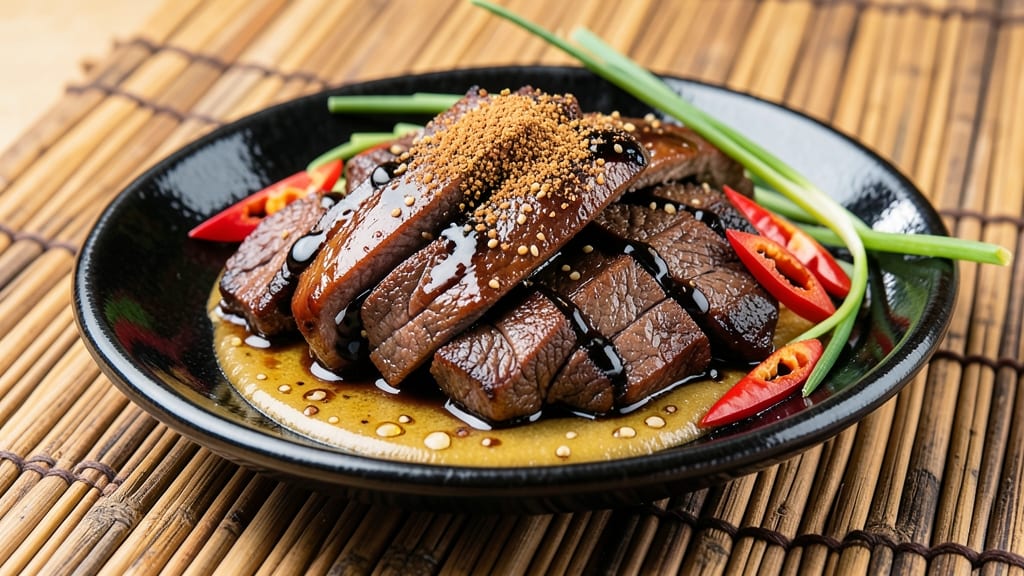
This Chinese beef marinade recipe transforms ordinary beef into restaurant-quality wok perfection with just 15 minutes of prep and 30 minutes of marinating. The bold combination of five-spice powder, soy sauce, and aromatic ginger creates a deep, complex flavor that tenderizes the meat while building layers of umami and warmth.
I developed this marinade after years of testing—it’s the secret weapon behind my favorite Chinese-American dishes, delivering that signature balance of sweet, salty, and spicy.
The magic lies in the precise ratio of ingredients: soy sauce for depth, five-spice powder for aromatic warmth, and garlic-ginger paste for freshness. Unlike store-bought versions that often taste flat, this marinade uses high-quality ingredients to create a flavor profile that’s both authentic and approachable.
The result is beef that’s not just flavorful but also perfectly tender, ready for stir-frying, grilling, or braising.
What makes this marinade truly perfect is its versatility—it elevates any cut of beef, from flank steak to sirloin, while working equally well for quick weeknight meals or special occasions. The flavors meld beautifully during the marinating process, ensuring every bite is packed with that signature Chinese restaurant taste.
Whether you’re cooking for a crowd or treating yourself to a homemade meal, this marinade is your shortcut to professional results.
Once marinated, your beef will be ready for the wok, grill, or oven, with flavors that deepen as they cook. The marinade’s sticky texture also helps create a caramelized crust, adding another layer of complexity. Here’s everything you need to make it—simple, foolproof, and guaranteed to impress.
Ingredients for chinese beef marinade
Five-spice powder and soy sauce create restaurant-quality beef marinade in minutes.
| Ingredient | Amount | Notes |
|---|---|---|
| Five-Spice Powder 🌶️ | 1 ½ tbsp | Toasted for deeper aroma |
| Light Soy Sauce 🥫 | ½ cup | Kikkoman preferred for balance |
| Dark Soy Sauce 🥫 | 1 tbsp | For rich color and depth |
| Garlic-Ginger Paste 🧄 | ¼ cup | Homemade or quality jarred |
| Sesame Oil 🫒 | 1 tbsp | Toasted, not flavored |
| Honey 🍯 | 1 ½ tbsp | Wildflower preferred |
| Rice Vinegar 🍶 | 1 tbsp | For brightness |
| Fresh Ginger 🌿 | 2 tbsp | Finely grated, aromatic |
| Cornstarch 🌾 | 1 tsp | For sticky texture |
| Red Chili Flakes 🔥 | ½ tsp | Adjust for heat preference |
The five-spice powder is non-negotiable here—Penzeys or Spicewalla for the best quality, but the bulk bins at Whole Foods work too. Look for a blend that includes star anise, fennel, and clove—they’re what give it that authentic warmth. The soy sauces? Light soy sauce adds depth while dark soy sauce brings that signature caramelized color. I always buy Kikkoman for the light soy, but any good brand works. For the garlic-ginger paste, homemade is ideal (just blend fresh garlic and ginger with a splash of water), but Trader Joe's has a great jarred version that saves time. The sesame oil should be toasted—not the flavored kind you’d drizzle on noodles. Kadoya is my go-to, but any Asian market will have good options.
No five-spice powder? Mix 0.5 tsp each of ground cinnamon, fennel seeds, star anise, and clove—it’s not identical, but close. Short on dark soy sauce? Miso paste plus a pinch of sugar mimics the depth. The garlic-ginger paste can be swapped for 2 tbsp minced fresh garlic plus 1 tbsp grated ginger, but it won’t be as smooth. The honey can be subbed with maple syrup or agave, though the flavor shifts slightly. Red chili flakes giving you pause? Sichuan peppercorns add heat without color—just crush 0.25 tsp. The cornstarch is key for that sticky texture; if you’re out, arrowroot powder works too.
This marinade keeps for 1 week in the fridge, sealed tightly in a jar. The flavors actually improve overnight, so make it a day ahead if possible. For longer storage, freeze in ice cube trays—thaw what you need and toss the rest. The sticky texture means it’s best used within 3 months of freezing. Pro tip: Save the leftover marinade for glazes or stir-fry sauces—it’s too good to waste.
Why You'll Love This Recipe
- Pantry Magic: I swear by this marinade—no fresh herbs, no fancy prep. Just five things you already have (or can grab in a pinch), and boom, flavor that punches way above its weight.
- Umami Bomb: That combo of light and dark soy sauce? It’s like a secret handshake for depth. The five-spice powder adds warmth, and the garlic-ginger paste? Pure comfort in every bite.
- Double-Duty Marinade: Use it for stir-fry tonight, then toss the leftover beef in rice for lunch. Honestly, I’ve even drizzled the extra marinade over roasted veggies—works every time.
- Budget-Friendly Powerhouse: Sesame oil is the star here, but it’s cheap and goes far. A little goes a long way, and you’ll use it up before it expires. My wallet and my taste buds win.
Step-by-step instructions for Chinese beef marinade
This marinade delivers deep umami, aromatic complexity, and that signature wok-house balance every time.
Toast the Five-Spice Powder for Depth
In a small dry skillet over medium heat, toast the 1.5 tablespoons five-spice powder for 30 seconds until fragrant and slightly darker in color. Here's the thing—this step transforms the flavor profile from ordinary to extraordinary. The heat activates the spices' essential oils, creating that signature aromatic punch that defines authentic Chinese beef dishes.
Watch closely—you're looking for just a hint of smoke and a noticeable aroma. Immediately transfer the toasted powder to a heatproof bowl to prevent burning. If you skip this step, you'll miss out on the layered complexity that makes this marinade truly special.
Combine Wet Ingredients for Balance
In the same bowl, whisk together the 0.5 cup light soy sauce, 1 tablespoon dark soy sauce, 0.25 cup garlic-ginger paste, 1 tablespoon sesame oil, and 1.5 tablespoons honey. The dark soy sauce will create that signature mahogany color while adding depth, while the honey provides natural sweetness that caramelizes beautifully during cooking.
Add the 1 tablespoon rice vinegar and 0.5 teaspoon red chili flakes, whisking until fully dissolved. This is where the marinade's character really comes together—the vinegar brightens the soy's richness, while the chili flakes add just a whisper of heat that lingers on the palate. Taste the mixture now—it should be bold, slightly sweet, and properly balanced between savory and tangy.
Incorporate Fresh Ginger and Cornstarch
Grate the 2 tablespoons fresh ginger using a microplane or fine grater, then add it to the bowl. The fresh ginger brings vibrant aroma that complements the paste's existing ginger flavor while adding a bright, slightly peppery note. Stir well to distribute the grated ginger throughout the marinade.
Sprinkle in the 1 teaspoon cornstarch and whisk vigorously until completely dissolved. This might seem like an odd addition, but it's crucial for creating that signature sticky texture that clings perfectly to beef during wok cooking. The cornstarch will also help create a beautiful glaze when the beef hits the hot wok.
Marinate for Optimal Flavor Penetration
Transfer the complete marinade to a resealable plastic bag or shallow dish. Add your beef (typically 1.5 pounds flank steak or sirloin), ensuring it's completely submerged in the marinade. Seal the bag or cover the dish and refrigerate for at least 4 hours, though I recommend 8-12 hours for maximum flavor development.
During marinating, the beef will absorb both the liquid and the aromatic compounds, transforming into tender, flavorful slices ready for quick searing. Real talk: This is where patience pays off. The longer it marinates within reason, the more complex and well-rounded the flavors become. Don't be tempted to rush this step—your wok-fried beef will thank you.
Pro Tips For Making Chinese Beef Marinade
- Bloom the Five-Spice: Toss the powder with a splash of warm water or light soy sauce first—this wakes up the spices so they don’t just sit like dust. I used to add it dry and wonder why my marinade tasted flat. A quick 5-minute rest makes all the difference.
- Balance the Soy Sauces: Dark soy sauce adds color, light soy sauce adds depth—use both. I learned this after making a batch that looked dull and tasted one-dimensional. Start with 1 part dark to 2 parts light, then adjust.
- Marinate Cold, Not Raw: Let the beef sit in the fridge for at least 2 hours, but don’t skip the final 30 minutes at room temp before cooking. Cold meat absorbs flavors better, and room temp ensures even cooking. (Yes, even if you’re impatient like me.)
- Toast the Garlic-Ginger: Warm the paste in a dry pan for 30 seconds until fragrant—this deepens the flavor without burning. I was skeptical until I tried it; now it’s non-negotiable for my marinade. Just don’t walk away.
Dietary considerations for chinese beef marinade
Gluten-Free Adaptations
This marinade is naturally gluten-free when using tamari instead of soy sauce. Replace the 0.5 cup light soy sauce and 1 tbsp dark soy sauce with 0.5 cup tamari (like San-J or Edamame Tamari) for the same umami depth without gluten.
The dark soy sauce substitution is trickier—opt for glazed black beans (blended with 1 tbsp molasses) to mimic the color and richness. Always check labels, as some tamaris contain wheat. 🌾
Low-Sodium Options
For heart-healthy cooking, reduce the soy sauce to 0.25 cup light soy sauce and add 1 tbsp coconut aminos (like Coconut Secret) to maintain flavor without excess sodium. The garlic-ginger paste and rice vinegar will still provide acidity and aroma.
Taste before marinating—you may need an extra pinch of salt. This version cuts sodium by about 30% while keeping the marinade's signature balance.
Soy-Free Substitutes
Skip soy entirely by using 0.5 cup coconut aminos (for light soy) and 1 tbsp hoisin sauce (for dark soy depth). Add 1 tsp fish sauce (like Red Boat) to boost umami.
The honey and rice vinegar ratios stay the same, but increase the five-spice powder to 2 tbsp to compensate for lost saltiness. This version works beautifully with flank steak or sirloin. 🍯
Dairy-Free & Vegan
This marinade is already dairy-free and vegan-friendly, but verify all ingredients. Some brands of garlic-ginger paste contain fish sauce (check labels). For a fully plant-based version, ensure your honey is replaced with agave syrup or maple syrup.
The cornstarch can be swapped for arrowroot powder if needed. The marinade works perfectly for tofu or seitan when adjusted to 1.5 cups liquid for better absorption.
Allergen-Friendly Tips
For nut allergies, confirm your sesame oil is processed in a nut-free facility (look for labels). For sesame-free versions, replace the 1 tbsp sesame oil with 1 tbsp avocado oil—it won’t replicate the toasted aroma but maintains the fat content.
Always double-check ingredient labels, especially for pre-made pastes or sauces. When in doubt, make your own garlic-ginger paste from fresh ingredients. 🌿
Keto-Friendly Adjustments
This marinade is already keto-compatible, but optimize it further by replacing honey with 1.5 tbsp monk fruit sweetener (like Lakanto) to keep it sugar-free. The cornstarch can be omitted entirely—its primary role is texture, not flavor.
For extra richness, add 1 tsp toasted coconut oil to the dry spices. The marinade pairs perfectly with ribeye or sirloin for a low-carb meal. 🥩
Nutrition facts
Frequently asked questions
Can I use this marinade for other meats besides beef?
This marinade works beautifully with chicken thighs or pork tenderloin, though adjust marinating time to 2-4 hours for poultry. For seafood like shrimp or salmon, reduce the marinating time to 30-60 minutes to prevent over-softening. The five-spice and soy base shines across proteins, but always taste before cooking to adjust seasoning.
What’s the best way to store leftover marinade?
Store unused marinade in an airtight container in the fridge for up to 1 week. For longer storage, freeze in ice cube trays—thaw only what you need. The sticky texture may thicken slightly after freezing, so whisk with a splash of water before using. Never refreeze thawed marinade.
Why does my beef turn dark after marinating?
The dark color comes from the dark soy sauce and cornstarch, which react with the beef’s proteins. This is normal and adds depth of flavor! If you prefer lighter beef, reduce dark soy sauce to 0.5 tablespoon or skip it entirely. The marinade will still taste delicious—just less visually dramatic.
Can I make this marinade spicier?
Double the red chili flakes to 1 teaspoon for noticeable heat, or add 1 teaspoon crushed Sichuan peppercorns for a numbing, citrusy kick. For extra depth, stir in 0.5 teaspoon gochugaru (Korean chili flakes) while marinating. Always taste before applying to beef.
How do I fix beef that’s too tough after marinating?
If your beef is still tough, it likely didn’t marinate long enough or was cooked too quickly. For next time, marinate for 12+ hours and cook on medium-high heat for 2-3 minutes per side (for 1-inch thick slices). If already cooked, try slicing thinly against the grain and serving with a quick stir-fry sauce to mask dryness.