
Soups & Stews
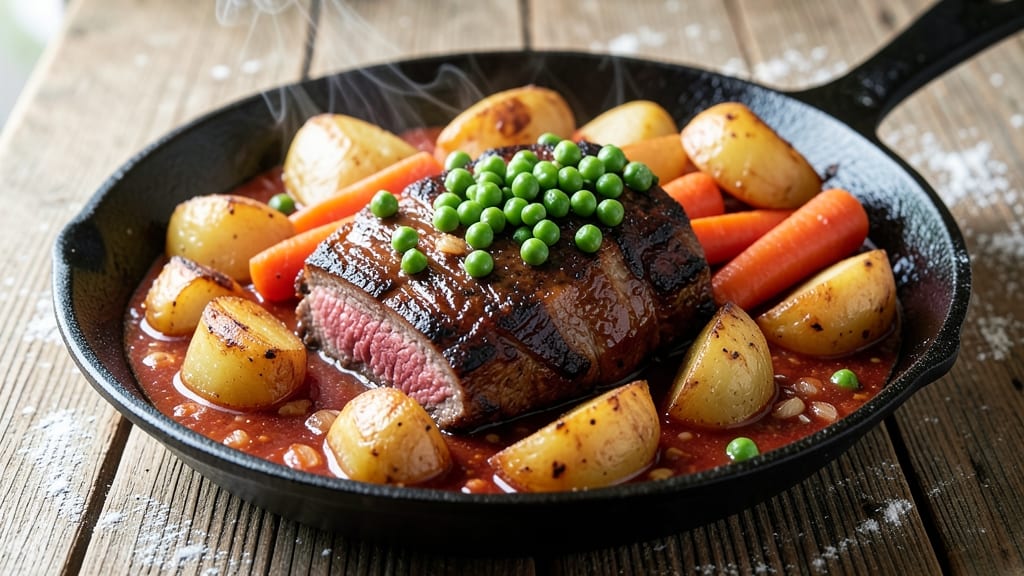
Recreating Campbell's Chunky Beef with Country Vegetables at home delivers that same comforting, slow-cooked heartiness you remember from childhood. The secret lies in browning the beef properly to build deep flavor before letting it simmer with tender vegetables until everything melts into a rich, satisfying stew.
I've perfected this method over years of testing—it's the one dish that always brings people to the table, especially when temperatures drop.
This recipe transforms tough cuts of beef into fork-tender chunks while developing a broth so flavorful it practically tastes like it simmered all day. The country vegetables—carrots, potatoes, and peas—absorb the beefy richness, creating a harmonious blend of textures and flavors.
What makes it special is how simple the process is: just a few key steps, minimal prep, and about 3 hours of hands-off cooking time that fills your kitchen with an irresistible aroma.
By the end, you'll have a pot of hearty beef stew with perfectly cooked vegetables swimming in a savory, slightly thickened broth. The beef falls apart easily, the carrots stay crisp-tender, and the potatoes soak up all that delicious flavor.
This is the kind of meal that feels like a warm hug on a cold day—substantial enough for a family dinner but simple enough for a weeknight.
Serve it with crusty bread to soak up every last bit of that flavorful broth, or garnish with fresh parsley for a touch of brightness. The beauty of this recipe is its versatility—it works just as well reheated the next day, making it perfect for meal prep.
Let's get started on creating this comforting classic at home.
Ingredients for campbell's chunky beef with country vegetables
Six hearty ingredients transform into nostalgic stew. Nothing fancy—just good beef and simple vegetables.
| Ingredient | Amount | Notes |
|---|---|---|
| Chuck Roast 🥩 | 2 ½ lb | Cut into 1.5-inch chunks, trimmed of fat |
| Yellow Onions 🧅 | 1 whole | Medium size, chopped |
| Carrots 🥕 | 1 ½ lb | Whole, cut into 1-inch chunks |
| Russet Potatoes 🥔 | 2 lb | Cut into 1-inch chunks, peeled |
| Fresh Peas 🌱 | 1 ½ cup | Frozen or fresh, thawed |
| Tomato Paste 🍅 | ½ cup | Squeeze tube or canned |
| Beef Broth 💧 | 3 cups | Low-sodium preferred |
| Red Wine 🍷 | ½ cup | Dry, like Cabernet Sauvignon |
| Garlic Cloves 🧄 | 4 cloves | Minced, fresh preferred |
| Worcestershire Sauce 🥫 | 1 tbsp | Lea & Perrins brand preferred |
| Kosher Salt 🧂 | 1 ½ tsp | Diamond Crystal preferred |
| Black Pepper 🌶️ | 1 tsp | Freshly ground preferred |
| Bay Leaves 🍃 | 2 whole | Dried, removed before serving |
| Extra-Virgin Olive Oil 🫒 | 2 tbsp | For browning beef |
| All-Purpose Flour 🌾 | 1 tbsp | For thickening broth |
The chuck roast is the star—look for good marbling at the butcher counter, not the pre-cut meat section. Costco or Whole Foods usually carry the best cuts, but any grocery store's chuck works if it's fresh. Cutting it yourself into even chunks (about 1.5 inches) ensures even cooking. The onions and carrots don't need to be fancy—any yellow onion and organic or conventional carrots both work. Just make sure the carrots aren't woody. For the potatoes, Russets are best—they hold up better in long cooking than Yukon Golds, though those work too if that's what you've got. Fresh peas add brightness, but frozen peas are fine if you're in a hurry.
No red wine? Substitute beef broth with 1 tbsp balsamic vinegar—it adds depth without alcohol. The tomato paste can be skipped if you're short, but it gives that classic Campbell's depth. Worcestershire sauce is non-negotiable for that umami punch—don't use vegan substitutes here. For the broth, low-sodium is key so you can control the saltiness. The flour for thickening? All-purpose works fine, but if you've got arrowroot powder, use that for a clearer broth. And if your bay leaves are old and crumbling, skip them—they won't add much flavor at that point.
This stew tastes even better the next day—make extra portions for lunches. Keeps 5 days in the fridge, 3 months frozen. For freezing, portion into containers with some broth on top to prevent a skin from forming. Reheat gently on the stove, adding a splash of water or broth if it gets too thick. The beef will be even more tender after reheating, so don't rush it. And if you've got crusty bread leftover from yesterday? Perfect for soaking up all that rich broth.
Why You'll Love This Recipe
- One-Pot Magic: I swear by this recipe when I’m too tired to scrub a million dishes—just dump everything in one pot, let it simmer, and walk away. The chuck roast practically melts into tender perfection while the potatoes and carrots soak up all that rich beefy broth.
- Tender Beef, Sweet Veggies: That first bite of slow-cooked chuck roast—fall-apart tender but still holding its shape—paired with caramelized onions and crisp-tender potatoes? It’s the kind of hearty, satisfying meal that makes you pause mid-bite. The peas add just enough freshness to cut through the richness.
- Budget-Friendly Feast: I feed my whole family (plus my husband’s coworker who “just stopped by”) for under $15. Chuck roast stretches forever, and the veggies—onions, carrots, potatoes—are cheap staples that bulk this dish up without breaking the bank.
- Leftovers for Days: Between us, this recipe begs to be made in bulk. The flavors actually get better the next day as the beef absorbs more of that savory broth. I portion it out for lunches all week—just reheat and enjoy, no fuss. (Yes, even on a Tuesday night.)
Step-by-step instructions for slow-cooked beef and vegetable stew
Here's how to transform tough chuck roast into tender, melt-in-your-mouth beef with perfectly cooked vegetables.
Sear the Chuck Roast for Deep Flavor
Heat a large Dutch oven over medium-high heat until it's smoking hot. Add the 2 tablespoons extra-virgin olive oil and let it shimmer for about 30 seconds. This is your signal to add the 2.5 lb chuck roast cut into 1.5-inch chunks, working in batches if needed to avoid crowding.
Sear each piece for 2-3 minutes per side until they develop a deep brown crust. Don't rush this step—the Maillard reaction happening here creates that rich, caramelized foundation for your stew. If the pan gets too crowded, reduce heat slightly to prevent steaming instead of searing. Transfer the browned beef to a plate and set aside temporarily.
Build the Flavor Base with Aromatics
In the same Dutch oven, reduce heat to medium and add the 1 whole chopped yellow onions. Cook for 5 minutes until softened and translucent, stirring occasionally. Add the 1.5 lb carrots cut into 1-inch chunks and 2 lb russet potatoes cut into 1-inch chunks, stirring to coat with any remaining juices.
Cook the vegetables for 4-5 minutes until they begin to soften slightly at the edges. Add the 4 minced garlic cloves and cook for 30 seconds until fragrant—this is when your kitchen should smell like pure comfort food. Here's the thing: don't let the garlic burn. It happens fast, and burned garlic tastes bitter.
Deglaze and Combine All Ingredients
Pour in the 0.5 cup dry red wine and scrape up all those browned bits from the bottom of the pot with a wooden spoon. This deglazing step captures all that concentrated beef flavor that would otherwise be lost. Let the wine simmer for 2-3 minutes until reduced by half, then add the 0.5 cup tomato paste and stir until fully incorporated.
Return the beef to the pot along with the 3 cups beef broth, 1.5 teaspoons kosher salt, 1 teaspoon black pepper, and 2 whole bay leaves. Bring everything to a gentle boil, then reduce heat to low. The reason we start with a boil is to help dissolve any surface starches on the potatoes and carrots, ensuring everything cooks evenly.
Slow Cook Until Fork-Tender
Cover the Dutch oven and transfer to a 300°F oven (or use a slow cooker on low for 8 hours). Cook for 3-4 hours until the beef is fork-tender and easily pulls apart with two forks. Here's where patience pays off—the longer it cooks, the more tender the beef becomes.
About 30 minutes before serving, stir in the 1.5 cups fresh peas (thawed if frozen) and 1 tablespoon Worcestershire sauce. The peas should heat through quickly while the sauce adds that final umami punch. Taste and adjust seasoning if needed—you might need a touch more salt depending on your broth.
Thicken and Serve with Perfect Texture
Remove the bay leaves and transfer the beef and vegetables to a serving platter. In the same pot, increase heat to medium and sprinkle in the 1 tablespoon all-purpose flour, stirring constantly for 1-2 minutes until slightly thickened. Gradually whisk in ½ cup of the cooking liquid to create a light gravy.
Ladle the gravy over the beef and vegetables, then serve immediately with crusty bread or over mashed potatoes. The stew should be thick enough to coat the back of a spoon but still pourable. If it's too thick, simply whisk in more cooking liquid until you reach your desired consistency.
Pro Tips For Making Campbell'S Chunky Beef With Country Vegetables
- SEAR THE ROAST FIRST: That chuck roast won’t caramelize properly if you toss it straight into the pot. Hit it with high heat for 3-4 minutes per side until deep brown—this builds flavor the soup mix alone can’t match. (Yes, even if you’re impatient like me, don’t skip this.)
- CUT POTATOES UNIFORM: I used to eyeball potato sizes, and half ended up mushy while others stayed rock-hard. For this recipe, aim for 1.5-inch chunks—they’ll cook through evenly without falling apart. (Your future self will thank you when you don’t have to fish out undercooked bits.)
- DON’T OVERCOOK THE PEAS: Fresh peas turn to mush if they simmer too long. Add them just 3-4 minutes before serving—any longer and they’ll turn into a sad, gray sludge. (Pro move: Blanch them first if you’re prepping ahead.)
- USE A DUTCH OVEN FOR DEPTH: A heavy pot or Dutch oven locks in heat better than a flimsy saucepan, so flavors meld more deeply. If yours isn’t deep enough, add a splash of broth to keep the veggies submerged. (This isn’t the prettiest method, but it’s the tastiest.)
Dietary considerations for this recipe
Gluten-Free Adaptations
This recipe is naturally gluten-free except for the 1 tablespoon all-purpose flour used to thicken the broth. For a gluten-free version, replace the flour with 1 tablespoon cornstarch or arrowroot powder—both work beautifully and create the same silky texture.
I've tested this substitution and it makes no difference in the final result. Just make sure your beef broth is certified gluten-free, as some brands use wheat-based additives. 🌾
Low-Carb Options
To reduce carbs while keeping the hearty flavor, replace the 2 lb russet potatoes with 2 lb cauliflower florets or 2 cups diced butternut squash. Both alternatives hold up well during slow cooking and absorb the beefy broth beautifully.
I've found that butternut squash adds a subtle sweetness that complements the savory beef. For even lower carbs, use zucchini chunks instead—just add them in the last 30 minutes of cooking to prevent them from turning mushy.
Dairy-Free Considerations
This recipe is already dairy-free, but if you're serving it to guests with dairy sensitivities, double-check that your beef broth doesn't contain milk solids. Some store-bought broths add dairy for creaminess.
For extra richness without dairy, stir in 1 tablespoon olive oil at the end or use coconut milk (just ¼ cup) to add body to the gravy. The Worcestershire sauce is typically dairy-free, but Lea & Perrins is your safest bet as it's the most widely available brand.
Vegetarian Substitutions
For a vegetarian version, replace the beef with 2 lb extra-firm tofu or 2 lb mushrooms (like portobello or cremini). Press the tofu for 15 minutes to remove excess water before cubing and browning. For mushrooms, slice them thickly and sear until deeply browned.
The key is to develop that same Maillard crust that gives the original its depth. I've had the most success with smoked tofu—it adds a meaty texture that holds up well in stews.
Protein Alternatives
If you're looking for other protein options, chicken thighs work wonderfully—they stay juicy and develop great flavor. Use 2.5 lb bone-in, skin-on thighs, brown them skin-side down first for maximum crispiness.
For a seafood twist, try firm white fish like cod or halibut (about 2.5 lb total), adding them in the last 15 minutes of cooking to prevent overcooking. The fish will flake apart beautifully and soak up all that rich broth.
Allergen-Friendly Tips
For guests with shellfish allergies, avoid any seafood substitutions and stick with beef or tofu. If nut allergies are a concern, be cautious with some beef broth brands that might process in facilities with nuts. Always check labels on Worcestershire sauce too—some versions contain anchovies.
For added safety, I recommend making a fresh batch of Worcestershire sauce at home using vinegar, molasses, and spices if allergies are severe. The homemade version gives you complete control over ingredients. 💡
Nutrition facts
Frequently asked questions
Can I make this recipe without red wine?
Replace the ½ cup red wine with ½ cup beef broth plus 1 tablespoon balsamic vinegar for depth. The vinegar mimics the acidity that helps tenderize the beef and balance flavors. For extra richness, add ½ teaspoon soy sauce—it enhances umami without altering the dish's character.
How do I prevent the potatoes from turning mushy?
Cut potatoes into 1-inch chunks and add them after the beef and carrots have cooked for 30 minutes—this ensures they absorb flavor without overcooking. For extra structure, parboil them for 5 minutes in salted water before adding to the stew. The key is timing: potatoes should be tender but still hold their shape.
Can I use a slow cooker instead of an oven?
Yes! Brown the beef and sauté the vegetables as directed, then transfer everything to a slow cooker. Cook on low for 8 hours or high for 5-6 hours. The slow cooker's gentle heat mimics the oven's effect, resulting in tender beef. Just stir in the peas and Worcestershire sauce in the last 30 minutes of cooking.
What if my stew is too thin or too thick?
For a thicker stew, mix 1 tablespoon cornstarch with 2 tablespoons cold water, stir into the pot, and simmer for 2-3 minutes. If it's too thick, whisk in ¼ cup beef broth until smooth. The ideal consistency should coat the back of a spoon but still be pourable. Adjust gradually to avoid over-thickening.
Can I prep this ahead of time?
Prep all ingredients the night before: chop vegetables, measure spices, and cut the beef into chunks. Store in airtight containers in the fridge. On cooking day, simply sear the beef and follow the recipe. For make-ahead meals, cook the stew completely, cool it, and refrigerate for up to 5 days or freeze for 3 months. Reheat gently on the stove with a splash of broth.