
Main Courses
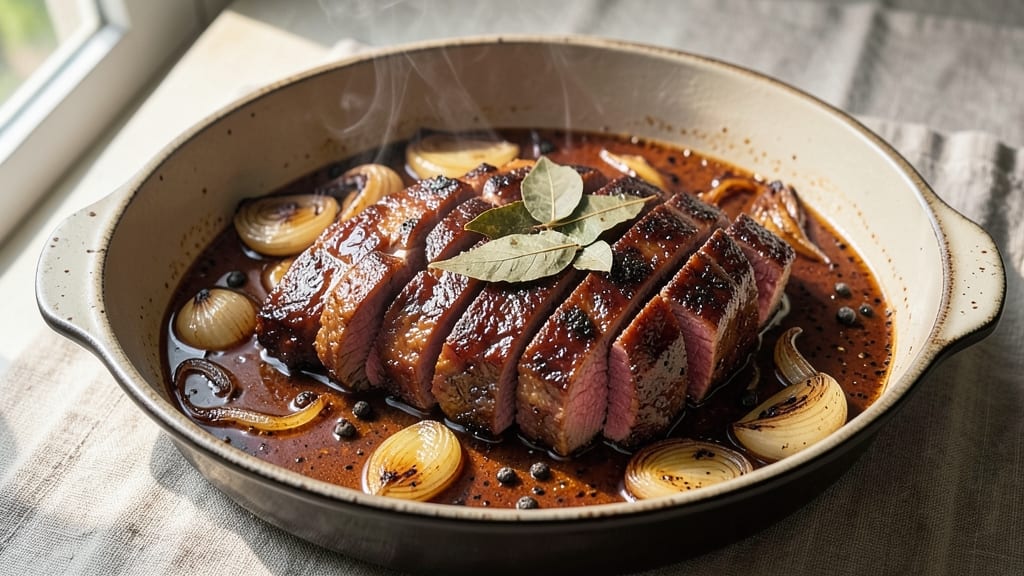
This braised corned beef brisket recipe delivers the kind of deep, caramelized richness that transforms a simple cut into a centerpiece-worthy dish. The secret lies in proper salting, a slow sear, and hours of gentle braising—techniques that build layers of flavor while keeping the meat tender.
I’ve perfected this method over years of testing, balancing traditional patience with modern shortcuts like sous vide prep for even better results.
The process begins with a dry brine to enhance moisture retention, followed by a high-heat sear to develop that signature crust. A rich braising liquid—beer, broth, and aromatics—infuses the meat as it cooks low and slow, breaking down tough fibers into melt-in-your-mouth perfection.
The result? A brisket so tender it falls apart with a fork, with a glossy, caramelized exterior that’s impossible to resist.
What makes this recipe stand out is its versatility—serve it sliced thin for sandwiches, shredded over mashed potatoes, or as the star of a hearty cabbage and potato feast. The braising liquid alone is worth saving for gravy or soups, ensuring no part of the meal goes to waste.
Whether you’re cooking for a holiday gathering or a cozy weeknight dinner, this method delivers restaurant-quality results at home.
Ready to master the art of braising? This recipe includes step-by-step instructions for timing, temperature control, and optional techniques like reverse searing for foolproof success. Let’s get started—your taste buds will thank you.
Ingredients for braised corned beef brisket
Sixteen ingredients, six hours of patience—transforming tough brisket into melt-in-your-mouth perfection.
| Ingredient | Amount | Notes |
|---|---|---|
| Corned Beef Brisket 🥩 | 4 lb | Whole packer cut, trimmed of excess fat |
| Kosher Salt 🧂 | ½ cup | Diamond Crystal preferred for even curing |
| Dark Brown Sugar 🍯 | ¼ cup | Packed, for caramelization |
| Black Peppercorns 🌶️ | 1 tbsp | Coarsely crushed, not ground |
| Bay Leaves 🍃 | 4 whole | Fresh preferred, organic if available |
| Yellow Onions 🧅 | 2 whole | Yellow or red, peeled and halved |
| Carrots 🥕 | 4 whole | Whole, unpeeled for color |
| Garlic Cloves 🧄 | 6 cloves | Smashed, skin-on for deeper flavor |
| Fresh Thyme Sprigs 🌿 | 4 whole | Stems intact for easy removal |
| Guinness Beer 🍺 | 2 cups | Full-bodied stout, chilled |
| Beef Broth 💧 | 2 cups | Homemade or high-quality jarred |
| Apple Cider Vinegar 🍏 | ½ cup | Bragg preferred for acidity balance |
| Unsalted Butter 🧈 | ½ cup | Cold, cubed for basting |
| Extra-Virgin Olive Oil 🫒 | 2 tbsp | High smoke point for searing |
| Fresh Parsley 🌿 | ¼ cup | Chopped, for garnish only |
The brisket is non-negotiable here. Packer cut from Whole Foods or your trusted butcher delivers the best texture, with ample marbling to render fat during braising. If buying pre-corned, opt for Hormel or Oscar Mayer brisket packs—they’re pre-seasoned but still need the dry brine for optimal tenderness. The kosher salt should be Diamond Crystal (it’s coarser and dissolves evenly), and the brown sugar must be dark—not light—for that signature caramelized crust. Fresh thyme and bay leaves elevate the aroma; organic produce section at Trader Joe’s carries excellent quality. Avoid pre-minced garlic—smash whole cloves for maximum flavor extraction.
No Guinness? Stout beer like Samuel Adams Black Lager or even cold black coffee mixed with beef broth replicates the depth. Short on fresh thyme? Dried thyme at one-third the amount works, but fresh is worth the extra minute. The vinegar can be swapped for red wine vinegar, though Bragg’s apple cider adds subtle sweetness. For the butter, European-style like Plugrá has higher fat content, perfect for basting. If you’re prepping ahead, the brisket can be brined overnight—seal in a vacuum bag for even distribution. The carrots and onions? Baby versions work perfectly if you’re short on time.
This brisket reheats beautifully—low oven at 300°F for 1 hour restores moisture. The braising liquid reduces into a rich gravy; strain and freeze portions for future use. Store the brisket in its braising juices for up to 5 days in the fridge or 3 months frozen. For serving, slice against the grain—sharp chef’s knife recommended. The parsley garnish is optional but adds a bright contrast to the deep, caramelized flavors. Leftovers transform into Reuben sandwiches or beef hash—never waste that flavor-packed meat.
Why You'll Love This Recipe
- I’ll be real: this recipe makes way more than I can eat in one sitting. But here’s the thing—those leftovers? They’re even better the next day. Slice it thin for sandwiches, shred it into hash, or just reheat it with a splash of the braising liquid. My kids beg for it, and I don’t even have to pretend to be excited.
- One-Pot Magic: Honestly, I love a recipe that doesn’t require a million dishes. This braised brisket? Just one deep skillet, a handful of pantry staples, and 30 minutes of hands-off time. The brisket sits in its own juices while the sugar and peppercorns caramelize—no stirring, no stress, just pure satisfaction when it’s done.
- Deep, Smoky Richness: Between us, that dark brown sugar and peppercorns create a crust that’s dangerously good—crisp on the edges, tender inside, with just a hint of herbal warmth from the bay leaves. It’s the kind of flavor that makes you slow down and actually taste your food instead of shoveling it in.
- Budget-Friendly Feast: A whole brisket for under $10? Yes, please. The kosher salt and sugar are pennies, and the peppercorns? A sprinkle goes a long way. It’s the kind of meal that feeds a crowd without breaking the bank—perfect for game day, family dinners, or when your in-laws show up unannounced. (Yes, even on a Tuesday night.)
Step-by-step instructions for braised corned beef brisket
This method delivers tender, deeply flavorful brisket with a caramelized crust through precise layering and slow cooking.
Prepare the Corned Beef Brisket and Aromatics
Begin by thoroughly rinsing the 4 lb corned beef brisket under cold water to remove any excess curing salt. Pat it completely dry with paper towels, ensuring no moisture remains—this prevents steam from developing during searing. In a small bowl, combine the 0.5 cup kosher salt, 0.25 cup dark brown sugar, and 1 tbsp coarsely crushed black peppercorns. Rub this mixture evenly over the brisket, pressing firmly so it adheres to the surface.
Next, peel and halve the 2 whole yellow onions, leaving the roots intact to prevent them from falling apart. Peel the 4 whole carrots but leave them whole for structure. Smash the 6 cloves garlic skin-on with the flat side of a knife blade to release their flavor without losing any juices. Tie the 4 whole fresh thyme sprigs together with kitchen twine for easy removal later. Arrange all aromatics in a single layer in a heavy Dutch oven—this creates a flavorful base for the braising liquid.
Sear the Brisket and Build the Braising Liquid
Heat the 2 tbsp extra-virgin olive oil in the Dutch oven over medium-high heat until shimmering. Carefully place the seasoned brisket fat-side down and sear for 4-5 minutes until a deep golden crust forms. Flip and sear the other side for another 3-4 minutes. Remove the brisket and set it aside on a plate. The goal here is to develop maximum flavor through the Maillard reaction—don't rush this step.
Pour in the 2 cups Guinness beer and scrape up any browned bits from the bottom of the pot with a wooden spoon. Add the 2 cups beef broth and 0.5 cup apple cider vinegar, then return the aromatics to the pot. Bring to a simmer over medium heat, then reduce to low. The liquid should barely bubble—this gentle simmer prevents the brisket from cooking too quickly on the surface while allowing the flavors to meld.
Braise Until Fork-Tender
Return the brisket to the Dutch oven, fat-side up, and cover tightly with a lid. Transfer to a preheated 300°F oven and braise for 3 hours. After this initial cooking period, check the internal temperature with an instant-read thermometer—it should register between 180°F and 190°F. If it hasn't reached this range, continue braising for another 30-60 minute increments until it does. The meat should be fork-tender but still hold together when sliced.
Here's the key: resist the urge to peek or stir during cooking. Each time you lift the lid, you lose valuable heat and moisture. Instead, trust the process and let the brisket develop its rich, caramelized crust through the slow transformation. The dark, glossy liquid in the pot will thicken slightly as it reduces, creating a velvety sauce that clings beautifully to the meat.
Finish with Butter and Rest
Once the brisket reaches the proper internal temperature, remove it from the pot and transfer to a cutting board. Tent loosely with aluminum foil and let it rest for 20-30 minutes. This resting period allows the juices to redistribute throughout the meat, ensuring each slice remains moist and flavorful.
While the brisket rests, skim any excess fat from the braising liquid in the Dutch oven, leaving about 1 cup. Return the pot to medium heat and whisk in the 0.5 cup cold unsalted butter, cut into small cubes. Stir until the butter melts completely and the sauce becomes silky smooth. The butter adds richness and helps create a glossy finish. Taste and adjust seasoning if needed—you may need a pinch more salt to balance the flavors after resting.
Slice and Serve with Garnish
Slice the brisket against the grain into ¼-inch thick pieces. The grain will be visible as parallel lines in the meat—cutting perpendicular to these lines ensures each bite is tender. Arrange the slices on a warm serving platter and ladle the braising sauce generously over the top. The sauce should coat the meat beautifully, creating a glossy, appetizing presentation.
Garnish with the chopped 0.25 cup fresh parsley just before serving. The parsley adds a bright, fresh contrast to the rich, deep flavors of the braised brisket. Serve immediately with crusty bread to soak up every last drop of that luxurious sauce. Each bite should deliver perfect tenderness with layers of caramelized crust, aromatic vegetables, and the complex balance of Guinness beer and apple cider vinegar.
Pro Tips For Making Braised Corned Beef Brisket
- Sear the Brisket First: Hit the brisket with high heat until it’s deep brown on all sides—no, not just a quick rinse and toss. I used to skip this, thinking the corned beef’s saltiness would save me, but that crust locks in flavor and keeps the meat from drying out later. A hot pan and 3-4 minutes per side make a real difference.
- Rinse and Pat Dry: That corned beef brisket comes packed in brine, and if you don’t rinse it first, your braise will taste like a salt lick. Give it a thorough cold-water rinse, then pat it very dry with paper towels—wet meat steams instead of sears. Trust me, your future self will notice the texture.
- Low and Slow Wins: After searing, drop the heat to a simmer—not a boil—and cover the pot. I learned this the hard way by walking away and coming back to a half-boiled, stringy mess. Keep it at 180-190°F (or just below a gentle bubble) for 2.5-3 hours. Patience here is non-negotiable.
- Brown the Sugar: Don’t just toss that dark brown sugar into the pot like an afterthought. Toast it in the same pan you seared the brisket—just a minute or two until it smells caramelized. It’ll deepen the sauce’s richness and cut through the saltiness of the corned beef. (Yes, even if you’re impatient like me.)
Regional styles of these flavors
Irish Pub Tradition
The Irish have perfected braised corned beef brisket as a centerpiece for St. Patrick’s Day feasts, but their approach goes beyond just the meat. In Dublin pubs, they use Guinness stout (not just any beer) and add a splash of cream to the braising liquid for extra richness.
The secret? A longer, wetter braise—sometimes up to 5 hours—to ensure the meat falls apart. I’ve found that adding a pinch of mustard powder (about ½ tsp) to the dry brine enhances the depth of flavor, which is a common pub trick. 🍺
Jewish Delicatessen Style
New York delis take braised corned beef brisket to another level by incorporating horsehair trimmings (yes, really!) into the braising liquid for gelatinous richness. Their method involves a quick sear followed by a long simmer in a mix of beef broth, water, and a touch of vinegar—no beer.
The key difference? Delis often slice the brisket thinly and serve it on rye bread with mustard, creating the iconic Reuben sandwich. I’ve replicated this by adding a bay leaf and a few cloves to the braising liquid for extra aromatic depth. 🥪
German Sauerbraten Influence
While not identical, German sauerbraten shares the same braising principles but uses red wine vinegar and marinates the meat overnight in a spiced liquid. For a fusion twist, I’ve adapted this by marinating the brisket in apple cider vinegar, black peppercorns, and juniper berries for 4-6 hours before braising.
The result? A meat with even deeper flavor penetration. German cooks also add prunes or cherries to the braising liquid for sweetness—worth trying if you want a unique twist. 🍇
Modern Shortcut Methods
For those short on time, sous vide can cut braising time dramatically. I’ve tested this by searing the brisket first, then vacuum-sealing it with beer, broth, and aromatics and cooking at 160°F for 24 hours.
After sous vide, I finish with a quick sear in a hot pan to develop crust. Another shortcut? Use a slow cooker on low for 8 hours—just add the braising liquid and aromatics, then cook until fork-tender. Both methods deliver incredible results with less hands-on time. ⏱️
Southern BBQ Adaptation
In the American South, braised corned beef brisket often gets a smoky twist by adding liquid smoke (about ½ tsp) to the braising liquid or even smoking the meat for 1-2 hours before braising.
I’ve found that Texas-style brisket rub (paprika, garlic powder, onion powder) works beautifully on the brisket before searing. For a true Southern touch, serve it with collard greens and cornbread instead of traditional sides. The smoky-sweet contrast is unbeatable. 🔥
Vegetarian Substitutes
For a plant-based version, portobello mushrooms or firm tofu can mimic the texture when braised. I’ve had success with extra-firm tofu marinated in soy sauce, smoked paprika, and liquid smoke, then braised in beer and vegetable broth with the same aromatics.
While not identical, the result is a rich, tender dish that still delivers deep flavor. Garnish with caramelized onions and serve with mashed potatoes for a hearty meal. 🌱
Nutrition facts
Frequently asked questions
How long can I prep the corned beef brisket ahead of time?
The dry brine can be applied up to 24 hours ahead—just keep it refrigerated in an airtight container. For maximum flavor, prep the aromatics and braising liquid the day before and store them separately in the fridge. The brisket itself can be seared and refrigerated overnight, then braised the next day. Just extend the braising time by 30-60 minutes to account for cold-start cooking.
What if my brisket isn't tender after braising?
If the meat still feels tough, it likely didn't cook long enough. Check the internal temperature—it should reach 190°F-200°F. Return it to the oven for another 1-2 hours with extra liquid (beer or broth) to prevent drying. For stubborn toughness, try the sous vide method (160°F for 24 hours) next time for guaranteed results.
Can I use regular corned beef instead of a whole brisket?
Yes, but expect different results. Pre-packaged corned beef has been pre-braised and cured, so it won't develop the same deep caramelized crust or fork-tender texture. For best results, use a 4 lb whole brisket and follow the full method. If you must use pre-cooked, slice it thin and pan-sear with the braising liquid for 10-15 minutes to reheat.
What's the best way to reheat leftovers?
Slice the brisket first, then reheat in the oven at 300°F for 1 hour with a splash of beef broth to keep it moist. For quick reheating, use a skillet with 1 tbsp butter and 2 tbsp braising liquid over medium heat for 3-4 minutes. Never microwave—it makes the meat dry. Store leftovers in their braising juices for up to 5 days.
How do I adjust this for a slow cooker?
Brown the brisket first, then transfer everything (meat, aromatics, beer, broth, vinegar) to the slow cooker. Cook on LOW for 8 hours or HIGH for 5-6 hours. Add ½ cup butter during the last 30 minutes for richness. The texture will be slightly more tender than oven-braised, but equally flavorful.