
Main Courses
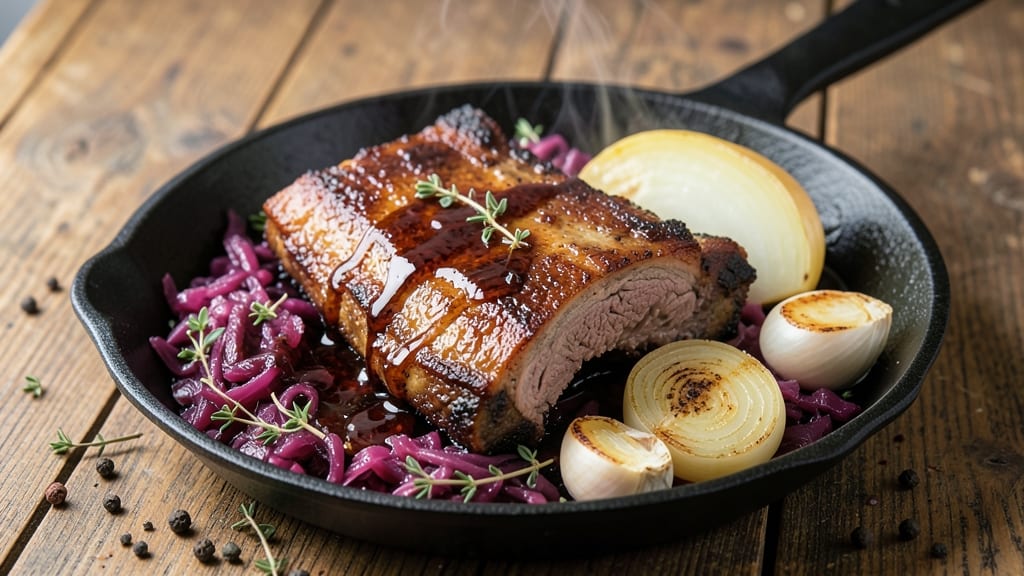
This beef ribs and sauerkraut recipe transforms tough cuts into melt-in-your-mouth tenderness while balancing rich meat with the sharp tang of fermented cabbage. The slow-braising process unlocks deep, smoky flavors in the ribs, while the sauerkraut adds a bright, crunchy contrast that cuts through every bite.
I developed this dish after years of experimenting with braising techniques—what started as a simple weeknight meal became a restaurant-worthy favorite.
The secret lies in the slow cook—whether in a Dutch oven on the stove or a smoker—where ribs develop a fall-apart texture while absorbing aromatic spices and a sweet-savory glaze. Meanwhile, the sauerkraut gets gently warmed (or served raw for maximum tang) to maintain its signature crunch.
This isn’t just comfort food; it’s a balanced meal where every component plays its part—rich, tender, and tangy in perfect harmony.
By the time you’re done, you’ll have ribs so tender they slide off the bone, their surfaces glistening with a caramelized crust, paired with sauerkraut that adds a refreshing bite.
The dish serves as a hearty main or the centerpiece of a meal, effortlessly elevating simple ingredients into something extraordinary. Ready to master this technique? Let’s get started.
Serve with crusty bread to soak up the juices or alongside roasted potatoes for a complete meal. The beauty of this recipe is its flexibility—adjust the braising time for your preferred tenderness or swap smoked paprika for a different spice blend.
The result is always the same: restaurant-quality ribs with a tangy, crunchy side that keeps every bite exciting.
Ingredients for beef ribs and sauerkraut
Four pounds of meaty ribs and two cups of tangy sauerkraut—this is where rich, slow-braised beef meets fermented crunch.
| Ingredient | Amount | Notes |
|---|---|---|
| Beef Ribs (Baby Back or St. Louis Style) 🍖 | 4 lb | Bone-in, meaty cuts preferred |
| Sauerkraut (Unpasteurized, Fermented) 🥬 | 2 cups | Packed, no liquid drained |
| Yellow Onion 🧅 | 1 whole | Medium size, sliced into wedges |
| Garlic Cloves 🧄 | 6 cloves | Smash lightly for deeper flavor |
| Apple Cider Vinegar 🍎 | ½ cup | For tangy depth (not white vinegar) |
| Dark Brown Sugar 🍬 | ¼ cup | Packed, for caramelized crust |
| Smoked Paprika 🌶️ | 2 tbsp | High-quality for smoky aroma |
| Ground Black Peppercorns 🌶️ | 1 tbsp | Freshly cracked for intensity |
| Kosher Salt 🧂 | 1 ½ tbsp | Diamond Crystal preferred |
| Fresh Thyme Leaves 🌿 | ¼ cup | Stems removed, chopped |
| Fresh Rosemary Sprigs 🌿 | 2 sprigs | Woody stems trimmed |
| Extra-Virgin Olive Oil 🫒 | ¼ cup | For searing ribs |
| Beef Broth (Low-Sodium) 💧 | 1 ½ cups | Homemade or high-quality store-bought |
| Whole Grain Mustard 🍯 | 1 tbsp | For subtle tangy kick |
| Apple Juice (Unsweetened) 🍎 | ½ cup | Balances richness |
The ribs are the star, so don’t cut corners. Baby back or St. Louis-style cuts work best—they’ve got that perfect balance of meat and connective tissue. I always grab mine from Whole Foods or a trusted butcher, looking for cuts with good marbling. Bone-in is non-negotiable—those bones hold onto flavor like nothing else. If you’re buying frozen, thaw overnight in the fridge. The sauerkraut? Unpasteurized is key—it’s got that live fermentation tang that store-bought canned versions miss. Trader Joe’s has a great organic version, or hit up a local deli counter for the freshest batch.
No sauerkraut? Ferment your own cabbage—it’s easier than you think, or use quick-pickled red cabbage as a substitute (though it won’t have the same depth). Short on smoked paprika? Substitute half with chipotle powder for heat, or regular paprika plus a pinch of liquid smoke. The apple cider vinegar can be swapped for red wine vinegar in a pinch, but it’ll lose some of that fruity complexity. Fresh herbs wilt fast, so if you’re prepping ahead, dried thyme at one-third the amount works, but nothing beats the aroma of fresh. The mustard adds brightness—if you’re avoiding it, extra lemon juice (1 tbsp) does the trick.
This dish tastes even better the next day, so make it ahead. Store ribs and sauce separately in the fridge for up to 4 days, then reheat gently on the stove. The sauerkraut? Eat it straight from the jar—no reheating needed to keep that crunch. For leftovers, freeze portions in airtight containers for 3 months. Pro tip: Save the braising liquid for soups or gravy—it’s packed with flavor. And if you’ve got extra ribs, turn them into sandwiches with crusty bread and a smear of mustard.
Why You'll Love This Recipe
- Here’s what sold me: that first bite where the tender ribs meet the sharp, briny sauerkraut. The apple cider vinegar cuts through the richness, and the unpasteurized fermented tang gives it this je ne sais quoi—like a fancy restaurant dish, but made in my kitchen. Not the prettiest, but the taste makes up for it every time.
- One-Pan Magic: I swear by this recipe when I don’t want to scrub three pots. The ribs and sauerkraut braise together—no flipping, no fuss—just a single sheet pan that handles everything. The onions caramelize right alongside while the garlic infuses the whole thing, so you’re left with layers of flavor without the mess.
- Tangy Crunch Combo: Here’s what sold me: that first bite where the tender ribs meet the sharp, briny sauerkraut. The apple cider vinegar cuts through the richness, and the unpasteurized fermented tang gives it this je ne sais quoi—like a fancy restaurant dish, but made in my kitchen. Not the prettiest, but the taste makes up for it every time.
- Weeknight Workhorse: Between us, this is my go-to when I’ve got friends dropping by unannounced or my kid’s soccer team needs snacks. It’s hearty enough for a main dish but still feels light enough for a side. I’ll be real: my daughter picks out the crispy rib bits first, but still asks for seconds. (Yes, even on a Tuesday night.)
Step-by-step instructions for beef ribs and sauerkraut
Here's how to transform tough ribs into fork-tender perfection with a tangy, crunchy sauerkraut finish.
Prepare and Sear the Ribs
Pat the 4 lb beef ribs dry with paper towels, removing any excess moisture from the surface. This step is crucial for achieving that perfect caramelized crust later. In a large Dutch oven, heat the 0.25 cup extra-virgin olive oil over medium-high heat until shimmering. Place the ribs bone-side down in the pan and let them sear undisturbed for 5-6 minutes until deep golden brown forms on the meaty sides.
Here's where it gets important: don't move them during this initial sear. You want those Maillard reactions working their magic to create deep flavor. Once browned, carefully flip the ribs and sear the other side for another 5-6 minutes. Remove the ribs from the pan and set them aside on a plate, leaving all that beautiful browned fond behind.
Build the Flavor Base
In the same Dutch oven, reduce the heat to medium and add the sliced 1 whole yellow onion. Cook for 5-6 minutes until softened and beginning to caramelize. Add the 6 lightly smashed garlic cloves and cook for another 30 seconds until fragrant—don't let them burn, or they'll turn bitter.
Stir in the 2 tbsp smoked paprika, 1 tbsp ground black peppercorns, and 1.5 tbsp kosher salt, letting the spices toast in the pan for 30 seconds to release their aromatic oils. This creates a flavor foundation that will infuse the entire dish. Pour in the 0.5 cup apple cider vinegar and scrape up all those browned bits from the bottom of the pan—this is where all the flavor lives.
Combine and Braise
Return the seared ribs to the Dutch oven and add the 2 cups sauerkraut, spreading it evenly around the ribs. Pour in the 1.5 cups beef broth and 0.5 cup apple juice, then sprinkle with the 0.25 cup fresh thyme leaves and 2 rosemary sprigs. The liquid should come about halfway up the ribs—if it's too shallow, add a splash of water.
Bring everything to a simmer, then cover the pot and transfer to a preheated 300°F oven. Here's the key: braise for 3-3.5 hours until the ribs are fork-tender. You'll know they're done when a meat thermometer inserted into the thickest part reads 195-200°F and the meat pulls apart easily with just slight resistance.
Finish with Sweetness and Mustard
After the initial braising time, remove the ribs from the oven and stir in the 0.25 cup dark brown sugar and 1 tbsp whole grain mustard. The sugar will caramelize slightly, adding another layer of complexity to the sauce. Return the ribs to the oven for an additional 30-45 minutes to let the sugar develop its flavor and the sauce reduce slightly.
Here's the final test: the ribs should be so tender they practically fall apart when you lift them with tongs. The sauce should coat the back of a spoon and have a beautiful glossy sheen. If it's too thin, uncover and simmer for another 10 minutes to reduce it. The sauerkraut should be softened but still retain some crunch, adding that perfect textural contrast.
Pro Tips For Making Beef Ribs And Sauerkraut
- Sear Ribs Before Braising: Hit the ribs with a screaming-hot pan—no oil needed, just their own fat—until deep brown in spots. I learned this the hard way: skipping the sear means flavor that’s more sauerkraut-adjacent than rib-adjacent. Let them sit 10 minutes after searing; the residual heat keeps them from steaming when they hit the pot.
- Drain and Rinse Kraut: Unpasteurized sauerkraut comes packed in brine—way more liquid than you need. Drain it in a colander, then rinse under cold water to cut the acidity. This isn’t about cleaning; it’s about balancing the tang so the onions and vinegar don’t turn your dish into a science experiment. (Yes, even if the jar says it’s “ready to eat.”)
- Don’t Crowd the Pot: If your ribs are packed like sardines, they’ll steam instead of braise. Layer them bone-side up with onions and garlic in a single layer, then add kraut in between. I once ignored this and ended up with ribs that tasted like sauerkraut soup. Trust me, the space matters.
- Simmer, Don’t Boil: Keep the liquid at a gentle bubble—tiny bubbles at the edges, not a rolling boil. Too much heat turns the kraut mushy and the ribs tough. After 2 hours, if it’s still not tender, add ¼ cup water, but don’t walk away. This isn’t a set-and-forget stew; it’s a slow dance.
Creative variations of these flavors
German-Style Sauerbraten Twist
Transform this dish into a classic German Sauerbraten by marinating the ribs overnight in a mixture of 1 cup apple cider vinegar, ½ cup red wine, 2 tbsp juniper berries, 1 tbsp caraway seeds, and 1 tbsp black peppercorns.
After marinating, braise the ribs with the same ingredients plus 2 cups sauerkraut and 1 large onion for 4-5 hours at 300°F. The result? A deep, tangy sauce that pairs perfectly with the tender ribs. 🌍
Asian-Inspired Kimchi Ribs
Swap the sauerkraut for 2 cups kimchi and infuse the braising liquid with 1 tbsp gochugaru (Korean red pepper flakes), 1 tbsp grated ginger, and 2 tbsp soy sauce. Add 1 cup coconut milk at the end of cooking for richness.
Serve with steamed jasmine rice and sesame seeds for a fusion dish that’s bold and balanced. The kimchi’s heat contrasts beautifully with the ribs’ tenderness. 🌶️
Smoky BBQ Ribs with Caramelized Kraut
For a Southern-inspired version, smoke the ribs with hickory or cherry wood chips> for 3-4 hours> at 225°F> before finishing in the oven.
Caramelize the sauerkraut separately by cooking it in a skillet with 1 tbsp brown sugar> and 1 tbsp apple cider vinegar> for 10 minutes> until glossy.
Drizzle the ribs with a tangy BBQ sauce made from ½ cup ketchup>, ¼ cup apple cider vinegar>, and 1 tbsp smoked paprika>. 🔥
Spicy Cajun Ribs with Pickled Cabbage
Kick up the heat with a Cajun-inspired twist>: toss the ribs in a dry rub of 2 tbsp Cajun seasoning>, 1 tbsp garlic powder>, and 1 tbsp onion powder> before searing.
Braise with 1 cup pickled cabbage> (quick-pickled in ½ cup vinegar>, 1 tbsp sugar>, and 1 tsp mustard seeds>) and finish with a splash of hot sauce. Serve over dirty rice for a Louisiana-style feast. 🌶️
Herb-Infused Ribs with Apple-Cider Kraut
Elevate the dish with a herb-forward approach>: add 1 tbsp fresh tarragon> and 1 tbsp fresh marjoram> to the braising liquid. For the sauerkraut, mix in ½ cup diced apples> and 1 tbsp apple cider vinegar> during the last 30 minutes> of cooking.
The apples soften slightly, adding natural sweetness that complements the ribs’ richness. Perfect for a fall or winter meal. 🍏
Slow-Cooker Shortcut
For a hands-off version, sear the ribs as directed, then transfer everything—including the sauerkraut—to a 6-quart slow cooker>. Add 1 cup beef broth>, cover, and cook on Low for 8 hours or High for 5 hours.
Stir in the sugar and mustard during the last 30 minutes> to caramelize. The slow cooker keeps the ribs tender while letting the sauerkraut soften just enough to stay crunchy. Ideal for busy weeknights! ⏰
Nutrition facts
Frequently asked questions
Can I use frozen sauerkraut in this recipe?
Fresh, unpasteurized sauerkraut is ideal for maximum tang and crunch, but you can use frozen sauerkraut in a pinch. Just thaw it completely first and drain any excess liquid to prevent a watery sauce. For best results, add it during the last 30 minutes of braising to preserve its texture.
How do I know when the ribs are fully tender?
Ribs are done when they reach an internal temperature of 195-200°F and the meat pulls apart easily with just slight resistance. Insert a meat thermometer into the thickest part—the probe should slide in like butter. If they're not quite there after 3 hours, add 15-30 minutes more.
Can I make this dish in a slow cooker instead of an oven?
After searing the ribs, transfer everything to a 6-quart slow cooker with 1 cup beef broth. Cook on Low for 8 hours or High for 5 hours. In the last 30 minutes, stir in the sugar and mustard to caramelize. The slow cooker keeps the ribs tender while letting the sauerkraut stay slightly crisp.
What if my sauerkraut loses all its crunch?
Overcooking is the most common cause. To preserve texture, add sauerkraut only during the last 30-45 minutes of cooking. If it's already too soft, serve it on the side or mix in a small amount of raw sauerkraut at the end. For extra crunch, try caramelizing it separately in a skillet with 1 tbsp brown sugar and 1 tbsp apple cider vinegar for 5 minutes.
Can I substitute sauerkraut with something else?
For a similar tangy crunch, try kimchi (Asian-inspired) or quick-pickled red cabbage (made with vinegar, sugar, and mustard seeds). If you prefer no fermented flavors, sauté 2 cups shredded cabbage with 1 tbsp apple cider vinegar and 1 tsp caraway seeds until tender. The key is balancing the richness of the ribs with acidity.