
Main Courses
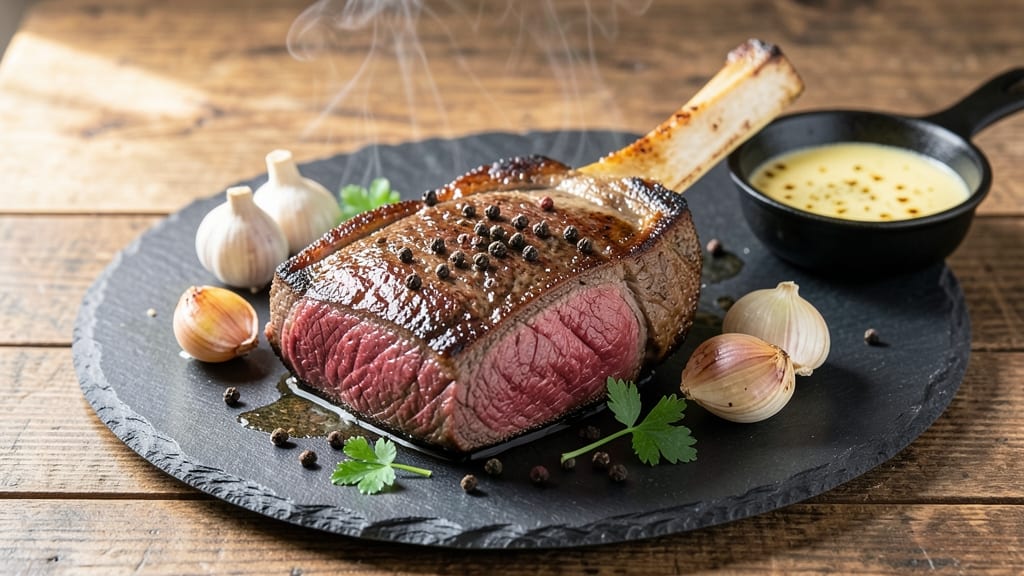
Mastering a bone-in beef loin New York steak transforms weeknight dinners into restaurant-worthy experiences with just one perfect sear. The key lies in balancing a crispy crust with buttery tenderness—a technique that elevates simple ingredients into something extraordinary.
I’ve refined this method over years of testing, ensuring the bone adds depth while the meat remains impossibly tender at the core.
What sets this recipe apart is the reverse-sear approach, where the steak cooks low and slow before finishing with a screaming-hot sear. This method guarantees even doneness without overcooking the exterior, while the bone infuses the meat with rich, savory flavor.
The result? A steak so tender it nearly melts in your mouth, with a crust that crackles at every bite.
You’ll need just five essential ingredients—high-quality beef, salt, pepper, butter, and garlic—to create a dish that feels like a chef’s special. The process is straightforward but demands precision: proper seasoning, controlled heat, and the patience to let the steak rest.
This isn’t just a steak; it’s a showstopper that commands attention at any table.
The beauty of this recipe lies in its versatility. Serve it alongside roasted potatoes, a crisp salad, or even a simple grilled vegetable to let the steak shine.
Every bite delivers the perfect harmony of crust and tenderness, proving that even the most classic cuts can become extraordinary with the right technique.
Ingredients for beef loin new york steak bone in
Five ingredients, one perfect sear, and the bone's rich depth transform beef into a showstopper.
| Ingredient | Amount | Notes |
|---|---|---|
| Bone-In Beef Loin New York Steak 🥩 | 1 ½ lb | Center-cut, 1.5-inch thick, bone-in preferred |
| Kosher Salt 🧂 | 1 ½ tbsp | Diamond Crystal preferred, coarse grain |
| Freshly Ground Black Pepper 🌶️ | 1 ½ tsp | Cracked peppercorns for optimal flavor |
| Unsalted European-Style Butter 🧈 | 4 tbsp | 85% fat content, cold and cubed |
| Garlic Cloves 🧄 | 6 cloves | Smash with side of knife, not minced |
| High-Smoke-Point Neutral Oil 🫒 | 2 tbsp | Avocado or grapeseed oil for searing |
| Fresh Thyme Leaves 🌿 | 1 tbsp | Optional garnish, stems removed |
The bone-in beef loin is non-negotiable here—look for a center-cut with good marbling and visible fat cap. Whole Foods Market or specialty butchers carry ideal cuts, often labeled as 'New York strip' with bone. Avoid pre-trimmed steaks; the bone's collagen renders into the meat during cooking, creating unparalleled depth. For a 4-person meal, aim for a 1.5-pound steak that yields four 4-ounce portions. If your butcher sells by the pound, request a 1.5-inch thick cut for even cooking. The steak should feel firm but slightly springy to the touch—this indicates proper aging and tenderness. Store unwrapped in the fridge for up to 5 days or freeze for 6-12 months in vacuum-sealed bags.
For salt, Diamond Crystal kosher salt is ideal—it's coarser and dissolves slower, creating better crust formation. Substitute with Maldon flaky salt if preferred, but reduce to 1 tbsp due to its finer texture. Freshly cracked peppercorns are essential; pre-ground loses potency quickly. Penzeys Spices sells high-quality peppercorns that stay fresh for months. The butter must be European-style (85% fat)—it has a lower water content, preventing steam from interfering with crust formation. For oil, avocado oil has the highest smoke point (520°F), while grapeseed is a budget-friendly alternative. Garlic should be fresh, plump cloves—avoid pre-minced, which oxidizes quickly. If thyme isn't available, fresh rosemary works equally well as a garnish.
This steak is best cooked the day it's purchased for optimal tenderness. If prepping ahead, season the steak 12 hours in advance and refrigerate uncovered on a wire rack—this enhances crust formation. The reverse-sear method requires patience: low-and-slow oven cooking (250°F) followed by a screaming-hot cast-iron sear. For leftovers, slice against the grain and reheat in a 350°F oven for 10-15 minutes with a pat of butter to restore moisture. The steak freezes beautifully—portion into individual servings before freezing for easy reheating. Always let the steak rest 10 minutes post-cooking to redistribute juices; cutting into it too soon results in dry, disappointing bites.
Why You'll Love This Recipe
- Five-Ingredient Magic: I swear by this—just salt, pepper, butter, garlic, and that perfect bone-in steak. Honestly, it’s the kind of recipe where you don’t overthink it, and the result still feels like a restaurant-worthy meal.
- Butter-Basted Bliss: That moment when you baste the steak with melted garlic butter? The crust seals in, the edges caramelize, and suddenly you’ve got a flavor bomb that’s crispy outside, tender inside. My kids fight over the last bite of the bone—yes, even the bone.
- Weeknight to Weekend: Same recipe, different vibes. Weeknight? Quick sear, slice, and serve with crusty bread. Weekend dinner party? Let it rest, carve it dramatically, and pair it with roasted potatoes. It handles the spotlight without breaking a sweat.
- Leftovers That Don’t Suck: Cold slices the next day? Still delicious. Toss them into a salad, wrap them in toast, or just eat them straight from the fridge. Between us, that bone-in cut means extra marrow for rich, savory drizzle—no waste, all flavor.
Step-by-step instructions for beef loin New York steak bone-in recipe
Here's the precise method to achieve a perfect crust while maintaining tender, buttery perfection.
Season and Rest the Bone-In Beef Loin New York Steak
Pat the 1.5 lb bone-in beef loin new york steak completely dry with paper towels, focusing on the thickest portions where moisture tends to accumulate. This step is critical for developing that coveted crust. Generously apply 1.5 tbsp kosher salt and 1.5 tsp freshly ground black pepper over all surfaces, pressing the seasoning into the meat with your fingertips to ensure even distribution.
Transfer the seasoned steak to a wire rack set over a rimmed baking sheet and refrigerate uncovered for 1 hour. This resting period allows the salt to penetrate deeply while the surface dries, creating an ideal foundation for crust formation. The steak should reach room temperature before cooking, which prevents uneven cooking and ensures a consistent sear.
Sear the Steak to Develop Crust and Color
Heat a heavy skillet over high heat until it's screaming hot. Add 2 tbsp high-smoke-point neutral oil and allow it to shimmer for 1 minute—this ensures proper heat distribution for searing. Place the steak in the pan, bone-side down first, and press gently with a metal spatula to maintain contact with the hot surface. Let it sear undisturbed for 3 minutes until a deep golden-brown crust forms.
Flip the steak and repeat the process on the opposite side for another 3 minutes. The crust should be uniformly browned and slightly caramelized. Here's the thing—resist the urge to move the steak during this time. The prolonged contact with the hot surface is what creates that restaurant-quality crust. If the steak begins to release easily from the pan, it's ready to move to the next stage.
Build the Buttery Garlic Thyme Crust
Reduce the heat to medium and add 4 tbsp unsalted european-style butter to the pan. Let it melt completely, then add the 6 smashed garlic cloves and 1 tbsp fresh thyme leaves. Cook for 1 minute until the garlic is fragrant but not browned—this prevents bitterness and preserves the delicate flavors. The butter should foam and create a glossy coating in the pan.
Flip the steak once more to coat the crust side with the buttery garlic mixture. Spoon the melted butter mixture over the top of the steak, ensuring it's evenly distributed. This step creates a dual crust—your initial sear plus this rich, aromatic butter layer—that locks in moisture while adding depth of flavor. The steak should now have a glossy, golden appearance with visible butter flecks.
Finish with Precision Timing for Perfect Doneness
Transfer the steak to a wire rack set over a plate and tent loosely with aluminum foil. Let it rest for 8-10 minutes at room temperature. This resting period is non-negotiable—it allows the juices to redistribute throughout the meat, ensuring each slice remains tender and moist. The internal temperature should reach 125°F for medium-rare doneness when measured at the thickest point, away from the bone.
Slice the steak against the grain into ½-inch thick portions, beginning at the thickest end. The bone-in nature of this cut means you'll have one thicker portion and one slightly thinner portion—this is normal and expected. Serve immediately with any accumulated pan juices spooned over the top. The result should be a steak with a perfect crust that gives way to tender, buttery meat with a subtle garlic-thyme aroma in every bite.
Pro Tips For Making Beef Loin New York Steak Bone In
- SEAR IN BATCHES: Bone-in New Yorks are heavy—crowding the pan drops the temperature fast, and you’ll end up with steamed meat instead of a crust. Cook one side at a time, even if it takes longer. I learned this the hard way after serving my first batch with sad, pale crusts.
- SALT THE GARLIC BUTTER: That unsalted European butter needs seasoning, or you’re missing flavor. Crush 2-3 garlic cloves into the softened butter with a pinch of salt and pepper before basting—it’s the easiest way to upgrade the sauce without extra effort.
- CHECK TEMP WITH THE TOUCH: No fancy thermometer? Press your finger into the thickest part—if it feels like pressing a warm cheek (not too soft, not firm), it’s likely medium-rare. Bone-in steaks run hotter; pull them 5°F below target and let them rest.
- REST UNDER FOIL: Tent the steak with foil for the first 5 minutes of resting—keeps the crust intact while juices redistribute. I skip this, and the edges dry out before the center catches up. (Yes, even if you’re impatient like me.)
Essential equipment for beef loin new york steak bone in
Cast Iron Skillet
A 10-inch Lodge Pre-Seasoned Cast Iron Skillet is my go-to for searing bone-in New York steaks. The heavy-duty construction retains heat evenly, creating that perfect crust without hot spots. I prefer Lodge because its pre-seasoned surface requires minimal maintenance—just a quick wipe-down after use.
For even better results, preheat the skillet on the stove for 5 minutes before adding oil. The weight also helps stabilize the steak during searing, preventing flipping mishaps. 🔥
Meat Thermometer
Accuracy is everything when cooking steak, and a ThermoWorks Smoke digital thermometer with a leave-in probe is a game-changer. I insert the probe into the thickest part of the steak (away from bone) to monitor internal temperature precisely.
For medium-rare doneness, aim for 125°F—this ensures perfect tenderness without overcooking. The Smoke thermometer’s dual-probe capability lets me track both the steak and oven temperature simultaneously if I’m using a reverse-sear method.
Wire Rack and Baking Sheet
A stainless steel wire rack placed over a rimmed baking sheet is essential for proper resting and even cooking. The rack elevates the steak, allowing air to circulate and preventing steam from forming, which keeps the crust crisp.
I use a Viking brand wire rack because it’s durable and fits snugly on most baking sheets. For reverse searing, I place the rack in a 450°F oven to ensure even heat distribution around the steak.
Tongs for Secure Handling
OXO Good Grips Kitchen Tongs are my preferred tool for flipping the steak—their non-slip grip prevents the steak from slipping mid-flip, which is critical for maintaining that perfect crust. The silicone tips also protect the steak’s surface from tearing. I avoid forks or spatulas, as they puncture the meat and release juices prematurely. For extra security, I grip the steak near the bone end, where the meat is thicker and less prone to tearing.
High-Quality Knife
A Wüsthof Ikon 8-inch chef’s knife is indispensable for slicing bone-in steaks against the grain. The German steel blade stays sharp longer and cuts through the meat cleanly, ensuring each slice is ¼-inch thick for optimal tenderness. I recommend honing the knife before use to maintain a razor-sharp edge.
For the bone-in section, I make a careful cut around the bone first, then separate it from the meat before slicing the rest of the steak.
Butter Basics
While not equipment per se, European-style butter (85% fat content) like Plugrá or Kerrygold is non-negotiable for the buttery garlic crust. The higher fat content ensures a richer, more stable compound butter that won’t steam away during cooking.
I cube the butter and chill it slightly before adding it to the pan—this prevents it from melting too quickly and losing its flavor. For extra richness, I sometimes add a pinch of smoked sea salt to the butter mixture before basting the steak. 💫
Nutrition facts
Frequently asked questions
Why does the recipe specify a bone-in New York strip steak?
The bone adds incredible depth of flavor as it renders during cooking, creating a richer, more complex taste profile. It also helps stabilize the steak during searing, preventing it from curling up in the pan. The bone-in version yields more tender meat since the collagen breaks down during cooking, infusing moisture back into the steak.
Can I substitute boneless New York strip steak?
You can, but the flavor won't be identical. Boneless cuts lack the collagen-rich bone that enhances tenderness and depth. If using boneless, consider adding a small piece of beef marrow or extra butter during cooking to compensate for the lost flavor. The cooking time may also need adjustment since boneless steaks cook slightly faster.
What's the best way to handle the bone when slicing?
First, make a careful cut around the bone using a sharp knife to separate it from the meat. Then slice the steak against the grain in ½-inch thick portions, working away from the bone. For the bone section, you can either remove it completely or serve it separately for those who prefer to eat around it. Always use a razor-sharp knife to prevent tearing the meat.
How do I adjust cooking time for thicker/thinner steaks?
For steaks thicker than 1.5 inches, increase searing time by 30 seconds per side and extend oven time by 5 minutes per ¼-inch thickness. For thinner cuts (1 inch), reduce searing to 2 minutes per side and oven time by 5 minutes. Always use a meat thermometer to verify doneness at 125°F for medium-rare.
Can I make this steak ahead of time?
Season the steak 12 hours ahead and refrigerate uncovered on a wire rack. Cook it fresh for best results, but if needed, reheat sliced portions in a 350°F oven for 10-15 minutes with a pat of butter to restore moisture. Never reheat the whole steak—it will overcook. For make-ahead meals, consider cooking to medium (145°F) and finishing with a quick sear when ready to serve.