
Soups & Stews
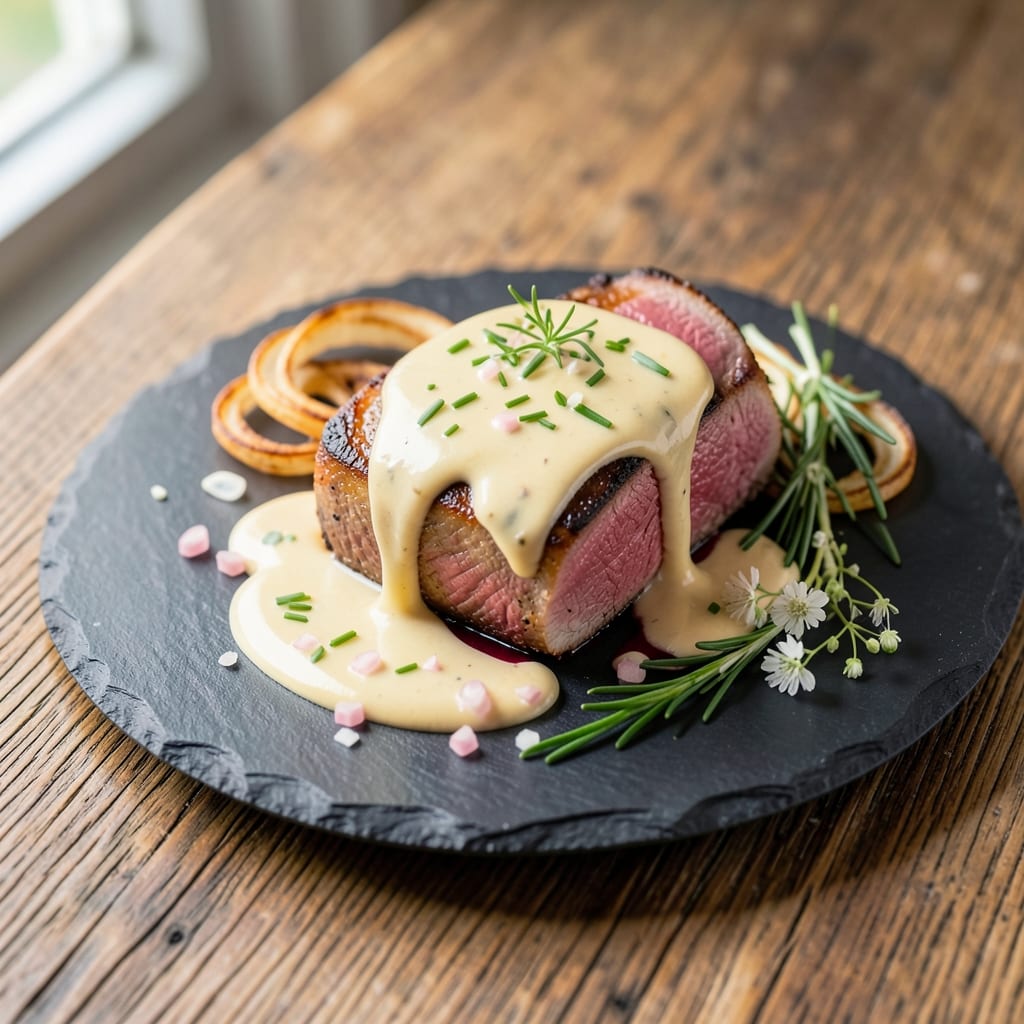
This beef bearnaise recipe delivers the perfect balance of rich, velvety butter and bright white wine—exactly what elevates steak from good to unforgettable. The secret lies in a stable emulsion that separates only when you want it to, creating that signature glossy finish. I've refined this technique over years of testing, ensuring every batch achieves that ideal harmony of flavors without breaking.
The foundation starts with a classic reduction of white wine and shallots, which builds depth before the butter comes into play. Fresh tarragon and chives add that signature herbal brightness, while a touch of Dijon mustard acts as the natural emulsifier. The key moment comes when you whisk in the butter—slowly, at the right temperature—to create that luxurious, glossy sauce without curdling.
What you'll end up with is a sauce that's restaurant-quality but achievable at home: rich enough to coat every bite of steak, tender enough to melt on your tongue, and balanced so the wine shines through rather than overpowering. The emulsion holds together beautifully, ready to drizzle over perfectly cooked beef or even roasted vegetables.
Make a double batch—the leftovers keep well in the fridge for up to 3 days, and the technique scales effortlessly. Whether you're serving a special dinner or simply treating yourself, this bearnaise will transform your meal into something truly exceptional.
Ingredients for beef bearnaise
Nine ingredients transform simple butter and wine into restaurant-quality bearnaise sauce.
| Ingredient | Amount | Notes |
|---|---|---|
| Unsalted Butter 🧈 | ¾ cup | Cold, cubed for easier incorporation |
| Dry White Wine 🍷 | 1 cup | Sauvignon Blanc or Chardonnay preferred |
| Shallots 🧅 | 2 whole | Minced finely for smooth texture |
| Fresh Tarragon 🌿 | ¼ cup | Finely chopped, stems removed |
| Fresh Chives 🌱 | 2 tbsp | Chopped, for bright finish |
| Dijon Mustard 🍯 | 1 tsp | For stable emulsion |
| Fresh Lemon Juice 🍋 | 1 tbsp | Brightens the sauce |
| Diamond Crystal Kosher Salt 🧂 | ½ tsp | Adjust to taste |
| Ground White Pepper 🌶️ | ¼ tsp | Freshly ground preferred |
| Heavy Cream 🥛 | ¼ cup | Optional for extra richness |
The butter must be cold when you add it—this is non-negotiable for that signature glossy finish. European-style unsalted butter (like Plugrá) has higher fat content, which gives a richer sauce, but any good-quality butter works. For the wine, dry whites like Sauvignon Blanc or Chardonnay are ideal—they cut through the richness without overpowering. I always grab a bottle I'd drink straight up, because you'll taste it in the final sauce. Shallots add depth, but if you can't find them, one small yellow onion works in a pinch (just use half the amount). Fresh tarragon is essential here—dried won't give you that same bright, anise-like flavor.
No tarragon? Fresh dill at half the amount gives a similar freshness, though it won't be identical. Running out of wine? Chicken or vegetable stock with a splash of white vinegar mimics the acidity, though purists might scoff. The Dijon mustard is crucial—it's what actually binds the emulsion. Whole-grain Dijon has more texture and works better than smooth varieties. For the chives, if you've got none, green onion tops chopped finely will do. The heavy cream is optional but worth it if you're serving this over delicate fish or vegetables—it adds that luxurious mouthfeel without overpowering the wine's brightness.
This sauce is best made fresh, but if you need to prep ahead, keep the reduced wine-shallot base in the fridge for up to 3 days—just whisk in the butter when ready to serve. The finished sauce holds for 2-3 days in the fridge, covered tightly with plastic wrap pressed right on the surface to prevent a skin. For freezing, portion into ice cube trays, freeze, then transfer to a bag. Thaw in the fridge overnight and gently reheat—never microwave, as that'll break the emulsion. The sauce reheats beautifully, though it'll be slightly thinner than when first made.
Why You'll Love This Recipe
- No Wine Waste: I always keep a bottle of dry white on hand—this sauce uses just a splash, so no sad leftover wine in the fridge. The shallots and tarragon turn that cheap bottle into something fancy.
- Weeknight Hero: Five minutes of chopping shallots, a quick reduction, then whisking butter into that silky wine-tarragon emulsion. Done. That’s dinner saved when you’re too tired to think.
- Leftovers That Shine: This sauce keeps for days in the fridge—better than takeout. Drizzle it over steak sandwiches, toss with pasta, or even slather on grilled chicken. It’s the ultimate flavor multiplier.
- Tarragon Magic: Honestly, that herb changes everything. Fresh tarragon and chives give it a bright, herbal lift that cuts through the richness of the butter. It’s the secret weapon in my sauce arsenal.
Step-by-step instructions for beef bearnaise sauce
Here's how to craft the perfect bearnaise—where rich butter meets bright wine in flawless balance.
Create the Tarragon-Infused Base
In a small saucepan, combine the 1 cup dry white wine and 0.25 cup finely chopped fresh tarragon. Bring to a gentle simmer over medium heat and reduce by half—about 8-10 minutes—until the liquid measures roughly ½ cup. You're looking for a concentrated, fragrant reduction that coats the back of a spoon. The tarragon should perfume the room with its anise-like aroma.
Strain through a fine-mesh sieve into a heatproof bowl, pressing gently on the tarragon to extract every bit of flavor. Discard the solids. This infusion forms the aromatic backbone of your sauce—don't skip it. If you're using the optional 0.25 cup heavy cream, whisk it into the warm infusion now to temper the cream and prevent curdling later.
Emulsify the Butter with Precision
Place the bowl over a saucepan of barely simmering water (double boiler method) to maintain a gentle 160-170°F temperature. Cut the 0.75 cup cold unsalted butter into ¼-inch cubes—colder butter emulsifies more smoothly. Add the 1 tsp Dijon mustard to the warm infusion to stabilize the emulsion.
Begin whisking vigorously as you gradually add the butter cubes, one at a time. The mixture will thicken dramatically—this is normal. Continue whisking until the butter melts completely and the sauce becomes glossy and homogeneous. Remove from heat immediately; any higher temperature will break the emulsion. The sauce should now resemble thick, velvety custard with a golden hue.
Finish with Aromatics and Seasoning
Return the sauce to gentle heat (just enough to maintain 160°F). Add the 2 tbsp chopped fresh chives, 1 tbsp fresh lemon juice, 0.5 tsp Diamond Crystal kosher salt, and 0.25 tsp ground white pepper. Whisk constantly for 2-3 minutes until the chives are wilted and the sauce is fully integrated. Taste and adjust seasoning—bearnaise should balance rich butter with bright acidity and subtle tarragon warmth.
For the final touch, strain through a fine-mesh sieve into a clean saucepan to remove any remaining solids. Keep the sauce warm over low heat, stirring occasionally, until ready to serve. The perfect bearnaise should coat the back of a spoon but remain pourable—like liquid silk. If it thickens too much, whisk in 1 teaspoon of hot water to restore consistency.
Pro Tips For Making Beef Bearnaise
- Whisk Like You Mean It: Bearnaise isn’t a smoothie—aggressive whisking at the start breaks down the butter faster. I used to go gentle, and the sauce would separate like a bad salad dressing. Now I whip it like I’m trying to polish silver, especially when adding the hot butter.
- Shallots Only When Cold: Finely minced shallots add depth, but they burn faster than you’d think. Pulse them in a food processor until they’re almost paste-like, then toss them into the wine while it’s still cold. Warm wine + raw shallots = instant bitterness. Trust me, I’ve done it.
- Strain Twice, Regret Nothing: That first strain through a fine-mesh sieve catches the tarragon stems and chive bits, but the second pass through cheesecloth guarantees silkiness. I skipped it once and served a sauce with texture issues—now I double-strain like a perfectionist.
- Wine Must Reduce Hard: Don’t skimp on the reduction. You want that white wine to shrink by at least half—no, more—so the flavor concentrates. If it’s still pale, you’re not done. I learned this after serving a bearnaise that tasted like a sad, watery martini.
Dietary considerations for this recipe
Dairy-Free Adaptation
Traditional bearnaise relies on butter, but you can create a dairy-free version using vegetable shortening or coconut oil (for a neutral flavor). Replace the 0.75 cup unsalted butter with 0.75 cup vegan butter (like Miyoko's) or 0.75 cup cold coconut oil. The emulsion works best with a 1 tbsp xanthan gum or 1 tsp arrowroot powder to stabilize it—whisk these into the warm wine reduction before adding the fat. The texture will be slightly lighter, but the rich, glossy finish remains. 🌱
Gluten-Free Considerations
This recipe is naturally gluten-free, but always double-check your ingredients. The Dijon mustard is typically gluten-free, though some brands contain wheat. Opt for gluten-free certified Dijon like Maille Mustard (which is naturally GF). Also verify that your white wine doesn't contain gluten—some fortified wines may. For extra caution, use a gluten-free wine vinegar substitute if reducing with vinegar instead of wine. The sauce itself poses no gluten risks once properly adapted. ✨
Low-Fat Version
For a lighter take, reduce the butter to 0.5 cup and replace the remaining 0.25 cup with Greek yogurt (for tang) or silken tofu blended smooth. The key is maintaining the emulsion—whisk in the butter first, then fold in the yogurt or tofu at the very end. This cuts calories by about 30% per serving while keeping the sauce velvety. The wine reduction still carries the tarragon's bright flavor, so the sauce won't taste watered down. 💪
Vegan Bearnaise
A fully vegan bearnaise swaps butter for cashew cream—blend 1 cup soaked cashews with 0.5 cup water until ultra-smooth. Heat the wine reduction with 1 tbsp nutritional yeast (for umami depth) and 1 tsp white miso paste (as an emulsifier). Slowly whisk in the cashew cream while maintaining 160°F temperature. Finish with 1 tsp lemon juice and 0.5 tsp turmeric (for color). The result is rich, glossy, and surprisingly close to the original—just without dairy. 🌿
Allergen-Friendly Swaps
For nut allergies, use sunflower seed butter (like SunButter) instead of cashews in the vegan version. If tarragon is problematic, substitute fresh basil or thyme—though the flavor profile will shift slightly. For egg allergies (unlikely here, but worth noting), the Dijon mustard acts as the natural emulsifier, so no additional binders are needed. Always keep the heat low (160°F) when incorporating fats to prevent separation. The sauce's stability comes from precise temperature control, not eggs. 🔥
Nutrition facts
Frequently asked questions
Why does my bearnaise sauce keep separating?
The most common cause is adding butter too quickly or heating the sauce too high. Always whisk in cold butter cubes one at a time while maintaining a temperature between 160-170°F. If it separates, whisk in 1 teaspoon of hot water to restore the emulsion. The Dijon mustard is your secret weapon—it acts as a natural emulsifier, so never skip it!
Can I make bearnaise without wine?
Yes! For a non-alcoholic version, replace the wine with a 1:1 ratio of white grape juice and white vinegar (like apple cider vinegar). The acidity is key for balancing the butter's richness. For even more depth, add 1 teaspoon of lemon juice to the reduction. The tarragon and shallots will still shine through beautifully.
How do I store leftover bearnaise sauce?
Store in an airtight container with plastic wrap pressed directly on the surface to prevent a skin from forming. Keep refrigerated for up to 3 days. To reheat, warm gently in a saucepan over low heat while whisking constantly—never microwave, as that will break the emulsion. If it thickens too much, whisk in 1 teaspoon of hot water to restore consistency.
What's the best way to reheat bearnaise?
Place the sauce in a clean saucepan and warm over low heat while whisking constantly. Keep the temperature below 165°F to prevent separation. For extra insurance, add 1 teaspoon of warm water to help maintain the emulsion. If you're reheating from the fridge, let it sit at room temperature for 5-10 minutes first to minimize temperature shock. The sauce should warm through in just 2-3 minutes of gentle heating.
Can I make bearnaise ahead of time?
Prepare the wine-shallot-tarragon reduction up to 3 days ahead and store it in the fridge. When ready to serve, simply reheat the reduction to 160°F, then whisk in the cold butter cubes as directed. This saves time while keeping the sauce's vibrant flavors intact. For the full sauce, it keeps well for 2-3 days in the fridge when properly stored.