
Soups & Stews
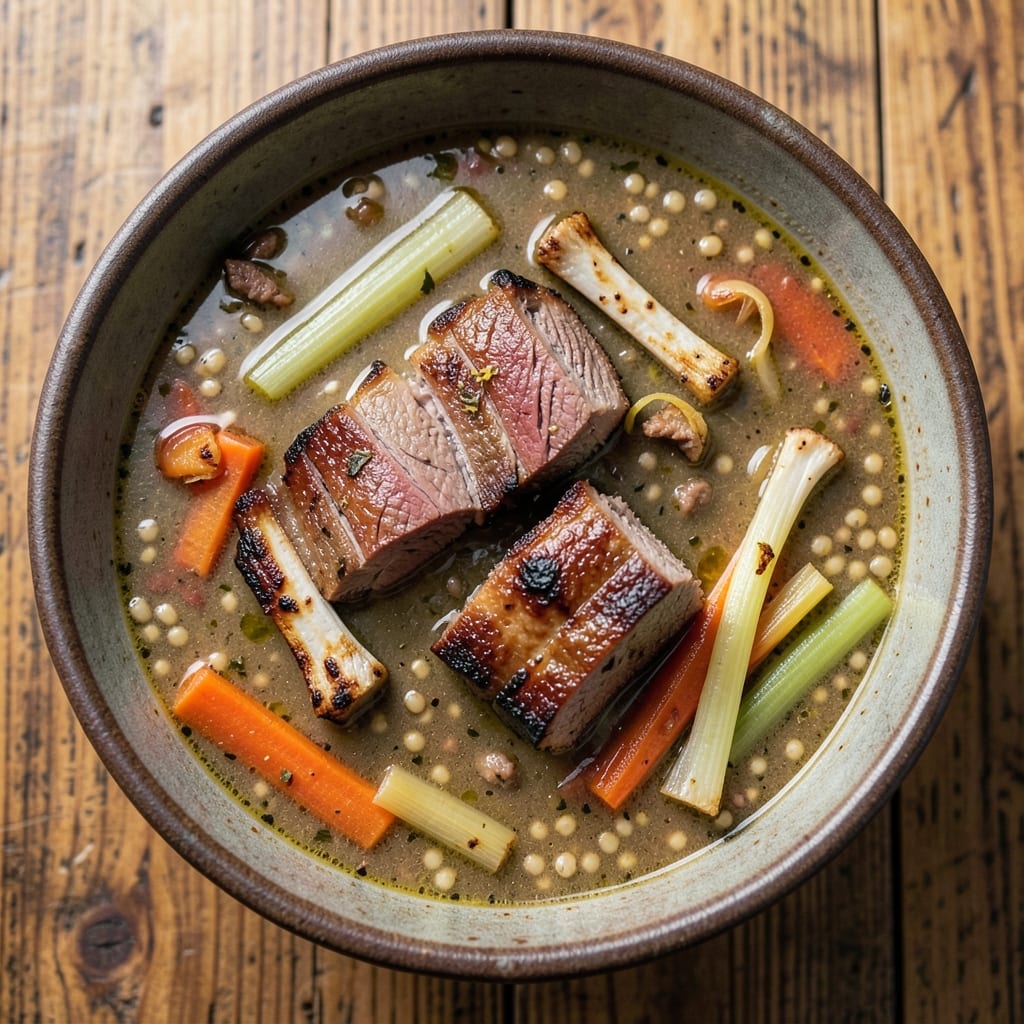
This beef barley soup recipe with leftover prime rib transforms holiday leftovers into a restaurant-worthy meal that tastes even better the next day. The secret lies in slow-simmered prime rib broth—rich, deeply savory, and packed with umami—where tender barley absorbs all the flavor while crisp vegetables add satisfying texture. I developed this after realizing how wasteful it was to let prime rib scraps go to waste, and now it's my go-to way to stretch a luxurious cut into a hearty, comforting soup.
The beauty of this recipe is its balance: the prime rib adds luxurious depth without overpowering the barley and vegetables, while a touch of thyme and bay leaf builds complexity. Unlike many soups that rely on store-bought stock, this version gets its depth from the actual meat you're using, making every spoonful taste like you've invested time—even when you're just repurposing leftovers. The result is a soup that's both elegant and approachable, perfect for weeknight dinners or bringing to potlucks where it'll disappear quickly.
What makes this recipe particularly special is how it maximizes flavor from every part of the prime rib—fat, bones, and scraps all contribute to a broth so rich it could almost stand alone. The barley becomes tender but still holds its shape, creating that perfect bite, while carrots and celery add natural sweetness and texture. The key is patience: letting everything simmer until the flavors meld completely transforms simple ingredients into something extraordinary.
This soup reheats beautifully, making it ideal for meal prep, and the flavors actually improve overnight as the barley softens further. Whether you're dealing with a prime rib roast or just want a deeply satisfying soup, this recipe delivers restaurant-quality results with minimal effort. Let's get started—your taste buds will thank you.
Ingredients for beef barley soup recipe with leftover prime rib
Prime rib leftovers plus pantry staples—this soup turns scraps into a rich, comforting masterpiece.
| Ingredient | Amount | Notes |
|---|---|---|
| Leftover Prime Rib 🥩 | 2 cups | Meat chopped into bite-sized pieces |
| Prime Rib Bones 🦴 | 4 pieces | For rich broth base |
| Carrots 🥕 | 3 medium | Peeled and cut into chunks |
| Yellow Onion 🧅 | 1 whole | Quartered for even cooking |
| Pearl Barley 🌾 | 1 cup | Rinsed before cooking |
| Celery Stalks 🧄 | 3 whole | Cut into 1-inch pieces |
| Fresh Thyme 🌿 | 2 sprigs | Or 1 tsp dried thyme |
| Bay Leaves 🍃 | 2 whole | Removed before serving |
| Garlic Cloves 🧄 | 4 cloves | Crushed for maximum flavor |
| Beef Broth 💧 | 4 cups | Low-sodium preferred |
| Tomato Paste 🍅 | 2 tbsp | For depth of flavor |
| Olive Oil 🫒 | 2 tbsp | For sautéing aromatics |
| Salt 🧂 | 1 ½ tsp | Adjust to taste |
| Black Pepper 🌶️ | ½ tsp | Freshly ground preferred |
The prime rib is where all the magic happens. Use both the meat and bones—the bones create that unmistakable depth you'd pay for in a restaurant. If you're buying extra bones, Costco or local butchers often have them for cheap. Look for bones with good marrow—those dark red spots inside. The barley? Pearl barley is key—it holds its shape better than steel-cut and absorbs flavor beautifully. I always rinse mine first to remove any dust or debris. For the veggies, no need to peel the carrots if they're organic, and Trader Joe's has pre-cut celery sticks that save time.
No prime rib bones? Beef marrow bones from the meat section work too, or beef bouillon cubes in a pinch. Fresh thyme is ideal, but dried works at half the amount—just make sure it's labeled as culinary thyme, not the ornamental kind. The tomato paste can be that squeeze tube from Trader Joe's—it's perfect for this. For the beef broth, low-sodium is crucial—you'll be adding plenty of salt later. Want more richness? Add a splash of red wine when you deglaze the pot. The garlic can be roasted for a sweeter flavor—just toss whole cloves on a baking sheet at 400°F for 15 minutes before crushing.
This soup tastes even better the next day—the barley softens and flavors meld. Store in an airtight container for 5 days in the fridge or freeze for 3 months. I like to portion it into individual containers so I can grab one for lunch. The broth freezes beautifully, so if you make extra, freeze it separately. For reheating, start from cold—just add water to cover and simmer until hot. The barley will soak up the liquid, so you might need to add a splash more broth when reheating.
Why You'll Love This Recipe
- Here’s the thing: prime rib bones are often free or cheap if you ask the butcher for the scraps. That means a restaurant-quality soup for pennies, plus the leftovers reheat like a dream. My wallet and my freezer thank me every time.
- No-Waste Magic: I swear by this trick—leftover prime rib isn’t just scraps, it’s the soul of the soup. The bones simmer into rich broth while the meat shreds effortlessly, turning what could’ve been trash into a flavor bomb. (Yes, even the crusty bits get used.)
- Deep Umami Bomb: That prime rib bone? It’s the secret weapon—crisped in the oven first, then tossed into the pot for a caramelized depth that makes store-bought bouillon look sad. The barley soaks up all the beefy goodness, and the onions caramelize right in the pot. Chef’s kiss.
- Weeknight to Dinner Party: I make this on Tuesdays for lazy nights, but it’s also my go-to for hosting—just double the barley and add a splash of red wine for extra flair. The barley’s chewy texture and beefy richness feel fancy, but honestly? It’s just a pot on the stove.
Step-by-step instructions for beef barley soup with leftover prime rib
Transform rich prime rib into a comforting, hearty soup that's perfect for chilly days.
Build the Flavorful Broth Base
Heat the 2 tablespoons olive oil in a large Dutch oven over medium-high heat. Add the 4 pieces prime rib bones and sear for 5-6 minutes until deeply browned on all sides. This step develops the deep, meaty flavor that will infuse your broth.
Remove the bones and set aside. In the same pot, add the 1 whole yellow onion (quartered), 3 whole celery stalks (cut into 1-inch pieces), and 3 medium carrots (chopped). Cook for 5 minutes until the vegetables begin to soften. Stir in the 4 cloves garlic cloves (crushed) and cook for 30 seconds until fragrant. Here's the thing—don't let the garlic burn, or you'll get a bitter taste instead of that sweet, aromatic punch we want.
Develop the Rich Broth
Sprinkle the 2 tablespoons tomato paste over the vegetables and stir to coat, letting it caramelize slightly for 1 minute. This adds depth and a subtle sweetness to the broth. Pour in the 4 cups beef broth and add the prime rib bones back to the pot. Bring to a boil, then reduce heat to low, cover partially, and simmer for 1 hour. Skim off any foam that rises to the surface during this time—it keeps the broth clear and clean.
After simmering, remove the prime rib bones and transfer the meat to a cutting board. Shred the meat into bite-sized pieces using two forks. Return the shredded prime rib to the pot. The broth should now be rich, deeply flavored, and ready for the next step. If you're worried about the broth being too thin, don't add water yet—just let the barley help thicken it naturally as it cooks.
Add Barley and Seasonings
Rinse the 1 cup pearl barley thoroughly under cold water to remove any dust or debris. Add the barley, 2 sprigs fresh thyme, and 2 whole bay leaves to the pot. Stir well to combine, then bring the soup back to a gentle simmer. Cover the pot and cook for 30-40 minutes, stirring occasionally, until the barley is tender but still has a slight bite.
Season the soup with 1.5 teaspoons salt and 0.5 teaspoon black pepper. Taste and adjust the seasoning as needed—this is where you can really make the soup your own. The barley should be soft enough to eat easily but still hold its shape. If the soup is too thick, add a little water to reach your desired consistency. Real talk: this is the moment you'll taste all your hard work paying off with every spoonful.
Finish and Serve
Remove the thyme sprigs and bay leaves before serving. Ladle the soup into bowls and enjoy it piping hot. The combination of tender prime rib, chewy barley, and rich broth creates a satisfying, comforting meal that's perfect for any occasion. I like to serve it with a slice of crusty bread to soak up every last drop of that flavorful broth.
This soup tastes even better the next day as the flavors continue to meld together. Store any leftovers in an airtight container in the refrigerator for up to 4 days or freeze for 3 months. The barley will continue to soften slightly over time, making the soup even more tender and flavorful.
Pro Tips For Making Beef Barley Soup Recipe With Leftover Prime Rib
- CRUSH THE BONES FIRST: Before tossing prime rib bones into the pot, smash the ends with a mallet or heavy pan—this cracks the marrow, releasing richer flavor straight into the broth. I used to skip this and wondered why my soup tasted like it was missing something.
- SWEAT THE ONIONS LOW: Cook the onions until they’re deep golden, not browned—about 15 minutes on medium-low with a splash of water to deglaze. Rushed onions mean a bitter, sharp taste that fights with the beef’s richness.
- SOAK THE BARLEY HALF DAY: Pearl barley swells faster and cooks more evenly if soaked in cold water for 4-6 hours before adding to the pot. I learned this after serving mushy, undercooked barley—now it’s tender and holds its shape.
- RESERVE THE BEST JUICES: Slice the leftover prime rib thin, then pour the pan drippings over it before adding to the soup. That fat and jus make the beef taste like it just came off the bone, not the fridge. (Yes, even if you’re impatient like me.)
Essential equipment for perfect results
Dutch Oven Essentials
A large Dutch oven is my non-negotiable tool for this recipe—it's the workhorse that sears, simmers, and holds everything together beautifully. I swear by the Lodge 6.5-quart Dutch oven because it distributes heat evenly and handles temperature shifts like a champ. If you're on a budget, the Cuisinart MultiClad Pro is a great alternative that still delivers professional results. The deep sides prevent spills when adding broth, and the heavy construction ensures steady simmering without hot spots. 🔥
Basic Knife Set
You'll need a sharp 8-inch chef's knife for chopping vegetables and a small paring knife for trimming. My trusty Mercer Culinary Genesis set handles everything from dicing carrots to mincing garlic with ease. If you're just starting out, a Victorinox Fibrox knife is a solid mid-range option that won't break the bank. Remember, a sharp knife is safer than a dull one—take 5 minutes to hone your blade before prepping ingredients. The difference in control and precision is night and day.
Immersion Blender
While this recipe doesn't require blending, an immersion blender is worth having for occasional soup smoothness adjustments. I use the Ninja PN601 for its powerful motor and easy cleanup. If you prefer not to blend, skip this tool entirely—the soup's texture is perfectly satisfying as-is. The immersion blender comes in handy when you want to create a velvety broth version or puree individual servings for a creamy finish. It's not essential, but it's a game-changer when you want to elevate your soup game. 💫
Measuring Tools
Precision matters with ingredients like barley and broth, so invest in a stainless steel measuring cup set and a digital kitchen scale. I love the OXO Good Grips measuring cups for their easy-read markings, and the Escali Primo scale gives accurate readings down to the gram. For the barley, measuring by volume works fine, but if you're feeling fancy, weighing it ensures perfect texture. The scale also helps when adjusting seasoning—you'll get consistent results every time. Don't skimp on these basics; they make all the difference in home cooking.
Skimming Spoon
A long-handled skimming spoon is your secret weapon for removing foam from the simmering broth. The OXO Good Grips version has a comfortable handle and a wide, slotted design that makes skimming effortless. This step might seem minor, but it keeps your broth clear and prevents a cloudy, off-flavored final product. I keep mine handy during all my broth-making adventures—it's one of those tools that becomes indispensable once you discover how much better your soups taste without the foam. Trust me on this one.
Storage Containers
For leftovers, glass airtight containers are your best friend—both for storage and reheating. I prefer Pyrex with snap-on lids because they stack neatly in the fridge and distribute heat evenly when reheating. If you're meal prepping, consider mason jars for individual portions—they're easy to grab and reheat. The key is to leave about 1 inch of headspace to prevent condensation from diluting your soup's flavor. These containers also make it easy to portion out broth for future recipes, reducing food waste and saving you time. 💡
Nutrition facts
Frequently asked questions
Can I use other cuts of beef instead of prime rib?
While prime rib delivers that luxurious flavor, you can use other rich beef cuts like chuck roast, short ribs, or even brisket. The key is choosing meat with good marbling—this adds natural fat for richness. For a similar texture, go for cuts that become tender when slow-cooked. If using a leaner cut, add an extra 1 tablespoon butter or 1 tablespoon olive oil to compensate for the lack of fat.
How do I know when the barley is perfectly cooked?
The barley should be tender but still have a slight bite—think al dente pasta. Test by tasting a small piece: it should be soft enough to chew easily but not mushy. If it's still crunchy after 40 minutes, add 1/2 cup water and cook another 10 minutes. Remember, barley continues cooking as it sits, so it's better to pull it slightly underdone than overcooked.
Can I make this soup in a slow cooker or Instant Pot?
Yes! For a slow cooker, brown the bones and vegetables first, then transfer everything to the pot and cook on low for 8 hours or high for 4 hours. For an Instant Pot, sauté the aromatics, then add everything else and cook on high pressure for 30 minutes, followed by a 10-minute natural release. The Instant Pot version will be slightly thinner—adjust with water or extra broth as needed.
What if I don't have prime rib bones?
No problem! Use beef marrow bones, beef bouillon cubes, or even beef stock powder to boost flavor. For extra richness, add 1 tablespoon Worcestershire sauce or 1 teaspoon beef base when you add the broth. The key is building depth—don't skip the searing step, as it creates the foundation for your broth's flavor.
How can I make this soup more interesting for kids?
Blend a small portion with an immersion blender for a smoother texture, or stir in a spoonful of milk or cream at the end for creaminess. Serve with buttered noodles or toasted bread cubes on the side. You can also add a sprinkle of grated Parmesan cheese or a dollop of sour cream for extra appeal. Keep the original flavor profile but make it more approachable with familiar textures.