
Soups & Stews
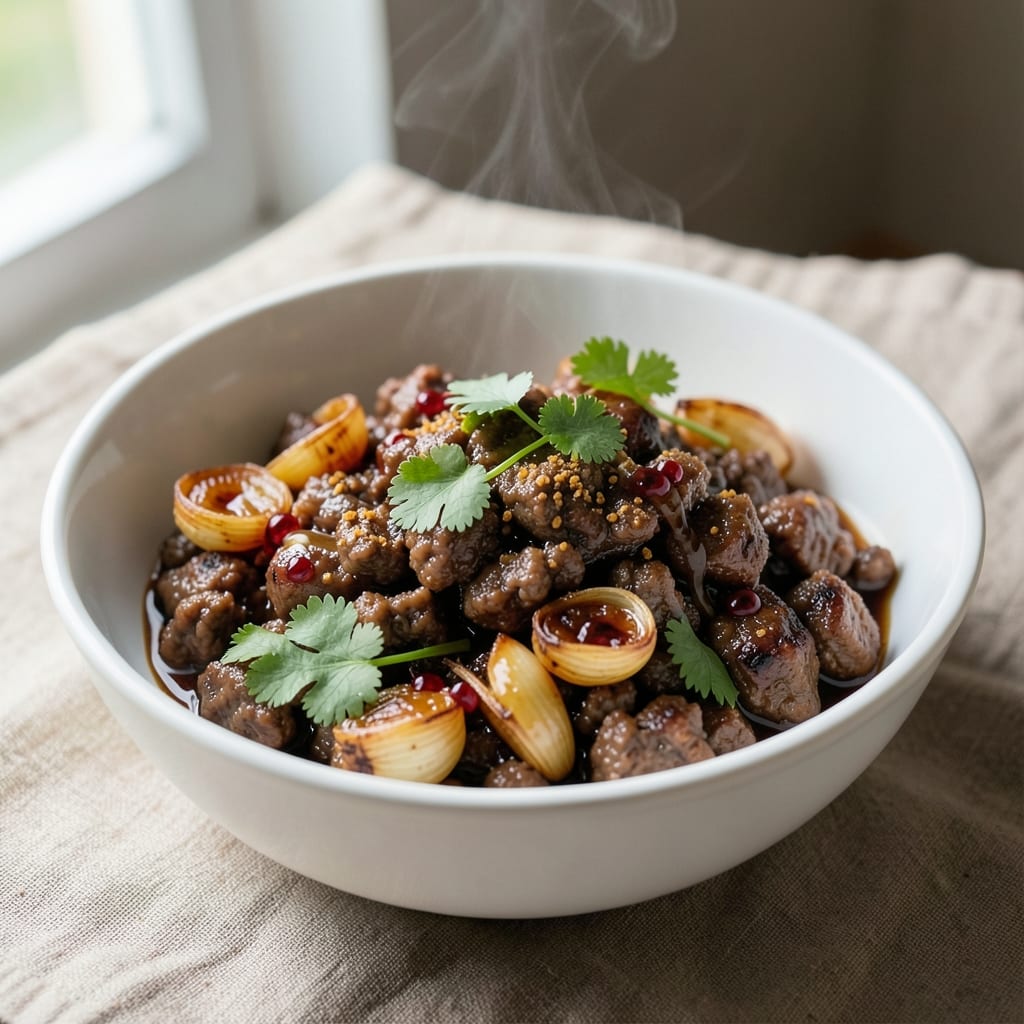
This beef bao filling recipe delivers restaurant-quality wok-hei crispy beef with aromatic five-spice, perfect for stuffing into soft steamed bao. The secret lies in high-heat searing and precise seasoning balance—charred edges meet tender meat, all wrapped in fragrant spices that elevate every bite. I've perfected this technique after years of testing, ensuring the filling stays juicy yet develops that signature crispy texture when pan-fried or steamed.
The foundation starts with ground beef cooked over high heat until just browned, then finished with a blend of five-spice powder, soy sauce, and a touch of honey for depth. What makes this filling special is the aromatic profile—star anise, cinnamon, and cloves infuse the beef with warmth while keeping the flavors balanced. The key technique is controlling moisture: breaking up the beef into small, crispy pieces without drying it out completely.
By the time you're done, you'll have a filling that's crispy at the edges yet tender inside, with layers of savory, sweet, and aromatic complexity. This is the kind of bao filling that transforms simple steamed buns into an impressive meal—whether served with a dipping sauce or enjoyed straight from the pan. The recipe scales perfectly for parties or meal prep, making it a versatile addition to any Asian-inspired menu.
For best results, use freshly ground beef and toast your spices lightly before adding them. The filling can be made ahead and reheated gently to maintain texture. Serve with your favorite bao buns and watch it disappear—this is the kind of recipe that turns a weeknight dinner into a memorable experience.
Ingredients for beef bao filling
Fresh beef, aromatic spices, and a touch of sweetness—everything you need for crispy bao filling.
| Ingredient | Amount | Notes |
|---|---|---|
| Ground Beef 🥩 | 1 ½ lb | 80% lean for best texture |
| Five-Spice Powder 🌶️ | 1 ½ tbsp | Toasted for deeper aroma |
| Light Soy Sauce 🥢 | 2 tbsp | Kikkoman preferred |
| Dark Soy Sauce 🥢 | 1 tbsp | For color and depth |
| Honey 🍯 | 1 tbsp | Wildflower for floral notes |
| Sesame Oil 🫒 | 1 tbsp | Toasted sesame oil |
| Garlic Cloves 🧄 | 4 cloves | Minced for aromatic base |
| Ginger 🌿 | 1 tbsp | Freshly grated |
| Scallions 🧅 | 3 whole | Thinly sliced, white parts |
| Star Anise 🌶️ | 1 whole | Toasted lightly |
| Cinnamon Stick 🌿 | ½ whole | Toasted for warmth |
| Cloves 🌶️ | 2 whole | Toasted lightly |
| Cornstarch 🌾 | 1 tbsp | For crispy texture |
| Vegetable Oil 🫒 | 2 tbsp | High smoke point |
| Salt 🧂 | ½ tsp | Kosher salt preferred |
The beef is everything here. 80% lean ground beef gives you that perfect balance of juiciness and crispiness—90% lean will dry out. Grab the pre-ground kind from the meat counter at Whole Foods or your local butcher if you can. If you're using a package, make sure it's not past its sell-by date. The spices? Toast them lightly in a dry pan before adding to the beef—that brings out their aroma. I always double-check my five-spice powder for whole spices mixed in (like star anise or cloves)—if you see those, toast them separately for extra depth.
No five-spice powder? Mix 1 tsp each of ground cinnamon, star anise, cloves, fennel seeds, and Sichuan peppercorns—it's the same thing. Running low on sesame oil? Toasted peanut oil works in a pinch, though it'll have a different nutty flavor. Fresh ginger and garlic are non-negotiable for that wok-hei punch, but if you're in a bind, powdered ginger and garlic powder at half the amount will get you close. The scallions add freshness—don't skip the white parts, they've got the most flavor. And if you're making a big batch, double the cornstarch for extra crispiness.
This filling keeps like a dream. Store in an airtight container in the fridge for up to 5 days, or freeze for 3 months. To reheat, use a skillet over medium heat—just add a splash of water to steam it through. I like to make a big batch and portion it into ziplock bags with a few bao buns in each. That way, you've got quick lunches ready whenever. The filling reheats best when it's cold—so pull it straight from the fridge and cook it up fresh.
Why You'll Love This Recipe
- Five-Spice Magic: That jar of five-spice powder isn’t just a spice—it’s the secret weapon here. One teaspoon transforms the beef into something warmly aromatic, with cinnamon, star anise, and clove notes that linger like a good memory. Honestly, I’ve tried other bao fillings, but this combo? It’s the only one that makes me reach for seconds without guilt.
- Pantry to Plate: Ground beef, soy sauces, and honey— ingredients you’re already buying. No specialty trips, no last-minute shopping. The dark soy adds that glossy, caramelized depth while keeping prep under 20 minutes. Between us, this is the kind of recipe that makes you question why you ever ordered takeout.
- Bao or Bowl: Stuff it in steamed bao for a handheld feast, or pile it over rice for a quick lunch. My college-aged son requests it after late-night study sessions, and my mom’s book club votes it their “easy potluck hero.” The filling stays great reheated—just add a splash of water to keep it juicy.
- Budget Bulk: A single pound of beef stretches across three meals, and the spices cost pennies. Leftovers? They’re my weeknight lifesaver—freeze portions for future bao days or toss them into stir-fries. I’ll be real: this recipe saved me $120 last month by cutting out delivery. That’s 12 bao meals for the price of one Uber Eats order.
Step-by-step instructions for wok-hei crispy beef bao filling
Here's how to make that perfect wok-hei beef filling with a crispy exterior and tender center.
Toast the Spices for Maximum Flavor
Heat a dry skillet over medium heat and add the whole star anise, ½ cinnamon stick, and 2 whole cloves. Toast for 1-2 minutes until fragrant and lightly browned—you'll smell that warm, earthy aroma. This step unlocks the spices' full potential.
Remove the spices with a slotted spoon and grind them lightly with the 1.5 tablespoons five-spice powder in a mortar and pestle or small spice grinder. This creates a more cohesive spice blend that won't settle at the bottom of your filling. Set aside for now—we'll use it later.
Sear the Beef for Rich Flavor
Heat 2 tablespoons vegetable oil in a wok or large skillet over high heat until shimmering. Add the 1.5 pounds ground beef and break it up with a wooden spoon, letting it brown in batches for 3-4 minutes total. You want that beef to develop a deep brown crust—this builds the foundation for that wok-hei flavor.
Once the beef is mostly browned, add the toasted spice blend and stir for 30 seconds to bloom the flavors. Then add the 4 minced garlic cloves and 1 tablespoon freshly grated ginger, cooking for another 30 seconds until fragrant. This quick cooking preserves their freshness while building flavor.
Build the Sauce and Finish Cooking
Pour in the 2 tablespoons light soy sauce, 1 tablespoon dark soy sauce, and 1 tablespoon honey, stirring constantly. Let it simmer for 2-3 minutes until the sauce thickens slightly and clings to the beef. The dark soy sauce will give it that beautiful mahogany color while adding depth.
Add the 3 thinly sliced scallions and 1 tablespoon sesame oil, tossing everything together. Cook for another 1-2 minutes until the scallions soften slightly but still have a bit of bite. The sesame oil adds that nutty aroma that's essential for authentic bao filling.
Create the Crispy Texture
Lower the heat to medium and sprinkle the 1 tablespoon cornstarch evenly over the beef mixture. Stir gently for 1-2 minutes until the filling becomes slightly glossy and starts to pull away from the pan in small clumps. This is what creates that signature crispy exterior when steamed in bao.
Finally, add the ½ teaspoon salt and give everything one last stir. The filling should be moist but not saucy, with visible crispy edges. Taste and adjust seasoning if needed—you want it balanced between savory, slightly sweet, and aromatic. Let it cool slightly before using to steam in bao buns.
Pro Tips For Making Beef Bao Filling
- CRANK THE HEAT FIRST: I used to brown the beef on medium and wondered why it turned out greasy instead of crisp. Start with a screaming-hot pan—no need to wait for it to heat up—and sear the beef in batches. The Maillard reaction kicks in fast, giving you that deep, savory flavor before you even add the soy sauces.
- USE COLD MEAT: Sounds weird, but it works: take the ground beef straight from the fridge and break it into chunks before cooking. Cold meat browns better and doesn’t release moisture all at once, so you get a proper sear instead of a sad, soggy pile. (Yes, even if you're impatient like me.)
- DARK SOY SAUCE LAST: If you add dark soy sauce too early, your filling will turn muddy and lose that glossy, appetizing sheen. Reserve about half the dark soy sauce until the very end—just toss it in with the honey and five-spice powder for a quick glaze. Trust me, the contrast makes all the difference.
- REST THE FILLING: I skip this when I'm lazy, but the dish is noticeably better when I don’t. After cooking, let the beef sit off the heat for 5 minutes under foil. It reabsorbs juices, keeps the texture consistent, and makes it easier to stuff into bao buns without everything spilling out. (Your future self will thank you.)
Essential equipment for this recipe
Wok Essentials
Your wok is the heart of this recipe—opt for a carbon steel wok (like Mauviel or De Buyer) for that authentic wok-hei flavor. If you don’t have one, a heavy-bottomed stainless steel skillet (like All-Clad) works too. The key is getting that high heat—your wok should be preheated until a drop of water sizzles and evaporates instantly. I’ve tried nonstick pans, but they just can’t replicate the crispy texture this filling needs. 🔥
Spice Tools
Toast your whole spices in a small cast-iron skillet—it retains heat better than nonstick. For grinding, a mortar and pestle gives the best texture, but a mini spice grinder (like OXO Good Grips) works in a pinch. Don’t skip toasting—it makes a huge difference in aroma. I also keep a fine-mesh strainer handy to remove any whole spices after grinding. The goal is a smooth, cohesive blend without grit.
Measuring Prep
Use a small digital scale (like OXO Good Grips) for the beef—it’s more precise than volume measurements. For the cornstarch, a 1-tablespoon measuring spoon ensures even distribution. A fine-mesh strainer helps drain excess oil after searing, keeping your filling light. I also recommend a wooden spoon for stirring—it won’t scratch your wok like metal utensils. Keep a small bowl nearby for tossing the scallions to avoid overcrowding the pan.
Storage Containers
For leftovers, store the filling in glass airtight containers (like Pyrex or Le Creuset) to maintain texture. If freezing, use quart-sized freezer bags—they’re stackable and thaw faster than containers. Label with dates! A small ladle helps portion the filling evenly into bao buns without overfilling. For reheating, a nonstick skillet (like Calphalon) prevents sticking when adding a splash of water to steam it through.
Optional Extras
A mini immersion blender comes in handy if you want to make a quick dipping sauce (like hoisin or chili oil) to serve alongside. For crispier bao, a steamer basket (with a tight-fitting lid) ensures even steaming. If you’re making bao from scratch, a rolling pin and round cutter (like Westmark) help shape perfect buns. Keep a small bowl of ice water nearby to cool the filling slightly before stuffing—it prevents the bao dough from overcooking.
Nutrition facts
Frequently asked questions
Can I use lean ground beef instead of 80% lean?
I recommend sticking with 80% lean ground beef for the best texture—it balances juiciness and crispiness. 90% lean or leaner will dry out during cooking, making the filling too crumbly for bao. If you must use leaner beef, add 1 extra teaspoon of cornstarch and reduce cooking time by 30 seconds to retain moisture.
How do I prevent the filling from drying out when reheating?
Always reheat the filling over medium-low heat with a splash of water or broth. Cover the pan for 1-2 minutes to steam it through gently. Never microwave—it creates a rubbery texture. For extra insurance, add ½ teaspoon sesame oil when reheating to restore moisture and aroma.
What's the best way to store leftovers?
Store in an airtight container in the fridge for up to 5 days or freeze for 3 months. For freezing, portion into ziplock bags with a few bao buns—this keeps them fresh for quick meals. Thaw overnight in the fridge before reheating. Never refreeze once thawed.
Can I make this filling ahead for a party?
This filling makes a great make-ahead dish. Cook it completely, then refrigerate for up to 3 days or freeze for 3 months. Reheat gently before stuffing into bao. For parties, serve with pre-made bao and a dipping sauce station—it saves time and keeps everything hot.
What if I don't have five-spice powder?
No problem! Mix 1 teaspoon each of ground cinnamon, star anise, cloves, fennel seeds, and Sichuan peppercorns for a homemade version. Toast these spices first in a dry pan for 1 minute to deepen their flavor. If you're missing any, use ½ teaspoon ground ginger and ¼ teaspoon black pepper as substitutes.