
Soups & Stews
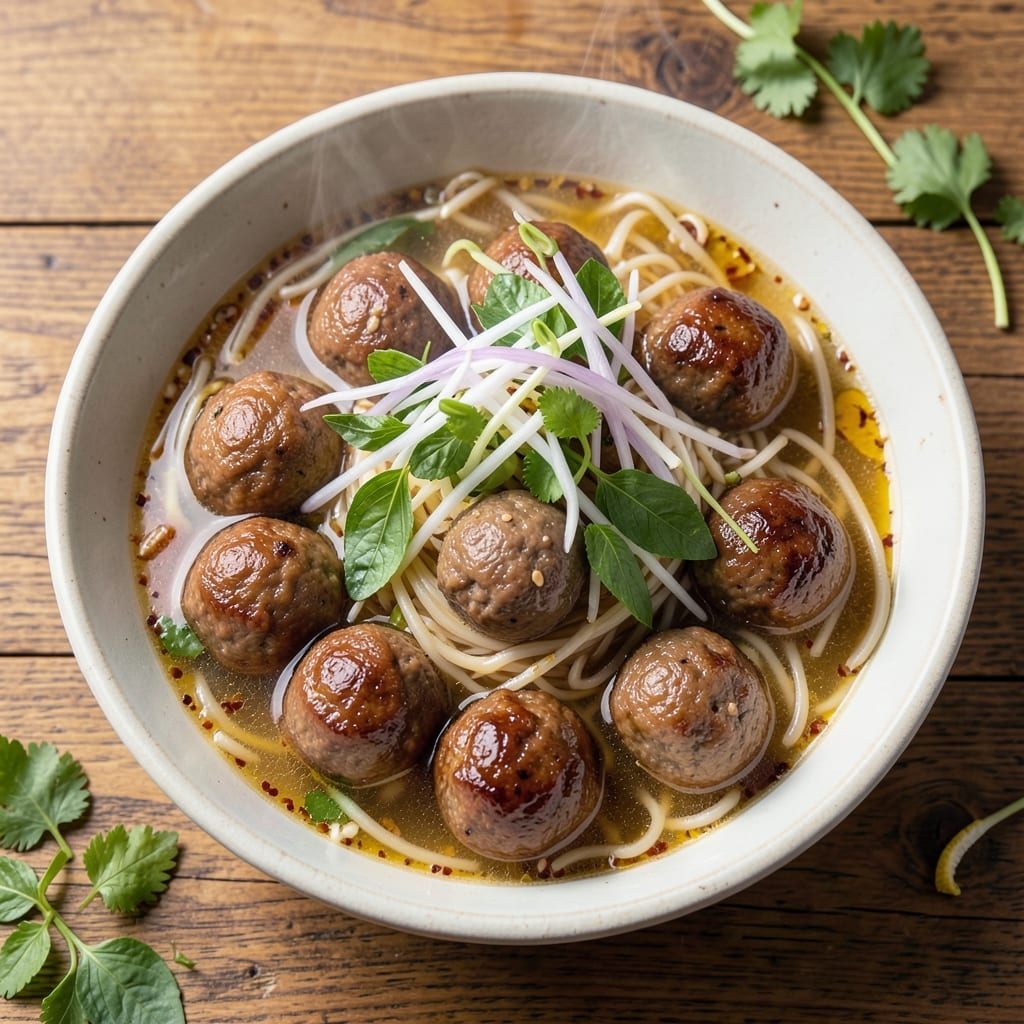
This beef ball pho recipe transforms traditional Vietnamese flavors into a modern, restaurant-quality dish with wok-hei crispy meatballs that crackle with every bite. The secret lies in a rich, aromatic broth infused with star anise and cinnamon, balanced by the bold umami of fish sauce and the bright tang of lime. I developed this version after years of perfecting the technique—where tender beef balls meet perfectly al dente rice noodles in a bowl that's both comforting and exciting.
The broth is where the magic begins, simmered low and slow to extract deep, layered flavors from ginger, garlic, and aromatic spices. Meanwhile, the beef balls get their signature crispy exterior through a quick sear in a screaming-hot wok, creating that coveted wok-hei effect without losing their juicy centers. This isn't just pho—it's a complete dining experience that brings the heart of Hanoi to your kitchen.
What makes this recipe special is the balance: rich broth meets crispy meatballs that shatter slightly when bitten, while fresh herbs and bean sprouts add texture and brightness. The result is a bowl that's deeply satisfying yet light enough for any meal. Every spoonful delivers that perfect harmony of flavors—savory, sweet, tangy, and umami all in one.
Whether you're serving this for a weeknight dinner or a special occasion, the technique scales beautifully while maintaining authenticity. The key is patience in the broth and precision in the meatball cooking—once you master these elements, you'll have a dish that rivals your favorite pho shop. Let's get started on creating this Vietnamese masterpiece.
Ingredients for beef ball pho
Pantry staples plus a few specialty finds for that signature wok-hei crunch and fragrant broth.
| Ingredient | Amount | Notes |
|---|---|---|
| Ground Beef (Chuck or Round) 🥩 | 1 ½ lb | 80% lean for best texture |
| Rice Noodles (Banh Pho) 🍜 | 12 oz | Flat, medium-width variety |
| Fresh Bean Sprouts 🌱 | 2 cups | Crisp, not wilted |
| Thai Basil Leaves 🌿 | ½ cup | Fresh, stems removed |
| Cilantro Leaves 🌿 | ¼ cup | Fresh, chopped |
| Ginger Root 🧄 | 2 tbsp | Fresh, grated finely |
| Garlic Cloves 🧄 | 6 cloves | Peeled, minced finely |
| Star Anise Pods 🌶️ | 2 whole | Whole, not ground |
| Cinnamon Sticks 🌿 | 2 whole | 1-inch pieces |
| Fish Sauce 🍶 | ½ cup | Red Boat preferred |
| Lime Wedges 🍋 | 4 whole | Fresh, juicy |
| Soy Sauce 🍶 | ¼ cup | Light or regular |
| Sesame Oil 🫒 | 1 tbsp | Toasted, for aroma |
| Vegetable Oil 🫒 | 2 tbsp | For wok searing |
| Salt 🧂 | 1 tsp | Kosher or sea salt |
The beef is non-negotiable—chuck or round gives the best texture for those crispy meatballs. Costco or local butchers often have pre-ground chuck, but if you're buying whole, trim off any fat. For the rice noodles, Asian markets carry the flat, medium-width variety—look for banh pho. Fresh ginger and garlic are musts here; Red Boat fish sauce makes all the difference in that umami punch. Star anise and cinnamon can be found in the spice aisle, but if your grocery store doesn't carry them, Penzeys or Amazon are great sources. The Thai basil? Worth hunting down—it's got that anise-like flavor that sets this apart from regular basil.
No star anise? 1 tsp anise seeds works in a pinch, but the flavor won't be identical. Running out of Thai basil? Regular basil plus a pinch of anise powder gets you close. The fish sauce can be swapped for soy sauce plus a dash of sugar, but you'll lose that deep umami. For the meatballs, if you can't find chuck, 80% lean ground beef works—just don't go leaner than that. The noodles can be pre-soaked for 10 minutes if you're short on time, but al dente is key—they should have just a slight bite when served. Lime wedges? Mexican limes are brighter, but regular ones work fine.
The ginger and garlic can be pre-grated and stored in the freezer for up to 3 months in an airtight container. Fish sauce keeps for years unopened, but once opened, it's best used within 6 months. The meatballs can be prepped ahead and refrigerated for 2 days before cooking. For the broth, make a double batch—it tastes even better the next day as the flavors meld. Store leftovers in the fridge for 4 days or freeze for 3 months. The noodles? Keep them in a sealed bag in the pantry—they last 1 year** unopened.
Why You'll Love This Recipe
- No-Fuss Assembly: I swear by this recipe when I’m too tired to fuss—just brown the beef balls, toss in the broth, and let the noodles soak while you chop herbs. The only real effort is the last two minutes of garnishing, and honestly? That’s the best part.
- Umami Bomb: That ground chuck, seared and packed into balls, soaks up the star anise and cinnamon like a sponge. First bite? Rich, savory, and just a hint of warmth—no fancy ingredients, just deep, satisfying flavor that sticks with you.
- Leftover Goldmine: This pho begs to be made ahead. The broth gets better overnight, and the beef balls reheat perfectly. I’ll make a big batch on Sundays, then turn it into lunches, potluck dishes, or even a quick dinner when I’m running late—no one ever complains.
- Budget Hero: Ground chuck is cheap, rice noodles last forever, and herbs stretch across multiple meals. I’ve fed four people for under $10, and the leftovers? Still delicious the next day. No guilt, just good food that doesn’t break the bank.
Step-by-step instructions for beef ball pho
Here's how to make wok-hei crispy meatballs and aromatic broth that'll have everyone asking for seconds.
Prepare the Crispy Beef Meatballs
In a large bowl, combine the 1.5 lb ground beef, 2 tbsp finely grated ginger root, 6 minced garlic cloves, 1 tsp salt, 0.25 cup soy sauce, and 1 tbsp sesame oil. Mix gently with your hands until just combined—don't overwork the meat or the meatballs will turn tough. Roll into 1-inch balls (about 12-14 total) and set aside on a plate.
Heat 2 tbsp vegetable oil in a wok or large skillet over medium-high heat until shimmering. Working in batches, add the meatballs and cook undisturbed for 2-3 minutes until they develop a deep golden-brown crust. This is where that wok-hei crispiness comes from—don't move them! Flip and cook another 2-3 minutes until cooked through (internal temperature should reach 160°F). Transfer to a plate and keep warm.
Build the Fragrant Broth
In the same wok, reduce heat to medium and add 1 cup water. Scrape up any browned bits from the bottom—this is packed with flavor. Add the 2 whole star anise pods and 2 cinnamon sticks, then bring to a gentle simmer. Let it steep for 5 minutes—you'll smell that deep, aromatic complexity developing.
Add 0.5 cup fish sauce and 1 more cup water. Bring to a simmer and let it cook uncovered for 10 minutes to develop the broth's depth. The aroma should be rich and slightly sweet with hints of anise and spice. Strain the broth through a fine-mesh sieve into a clean pot, discarding the spices.
Cook the Rice Noodles
Bring a large pot of water to a rolling boil. Add the 12 oz rice noodles and cook according to package instructions (usually 3-5 minutes) until they're tender but still slightly firm. Drain immediately and rinse briefly under cold water to stop the cooking process. Divide among serving bowls.
Here's the thing—rice noodles cook fast and continue cooking when they hit the hot broth. You want them al dente when they go in, not mushy. The residual heat from the broth will finish them perfectly.
Assemble and Serve
Ladle the hot broth over the noodles in each bowl. Arrange 4-5 crispy beef meatballs on top of each serving. Add 2 cups fresh bean sprouts and 0.5 cup Thai basil leaves to each bowl. Drizzle with a little extra sesame oil for aroma and serve with the 4 lime wedges on the side.
Each bite should deliver that perfect contrast—crispy meatballs, silky noodles, and fragrant broth. The lime wedges are for balancing the richness with a bright, tangy finish. Serve immediately while everything is hot and the meatballs are still crispy on the outside.
Pro Tips For Making Beef Ball Pho
- CRANK THE HEAT HIGH: The beef balls need a screaming-hot pan to sear properly—no simmering or medium heat. I used to cook them on medium and ended up with gray, rubbery meatballs instead of caramelized, juicy ones. Hit high heat for 2-3 minutes per side until deep brown, then lower to finish.
- SALT THE MEAT BEFORE FORMING: Mix 1 teaspoon of salt into the ground beef before shaping the balls—it distributes evenly and keeps them from shrinking as much. I skipped this once and got tough, dry meatballs; now I swear by it.
- DON’T OVERCROWD THE POT: Cook the beef balls in batches if needed—they’ll steam instead of sear, turning soggy. A single layer in the pan guarantees a crisp exterior. (Yes, it means more cleanup, but the flavor difference is worth it.)
- SOAK NOODLES UNTIL PLIANT: Banh pho noodles should bend like a bow when soaked—not snap like dry spaghetti. Test one: if it cracks, soak 10 more minutes. Overcooked noodles turn mushy; undercooked ones feel like chewing cardboard. (I learned this after a disastrous lunch.)
Creative variations of beef ball pho
Spicy Sriracha Swirl
For a kick of heat, stir 1-2 tablespoons of Sriracha into the broth before serving—adjust to taste. The spicy swirl cuts through the richness beautifully, especially if you love a little heat with your pho. I like to add it just before serving so everyone can control their own spice level. 🌶️
Coconut Milk Creaminess
Transform your broth into a creamy version by adding ½ cup coconut milk at the end of simmering. This adds a luxurious texture that pairs perfectly with the crispy meatballs. Be sure to use full-fat coconut milk for the best mouthfeel. The result is like a fusion of pho and Thai coconut soup—absolutely delicious.
Mushroom Umami Boost
Add 1 cup sliced shiitake mushrooms to the broth during the final 10 minutes of simmering. Shiitakes bring deep umami flavor that complements the beef beautifully. For extra richness, sauté them first in a little oil until golden before adding to the broth. This variation feels especially hearty and satisfying.
Herb-Infused Oil
Create a fragrant herb oil by blending ¼ cup fresh Thai basil, ¼ cup cilantro, 1 clove garlic, and 2 tbsp sesame oil. Drizzle this vibrant oil over each bowl just before serving. The fresh herbs brighten the dish while adding an extra layer of aroma that makes every bite feel special. 🌿
Crispy Shallot Topping
For a textural upgrade, fry ¼ cup thinly sliced shallots in 1 tbsp neutral oil until golden and crispy. Sprinkle these over your pho just before serving—they add a delightful crunch that contrasts perfectly with the tender noodles and meatballs. This is my go-to restaurant-style finishing touch.
Sweet Chili Glaze
Brush the meatballs with a sweet chili glaze made by simmering 2 tbsp soy sauce, 1 tbsp honey, and 1 tsp chili flakes for 5 minutes before serving. The sweet-savory glaze adds complexity to the crispy exterior. This variation works especially well if you're serving pho to guests who enjoy balanced sweet and spicy flavors.
Nutrition facts
Frequently asked questions
Why do the beef balls need to be crispy?
The wok-hei crispiness creates that signature restaurant-style texture that contrasts perfectly with the silky noodles and rich broth. The quick sear at high heat develops a caramelized crust while keeping the centers juicy. This technique is inspired by traditional Vietnamese wok cooking where high heat creates that irresistible crunch.
Can I make the broth ahead of time?
The broth actually tastes better the next day as the flavors meld. Store it in the fridge for up to 4 days or freeze for 3 months. Reheat gently over medium heat—never boil, as this can make it cloudy. The spices can be removed before storing if you prefer a cleaner presentation.
What's the best way to store leftover meatballs?
Keep them refrigerated in an airtight container for 2 days or freeze for 3 months. To reheat, warm in a dry skillet over medium heat for 2-3 minutes until crispy again. The key is to avoid steaming them, which makes them soggy. For extra crispiness, broil for 1 minute after reheating.
Can I use regular basil instead of Thai basil?
Regular basil will work, but Thai basil has that distinctive anise-like flavor that's essential for authentic pho. If you can't find Thai basil, mix regular basil with ¼ tsp anise powder per serving. The flavor won't be identical, but it'll be closer to the traditional taste.
How do I adjust the spice level?
The recipe balances rich and aromatic flavors without being spicy. For heat, add 1-2 tablespoons of Sriracha to each bowl before serving. For extra depth without spice, increase the fish sauce to 0.6 cup and add ½ teaspoon sugar to balance. The lime wedges also help brighten the bowl if you prefer less saltiness.