
Soups & Stews
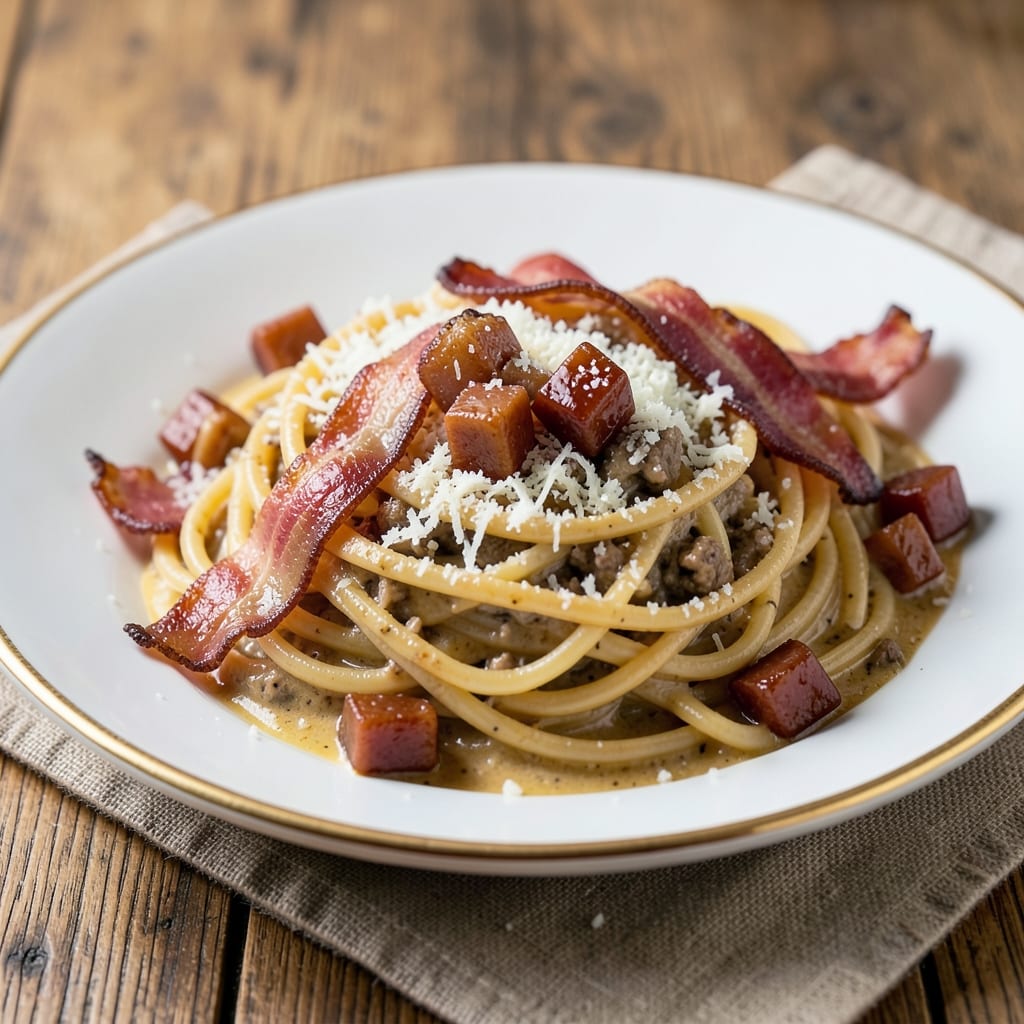
This beef bacon carbonara recipe delivers the perfect marriage of smoky pancetta, rich eggy silk, and al dente pasta—every bite is a balance of textures and flavors you won’t find in store-bought versions. The secret lies in creating a proper stovetop emulsion using just eggs, cheese, and pasta water, which transforms this dish from ordinary to extraordinary. I’ve perfected the technique over years of testing, ensuring the sauce stays velvety without ever turning grainy or separating.
What sets this recipe apart is the combination of tender beef strips and crispy pancetta, which adds a satisfying crunch that contrasts beautifully with the creamy sauce. The key steps—cooking the pancetta until golden, searing the beef just enough to keep it tender, and timing the egg-cheese mixture precisely—are all critical for achieving that signature carbonara texture. This isn’t just another pasta dish; it’s a restaurant-quality meal you can make at home with simple ingredients and a little patience.
The result is a dish that’s rich yet balanced, with each forkful offering layers of flavor: the smokiness of the pancetta, the umami depth of the beef, and the creamy, eggy silk that coats every strand of pasta. The sauce clings perfectly to the noodles, creating a cohesive bite that’s both indulgent and satisfying. Whether you’re serving this for a weeknight dinner or a special occasion, it’s sure to impress.
For those who love modern twists, you can experiment with smoked bacon or even add a splash of cream for extra richness, though purists will appreciate the traditional method. The recipe scales easily, so it’s perfect for feeding a crowd or saving leftovers for another meal. Let’s get started on creating your perfect carbonara.
Ingredients for beef bacon carbonara
Pancetta, beef, and eggs—just three ingredients transform into restaurant-quality carbonara magic.
| Ingredient | Amount | Notes |
|---|---|---|
| Spaghetti 🍝 | 12 oz | Al dente preferred, broken in half |
| Pancetta 🥓 | 6 oz | Thinly sliced, not thick-cut bacon |
| Beef Tenderloin 🥩 | 1 lb | Thinly sliced against grain |
| Large Eggs 🥚 | 4 whole | Room temperature, separated yolks |
| Pecorino Romano Cheese 🧀 | 1 cup | Freshly grated, not pre-shredded |
| Parmesan Cheese 🧀 | ½ cup | Freshly grated, aged minimum 12 months |
| Unsalted Butter 🧈 | 2 tbsp | Cold, cut into small cubes |
| Fresh Black Peppercorns 🌶️ | 1 tbsp | Cracked, not ground |
| Sea Salt 🧂 | 1 tsp | Diamond Crystal preferred |
| Garlic Cloves 🧄 | 2 cloves | Minced, not powdered |
| Pasta Water 💧 | 1 ½ cups | Reserved from cooking pasta |
The pancetta is non-negotiable here—it’s what gives carbonara its signature smoky crunch. Look for Italian-style pancetta at specialty stores like Whole Foods or Eataly if you can, but the regular bacon aisle stuff works in a pinch. The beef tenderloin should be thinly sliced against the grain for maximum tenderness. I always ask the butcher to slice it for me—thin means tender. For the cheeses, Pecorino Romano is essential for that sharp, salty bite, but if you can’t find it, Parmigiano-Reggiano works in a bind. Just make sure it’s freshly grated—pre-shredded cheese is a textural disaster in this dish.
No pancetta? Smoked bacon works perfectly, but it’ll be smokier—adjust to taste. The beef can be swapped for chicken thighs if you’re avoiding red meat, though purists will argue about it. For the eggs, room temperature is key—they’ll emulsify better. If you’re worried about salmonella, just use pasteurized eggs. The pasta water? Save at least 1.5 cups—it’s the secret to a silky sauce. No need to strain it completely; just reserve it in a measuring cup while you finish cooking the pasta. And for the love of carbonara, don’t add milk—traditionalists will hunt you down.
This sauce is best made fresh, but leftovers reheat beautifully—just add a splash of pasta water to loosen it up. Store the sauce separately from the pasta in the fridge for up to 2 days, then toss when ready to eat. The pancetta keeps for 1 week in the fridge, so you can prep it ahead. For a crowd, double the recipe—it scales perfectly. And if you’re serving it immediately, keep the pasta warm in a colander over the pot while you make the sauce. That’s the only way to keep it al dente.
Why You'll Love This Recipe
- I’ll be real: I used to buy pre-diced pancetta for this, and it’s still foolproof. The fat crisps up while the beef cooks, and you’re left with flavor in every bite. Plus, you’re not standing there chopping herbs or dicing onions. Just meat, cheese, eggs, and pasta—done. My lazy Sunday mornings thank me.
- No Fuss, Big Payoff: I swear by this one—just sear the beef tenderloin and pancetta together, toss in the spaghetti, then stir in the egg-cheese sauce. No simmering, no waiting, no stress. The pancetta renders its fat right into the pan, so you’re basically making it in the same pot you cooked the meat in. Chef’s move.
- Rich Without the Guilt: That beef tenderloin adds depth you won’t find in classic carbonara, and the Pecorino Romano—oh man—it’s salty, sharp, and melts into a velvety coat. The eggs bind everything together without turning gluey, and honestly? I’ve made this for date nights and family dinners, and no one’s ever asked for the “light” version.
- Leftovers That Beg for Seconds: Between us, this reheats like a dream. The sauce clings to the pasta without drying out, and the beef stays tender. I’ve packed it for lunches (yes, even on a Tuesday) and brought it to potlucks—people always ask for the recipe. Pro tip: Add a splash of pasta water when reheating, or you’ll regret it.
Step-by-step instructions for beef bacon carbonara
Here's how to craft this decadent twist on classic carbonara—where smoky pancetta and tender beef elevate every bite.
Sear the Beef Tenderloin to Perfect Tenderness
Pat the 1 lb beef tenderloin dry with paper towels and slice it thinly against the grain into ¼-inch strips. Heat a large skillet over medium-high heat until hot, then add 1 tablespoon of the 2 tbsp unsalted butter. Once the butter foams, add the beef strips in a single layer and let them sear undisturbed for 2 minutes—this builds a flavorful crust.
Flip the beef and cook for another 1-2 minutes until it reaches 145°F internally. The strips should be just pink in the center but firm to the touch. Remove the beef from the skillet and set it aside on a plate. Don't drain the pan yet—those browned bits are pure flavor. Here's the thing—if the beef releases easily from the pan, it's ready. If it sticks, let it cook another 30 seconds before flipping.
Render the Pancetta for Maximum Crunch
In the same skillet (with all those delicious browned bits), add the 6 oz pancetta in a single layer. Cook over medium heat for 5-6 minutes, stirring occasionally, until the pancetta is golden brown and crispy at the edges. The fat should render out and pool in the pan—this is what gives the dish its signature smoky crunch.
Use a slotted spoon to remove the pancetta and set it aside with the beef. Leave the rendered fat in the skillet—it's the foundation of your sauce. If the pancetta releases too easily before browning, reduce the heat slightly and give it another 1-2 minutes. The goal is crispy edges with tender centers. Real talk: this is where the magic happens—don't rush it.
Cook the Spaghetti Al Dente and Reserve Pasta Water
Bring a large pot of well-salted water to a rolling boil. Add the 12 oz spaghetti and cook until 1 minute shy of al dente (about 10-11 minutes). Before draining, scoop out 1.5 cups of pasta water and set it aside in a measuring cup. This starchy liquid is essential for creating the creamy sauce later.
Drain the spaghetti but don't rinse it—those surface starches help the sauce cling. Toss the hot spaghetti immediately with 1 tablespoon of the remaining 1 tbsp fresh black peppercorns and ½ teaspoon of the 1 tsp sea salt. This step ensures every strand is seasoned before it hits the sauce. I know it seems like too much salt, but trust me—it balances perfectly with the rich flavors.
Create the Egg and Cheese Sauce Off Heat
In a large bowl, whisk together the 4 whole large eggs, 1 cup freshly grated Pecorino Romano cheese, ½ cup freshly grated Parmesan cheese, and the remaining ½ teaspoon sea salt and ½ tablespoon fresh black peppercorns. The mixture should be thick and pale yellow, almost like a custard. This is your sauce base—handle it gently to avoid scrambling the eggs.
Remove the skillet from heat and add the 2 tbsp unsalted butter, letting it melt into the rendered pancetta fat. Add the cooked spaghetti to the skillet and toss vigorously to coat in the fat. Pour in ½ cup of the 1.5 cups pasta water and toss again. Now, here's the crucial part: add the egg-cheese mixture in a slow, steady stream while tossing constantly.
Combine and Finish with Crispy Toppings
Keep tossing the spaghetti over low heat for 1-2 minutes until the sauce thickens to a creamy consistency. If it's too thick, add more pasta water 1 tablespoon at a time until it reaches your desired silkiness. The sauce should coat the back of a spoon but still be loose enough to cling to the noodles.
Return the seared beef and crispy pancetta to the skillet and toss everything together. The residual heat from the pasta will gently cook the eggs into a luscious sauce without scrambling them. Serve immediately, garnished with additional freshly cracked black pepper and extra grated Pecorino Romano cheese. Each bite should deliver tender beef, smoky pancetta crunch, and that perfect eggy silk—this is carbonara reimagined.
Pro Tips For Making Beef Bacon Carbonara
- CUT PANCETTA THIN: I learned this the hard way—thick slices of pancetta won’t render fat fast enough, and you’ll end up with chewy bits. Use a sharp knife to slice it paper-thin (about 1/16-inch) before cooking, so it crisps up in seconds and melts into the sauce.
- SEAR BEEF IN BATCHES: Tenderloin’s lean—crowd it in the pan, and you’ll steam it instead of sear it. Work in single layers, no overlapping, and let each piece develop a crust before adding more. A hot, dry skillet (no oil needed) is your friend here.
- TEMPER EGGS WITH CHEESE: Skip the water trick—it’s messy. Instead, whisk eggs with grated Pecorino Romano (about 1/4 cup per egg) before mixing with pasta water. The cheese stabilizes the emulsion, so the sauce won’t turn grainy or break when tossed.
- REST THE PASTA DRY: Drain spaghetti, give it a hard shake to break surface starch, then spread it on a baking sheet for 2 minutes. Cold pasta absorbs sauce unevenly—this ensures every strand gets coated, not just the top layer. (Yes, even if you’re impatient like me.)
Troubleshooting this dish
Eggs Scrambling
If your sauce looks curdled or scrambled instead of silky, you likely added the egg-cheese mixture too quickly or over high heat. The fix? Remove the skillet from heat immediately after adding the spaghetti and eggs, then toss vigorously off the heat for 30 seconds to let residual heat gently cook the eggs into a creamy sauce. For next time, add the egg-cheese mixture in a slow, steady stream while tossing constantly—this prevents scrambling. 💛
Sauce Too Thick
A sauce that clings like glue? You didn’t reserve enough pasta water or overcooked the eggs. The solution is simple: add 1 tablespoon of reserved pasta water at a time while tossing until you reach a velvety consistency. For prevention, keep your pasta water hot and ready—it should be starchy but not boiling. Also, ensure your eggs are at room temperature before mixing with cheese.
Pancetta Not Crispy
Soggy pancetta ruins the texture contrast this dish depends on. To fix it, increase heat to medium-high and cook in a single layer without crowding the pan. For next time, use thinly sliced pancetta (ask your butcher) and cook until edges are deep golden brown. If it’s already cooked, drain on paper towels and crisp again in a dry skillet for 1-2 minutes before serving.
Beef Overcooked
Tough beef strips? You likely cooked them past 145°F internal temperature. The fix is to slice the beef into ¼-inch strips and sear for only 2-3 minutes total on medium-high heat. For prevention, use a meat thermometer—beef should be just pink in the center. If already overcooked, shred it finely and mix into the sauce to distribute flavor evenly.
Cheese Clumps
Gritty cheese texture? Pre-shredded cheese is the culprit—it contains anti-caking agents that prevent smooth melting. The solution is to grate your own cheese using a fine-hole grater right before mixing. For next time, use Pecorino Romano and Parmesan (aged 12+ months) and let them sit at room temperature for 30 minutes before grating to ensure maximum smoothness.
Sauce Separates
If your sauce breaks into oil and curds, it means the eggs cooked too quickly. The fix is to toss the pasta with the egg-cheese mixture off the heat for 1-2 minutes using only residual heat. For prevention, always add the egg-cheese mixture in a slow stream while tossing constantly. If it separates anyway, whisk in 1 tablespoon of cold water to re-emulsify the sauce before serving. 🔥
Nutrition facts
Frequently asked questions
Can I substitute pancetta with regular bacon?
Yes, but expect a slightly smokier flavor. Use smoked bacon for the closest match, or regular bacon if that's all you have. The key is to render it until crispy—about 5-6 minutes on medium heat. Just reduce the amount slightly since bacon is saltier than pancetta.
Why does my carbonara sauce get grainy?
Grainy texture usually means the eggs cooked too quickly. Always add the egg-cheese mixture off heat while tossing constantly. If it's already grainy, whisk in 1 tablespoon of cold water to re-emulsify. For prevention, use room temperature eggs and freshly grated cheese.
How do I make this vegetarian?
Replace the beef with sautéed mushrooms or crispy chickpeas for protein. For pancetta, use smoked tofu or tempeh cut into strips. The egg-cheese sauce remains the same—just ensure you're using Pecorino Romano for proper flavor.
Can I make this ahead of time?
Cook the pancetta and beef separately, then store them in the fridge for up to 3 days. Keep the egg-cheese mixture and pasta water separate until ready to serve. When ready, cook the pasta fresh, combine everything, and toss with reserved pasta water to reheat the sauce. Never pre-mix the sauce with raw eggs.
What's the best pasta shape for carbonara?
Traditional spaghetti works perfectly, but bucatini or rigatoni also work well. Avoid thin noodles—they can overcook quickly. For extra texture, try fettuccine, which holds the sauce beautifully. Just ensure it's al dente when cooked.