
Sauces & Condiments
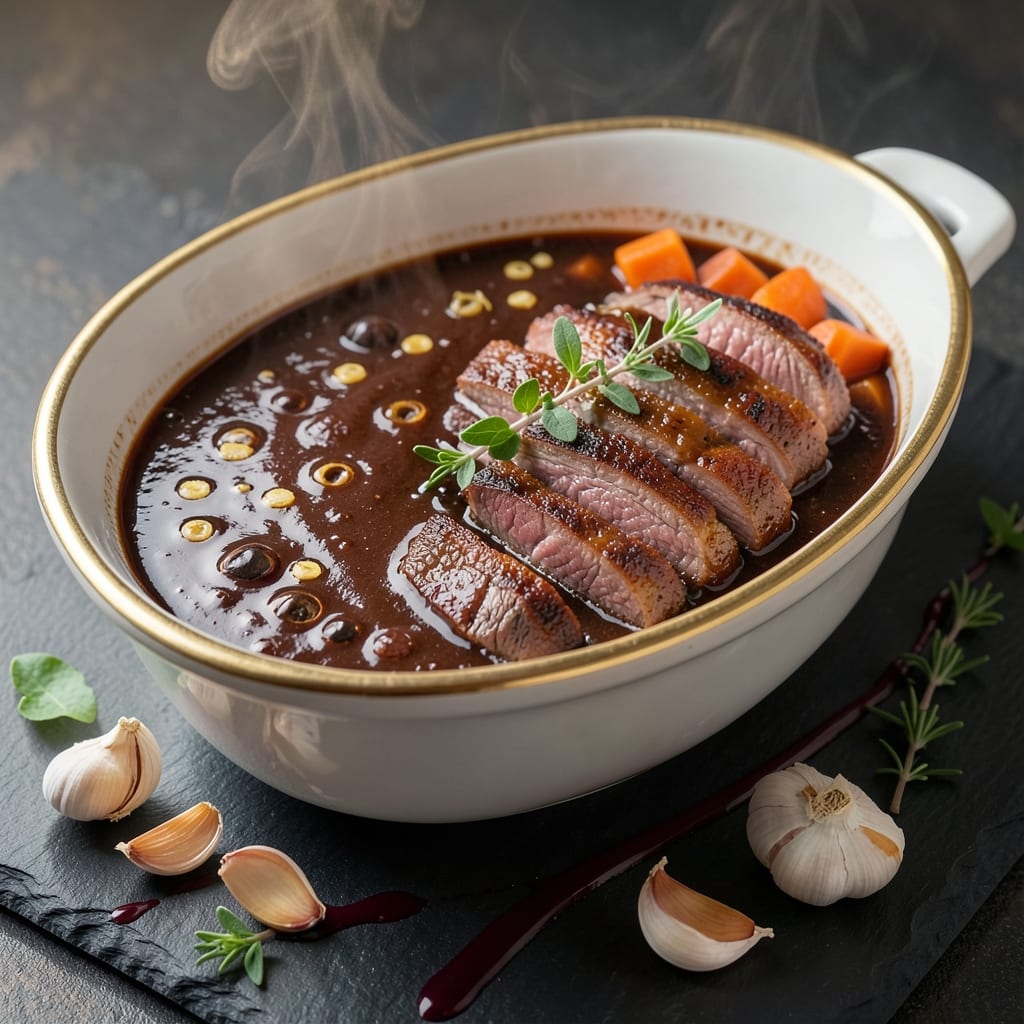
This beef au jus sauce recipe transforms simple ingredients into a velvety, wine-infused sauce that elevates roasts to restaurant-quality. The secret lies in slow reduction—where beef stock, red wine, and aromatics meld into a rich, deep sauce with layers of savory complexity. What makes this recipe stand out is the balance of acidity from the wine and umami from the stock, creating a sauce that's both bold and refined.
The process is straightforward: brown beef pieces to develop deep flavor, deglaze the pan with wine, then simmer with stock and aromatics until reduced to a glossy, concentrated sauce. This method ensures every spoonful delivers intense beefy richness without overpowering your main dish. The sauce thickens beautifully when reduced, coating each bite with its luxurious depth.
Perfect for drizzling over prime rib, beef tenderloin, or even steak sandwiches, this au jus sauce adds a professional touch to any beef dish. It keeps well in the refrigerator for up to 5 days, allowing you to make a big batch and use it throughout the week. The key to success is patience—letting the sauce reduce slowly to achieve that perfect balance of richness and acidity.
For extra depth, add a splash of balsamic vinegar or a pinch of thyme at the end. The result is a sauce that's versatile enough for weeknight dinners but impressive enough for special occasions. Let's create this flavorful masterpiece that will make your beef dishes unforgettable.
Ingredients for beef au jus sauce
Nine essential ingredients transform into a luxurious wine-infused sauce perfect for roasts and steaks.
| Ingredient | Amount | Notes |
|---|---|---|
| Beef Stock 🥩 | 3 cups | High-quality, homemade preferred |
| Dry Red Wine 🍷 | 1 cup | Bold, dry variety like Cabernet |
| Yellow Onion 🧅 | 1 whole | Medium size, chopped fine |
| Garlic Cloves 🧄 | 4 cloves | Peeled, minced finely |
| Carrots 🥕 | 2 medium | Peeled, chopped into small pieces |
| Fresh Thyme 🌿 | 1 tbsp | Leaves only, chopped |
| Tomato Paste 🍅 | 1 tbsp | Smooth, not chunky |
| Beef Bones 🦴 | 2 cups | Crushed for deep flavor |
| Black Peppercorns 🌶️ | 10 whole | Freshly cracked |
| Salt 🧂 | 1 tsp | Kosher or sea salt |
| Balsamic Vinegar 🍶 | 1 tbsp | Optional, for finishing |
The beef stock is non-negotiable here—homemade stock delivers unmatched depth, but high-quality store-bought like Kitchen Basics works in a pinch. For the red wine, Cabernet Sauvignon or Merlot add the right tannic structure, but any bold, dry red will work. The beef bones should be raw and crushed—roasted bones add smokiness, but raw gives you that classic au jus richness. Fresh thyme is ideal, but dried thyme at one-third the amount works if you're short on time. The tomato paste might seem odd, but it adds a subtle sweetness that balances the acidity of the wine.
No red wine? Beef broth with a splash of balsamic vinegar mimics the acidity, though the sauce will be slightly less complex. The carrots and onions can be swapped for celery and mushrooms for a different depth of flavor—just keep the total volume similar. If you can't find fresh thyme, Italian seasoning at half the amount gives a similar herbal note. The beef bones are crucial for that unmistakable beefy flavor, but if you're vegetarian, mushroom stems or soy sauce can stand in. For extra richness, add a tablespoon of butter at the end, though traditional recipes keep it dairy-free.
This sauce tastes even better the next day as flavors meld. Store in an airtight container in the fridge for up to 5 days, or freeze for 3 months in ice cube trays for single-use portions. The sauce thickens as it cools, so you can thin it with a splash of stock or water if needed. For serving, strain through a fine-mesh sieve to achieve that silky texture—cheesecloth works best for ultra-smooth results. Leftovers reheat beautifully on the stove or in the microwave, though stovetop keeps the texture richer.
Why You'll Love This Recipe
- Pantry Magic: I swear by this recipe when I’m staring into an empty fridge. Just stock, wine, and a handful of veggies—no fancy shopping trip required. The red wine’s acidity cuts through the richness, and the carrots add natural sweetness without extra work.
- Rich Without Effort: That deep, savory umami? Pure beef stock and garlic simmering until the onions caramelize just enough. Honestly, the first time I tasted it, I thought, "Why haven’t I been doing this all along?"—no heavy cream, no complicated reductions, just layers of flavor.
- Leftovers That Shine: This sauce keeps better than most. I’ll make a big batch on Sunday, and by Wednesday, it’s still rich and vibrant—perfect for drizzling over roasted potatoes or tossing with mashed. Even my picky husband asks for seconds.
- Weeknight Workhorse: Between us, this is my go-to when I’m too tired to think. Toss everything in one pot, let it bubble, and boom—dinner’s saved. The wine mellows out the beefy depth, so it’s great for casual dinners or impressing guests who think I’m a chef.
Step-by-step instructions for beef au jus sauce
This method transforms simple ingredients into a velvety, wine-infused sauce with deep umami richness.
Build the Flavor Base with Bones and Aromatics
In a heavy-bottomed pot, combine the 2 cups crushed beef bones with the 1 whole yellow onion (chopped fine), 2 medium carrots (chopped small), 4 cloves garlic (minced finely), and 10 whole black peppercorns. This aromatic bundle forms the foundation of your sauce's complexity. Add the 3 cups beef stock and bring to a gentle simmer over medium heat.
Let it cook uncovered for 30 minutes, stirring occasionally to prevent sticking. The bones will release their marrow and collagen, creating a naturally thickened base. You'll notice a deep, caramelized aroma developing—this is where the sauce's depth begins. Keep the heat low enough to prevent boiling, which can make the sauce cloudy.
Develop Richness with Wine and Tomato
Once the base has simmered for 30 minutes, reduce heat to low and carefully stir in the 1 cup dry red wine. The wine will sizzle briefly as the alcohol burns off—this is normal and essential for concentrating flavor. Add the 1 tbsp tomato paste and 1 tbsp fresh thyme, stirring to combine. The tomato paste will deepen the color and add a subtle sweetness that balances the acidity of the wine.
Simmer uncovered for another 20 minutes, allowing the liquid to reduce by about one-third. You should see the sauce thicken slightly and develop a glossy sheen. Taste occasionally—this is when you'll begin to detect the layered flavors coming together. If the sauce starts to stick, add a splash of water, but aim to keep it reduced for maximum intensity.
Season and Finish with Precision
Stir in the 1 tsp salt and adjust seasoning if needed—you want a balance of saltiness and acidity. For the final touch, add the 1 tbsp balsamic vinegar (if using). This optional step adds a subtle tang that brightens the sauce. Simmer for an additional 10-15 minutes until the sauce reaches your desired consistency—it should coat the back of a spoon but still be pourable.
The sauce is now ready to serve. For best results, strain it through a fine-mesh sieve to remove any solids, then return to the pot. If you prefer a smoother texture, this step is crucial. The final sauce should be deep red, glossy, and rich with layers of beef, wine, and herb flavors. Serve immediately alongside roasted beef or use as a dipping sauce for crusty bread.
Pro Tips For Making Beef Au Jus Sauce
- DEGLAZE HOT, DEGLAZE FAST: The second those onions and carrots hit the pan, turn the heat to medium-high and keep the wine bottle handy. Letting the wine simmer too long before adding stock turns your au jus into sad, diluted vinegar—scrape every last bit with a wooden spoon while the pan’s still hot, then pour in the wine immediately.
- SWEAT ONIONS UNTIL SOFT: I used to rush this step, but those onions need 8-10 minutes of gentle heat until they’re translucent and just starting to caramelize. If they’re still raw-tasting when you add the garlic, your sauce will have a harsh bite—no one wants that fighting with the beefy richness.
- STRAIN THROUGH A FINE MESH: Skip the cheesecloth unless you’re aiming for a restaurant-level finish. A fine-mesh strainer catches stray bits of carrot and onion while letting the sauce flow freely—no one wants to spoon through a slurry. Press the solids with the back of a spoon if you’re feeling fancy.
- REDUCED WINE ISN’T CHEATING: Store-bought reduced wine saves 20 minutes and still delivers depth—just don’t skimp on quality. A decent dry red (like Cabernet or Merlot) reduced by half works better than cheap wine cut with water. Taste it before adding stock; if it’s too sharp, dilute with a splash of beef stock.
Storing and reheating this dish
Refrigerator Storage
Transfer your finished au jus sauce to an airtight glass container (like Pyrex) and let it cool completely before refrigerating. The sauce actually improves overnight as the flavors meld together. Store for up to 5 days at 40°F or below—the wine and stock flavors become more harmonized with time. I always make a double batch so I can enjoy it over multiple meals. ❄️
Freezer Preservation
For long-term storage, portion the sauce into ice cube trays or freezer-safe jars, leaving ½-inch headspace for expansion. Freeze for up to 3 months—this is perfect for single-use portions when you're craving that restaurant-quality sauce. When ready to use, thaw overnight in the fridge and reheat gently on the stove. The texture remains rich and glossy if reheated properly. 🥶
Reheating Methods
For the best results, reheat your au jus sauce on the stovetop over low heat with a splash of beef stock (about 2 tbsp) to prevent sticking. Bring to a gentle simmer and reduce again to concentrate the flavors. Avoid microwaving—it can make the sauce watery and dull the wine's depth. If using frozen portions, thaw in the fridge first for even heating. 🔥
Thinning or Thickening
If your sauce thickens too much after refrigeration, whisk in 1-2 tbsp of warm beef stock to restore pourability. For extra richness, stir in 1 tbsp unsalted butter at the end. The sauce should coat the back of a spoon but still flow smoothly—this is the ideal consistency for drizzling over roasts or steaks. Taste and adjust seasoning after reheating, as flavors can concentrate differently. 💡
Straining for Smoothness
For a silky, restaurant-quality finish, strain the reheated sauce through a fine-mesh sieve or cheesecloth lined with a bowl. This removes any solids and gives you that velvety texture. Press gently on the solids with a spoon to extract every last drop of flavor. I find this step makes all the difference when serving alongside prime rib or beef tenderloin. ✨
Serving Suggestions
Use your reheated au jus sauce immediately to elevate dishes like prime rib, beef tenderloin, or even steak sandwiches. Drizzle generously over the meat just before serving to keep it warm and glossy. For extra drama, finish with a sprinkle of fresh thyme leaves or a few drops of hot olive oil. The sauce's deep, wine-infused richness pairs perfectly with crusty bread for dipping too. 🍽️
Nutrition facts
Frequently asked questions about beef au jus sauce
Can I substitute red wine with something else?
The wine adds essential acidity and depth, but you can use 1 cup beef broth + 1 tbsp balsamic vinegar for a similar balance. For extra richness, add ½ cup tomato juice to mimic the wine's body. Just remember, the sauce will taste slightly different without the wine's complexity.
Why does my au jus sauce turn cloudy?
Cloudiness usually means the sauce boiled too vigorously, breaking down proteins. To fix it, simmer gently over low heat and stir in 1 tbsp cold butter or 1 egg yolk to clarify. For prevention, always cook uncovered and reduce heat when bubbles form. A fine-mesh strainer helps achieve that glossy, restaurant-style finish.
How do I make this sauce more flavorful?
For deeper flavor, add 1 tsp Worcestershire sauce or ½ tsp smoked paprika during simmering. Roast the beef bones first for 20 minutes at 400°F before making the sauce to enhance their richness. A splash of port wine instead of red wine adds complexity too. The key is patience—longer simmering concentrates flavors beautifully.
Can I use this sauce for non-beef dishes?
While it's designed for beef, the wine and herb base works wonderfully with lamb chops, pork tenderloin, or even mushrooms for a vegetarian twist. The umami-rich sauce pairs surprisingly well with roasted root vegetables too. Just adjust seasoning—lamb may need more thyme, while mushrooms benefit from a pinch of black pepper.
What's the best way to reheat leftovers?
Always reheat on the stovetop over low heat with 1-2 tbsp beef stock to prevent sticking. Never microwave—it creates a skin and dulls the wine's depth. For extra richness, stir in 1 tbsp butter at the end. If the sauce thickens too much, whisk in a splash of warm water until smooth. The texture should be glossy and coat the back of a spoon.