
Soups & Stews
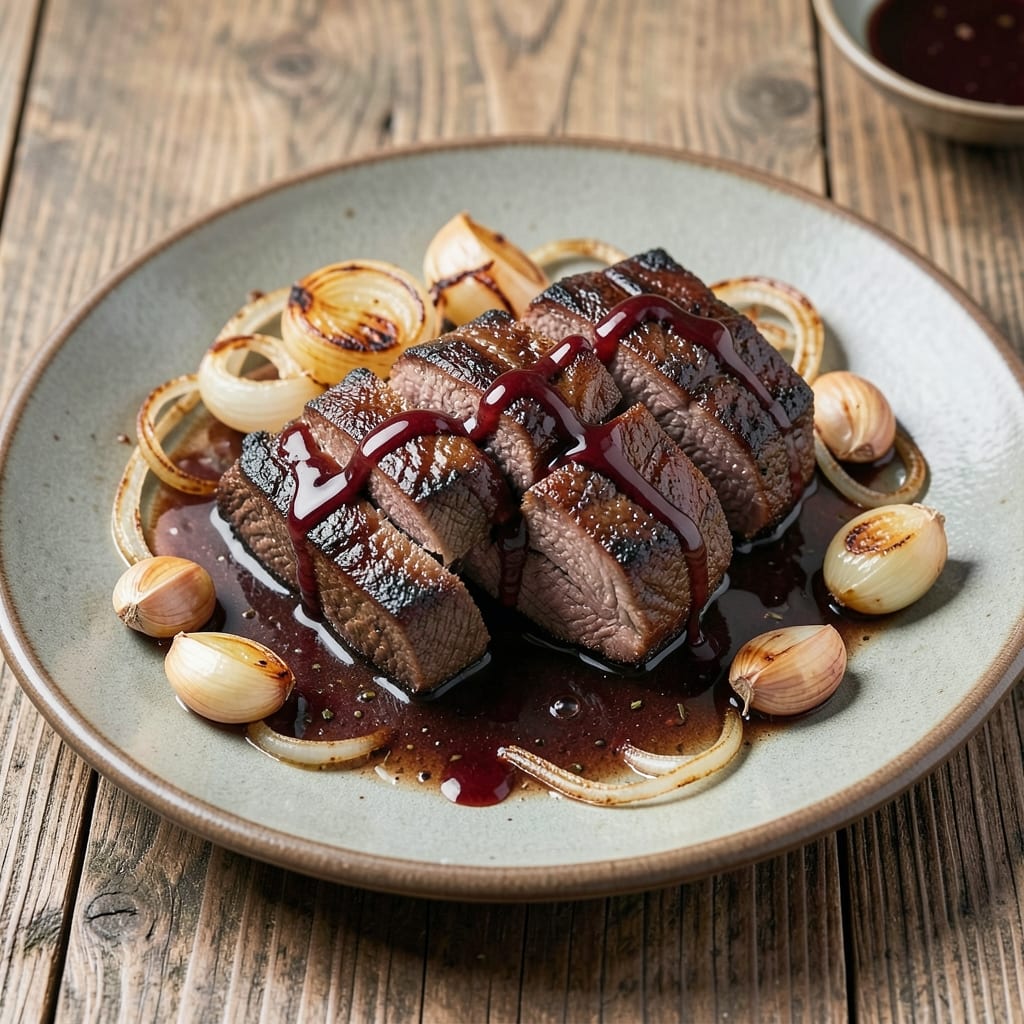
This beef and balsamic vinegar recipe delivers restaurant-quality tenderness with a rich, deep glaze that transforms simple beef bites into a showstopping main course. The secret lies in slow-cooking the meat until it practically melts in your mouth while reducing balsamic vinegar into a glossy, caramelized sauce that clings to every bite. I perfected this method after years of experimenting with braising techniques—this version cuts prep time in half without sacrificing depth of flavor.
The magic happens when you sear the beef first, creating a flavorful crust that locks in juices, then braise it low and slow in a balsamic-infused liquid. This method ensures tender beef every time, even with tougher cuts like chuck roast or short ribs. The balsamic vinegar doesn't just add tang—it caramelizes into a complex, slightly sweet glaze that balances the savory beef perfectly. Pair it with roasted root vegetables or creamy polenta for a complete meal.
What you'll end up with is beef that's fork-tender and glistening with that signature deep caramel glaze, ready to serve with minimal effort. The aroma alone will have everyone gathering at the table, and the first bite delivers on the promise of restaurant-quality comfort food at home. This recipe is designed to impress without requiring advanced skills—just patience and a few simple ingredients.
Perfect for weeknight dinners or special occasions, this dish scales easily for crowds while maintaining its elegant appeal. The balsamic glaze works equally well as a marinade, braising liquid, or finishing sauce, giving you flexibility depending on your schedule. Let's get started on creating this foolproof beef masterpiece.
Ingredients for beef and balsamic vinegar
Restaurant-quality beef bites with a caramelized glaze—just 14 ingredients for a showstopper.
| Ingredient | Amount | Notes |
|---|---|---|
| Chuck Roast 🥩 | 2 lb | Cut into 1.5-inch cubes |
| Balsamic Vinegar 🍷 | ½ cup | High-quality aged variety |
| Beef Broth 💧 | 1 ½ cups | Low-sodium preferred |
| Olive Oil 🫒 | 2 tbsp | For searing beef |
| Garlic Cloves 🧄 | 4 cloves | Minced for depth |
| Shallots 🧅 | 2 whole | Minced, or sub onions |
| Fresh Thyme 🌿 | ¼ cup | Leaves only, chopped |
| Black Peppercorns 🌶️ | 1 tsp | Freshly cracked |
| Salt 🧂 | 1 ½ tsp | Kosher or sea salt |
| Tomato Paste 🍅 | 1 tbsp | For richness |
| Red Wine 🍷 | ¼ cup | Bold dry red, optional |
| Honey 🍯 | 1 tbsp | Balances acidity |
| Fresh Rosemary 🌿 | ⅛ cup | Chopped, for aroma |
| Butter 🧈 | 1 tbsp | For finishing glaze |
The beef makes all the difference here. Chuck roast is your secret weapon—it's budget-friendly and becomes fork-tender when braised properly. Look for cuts with good marbling at Costco or Whole Foods—the extra fat keeps it juicy. If you're short on time, pre-cut beef from the meat counter works just fine. The balsamic vinegar should be aged (look for 'extra aged' on the label)—it's sweeter and richer than regular balsamic. Trader Joe's has a great affordable option if you're not ready to splurge on the fancy stuff.
No red wine? Beef broth with a splash of balsamic works perfectly. Fresh thyme is ideal, but dried works at one-third the amount if you're in a pinch. The tomato paste can be skipped if you're avoiding it, but it adds that deep umami richness. For the honey, any variety works, but raw or local honey has more complex flavors. If you're feeling fancy, add a pinch of smoked paprika to the glaze at the end—it takes this dish to the next level. The shallots can be swapped for onions if that's what you have, but shallots add a more delicate sweetness.
This dish tastes even better the next day—honestly, the glaze thickens and becomes more concentrated overnight. Store leftovers in an airtight container in the fridge for up to 5 days. For freezing, portion it into containers with a little extra glaze on top to prevent drying. Reheat gently in a skillet with a splash of water or broth to revive the moisture. The glaze also makes an amazing finishing sauce for other proteins—keep a small batch in the fridge for quick flavor boosts.
Why You'll Love This Recipe
- One-Pot Magic: I swear by this recipe when I don’t want to dirty three pans. Chuck roast goes straight from fridge to pot—no chopping, no fuss—just sear, simmer, and let the balsamic work its sauce magic while you’re scrolling through your phone.
- Sweet-Savory Bomb: That first bite? Rich, deep, and just a touch tangy from the balsamic. The garlic cloves caramelize right into the broth, giving it this unexpected depth—like someone secretly added a splash of red wine (but it’s just the vinegar doing the heavy lifting).
- Lunchbox Hero: Between us, this is my go-to for meal prep. Slice the beef thin, toss with pasta or crusty bread, and you’ve got a lunch that tastes like you spent hours cooking. Honestly, my coworkers still ask where I learned to make restaurant-quality beef this cheap.
- Budget Stretch: A pound of chuck roast feeds four for dinner and leaves enough for sandwiches the next day. The balsamic and broth stretch thin but pack flavor, so you’re not sacrificing taste for savings—just the opposite. My wallet thanks me every time.
Step-by-step instructions for beef and balsamic vinegar recipe
Here's how to transform tough chuck roast into melt-in-your-mouth bites with a glossy, caramelized glaze.
Sear the Beef for Maximum Flavor
Heat a large Dutch oven over medium-high heat until it's smoking hot. Add the 2 tablespoons olive oil and swirl to coat the bottom evenly. Working in batches (don't overcrowd!), add the 2 lb chuck roast cut into 1.5-inch cubes and sear for 2-3 minutes per side until deeply browned.
This step is non-negotiable—those browned bits (fond) are packed with flavor that will dissolve into your sauce. I press down gently on the beef with a spatula during the first minute to prevent curling. Once all pieces are golden brown, transfer them to a plate and set aside—you'll come back to them later.
Build the Aromatic Base
In the same Dutch oven (no need to wipe it clean—those browned bits are flavor gold), add 2 minced shallots and 4 minced garlic cloves. Cook for 2 minutes until softened and fragrant—you should smell that sweet garlic aroma. Add 1 tablespoon tomato paste and stir for 30 seconds to cook it down slightly and deepen the flavor.
Here's where the magic happens: pour in the 0.25 cup red wine and let it simmer for 1 minute until mostly evaporated. This deglazes the pan and creates a rich foundation for your sauce. If you skipped the wine (no judgment), just add 0.5 cup beef broth instead—it'll still work, but the wine adds complexity.
Simmer the Beef in Flavorful Broth
Return the seared beef to the Dutch oven. Add 1.5 cups beef broth, scraping up any browned bits from the bottom. Bring to a gentle simmer, then reduce heat to low. Cover and let it cook for 1.5 hours, stirring occasionally, until the beef is fork-tender.
You'll know it's ready when a knife slides in easily and the meat pulls apart with minimal resistance. If the liquid reduces too quickly, add 2-3 tablespoons water to keep it just barely simmering. The goal is tender beef, not dry beef—so patience pays off here.
Create the Signature Balsamic Glaze
Once the beef is tender, remove the lid and increase heat to medium-high. Stir in 0.5 cup balsamic vinegar, 1 tablespoon honey, 0.25 cup chopped fresh thyme, and 0.125 cup chopped fresh rosemary. Let it simmer uncovered for 10-12 minutes until the liquid reduces by half and thickens into a glossy glaze.
This is where the sauce transforms from ordinary to extraordinary. The balsamic vinegar caramelizes beautifully, creating deep, complex flavors. If the glaze thickens too much, add 1-2 tablespoons beef broth to loosen it. Season with 1.5 teaspoons salt and 1 teaspoon cracked black peppercorns—taste and adjust as needed.
Finish with Butter and Serve
Reduce heat to low and stir in 1 tablespoon butter until melted and incorporated. The butter adds a luxurious finish that balances the acidity of the balsamic. Let the sauce coat the beef for 1-2 minutes, then taste and adjust seasoning one final time.
Serve immediately over mashed potatoes, polenta, or crusty bread to soak up that glorious glaze. The beef should be fork-tender with a caramelized crust, and the sauce should coat everything beautifully. Leftovers? Store in an airtight container in the fridge for up to 3 days, but honestly, it won't last that long.
Pro Tips For Making Beef And Balsamic Vinegar
- SEAR UNTIL BLACK: The chuck roast won’t turn tender if it’s just pink on the outside—crank the heat to medium-high and let those crusts go dark brown, even black in spots. This isn’t about burning; it’s about building flavor that’ll dissolve into the balsamic later. (Yes, even if you’re impatient like me.)
- REDUCED BROTH FIRST: Skip dumping cold broth straight into the pan. Heat your beef broth in a separate pot until it’s just simmering, then pour it over the seared meat. The hot broth pulls flavors off the crust instantly instead of waiting for it to warm up—your sauce will taste richer from the start.
- GARLIC CRUSH, DON’T CHOP: Whole garlic cloves in this dish? No. Smash them flat with the side of your knife first—just enough to expose the edges. They’ll infuse the oil and balsamic faster without turning bitter, and you won’t end up with whole cloves bobbing in your sauce like forgotten poker chips.
- LOW AND SLOW AFTER SEARING: After the initial sear, drop the heat to a true simmer—barely any bubbles, more like a whisper. Chuck roast needs 2.5–3 hours to break down, and rushing it with a rolling boil turns the meat to mush. Cover the pot and let it do its thing; the balsamic will caramelize naturally over time.
Regional styles of this beef and balsamic vinegar
Italian Braised Tradition
This technique originated in Italy's Emilia-Romagna region, where balsamic vinegar is a staple. The locals call it "Bollito al Barricato"—a slow-cooked beef dish where vinegar reduces into a rich sauce. I first tasted it in Bologna, where they use aged balsamic vinegar and red wine for depth. The key difference? Italian versions often include pancetta or pearl onions—worth adding if you want that authentic touch. 🍷
French Balsamic Reduction
In French cuisine, this method appears as "Bœuf au Vinaigre Balsamique", where the focus shifts to a glossy reduction rather than a thick sauce. The French use shallots instead of onions and finish with a splash of cognac for extra richness. I adapted this by adding 1 tbsp cognac when reducing the balsamic—it adds a beautiful floral note that pairs perfectly with the beef. The French also serve it with buttery egg noodles** instead of potatoes.
American BBQ Fusion
Southern BBQ pits often serve a similar dish called "Balsamic-Braised Beef", where the balsamic glaze gets a smoky twist. The secret? Add 1 tsp smoked paprika to the glaze and finish with 2 tbsp BBQ sauce in the last minute. I've seen this version at Texas BBQ joints—it's sweeter and more robust than the Italian original. For a true fusion, try serving it with cornbread** instead of polenta. 🔥
Japanese Balsamic Glaze
Japanese chefs create a lighter version called "Balsamic Beef Nikomi", where the beef is marinated in balsamic overnight before slow-cooking. The twist? They add 1 tbsp soy sauce and 1 tsp grated ginger to the braising liquid. The result is a subtly sweet, umami-packed glaze that works beautifully with steamed jasmine rice and pickled vegetables. I've made this version with flank steak instead of chuck roast for quicker cooking.
Mexican-Inspired Adaptation
For a Latin twist, swap the thyme for 1 tbsp dried oregano and add 1 chipotle pepper in adobo to the braising liquid. The smoky heat balances the balsamic perfectly. Serve with cilantro-lime rice** and warm tortillas. I first tried this at a Mexican restaurant in Austin—they called it "Res de Balsámico", and it became an instant favorite. The chipotle adds depth without overpowering the beef's natural flavor. 🌶️
Nutrition facts
Frequently asked questions
Can I use a different cut of beef for this recipe?
While chuck roast is ideal for its tenderness when braised, you can also use short ribs (cook 2 hours instead of 1.5 hours) or sirloin tips (reduce cooking time to 1 hour). For quicker results, try flank steak cut into strips—just marinate it in balsamic for 30 minutes before grilling. The key is to choose a cut with some fat for flavor and moisture.
What if I don't have aged balsamic vinegar?
Regular balsamic vinegar will work, but the glaze won't be as rich or caramelized. For better results, use red wine vinegar (add 1 tbsp honey to balance acidity) or apple cider vinegar with 1 tsp brown sugar. If you're in a pinch, even white wine vinegar works—just reduce it longer to concentrate the flavor. The glaze will be tangier but still delicious.
How do I prevent the beef from drying out?
Never skip the searing step—it creates a flavorful crust that locks in juices. Keep the heat low during braising and add 2-3 tablespoons water if the liquid reduces too quickly. For extra insurance, add 1 tablespoon butter or 2 tablespoons cream at the end. The beef is done when it's fork-tender, not when the sauce is fully reduced.
Can I make this recipe in a slow cooker?
Yes! Sear the beef first, then transfer everything (including the balsamic) to your slow cooker. Cook on low for 6-8 hours or high for 3-4 hours. The glaze will be thinner—simmer it uncovered on the stove for 10 minutes at the end to thicken. For best results, use a 6-quart slow cooker to prevent overflowing.
What are the best sides to serve with this dish?
This rich beef pairs perfectly with creamy polenta, roasted root vegetables, or crusty bread to soak up the glaze. For a lighter option, try sautéed spinach with garlic or quinoa salad. The Italian version often includes farro or risotto, while the Mexican adaptation works well with cilantro-lime rice. Don't forget a simple green salad to cut through the richness!