
Soups & Stews
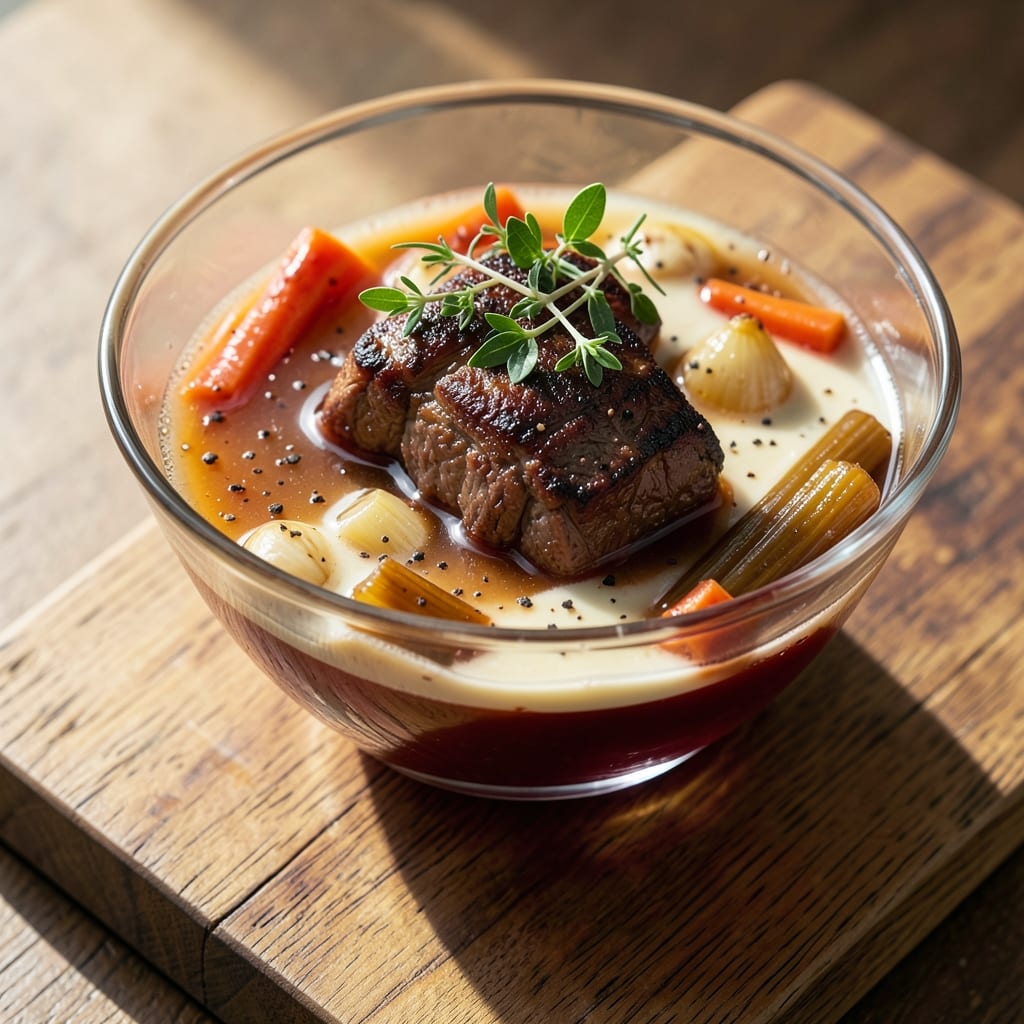
This beef aspic recipe transforms humble beef and vegetables into a restaurant-worthy centerpiece with its signature wobbling gelatin glaze. The secret lies in simmering beef bones and vegetables for hours to create a rich, flavorful broth that sets into a delicate, glossy aspic when chilled. It’s a dish that feels luxurious yet requires just a few hours of hands-off cooking—ideal for special occasions or when you want to impress with minimal effort.
The process begins with searing beef chunks to develop deep, caramelized flavors before simmering them with aromatic vegetables and herbs. The broth is then strained, seasoned, and combined with gelatin to create a smooth, silky setting agent. Once poured over the meat and vegetables, it chills into a firm yet delicate glaze that holds everything together like a culinary masterpiece. This technique ensures every bite delivers tender meat, vibrant vegetables, and a rich, savory broth in perfect harmony.
What makes this recipe truly special is its versatility—serve it as a main course with pickles, mustard, and fresh herbs for a classic presentation, or use it as an elegant appetizer with crusty bread. The aspic’s glossy finish and delicate texture make it a showstopper, while the deep, savory flavors satisfy even the most discerning palates. Whether you're hosting a dinner party or simply craving a dish that feels extraordinary, this recipe delivers.
The best part? Once you master the technique, you can adapt it with different meats, vegetables, or herbs to create endless variations. The key is patience—allowing the broth to simmer long enough to develop maximum flavor and the aspic to set properly. With this recipe, you’ll achieve a dish that’s both impressive and deeply satisfying, proving that elegant cooking doesn’t require complicated techniques.
Ingredients for beef aspic
Six aromatic vegetables, premium gelatin, and slow-simmered beef create this restaurant-worthy centerpiece.
| Ingredient | Amount | Notes |
|---|---|---|
| Beef Chuck Roast 🥩 | 3 lb | Cut into 2-inch chunks, bones included |
| Yellow Onions 🧅 | 2 whole | Quartered, peeled, root end trimmed |
| Carrots 🥕 | 4 whole | Whole, scrubbed, cut into 3-inch lengths |
| Celery Stalks 🧄 | 4 whole | Cut into 3-inch lengths, leaves trimmed |
| Garlic Cloves 🧄 | 6 cloves | Smashed, skins left on |
| Fresh Thyme Sprigs 🌿 | 4 whole | Stems intact for easy removal |
| Fresh Bay Leaves 🍃 | 2 whole | Lightly bruised for flavor release |
| Black Peppercorns 🌶️ | 1 tbsp | Coarsely cracked, not ground |
| Kosher Salt 🧂 | 1 ½ tsp | Diamond Crystal preferred |
| Unflavored Gelatin 🍬 | 2 ½ tbsp | Powdered, high bloom recommended |
| Cold Water 💧 | ½ cup | For blooming gelatin |
| Dry White Wine 🍷 | 1 cup | Sauvignon Blanc preferred |
| Beef Consommé 🍲 | 4 cups | Homemade or high-quality store-bought |
| Fresh Parsley 🌿 | ¼ cup | Chopped, for garnish |
The beef selection is critical—chuck roast with bones delivers maximum gelatinous richness. Whole Foods or specialty butchers carry the best cuts for aspic, though any grocery store will have chuck roast. Look for pieces with visible marbling and a deep red hue, not grayish or discolored. The vegetables should be fresh but firm—carrots and celery with crisp stems, onions with no sprouting. For the wine, Sauvignon Blanc adds brightness, but any dry white will work. The gelatin must be unflavored and high bloom—Great Lakes or Knox brands are industry standards. Pre-bloom the gelatin in cold water for 10 minutes before adding to the hot broth to ensure a perfect set.
No wine? Substitute an extra cup of beef consommé—the acidity from wine helps tenderize the meat and balance flavors. Fresh thyme and bay leaves are ideal, but dried thyme at half the amount works in a pinch. For the consommé, homemade is best, but Swanson or Knorr premium brands are acceptable shortcuts. If you can't find whole bay leaves, crushed dried bay leaf at one-third the amount suffices. The carrots and celery can be swapped for fennel or leeks for variation, though traditional mirepoix works best here. Always use Diamond Crystal kosher salt—it dissolves more easily than table salt, which can cloud the aspic.
This aspic requires patience—4-5 hours of simmering develops the deepest flavors. Once set, it keeps 5-7 days refrigerated in an airtight container with plastic wrap pressed directly on the surface to prevent a skin. For serving, unmold onto a platter and garnish with chopped parsley and cornichons. The aspic can be reheated gently in a water bath if needed, though it's best enjoyed cold. Portion into individual molds for elegant appetizers or serve family-style for a showstopping main. Freezes beautifully for up to 3 months—perfect for holiday entertaining.
Why You'll Love This Recipe
- One-Pot Magic: I swear by this—just dump the chuck roast, veggies, and broth into one pot, simmer, then strain. No chopping, no fuss, no extra dishes. The onions and carrots soften into the broth, so you’re left with zero cleanup.
- Rich, Deep Umami Bomb: That beef chuck roast? It melts into the broth, turning it into a silky, savory base with layers of garlic and carrot sweetness. Honestly, it’s the kind of flavor that makes you pause mid-bite—like a hug in a bowl.
- Meal Prep MVP: Make a big batch on Sunday, and you’ve got a week’s worth of lunches or potluck sides covered. Slice it cold for sandwiches, or reheat with a splash of broth for instant comfort. My freezer’s always stocked with this—because why not?
- Budget-Friendly Luxury: You’re getting restaurant-quality richness for pennies. Chuck roast is cheap, the veggies stretch the broth, and leftovers? They last forever. Between us, this is how I feed my family without breaking the bank.
Step-by-step instructions for beef aspic with herb elegance
Transform humble beef into a luxurious, wobbling centerpiece using precise technique and aromatic herbs.
Sear and Simmer the Beef Base
In a large Dutch oven, combine the 3 lb beef chuck roast cut into 2-inch chunks, 2 whole yellow onions quartered, 4 whole carrots cut into 3-inch lengths, 4 whole celery stalks cut into 3-inch lengths, 6 smashed garlic cloves, 4 fresh thyme sprigs, 2 fresh bay leaves, 1 tbsp coarsely cracked black peppercorns, and 1.5 tsp kosher salt. This aromatic bundle creates the flavor foundation.
Heat the Dutch oven over medium-high heat until hot, then add 1 cup dry white wine to deglaze and release fond from the bottom. Cook uncovered for 15 minutes, stirring occasionally, until the beef develops a deep brown crust and the vegetables begin to soften. This searing step builds complex flavors that will infuse the aspic.
Build the Consommé and Bloom the Gelatin
Pour in the 4 cups beef consommé, ensuring all ingredients are submerged. Bring to a gentle simmer over medium heat, then reduce to a bare bubble and cook uncovered for 2 hours. Skim any foam that rises to the surface with a fine-mesh skimmer, maintaining clarity for the finished aspic.
While the consommé simmers, bloom the 2.5 tbsp unflavored gelatin in the 0.5 cup cold water according to package directions (typically 5-10 minutes). This creates a smooth, flavorless gel that will give the aspic its signature wobble. The gelatin must be fully dissolved before adding to the hot liquid.
Strain and Set the Aspic Mixture
Line a 9x5-inch loaf pan with plastic wrap, leaving an overhang on all sides. Strain the simmered mixture through a fine-mesh sieve into a heatproof bowl, pressing on the solids with a wooden spoon to extract maximum flavor. Discard the solids or compost them—their purpose is complete.
Whisk the bloomed gelatin into the strained consommé until fully incorporated. The mixture should be smooth and homogeneous. Pour into the prepared loaf pan, pressing the plastic wrap against the surface to eliminate air bubbles. Cover the pan with a clean kitchen towel and refrigerate for 4-6 hours until completely set.
Serve with Herb Garnish
Once set, invert the aspic onto a serving platter by gripping the plastic wrap and flipping quickly. Remove the plastic wrap and use a sharp chef's knife to trim any uneven edges. The aspic should hold its shape when gently shaken—this indicates proper setting.
Garnish immediately with 0.25 cup chopped fresh parsley for vibrant color contrast. Serve chilled with toothpicks for easy portioning. The aspic should have a delicate, jiggly texture with a rich, herby beef flavor that pairs beautifully with crusty bread or roasted vegetables.
Pro Tips For Making Beef Aspic
- Simmer Slow and Steady: I learned this the hard way—rushing the aspic by boiling hard will turn it into glue. Keep the heat at a bare simmer (gentle bubbles, no rolling) for at least 6 hours, or until the broth reduces by about 40%. The longer it cooks, the clearer and firmer the final gel will be.
- Char the Aromatics First: Skip the soft onions and carrots—roast the chopped onions, carrots, and celery in a dry pan until deeply browned (about 15 minutes). This adds depth that raw veggies can’t match. Just don’t burn them; pull them when they smell like caramelized heaven.
- Strain Like Your Gel Depends on It: I used to skimp on straining, and my aspic always ended up cloudy. After simmering, strain the broth through a fine-mesh sieve twice—first with a cheesecloth-lined colander, then through a coffee filter for extra clarity. The extra effort makes a noticeable difference in texture.
- Use Cold Broth for Setting: Pour the hot broth into your molds only after it’s cooled to room temperature—hot liquid will cook the gelatin and weaken the set. If you’re in a hurry, chill the broth in an ice bath for 10 minutes first. Patience here guarantees a clean, wobbly slice.
Regional styles of these flavors
French Classic
In France, beef aspic is a staple at holiday feasts, often served with cornichons and Dijon mustard. The French version uses beef marrow bones for extra richness and a white wine reduction to brighten the flavor. I’ve made it with Chablis instead of Sauvignon Blanc—its crisp acidity cuts through the gelatin beautifully. Serve with baguette slices for dipping, and garnish with chopped tarragon for a refined touch. 🍷
British Game Aspic
The British elevate aspic with game meats like venison or pheasant, replacing beef chuck with venison shank or pork shoulder. They often add port wine to the consommé for depth, and garnish with watercress and pickled onions. For a modern twist, I’ve used smoked paprika in the broth—it adds a subtle smokiness that pairs perfectly with the gelatin’s clean texture. 🌶️
German Jellied Meat
In Germany, Gelée Fleisch is a hearty dish often made with pork or beef brisket, simmered with carrots, leeks, and juniper berries. The Germans favor a thicker set, achieved by using extra gelatin (up to 3 tbsp). Serve with sauerkraut and mustard sauce for a tangy contrast. I’ve adapted this by adding a splash of apple cider vinegar to the broth—it brightens the flavor without overpowering the meat. 🥬
American Holiday Tradition
American aspic often features beef tongue or ham, especially during Thanksgiving and Christmas. The broth is typically spiced with cloves and allspice, and the dish is garnished with watercress and lemon slices. For a Southern twist, I’ve incorporated a touch of hot sauce into the consommé—just ½ tsp of Crystal hot sauce adds a subtle kick that balances the richness. 🔥
Japanese Aspic-Inspired
Japanese cuisine uses dashi broth instead of beef consommé, creating a lighter, umami-rich aspic. Replace the beef with shirataki noodles or tofu for a vegetarian version, and infuse the broth with grated ginger and shiso leaves. Garnish with pickled ginger and sesame seeds for a refreshing contrast. I’ve experimented with mirin in the broth—it adds sweetness and depth without overpowering the gelatin’s clarity. 🌿
Nutrition facts
Frequently asked questions
Why does my aspic turn out cloudy instead of clear?
Cloudiness usually means the broth didn't simmer long enough or wasn't strained properly. Skim the foam during simmering and strain through a fine-mesh sieve for crystal clarity. For extra polish, chill the strained broth uncovered in the fridge for 1 hour to let fat solidify, then carefully remove it before adding gelatin.
Can I make beef aspic without gelatin?
Yes! Use 1 tbsp agar-agar powder instead—it creates a firmer, vegetarian-friendly set. Bloom it in ¼ cup cold water> first, then whisk into the hot broth. Agar-agar requires 10 minutes> of simmering after adding to fully activate. The texture will be slightly different but still elegant.
How do I fix an aspic that didn't set properly?
If your aspic is too soft, it likely didn't chill long enough or used insufficient gelatin. For a quick fix, reheat the mixture gently (don't boil) and add ½ tsp extra gelatin> dissolved in 1 tbsp cold water. Pour back into molds and refrigerate for another 4-6 hours. For prevention, always use high-quality gelatin and ensure your molds are completely chilled before pouring.
What's the best way to unmold beef aspic?
Run a thin knife around the edges first to loosen it, then dip the bottom of the mold in hot water> for 5 seconds> before flipping. For delicate aspics, place a serving platter over the mold and invert both together. Work quickly—the aspic should release cleanly if properly set.
Can I make beef aspic ahead of time?
Aspic actually improves with 24 hours> of refrigeration as flavors meld. Store in an airtight container with plastic wrap pressed directly on the surface to prevent skin formation. For serving, unmold just before eating. It keeps well for 5-7 days> refrigerated or 3 months> frozen. Perfect for meal prep!