
Main Courses
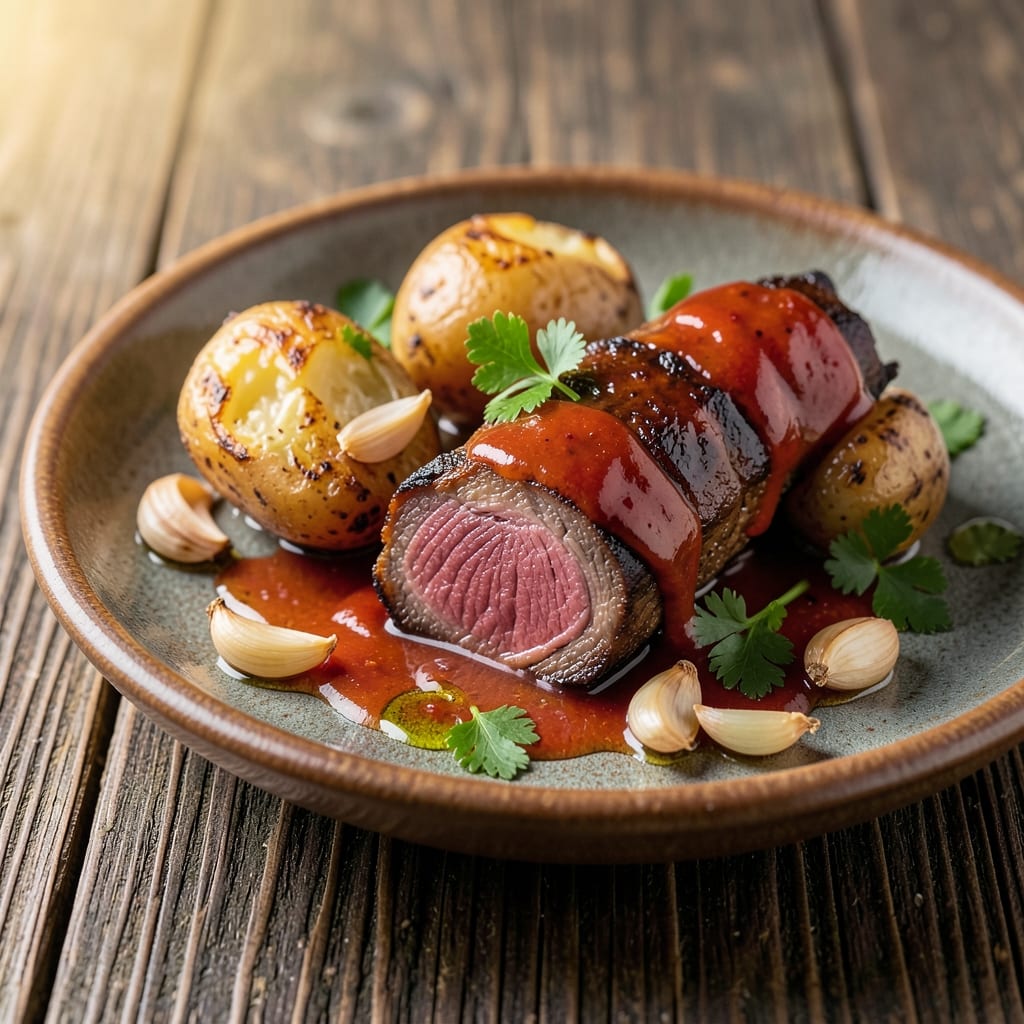
This Basque beef tongue recipe brings the heart of Spain's culinary tradition to your kitchen with its slow-simmered richness and paprika-kissed depth. 🔥 The dish transforms tough beef tongue into melt-in-your-mouth tenderness through hours of gentle braising, a technique perfected in Basque country where slow cooking elevates humble ingredients into extraordinary meals. What sets this recipe apart is the careful balance of spices—smoky paprika, garlic, and white wine—that creates layers of flavor while keeping the dish authentically simple.
The process begins with marinating the tongue overnight to break down fibers and infuse it with flavor, then simmers for hours until fork-tender. This method ensures the meat remains juicy and flavorful, not dry or rubbery. The result is a dish that's rich yet balanced, with a texture that's both satisfying and elegant. Basque cuisine values simplicity and quality ingredients, and this recipe delivers both in every bite.
When served, the beef tongue is typically paired with traditional sides like piquillo peppers and roasted potatoes, creating a meal that's hearty and full of character. The dish carries a rustic charm that makes it perfect for special occasions or when you want to impress guests with an authentic taste of Basque culture. The slow cooking process transforms a simple cut of meat into something truly special.
What makes this recipe particularly rewarding is the patience it requires—each step builds toward that moment when you slice into perfectly tender meat infused with deep, smoky flavors. The aroma alone will fill your kitchen with the promise of a meal that's both comforting and sophisticated. Let's create this Basque classic together.
Ingredients for basque beef tongue
Authentic Basque flavors meet slow-cooked perfection with these quality ingredients.
| Ingredient | Amount | Notes |
|---|---|---|
| Beef Tongue 🥩 | 2 lb | Fresh, preferably from butcher |
| Smoked Paprika 🌶️ | 2 tbsp | High-quality for authentic flavor |
| Garlic Cloves 🧄 | 8 cloves | Freshly peeled, lightly crushed |
| White Wine 🍷 | 1 cup | Dry variety, chilled |
| Tomato Paste 🍅 | ½ cup | San Marzano preferred |
| Bay Leaves 🌿 | 2 whole | Fresh or high-quality dried |
| Olive Oil 🫒 | ¼ cup | Extra-virgin for richness |
| Red Wine Vinegar 🍶 | 2 tbsp | For marinade acidity |
| Salt 🧂 | 1 ½ tsp | Diamond Crystal preferred |
| Black Peppercorns 🌶️ | 1 tsp | Freshly cracked |
| Onion 🧅 | 1 whole | Yellow, peeled and quartered |
| Carrot 🥕 | 1 whole | Medium, peeled and chopped |
| Celery Stalks 🌿 | 2 whole | Fresh, chopped |
| Thyme Sprigs 🌿 | 4 whole | Fresh, stems removed |
| Water 💧 | 4 cups | Filtered preferred |
The beef tongue is the centerpiece, and freshness is non-negotiable. Source it from a trusted butcher—look for vibrant color and minimal odor. Whole Foods or specialty meat counters often carry superior quality. For the paprika, La Boqueria brand delivers that authentic smoky depth. The garlic should be firm and unspoiled, while the white wine should be a dry variety like Albariño or Viognier. Trader Joe's often stocks excellent affordable options. The San Marzano tomato paste is worth seeking out—its sweetness elevates the dish significantly.
No smoked paprika? Sweet paprika plus a pinch of liquid smoke works in a pinch, though the flavor won't be identical. Fresh thyme unavailable? Dried thyme at one-third the amount suffices, though fresh is preferred. For the white wine, dry vermouth or extra chicken broth can substitute if needed. The vegetables—onion, carrot, and celery—form the aromatic base, so don't skip them. If you're short on time, pre-chopped mirepoix mixes from Williams Sonoma save effort without sacrificing quality.
The marinade components—vinegar, olive oil, and spices—should be combined and applied immediately to the tongue. Store the marinade separately if prepping ahead, and refrigerate for up to 2 days. The cooked tongue keeps beautifully in the fridge for 5 days when properly stored in its cooking liquid. For longer storage, freeze for up to 3 months, though texture may slightly alter. Reheat gently in the cooking liquid to maintain moisture.
Why You'll Love This Recipe
- One-Pot Magic: I swear by this recipe because it’s all in one pan—no chopping, no fuss, just simmer and savor. The wine reduces down to a glossy sauce while you’re doing other things, and the tongue practically falls apart when it’s done. Honestly? That’s my kind of cooking.
- Rich, Smoky Depth: The smoked paprika and garlic cloves turn this into something special—deep, earthy, with a hint of wine brightness that cuts through the richness. Between us, that crispy exterior with the tender center? It’s the kind of bite that makes people ask, "What’s in this?"
- Leftovers That Shine: This dish actually improves the next day. The flavors meld into something even more complex, and it’s perfect for quick lunches or charcuterie boards. I’ve sent it in thermoses for picnics, and no one’s ever complained—just the opposite.
- Budget-Friendly Luxury: Beef tongue is cheaper than steak but feels like a splurge. A single cut feeds four, and the sauce stretches for toast or pasta. Between the wine and paprika, it tastes like you spent hours—when really, you just had to wait. My secret weapon for fancy nights without the fancy price.
Step-by-step instructions for Basque beef tongue
Transform tough beef tongue into melt-in-your-mouth tenderness using this slow-simmered Basque technique.
🍳 Step 1: Sear the Beef Tongue for Depth of Flavor
Heat the 0.25 cup olive oil in a large Dutch oven over medium-high heat until shimmering. Place the 2 lb beef tongue in the pan, searing on all sides until deeply browned—about 8-10 minutes total. This step develops the Maillard reaction, creating that rich, caramelized foundation for your sauce.
While searing, I like to press down gently on the tongue during the first minute—this prevents it from curling and ensures even contact with the pan. Once browned, remove the tongue and set it aside on a plate. Don't drain the oil; those flavorful browned bits will form the base of your sauce.
👨🍳 Step 2: Build the Aromatic Base
In the same Dutch oven, add the 1 whole onion, 1 whole carrot, and 2 whole celery stalks, all chopped into ¼-inch dice. Cook for 8-10 minutes until softened and beginning to caramelize. Stir occasionally to prevent burning—this is where the vegetables release their natural sweetness.
Add the 8 cloves garlic cloves and 4 whole thyme sprigs (leaves only, stems removed), cooking for another 2 minutes until fragrant. The thyme should perfume the air noticeably. Here's where it gets good—sprinkle in the 2 tbsp smoked paprika and stir for 30 seconds until the spices bloom and fill your kitchen with that unmistakable Basque aroma.
🥘 Step 3: Deglaze and Simmer the Sauce
Pour in the 1 cup white wine and 2 tbsp red wine vinegar, scraping up all those delicious browned bits from the bottom of the pot. Let this reduce by half—about 5-7 minutes—until you have about ½ cup of wine mixture remaining. The acidity from the vinegar brightens the flavors while the wine adds depth.
Add the 0.5 cup tomato paste, 1.5 tsp salt, and 1 tsp black peppercorns (cracked), stirring until smooth. Pour in the 4 cups water and add the 2 whole bay leaves. Return the seared beef tongue to the pot, ensuring it's fully submerged. Bring to a gentle simmer—you should see just a few small bubbles breaking the surface—and maintain this temperature.
⏰ Step 4: Slow-Cook Until Fork-Tender
Cover the Dutch oven and transfer it to a 300°F oven. Here's where patience pays off—simmer the tongue for 3-4 hours until it's fork-tender. I check for doneness by inserting a knife into the thickest part; it should slide in easily with just slight resistance. The sauce should reduce to a rich, velvety consistency that coats the back of a spoon.
If the liquid level gets too low, add ½ cup hot water to maintain coverage. The tongue will continue cooking after removal, so aim for slightly underdone—it'll finish perfectly during resting. The aroma at this stage should be intoxicating: smoky, sweet, and deeply savory.
🔪 Step 5: Rest and Serve with Confidence
Remove the tongue from the pot and transfer it to a cutting board. Let it rest for 20-30 minutes before slicing—this allows the fibers to relax and redistribute juices. The sauce should thicken slightly during this time; if it's too thin, simmer it uncovered for 5-10 minutes to reach your desired consistency.
Slice the tongue against the grain into ¼-inch thick pieces. Serve with generous spoonfuls of the reduced sauce, garnished with fresh thyme leaves. Each bite should deliver that perfect balance of tender meat, smoky paprika depth, and bright acidity. The Basque technique transforms what could be a tough cut into a luxurious centerpiece worthy of any table.
Pro Tips For Making Basque Beef Tongue
- SCORE THE CRUST FIRST: Blister the tongue’s skin in a screaming-hot pan for 3-4 minutes before adding any liquid—this locks in flavor and prevents it from turning to mush later. (Yes, it’ll look like you’re charring it, but that’s the point.)
- PEEL THE GARLIC RIGHT: Smash those garlic cloves flat with the side of your knife before cooking—it releases more flavor and burns slower than whole cloves. I used to skip this, and the sauce always tasted underwhelming.
- DON’T SKIP THE SIMMER: After deglazing with wine, reduce the sauce to a thick, glossy consistency—it should coat the back of a spoon. Rushing this step means a watery, bland sauce that clings like regret.
- UPGRADE WITH A SPLASH OF BRANDY: Swap half the white wine for a shot of brandy (or even a splash of sherry) mid-cook—it deepens the sauce’s complexity without extra effort. (Your future self will notice the difference.)
Dietary considerations for these flavors
Protein-Rich Foundation
Beef tongue is an exceptional protein source, delivering about 50 grams of protein per 3-ounce serving—that's more than chicken breast or salmon. It's also packed with iron (3.5mg per serving) and zinc (2.5mg per serving), essential for immune function and energy metabolism. The slow-cooking process makes these nutrients more bioavailable, maximizing their benefits. 💪
Low-Fat, High-Flavor
Unlike fatty cuts of beef, tongue is surprisingly lean—a 3-ounce serving contains just 12 grams of fat, with only 3 grams saturated. This makes it an excellent choice for those monitoring cholesterol levels. The rich, umami flavors from the Basque marinade (paprika, garlic, wine) mean you won’t miss the fat—it’s all about bold taste without the guilt.
Gluten-Free Naturally
This recipe is 100% gluten-free by default, as it relies on fresh ingredients without any wheat-based components. The marinade and sauce contain only olive oil, wine, vinegar, and spices—all naturally gluten-free. For extra caution, verify that your smoked paprika (like La Boqueria) and tomato paste (like San Marzano) are certified gluten-free if you have celiac concerns.
Dietary Adaptations
Looking to modify this for dietary needs? Swap the white wine for chicken broth (1:1) to keep it alcohol-free. For a vegetarian alternative, try portobello mushrooms marinated in the same spice blend and braised for 2-3 hours—though texture will differ. The dish’s umami depth comes from the paprika and tomato paste, so these adaptations retain the core flavors while adjusting protein sources.
Low-Carb Considerations
This recipe is naturally low-carb, with only 5 grams net carbs per serving (from natural sugars in the vegetables). To make it keto-friendly, skip the carrots and celery (or reduce to 1 tbsp each) and use cauliflower for a minimal-carb mirepoix. The tomato paste adds negligible carbs, so the dish stays well under 5g net carbs per serving—ideal for low-carb or keto diets.
Allergen Awareness
Watch for sulfites in dried spices (like paprika) if you have sensitivities—opt for fresh thyme and fresh bay leaves to minimize risk. The recipe contains no dairy, nuts, or shellfish, making it safe for most common allergies. For soy-free needs, ensure your tomato paste isn’t processed in soy facilities (check labels). Always cross-check ingredient sources when adapting for allergies.
Nutrition facts
Frequently asked questions
Why does Basque beef tongue need such a long cooking time?
Beef tongue has dense, fibrous connective tissue that requires slow, moist heat to break down properly. The 3-4 hour simmer at 300°F transforms tough fibers into tender, melt-in-your-mouth texture. This traditional Basque method ensures the meat remains juicy rather than drying out—patience is key for that perfect result!
Can I use beef tongue from the grocery store instead of fresh?
Yes, but quality matters! Look for previously frozen beef tongue that's been properly handled—it should smell fresh and have a vibrant color. If it's been thawed and sitting too long, the texture may suffer. For best results, ask your butcher to trim excess fat and score the surface lightly before cooking to help flavors penetrate.
What's the best way to store leftover Basque beef tongue?
Store in an airtight container with its cooking liquid to preserve moisture. It keeps 5 days refrigerated or 3 months frozen. For reheating, warm gently in the sauce over low heat—never microwave directly, or it'll dry out. The sauce thickens when chilled, so add a splash of water when reheating for that perfect consistency.
How do I know when the beef tongue is fully cooked?
Insert a knife into the thickest part—it should slide in easily with just slight resistance. The internal temperature should reach 205°F. Another test: gently press with a fork—if it flakes apart cleanly, it's done. The sauce should also reduce to a velvety consistency that coats the back of a spoon. Overcooking can make it dry, so aim for just tender!
What sides pair best with Basque beef tongue?
Traditional Basque pairings include piquillo peppers (roasted and sliced), garlic potatoes (pan-fried or roasted), or a simple green salad with sherry vinaigrette. The smoky, rich flavors of the tongue contrast beautifully with the bright acidity of vinegar and the earthy sweetness of roasted vegetables. For a heartier meal, serve with crusty bread to soak up the sauce.