
Soups & Stews
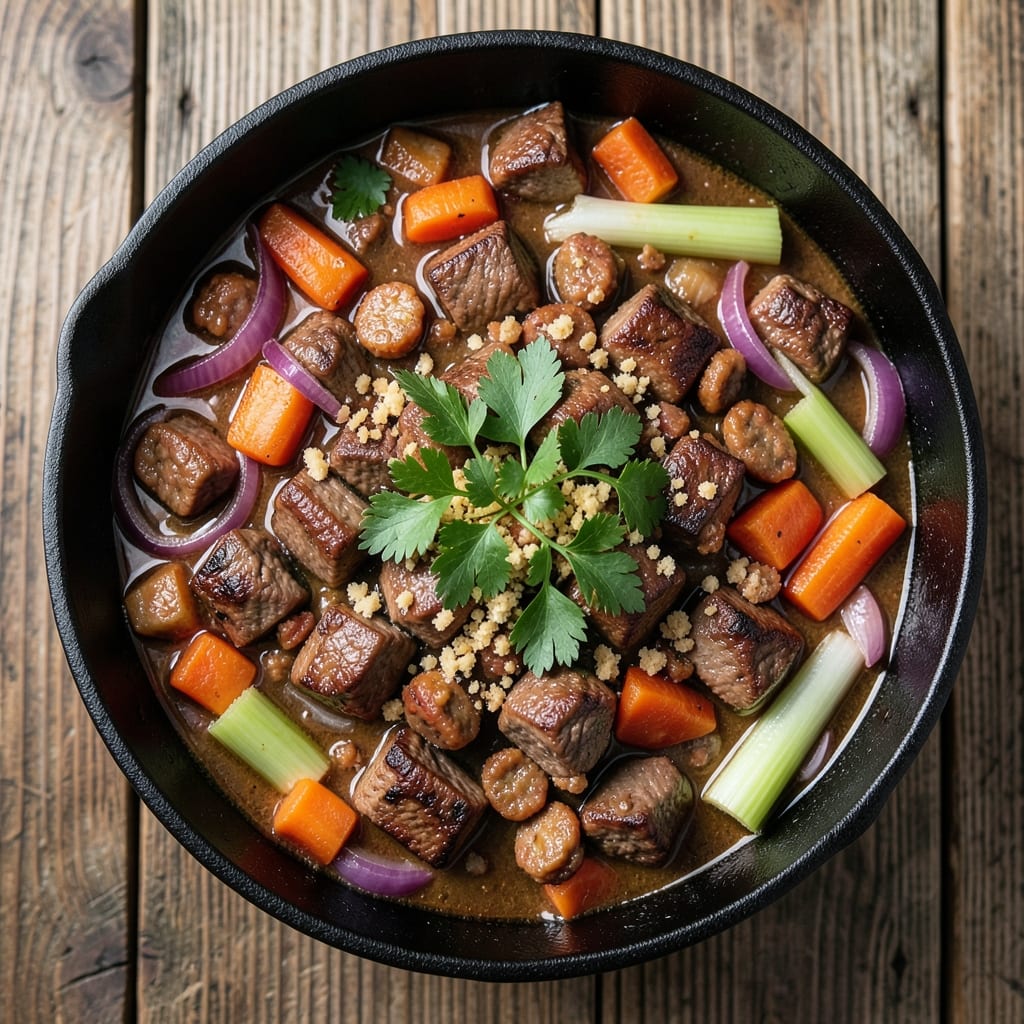
This beef and sausage stew recipe delivers the kind of deep umami richness that transforms weeknight dinners into cozy, restaurant-quality meals. The secret lies in properly browning the meat first—this step unlocks layers of flavor that no shortcut can replicate. What starts as a simple pot of ingredients becomes a fragrant, hearty stew where tender beef and sausage melt into a velvety broth infused with root vegetables.
The beauty of this recipe is its versatility—perfect for a slow cooker on busy days or a stovetop simmer when you have time. You'll work with just a handful of pantry staples (plus a few fresh vegetables) to create a dish that's naturally filling and packed with satisfying textures. The key technique? Low-and-slow cooking that breaks down tough cuts into fork-tender perfection while letting the flavors meld into harmony.
By the time you're done, you'll have a steaming pot of stew where each bite delivers caramelized meat, tender vegetables, and a broth so flavorful it deserves a second helping. The aroma alone will have everyone gathering around the table—this is the kind of comfort food that feels like a warm hug on chilly evenings.
Serve it with crusty bread for soaking up every last drop or alongside roasted potatoes for a complete meal. The leftovers? Even better the next day as the flavors continue to develop. Let's get cooking—this stew is worth every minute of simmering time.
Ingredients for beef and sausage stew
Six hearty ingredients kickstart this restaurant-quality beef and sausage stew.
| Ingredient | Amount | Notes |
|---|---|---|
| Beef Chuck Roast 🥩 | 2 lb | Cut into 1-inch cubes for even cooking |
| Italian Sausage 🌭 | 1 lb | Mild or spicy, casings removed |
| Yellow Onion 🧅 | 1 whole | Medium size, chopped |
| Carrots 🥕 | 4 medium | Peeled, cut into 1-inch chunks |
| Celery Stalk 🌿 | 3 whole | Cut into 1-inch pieces |
| Garlic Cloves 🧄 | 4 cloves | Minced for deep flavor |
| Tomato Paste 🍅 | 2 tbsp | High-quality for richness |
| Beef Broth 💧 | 4 cups | Low-sodium preferred |
| Red Wine 🍷 | 1 cup | Bold dry variety like Cabernet |
| All-Purpose Flour 🌾 | 1 tbsp | For thickening broth |
| Dried Thyme 🌿 | 1 tsp | Or 1 tbsp fresh thyme |
| Bay Leaves 🌿 | 2 whole | Remove before serving |
| Salt 🧂 | 1 ½ tsp | Kosher or sea salt |
| Black Pepper 🌶️ | ½ tsp | Freshly ground preferred |
The beef chuck roast is your flavor anchor—look for well-marbled cuts at Whole Foods or your local butcher shop. If pre-cubed isn't available, ask for it to be cut into 1-inch chunks for even cooking. Italian sausage adds depth, but smoked sausage works too—just adjust the spices. For the vegetables, organic carrots and celery make a difference in flavor, but regular produce is fine. The key is chopping everything uniformly so nothing stays tough. I always grab extra carrots since they sweeten beautifully during the long simmer.
No beef broth? Chicken broth with an extra splash of soy sauce works in a pinch, though it'll lack that deep umami. Running out of red wine? Substitute an extra 1/2 cup beef broth plus 1 tbsp balsamic vinegar for acidity. Fresh thyme is ideal, but dried thyme at one-third the amount gets the job done. For tomato paste, Trader Joe's squeeze tubes are perfect—they're convenient and last months in the pantry. The flour is just for thickening at the end, so don't stress about quality. If you're using smoked sausage, you might reduce the black pepper slightly to avoid overpowering the dish.
This stew tastes even better the next day as flavors meld. Store in an airtight container in the fridge for 4-5 days or freeze portions for up to 3 months. I always make a double batch—one for dinner, one for lunches. The broth thickens as it cools, so add a splash of water when reheating. For extra richness, stir in a pat of butter at the end. The bay leaves can be removed early if you prefer less herbaceous notes, but leaving them in longer adds more complexity to the broth.
Why You'll Love This Recipe
- One-Pot Magic: I swear by this recipe when I’m too tired to scrub pots—just toss everything in one Dutch oven, let it simmer, and walk away. The beef and sausage practically melt into rich, tender perfection while you’re doing laundry or scrolling through your phone.
- Flavor Bomb: That Italian sausage? It’s the secret weapon—herbs and spices infuse the broth while the beef chuck roast turns fork-tender, and the onions caramelize into sweet, jammy pockets. Honestly, the first bite makes me forget I’m cooking at all.
- Weeknight Workhorse: Between us, this stew is my go-to for dinner parties and lazy Sundays. Double the batch, freeze half, and you’ve got a hearty meal ready for when you’re too wiped to think. (Yes, even on a Tuesday night.)
- Budget-Friendly Feast: A chuck roast and a few sausages stretch for days—this recipe feeds four for under $20, and leftovers only get better the next day. My college self would’ve cried happy tears over this.
Step-by-step instructions for beef and sausage stew
This method delivers rich, deeply flavorful stew with tender meat and perfectly balanced vegetables.
Prepare the Meat and Aromatics
Cut the 2 lb beef chuck roast into 1-inch cubes for even cooking. Remove the casings from the 1 lb Italian sausage and crumble it into bite-sized pieces. In a large Dutch oven, heat 1 tablespoon olive oil over medium-high heat until shimmering. Add the beef cubes in a single layer and sear undisturbed for 3-4 minutes until browned on all sides.
Remove the beef and set aside. In the same pot, add the chopped 1 whole yellow onion, 4 medium carrots (cut into 1-inch chunks), and 3 whole celery stalks (cut into 1-inch pieces). Cook for 5-6 minutes until the vegetables begin to soften and the onion turns translucent. Add the 4 cloves minced garlic and cook for 30 seconds until fragrant. This foundational step builds the stew's flavor base.
Develop the Sauce Base
Reduce heat to medium and stir in the 2 tablespoons tomato paste, spreading it evenly to coat the vegetables. Cook for 1 minute until the raw taste disappears. Pour in the 1 cup red wine and scrape up any browned bits from the bottom of the pot—these contain concentrated flavor. Let the wine simmer for 3-4 minutes until reduced by half.
Sprinkle the 1 tablespoon all-purpose flour over the mixture and stir vigorously for 1 minute to remove any lumps. Gradually pour in the 4 cups beef broth, stirring constantly to create a smooth, velvety sauce. Add the 1 teaspoon dried thyme, 2 whole bay leaves, 1.5 teaspoon salt, and 0.5 teaspoon black pepper. Return the seared beef to the pot and bring everything to a gentle simmer.
Simmer Until Tender
Cover the Dutch oven and transfer to a preheated 325°F oven. Cook for 2 hours, stirring occasionally, until the beef becomes fork-tender. If the liquid reduces too quickly, add ½ cup hot water to maintain the proper consistency. The sausage should cook through during this time, but its fat will render into the stew, enriching the flavor.
After 2 hours, remove the stew from the oven. Add the crumbled sausage to the pot and stir gently to distribute. Return to the oven (covered) for an additional 30 minutes to allow the sausage to fully cook and absorb the flavors. The stew should now be thick enough to coat the back of a spoon with a rich, glossy sheen.
Finish and Serve
Remove the stew from the oven and discard the bay leaves. Taste and adjust seasoning if needed—this is where you can fine-tune the balance of salt, pepper, and acidity. Let the stew rest for 10 minutes before serving to allow the flavors to meld and the meat to reabsorb any juices that may have escaped during cooking.
Ladle the stew into warmed bowls, ensuring each serving contains generous portions of beef, sausage, and vegetables. The broth should be rich and aromatic, with visible layers of flavor from the caramelized vegetables and deep umami from the seared meat. Serve with crusty bread to soak up every last drop of this hearty, comforting dish.
Pro Tips For Making Beef And Sausage Stew
- CRISP THE SAUSAGE FIRST: Pop those Italian sausages out of their casings and sear them skin-side down in a dry pan for 2 minutes before adding them to the stew. The rendered fat will deepen the flavor, and the crisped edges add texture—no one wants mushy sausage in their bite.
- CUT THE ROAST UNIFORM: Slice the beef chuck roast into 1.5-inch chunks, not random hunks. Even-sized pieces cook at the same rate, so you won’t end up with some rubbery and some falling-apart. Use a sharp knife and don’t overthink it—just consistent cuts.
- SWEAT, DON’T BURN, THE AROMATICS: When cooking the onions, carrots, and celery, keep the heat medium-low and stir often. I used to rush this, and the onions would darken into bitter sludge. A good sweat takes 8-10 minutes—patience here means flavor later.
- ADD THE LIQUID IN STAGES: Start with just enough broth or water to deglaze the pan, then add the rest later. This builds a richer base instead of diluting the flavors right away. If the stew gets too thin, thicken it with a splash of tomato paste or a mashed potato—works every time.
Regional styles of beef and sausage stew
French Country Style
In France, stews like this become a rustic boeuf bourguignon when you add bacon or lardons and swap the sausage for pork shoulder. Cook it in red wine from Burgundy with mushrooms and pearl onions for an elegant touch. I love adding 1 cup sliced mushrooms and ½ cup pearl onions> after the initial sear. Serve with crusty baguette and a simple green salad. 🍷
Southern American Twist
Southern cooks elevate this stew by adding smoked sausage and a splash of hot sauce at the end. Use Andouille sausage for authentic Cajun flavor and add 1 tbsp Cajun seasoning to the broth. For extra depth, stir in 1 cup diced tomatoes> with the wine. Serve over white rice> or with cornbread for a true Southern meal. 🌶️
German Hearty Version
German Rindfleisch-Eintopf takes this stew to hearty new heights by adding potatoes and sauerkraut>. After searing the meat, add 2 cups diced potatoes> and 1 cup chopped sauerkraut> with the vegetables. Use beer instead of wine>—a dark bock beer> adds malty richness. Finish with 1 tbsp caraway seeds> for an authentic touch. This version is perfect for cold weather. ❄️
Italian Rustic Adaptation
For an Italian-inspired twist, use Italian pork sausage> and add sun-dried tomatoes> and rosemary>. After browning the meat, stir in ½ cup chopped sun-dried tomatoes> and 1 tbsp fresh rosemary> with the garlic. Replace thyme with oregano> for a Mediterranean flair. Serve with polenta> or crusty ciabatta bread>. 🌿
Slow Cooker Adaptation
This version works perfectly in a 6-quart slow cooker>. Brown the meat and vegetables in a skillet first, then transfer everything to the slow cooker. Add the remaining ingredients and cook on low for 8 hours> or high for 5 hours**>. The slow cooker's gentle heat ensures tender meat without monitoring. Perfect for busy weeknights! ⏳
Nutrition facts
Frequently asked questions
Can I use ground beef instead of beef chuck roast?
Yes, but the texture will differ. Ground beef cooks faster and won't have the same tender, fork-tender bite. If using it, brown it first to develop flavor, but expect a softer final texture. For best results, stick with chuck roast for that classic stew experience.
How do I make this stew in a slow cooker?
Brown the beef and sausage first in a skillet, then transfer everything to your slow cooker with all ingredients. Cook on low for 8 hours or high for 5 hours. The slow cooker's gentle heat ensures tender meat without constant monitoring. Perfect for busy days!
What if my stew is too thin or too thick?
For a thinner stew, add ½ cup hot beef broth and simmer for 10 minutes. For thickening, mix 1 tbsp cornstarch with 2 tbsp cold water, stir into the stew, and simmer for 5 minutes. Adjust gradually to reach your desired consistency.
Can I freeze this stew for later?
Let it cool completely, then store in an airtight container for up to 3 months. Thaw overnight in the fridge before reheating. The flavors actually improve after freezing, making leftovers even more delicious. Just add a splash of water when reheating to restore moisture.
What's the best way to reheat stew?
Gently reheat on the stovetop over low heat or in the microwave at 50% power to prevent overcooking. For best texture, add 1-2 tablespoons water or broth to restore richness. Never boil—just warm through until steaming. This preserves the tender meat and velvety broth.