
Main Courses
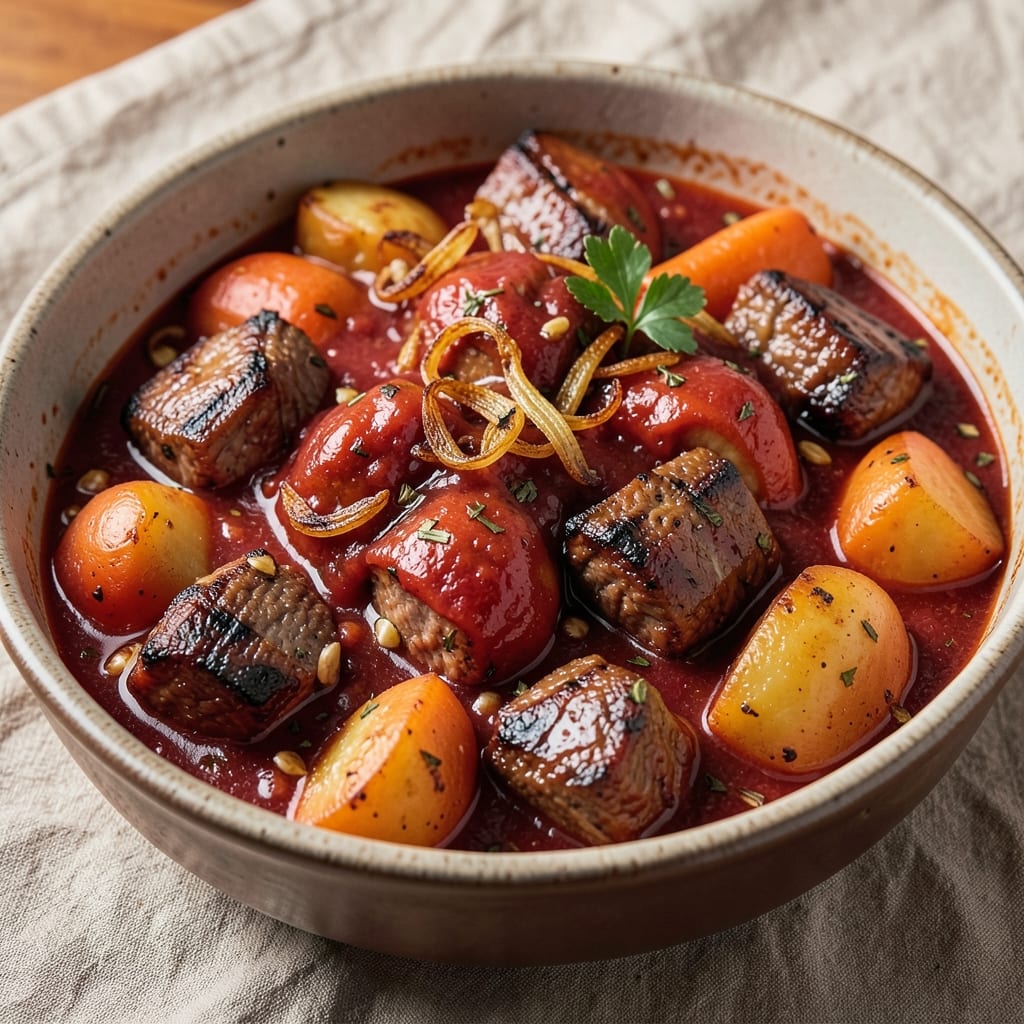
This beef and pork caldereta recipe brings the heart of Filipino comfort food to your kitchen with its rich, tangy tomato-vinegar sauce and tender meat. The slow-braised combination of beef and pork creates melt-in-your-mouth texture, while potatoes and eggplant soak up every flavorful drop. I first discovered this dish during my time in Charleston, where the Filipino community introduced me to its deep, savory-sweet balance that’s both hearty and elegant.
The secret lies in the slow cooking—simmering the meat until fork-tender while building layers of flavor through tomatoes, vinegar, and aromatic spices. Unlike quick stews, this recipe rewards patience with a sauce that thickens beautifully, coating every bite. The vinegar adds that signature tang, while potatoes and carrots soften just enough to absorb the rich, caramelized depths without turning mushy.
What you’ll end up with is a restaurant-quality stew that’s perfect for family gatherings or cozy weeknight dinners. The aroma alone—tomatoes, garlic, and vinegar mingling with tender meat—will have everyone gathered around the table. Serve with steamed rice to soak up every last drop of that velvety sauce, or pair it with crusty bread for dipping.
This dish is a celebration of Filipino home cooking, where simple ingredients transform into something extraordinary. The technique is straightforward, but the result is anything but basic—deep, complex, and impossible to resist. Let’s get cooking!
Ingredients for beef and pork caldereta
Sixteen ingredients transform into a restaurant-quality Filipino stew with melt-in-your-mouth meat and velvety sauce.
| Ingredient | Amount | Notes |
|---|---|---|
| Chuck Roast Beef 🥩 | 2 lb | Cut into 1.5-inch cubes for even cooking |
| Pork Shoulder 🐖 | 2 lb | Cut into 1.5-inch cubes, bone-in preferred |
| Yellow Onions 🧅 | 3 whole | Medium size, sliced into 1/2-inch wedges |
| Garlic Cloves 🧄 | 8 cloves | Minced, fresh preferred for aromatic depth |
| Russet Potatoes 🥔 | 2 lb | Cut into 2-inch chunks for even cooking |
| Carrots 🥕 | 3 whole | Medium size, cut into 1-inch pieces |
| Eggplant 🍆 | 1 whole | Medium size, cut into 1-inch cubes |
| Canned Tomato Sauce 🍅 | 2 cups | San Marzano preferred for sweetness |
| Cane Vinegar 💧 | ½ cup | White vinegar substitute if unavailable |
| Bay Leaves 🌿 | 2 whole | Fresh preferred, dried works in pinch |
| Ground Black Peppercorns 🌶️ | 1 tsp | Freshly ground for optimal flavor |
| Salt 🧂 | 1 ½ tsp | Diamond Crystal preferred for balance |
| Olive Oil 🫒 | ¼ cup | Extra-virgin for richness in searing |
| Soy Sauce 🍶 | 2 tbsp | Light soy preferred for authentic flavor |
| Sugar 🍬 | 1 tbsp | Balances acidity in the sauce |
The meat selection is everything here. Chuck roast for the beef gives that signature fall-apart texture, while pork shoulder adds juicy richness—both should be cut into even 1.5-inch cubes for consistent doneness. I always grab these from Costco when I'm making a big batch, but your local butcher will have them too. Look for good marbling in the beef and a firm, unctuous feel in the pork. For the vegetables, Russet potatoes hold up best to long cooking, while eggplant soaks up the sauce beautifully. If you can't find cane vinegar, white vinegar works in a pinch—just reduce by half since it's more acidic.
No San Marzano tomatoes? Crushed tomatoes in a can will do, but add an extra pinch of sugar to balance the acidity. Fresh bay leaves elevate the dish, but dried works at half the amount if that's all you have. The soy sauce is non-negotiable for that umami depth—light soy gives the most authentic flavor. For the vinegar, if you're using white vinegar, start with half the amount and taste as you go. The sugar might seem odd, but it's essential to round out the tangy-sweet balance. If you're short on time, parboil the potatoes and carrots for 5 minutes before adding them to the stew to cut down on cooking time.
This stew tastes even better the next day as the flavors meld. Store in an airtight container in the fridge for up to 4 days or freeze for 3 months. I always make a double batch because it reheats beautifully—just add a splash of water or broth if the sauce gets too thick. The eggplant absorbs the most sauce, so add it last if you want it to stay tender. For serving, steamed jasmine rice is traditional, but crusty bread works too. The leftovers make incredible sandwiches the next day—just pile on extra rice to soak up that rich sauce.
Why You'll Love This Recipe
- Slow-Cooker Simplicity: I swear by this recipe when I’m too tired to stand for long. Toss the beef and pork shoulder in a pot, add onions and garlic, and let it braise while I do laundry or scroll through my phone—no stirring required. The meat practically falls apart on its own, and the potatoes soak up all the rich, savory broth like sponges.
- Umami Bomb: Between the deep, caramelized beef and the pork’s tender, fatty richness, this dish has layers of flavor. Honestly, the moment the onions turn golden and the garlic infuses that warm, toasty aroma? My mouth starts watering before the first bite. It’s the kind of taste that makes you reach for seconds without even thinking.
- Leftovers That Don’t Suck: I make this on Sundays because the second batch is just as good as the first. Cold caldereta? Surprisingly delicious in a sandwich with crusty bread. Reheated? The potatoes get even softer, and the broth thickens into a velvety sauce. My kids beg for it for days—no sad, dry leftovers here.
- Budget-Friendly Feast: Chuck roast and pork shoulder are cheap cuts, but they taste like a fancy dinner. A single pot feeds six, and the potatoes stretch the meal further without breaking the bank. I’ll be real: this is how I feed my family well without stressing over grocery bills. Plus, the ingredients are pantry staples—I bet you already have half of them.
Step-by-step instructions for beef and pork caldereta
Here's how to create this rich, tangy Filipino stew with tender meats and hearty vegetables.
Prepare and Sear the Meats
Cut the 2 lb chuck roast beef and 2 lb pork shoulder into 1.5-inch cubes as specified in the ingredients. In a large Dutch oven, heat 0.25 cup olive oil over medium-high heat until shimmering. Working in batches, add the beef and pork, spreading them out in a single layer. Let them sear undisturbed for 3-4 minutes until deeply browned on all sides.
This initial searing creates the Maillard reaction, which builds deep, savory flavors that form the foundation of the stew. Don't rush this step—proper browning ensures your caldereta will have that rich, caramelized depth. Once all the meat is browned, transfer it to a plate and set aside temporarily.
Sauté the Aromatics and Vegetables
In the same Dutch oven, reduce the heat to medium and add 3 whole yellow onions (sliced into ½-inch wedges) and 3 whole carrots (cut into 1-inch pieces). Cook for 5-6 minutes, stirring occasionally, until the onions soften and begin to caramelize slightly. Add 8 cloves garlic cloves (minced) and cook for another 30 seconds until fragrant.
Next, add 2 lb russet potatoes (cut into 2-inch chunks) and 1 whole eggplant (cut into 1-inch cubes). Stir to combine and cook for 3-4 minutes until the potatoes begin to soften slightly. This step ensures all the vegetables develop a gentle sweetness before they simmer in the sauce.
Build the Tangy Sauce
Pour in 2 cups canned tomato sauce, 0.5 cup cane vinegar, 2 tbsp soy sauce, and 1 tbsp sugar. Stir well to combine, scraping up any browned bits from the bottom of the pot. Add 1.5 tsp salt and 1 tsp ground black peppercorns, along with the 2 whole bay leaves. Return the seared meats to the pot, ensuring they're submerged in the sauce.
Bring the mixture to a gentle simmer over medium-low heat. The sauce should bubble softly but not vigorously. This low-and-slow approach allows the flavors to meld without the meats becoming tough. Let it simmer uncovered for 45-50 minutes, stirring occasionally, until the meats are tender and the vegetables are fork-tender.
Simmer to Perfection
Once the meats and vegetables are tender, increase the heat to medium-high and let the stew simmer uncovered for an additional 10-15 minutes. This final step reduces the sauce slightly, intensifying its tangy, savory flavors. Taste and adjust the seasoning if needed—you may want to add a bit more salt or vinegar to balance the flavors.
The caldereta is ready when the sauce coats the back of a spoon and the meats pull apart easily with a fork. Remove the bay leaves before serving, as they can be quite bitter if consumed. Serve this hearty stew hot, accompanied by steamed rice to soak up every last drop of that rich, tangy sauce.
Pro Tips For Making Beef And Pork Caldereta
- Sear the Meat in Batches: That cast-iron skillet won’t hold both cuts at once, and crowding means steaming instead of browning. Cut the beef and pork into even chunks, then work in two rounds—high heat, no rushing—until they’re deeply golden. The crust locks in flavor, not just color, and that’s what makes caldereta sing.
- Salt the Potatoes First: Toss those russets with salt and olive oil before adding them to the pot. I learned this the hard way—dry-salting them afterward just makes the stew watery. Let them sit for 10 minutes while you brown the meat, and they’ll absorb the broth like sponges, staying creamy without turning to mush.
- Simmer Low and Slow: Caldereta isn’t a race. After the initial sear and tomato base, drop the heat to a bare simmer—just bubbles breaking occasionally—and let it cook for 2.5 to 3 hours. Skim the foam early, but after that, leave it alone. The meat needs time to fall apart, and rushing turns it tough.
- Use Two Onion Layers: Start with a rough chop for the first batch—sauté until caramelized and sticky, then set aside. For the second layer, mince the rest finely and cook it down until it’s nearly paste. The contrast in textures—chewy caramelized bits and smooth fond—adds depth the recipe often skips. Trust me, it matters.
Flavor customization for this dish
Spicier Version
For a kick, add 1-2 tbsp Calabrian chili paste when building the sauce—it brings deep, fruity heat that pairs perfectly with the tangy vinegar. I also toss in ½ tsp ground coriander and ½ tsp cinnamon for warmth, then finish with 1 tbsp chopped Thai bird's eye chilies on top. The vinegar cuts through the heat beautifully, and the spices add complexity. 🌶️
Creamy Twist
Transform this into a creamy caldereta by stirring in ½ cup coconut milk during the final 10 minutes of simmering. The richness balances the vinegar’s acidity, and the sauce becomes velvety. For extra decadence, top with toasted coconut flakes and fresh cilantro. This version feels like a fusion of Filipino and Thai flavors—trust me, it’s a crowd-pleaser.
Vegetarian Adaptation
Swap the beef and pork for 2 lbs extra-firm tofu (pressed and cubed) and 1 lb king oyster mushrooms (sliced). Sear them first in the Dutch oven, then proceed with the recipe as written. The mushrooms add a meaty texture, while the tofu soaks up the sauce beautifully. Add 1 tbsp nutritional yeast to boost umami depth—it mimics the savory richness of the original.
Sweet Potato Swap
Replace russet potatoes with 2 lbs sweet potatoes for a naturally sweeter, caramelized version. Their texture holds up well during simmering, and they add a subtle sweetness that complements the tangy sauce. I also reduce the sugar to ½ tbsp since sweet potatoes contribute their own natural sweetness. Garnish with a sprinkle of smoked paprika for extra depth.
Quick Weeknight Hack
For a faster version, use pre-cooked rotisserie chicken (shredded) and pre-cut frozen hash browns instead of fresh potatoes. Sauté the hash browns for 5 minutes before adding the sauce, and reduce the simmering time to 25 minutes. This cuts prep time in half while keeping the dish hearty and satisfying. Perfect for busy nights when you still want that rich, tangy flavor. ⏰
Herb-Infused Variation
Brighten the dish with 1 tbsp fresh lemongrass (minced) and 1 tbsp chopped kaffir lime leaves when building the sauce. These herbs add a citrusy, aromatic note that elevates the tangy vinegar. For extra freshness, garnish with cilantro and Thai basil before serving. This version feels like a tropical twist on a classic comfort stew.
Nutrition facts
Frequently asked questions about beef and pork caldereta
Can I substitute chicken for the beef and pork?
While chicken works for a lighter version, it won't replicate the rich, hearty texture of beef and pork. For best results, use bone-in chicken thighs (2 lbs) instead of breasts—they stay juicier during long simmering. The cooking time will be shorter (25-30 minutes after searing), but the sauce may need extra reduction to concentrate flavors.
Why does my caldereta taste too acidic?
The vinegar's acidity can overwhelm if not balanced properly. Start by adding ½ cup vinegar and taste as you go—you can always add more later. To fix over-acidity, stir in 1 tbsp sugar or 1 tbsp soy sauce to round out the flavors. A splash of coconut milk also helps mellow the tang.
Can I make this in an Instant Pot?
Sear the meats first, then add all ingredients except vinegar. Cook on high pressure for 30 minutes, then release pressure naturally. Stir in the vinegar and simmer on sauté mode for 10 minutes to thicken the sauce. The pressure cooker cuts time by half while keeping the meat tender.
What's the best way to reheat leftovers?
Reheat gently on the stove over low heat with 2-3 tbsp water or broth to prevent the sauce from thickening too much. Avoid microwaving—it can make the potatoes rubbery. For extra flavor, add a splash of vinegar or soy sauce. Leftovers taste even better the next day as flavors meld!
How do I know when the meat is fully cooked?
The beef should reach 145°F internally (use a meat thermometer), while pork needs 160°F. The meat should pull apart easily with a fork and look fork-tender. If it's still tough after 45 minutes, add ¼ cup water and simmer 10 more minutes. Never rush this—properly braised meat is the heart of this dish!