
Soups & Stews
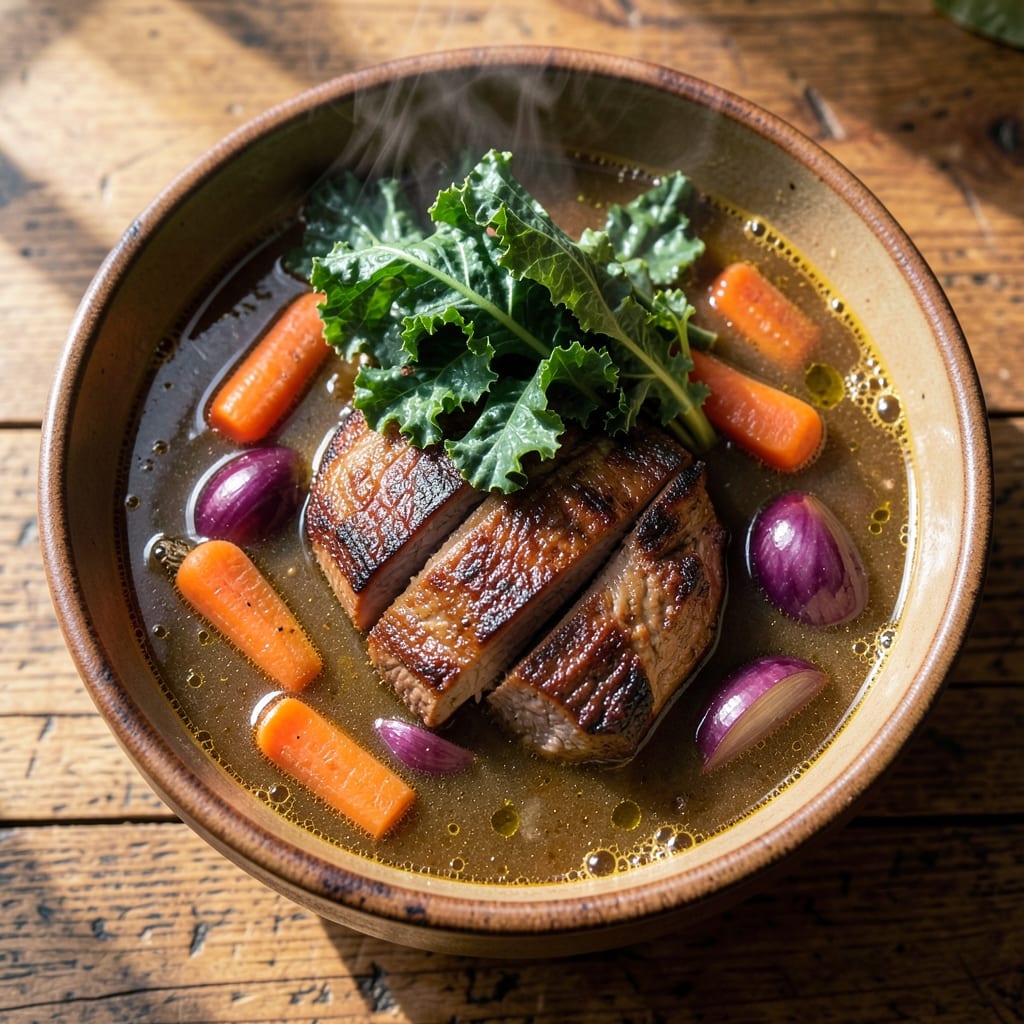
This beef and kale soup recipe delivers hearty winter comfort in a single pot, where tender beef meets caramelized onions and earthy kale in a rich, savory broth. The secret lies in slow simmering—transforming tough beef into fork-tender chunks while building layers of flavor through deglazing and reducing. Perfect for chilly evenings, this one-pot wonder requires minimal prep but rewards with restaurant-quality depth.
The foundation starts with searing beef and aromatics in a Dutch oven, creating a flavorful crust that dissolves into the broth during simmering. Caramelized onions add natural sweetness, while garlic and thyme infuse the liquid with aromatic warmth. Kale wilts into tender greens at the end, absorbing the broth’s savory essence without losing its vibrant color. Every spoonful balances protein, vegetables, and umami richness.
What sets this recipe apart is its foolproof technique—no fancy ingredients, just a few staples that work together harmoniously. The broth develops a velvety texture as it reduces, while the beef remains juicy and tender. Serve with crusty bread to soak up every last drop of that caramelized, herb-infused goodness. This is the kind of soup that warms both body and soul.
For extra depth, finish with a splash of red wine or a sprinkle of parmesan. Leftovers taste even better the next day, making this an ideal meal-prep solution. Whether you're feeding a crowd or treating yourself to a cozy night in, this beef and kale soup delivers satisfying, restaurant-quality flavor with minimal effort.
Ingredients for beef and kale soup
Pantry staples meet Dutch oven magic for restaurant-quality beef and kale soup.
| Ingredient | Amount | Notes |
|---|---|---|
| Chuck Roast 🥩 | 1 ½ lb | Cut into 1.5-inch cubes |
| Yellow Onions 🧅 | 2 whole | Thinly sliced for caramelizing |
| Carrots 🥕 | 4 medium | Peeled and sliced into rounds |
| Garlic Cloves 🧄 | 4 cloves | Minced for aromatic depth |
| Fresh Kale 🌿 | 5 oz | Chopped, stems removed |
| Beef Broth 💧 | 4 cups | Low-sodium preferred |
| Tomato Paste 🍅 | 2 tbsp | For umami richness |
| Dried Thyme 🌿 | 1 tsp | Or 1 tbsp fresh |
| Bay Leaves 🌿 | 2 whole | Remove before serving |
| Salt 🧂 | 1 ½ tsp | Adjust to taste |
| Black Pepper 🌶️ | ½ tsp | Freshly ground preferred |
| Olive Oil 🫒 | 2 tbsp | For searing beef |
| Red Wine 🍷 | ½ cup | Optional for depth |
| Parmesan Cheese 🧀 | ¼ cup | Freshly grated for garnish |
The chuck roast is non-negotiable here—its fat content keeps the beef fork-tender while adding richness to the broth. Costco or local butchers often have it pre-cut, but if buying whole, ask for a 2-3 lb roast and cube it yourself. The onions are the flavor foundation, so don't rush the caramelizing—20-25 minutes over medium heat transforms them from sharp to sweet. For the kale, look for vibrant green leaves with no brown spots; curly kale holds up better than flat-leaf varieties. Fresh thyme is ideal, but if using dried, measure carefully—it's more potent than fresh.
No red wine? Substitute with extra beef broth—just add an extra splash of balsamic vinegar for acidity. Prefer low-sodium broth? Use regular broth and reduce salt by half initially, then adjust at the end. Kale wilting too fast? Toss it in ice water for 30 seconds before adding to the pot to slow wilting. The tomato paste can be swapped for 1 cup crushed tomatoes if you prefer a chunkier texture. For extra umami, add 1 tsp soy sauce or 1/2 tsp fish sauce—just don't tell anyone I suggested it.
This soup tastes even better the next day as flavors meld. Store in an airtight container in the fridge for up to 5 days, or freeze portions for 3 months. The beef reheats beautifully—just add a splash of broth to prevent drying. For meal prep, I double the recipe and freeze half. When reheating from frozen, add 1/2 cup extra broth and simmer until bubbling. The parmesan garnish? Skip it if serving to guests with dairy restrictions—it's purely for flavor, not structure.
Why You'll Love This Recipe
- One-Pot Wonder: I swear by this recipe when I’m too tired to wash extra bowls—just toss everything in one pot, let the chuck roast simmer until it falls apart, and boom. The onions caramelize right in the broth, so you don’t even need to fuss with a separate pan.
- Deep Umami Magic: That chuck roast? It’s the star—slow-cooked until tender, then shredded into the broth where it soaks up the garlic and onions until the whole pot tastes like a hug. Honestly, the first time I made it, I took a spoonful mid-cook and forgot I was supposed to wait.
- Leftovers That Ask for More: This soup actually improves the next day. The flavors meld overnight, and the kale softens into the perfect bite—no sad wilted greens here. I’ll be real: I’ve reheated this for breakfast three times, and my kids still beg for seconds.
- Budget-Friendly Powerhouse: Chuck roast is cheap, carrots last forever, and a bunch of kale stretches across multiple meals. Between us, this is my go-to when grocery money’s tight—feeds four for under $15, and the leftovers turn into next week’s lunch. No guilt, all flavor.
Step-by-step instructions for beef and kale soup
This method builds rich, caramelized flavors layer by layer in a single pot.
Sear the Chuck Roast for Deep Flavor
Heat the 2 tablespoons olive oil in a large Dutch oven over medium-high heat until shimmering. Pat the 1.5 lb chuck roast dry with paper towels and season generously with 1 teaspoon salt and ½ teaspoon black pepper on all sides. This dry seasoning is crucial—it creates that perfect crust.
Add the roast to the pot and sear for 3-4 minutes per side until deep golden brown. You'll see those beautiful crusty edges form—this is where all the flavor starts. If needed, work in batches to avoid crowding the pan. Once browned, remove the roast and set aside temporarily on a plate.
Caramelize Onions and Vegetables
In the same pot, reduce heat to medium and add the 2 whole yellow onions and 4 medium carrots sliced into rounds. Cook for 8-10 minutes, stirring occasionally, until the onions soften and begin to turn golden. This slow cooking process develops their natural sweetness—don't rush this step.
Add the 4 cloves minced garlic and 2 tablespoons tomato paste, stirring to coat everything evenly. Cook for another 1-2 minutes until the garlic becomes fragrant. This aromatic base forms the flavor foundation of your soup. If the vegetables stick, add a splash of beef broth to deglaze and scrape up any browned bits from the bottom.
Simmer the Beef and Build the Broth
Return the seared chuck roast to the pot and add the 4 cups beef broth, ½ cup red wine, 1 teaspoon dried thyme, and 2 whole bay leaves. Bring to a gentle boil, then reduce heat to low and cover partially. Let it simmer for 1½ hours, stirring occasionally, until the beef is fork-tender and easily shreds with a fork.
Here's the thing—this long simmering time is what transforms tough chuck roast into tender, melt-in-your-mouth beef. You'll know it's ready when the meat pulls apart easily and the broth has reduced slightly, intensifying its flavor. If the liquid level gets too low, add a little water to maintain the proper consistency.
Finish with Kale and Season to Perfection
Once the beef is tender, remove it from the broth and shred it using two forks directly in the pot. Discard the bay leaves and stir the shredded beef back into the broth. Add the 5 oz chopped fresh kale and simmer uncovered for 5-7 minutes until the kale wilts completely but still maintains a vibrant green color.
Taste the soup and adjust seasoning with additional salt or black pepper as needed. The kale should be tender but still retain some bite—this ensures you get both texture and nutrition in every spoonful. The soup should have a rich, savory depth with bright notes from the kale and caramelized onions.
Serve Warm with Parmesan Garnish
Ladle the soup into bowls and garnish each serving with 1 tablespoon freshly grated Parmesan cheese. This final touch adds a beautiful contrast of textures and a salty finish that complements the rich broth. The Parmesan should be freshly grated—pre-shredded cheese contains anti-caking agents that affect the texture.
Serve immediately while hot, with crusty bread on the side to soak up every last drop of that flavorful broth. The soup will continue to improve as it sits for a few minutes, allowing the flavors to meld together even more. Each spoonful should deliver tender beef, sweet caramelized vegetables, and the earthy bite of kale in perfect harmony.
Pro Tips For Making Beef And Kale Soup
- Sear the Chuck Roast: Brown that meat hard and fast—no rushing. A deep, dark crust locks in flavor and keeps it tender later. I used to skimp on this step, and the soup always tasted flat afterward. Two minutes per side in a screaming-hot pot with a splash of oil, then let it rest before adding liquid.
- Trim Kale Like a Pro: Strip the tough stems off kale with a knife—don’t tear it. The veins get chewy, and no one wants that in soup. Work in batches, lay the leaves flat, and cut along the central stem. Save the stems for stock if you’re feeling fancy.
- Don’t Crowd the Pot: If your carrots and onions are fighting for space, they’ll steam instead of caramelize. Spread them out in a single layer for the first 5 minutes, then stir and add the beef. This isn’t a race—let them develop color before adding liquid.
- Salt the Water Generously: The soup base should taste like the sea, not like it’s missing something. Aim for 1½ teaspoons of salt per quart of water (or to taste after simmering). I learned this the hard way—underseasoned broth ruins everything, and you can’t fix it later.
Storing and reheating this recipe
Refrigerator Storage
Let your beef and kale soup cool to room temperature (about 30-45 minutes) before transferring to airtight glass containers. I recommend using quart-sized Pyrex containers with tight-sealing lids—they maintain flavor better than plastic. Store in the fridge at 40°F or below for up to 4-5 days, though I find the flavors actually deepen after 24 hours as the beef continues to tenderize. 🥫
Freezer Prep Tips
For long-term storage, portion the soup into freezer-safe containers or heavy-duty freezer bags, leaving 1-inch headspace for expansion. Remove as much air as possible to prevent freezer burn. Label with the date—this soup keeps its quality for up to 3 months. I like using quart-sized silicone molds for individual servings, which thaw perfectly for quick lunches. 🧊
Stovetop Reheating
My preferred method is reheating on the stovetop to preserve texture. Transfer the desired portion to a pot and heat over medium-low heat for 10-15 minutes, stirring occasionally. Add 2-3 tablespoons of beef broth or water if the soup appears too thick. The low heat prevents the kale from overcooking while bringing the beef back to perfect tenderness. 🔥
Microwave Method
For quick reheating, use the microwave on 50% power in 1-minute intervals, stirring between each interval. Cover with a microwave-safe lid or damp paper towel to retain moisture. Most soups are ready after 2-3 minutes, but check the internal temperature—it should reach 165°F for safety. Add a splash of broth if needed to restore the perfect consistency. ⚡
Thawing Frozen Soup
Never thaw soup at room temperature—always use the fridge for overnight thawing or the microwave's defrost setting. For faster results, place the sealed container in a bowl of cold water and change the water every 30 minutes. Once thawed, reheat using the stovetop method above. The texture remains remarkably similar to freshly made soup, with no noticeable difference in flavor. ❄️
Garnish Refresh
After reheating, revive the soup with fresh garnishes. A sprinkle of freshly grated Parmesan or a drizzle of high-quality olive oil restores that restaurant-quality finish. For extra brightness, add a few chopped fresh parsley leaves or a pinch of red pepper flakes right before serving. These final touches make reheated soup taste almost as good as fresh! 🌿
Nutrition facts
Frequently asked questions
Can I use ground beef instead of chuck roast?
You can substitute 1 lb ground beef for the chuck roast, but the texture and flavor will differ. Ground beef will make the soup thicker and more like a stew. For best results, brown the meat first, then proceed with the recipe. The long simmering time won't be needed since ground beef cooks quickly, so reduce the simmering time to 30-40 minutes instead.
How do I make this soup vegetarian?
Replace the beef with 1 lb mushrooms (cremini or portobello) or 1 lb extra-firm tofu pressed and cubed. Use vegetable broth instead of beef broth and add 1 teaspoon soy sauce for umami depth. The kale and caramelized onions will still shine, but the texture will be lighter. Simmer for 20-25 minutes after adding the mushrooms/tofu.
Why did my kale turn mushy?
Overcooking is the most common cause. Kale should wilt in 5-7 minutes—any longer and it loses its texture. If your kale turned mushy, try adding it later in the cooking process or using young kale leaves (like baby kale) which cook faster. For extra protection, blanch the kale in boiling water for 1 minute before adding it to the soup.
Can I make this soup in an Instant Pot?
Sear the beef first in a skillet, then transfer it to the Instant Pot with the onions, carrots, garlic, and tomato paste. Add the broth, wine, thyme, and bay leaves. Cook on high pressure for 40 minutes, then quick-release. Shred the beef, add kale, and cook for an additional 3 minutes on sauté mode. The pressure cooker cuts cooking time dramatically while keeping flavors intense.
What's the best way to reheat leftovers?
For best results, reheat on the stovetop over medium-low heat for 10-15 minutes, stirring occasionally. Add 2-3 tablespoons of beef broth or water if the soup thickens too much. Microwave reheating works too—use 50% power in 1-minute intervals, stirring between each. Always check that the internal temperature reaches 165°F for safety.