
Main Courses
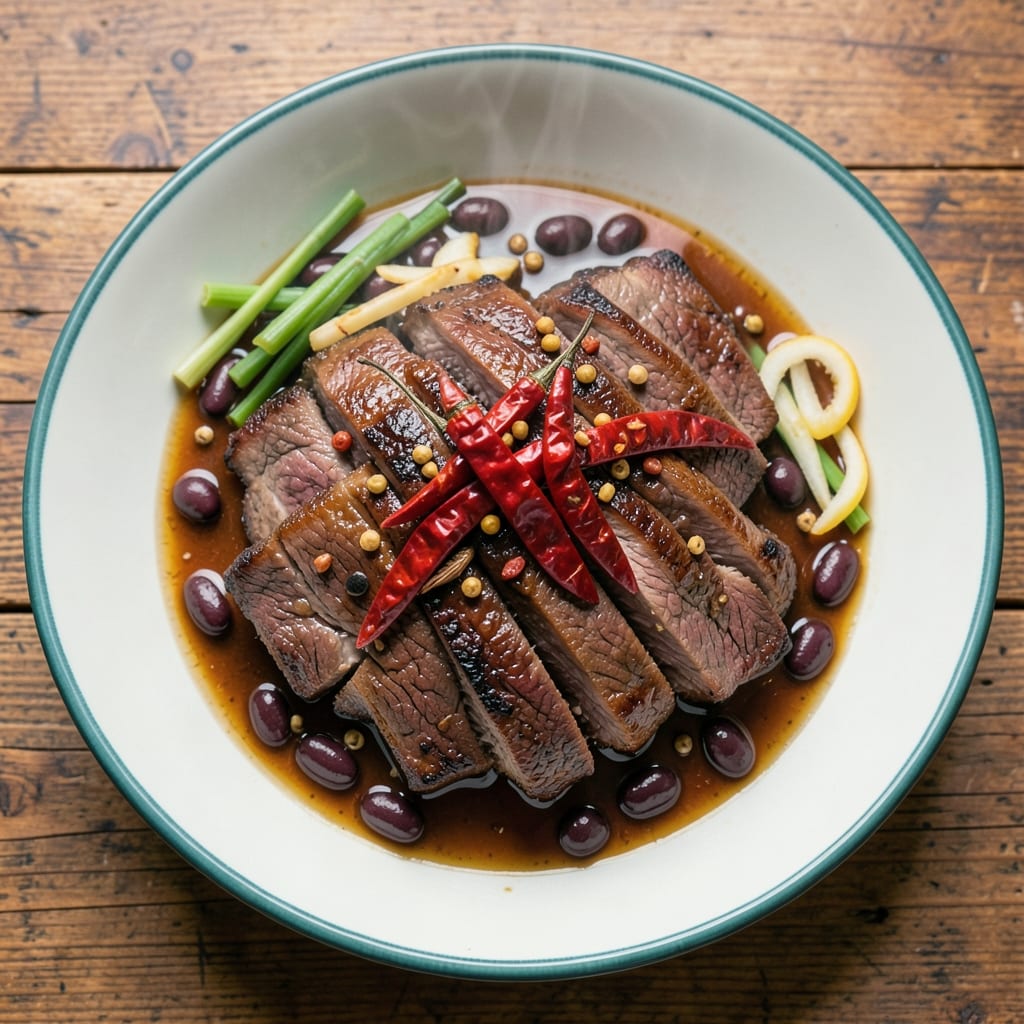
Beef à la Sichuan delivers the perfect balance of numbing heat and silky tenderness that defines Sichuan cuisine. This dish transforms tough beef into melt-in-your-mouth strips infused with fiery chili oil and aromatic Sichuan peppercorns—a technique that creates both heat and a subtle tingling sensation on the tongue. The secret lies in proper marinating and high-heat stir-frying to achieve that signature wok hei smokiness.
What sets this recipe apart is the layered flavor profile: the initial heat from chili oil mellows into a complex harmony of garlic, ginger, and fermented black beans, all while the beef remains tender and juicy. Traditional Sichuan cooking relies on these contrasting textures and flavors—crisp edges, silky meat, and a sauce that clings without overwhelming. The dish is complete with fresh scallions and toasted Sichuan peppercorns for garnish, adding both visual appeal and an extra layer of aromatic depth.
This method ensures restaurant-quality results at home, with every bite delivering the signature Sichuan experience—numbing heat that lingers just long enough to satisfy, followed by a rich, savory finish. The dish pairs beautifully with steamed rice, which soaks up the bold flavors while balancing the heat. Whether you're introducing someone to Sichuan cuisine or perfecting a favorite, this recipe captures the essence of the region's bold, complex flavors.
Key to success is the chili oil, which should be infused with dried chilies and Sichuan peppercorns for that signature málà (numbing-spicy) profile. The marinade works its magic overnight, ensuring the beef absorbs the aromatic flavors deeply. With just a few hours of active preparation, you'll have a dish that's as impressive as it is delicious—perfect for special occasions or when you want to bring a taste of China to your dinner table.
Ingredients for beef a la sichuan
The heart of Sichuan cuisine in your kitchen—just 14 ingredients for bold, numbing heat and tender beef.
| Ingredient | Amount | Notes |
|---|---|---|
| Beef Chuck Roast 🥩 | 1 ½ lb | Thinly sliced against grain |
| Dried Red Chilies 🌶️ | ¼ cup | Arbol or Thai for heat |
| Sichuan Peppercorns 🌿 | 1 tbsp | Toasted for numbing effect |
| Garlic Cloves 🧄 | 8 cloves | Minced for marinade |
| Fresh Ginger 🌿 | ½ cup | Finely grated, peeled |
| Fermented Black Beans 🥫 | ¼ cup | Rinsed, chopped (optional) |
| Soy Sauce 🥫 | ⅓ cup | Dark soy preferred |
| Shaoxing Wine 🍷 | ¼ cup | Substitute dry sherry |
| Sesame Oil 🫒 | 1 tbsp | Toasted for aroma |
| Green Onions 🧅 | ½ cup | Sliced, for garnish |
| Neutral Oil 🫒 | ½ cup | Peanut or vegetable oil |
| Cornstarch 🌾 | 1 tbsp | For velveting beef |
| Sugar 🍚 | 1 tbsp | Balances heat |
| Salt 🧂 | 1 tsp | Kosher preferred |
The beef is non-negotiable—chuck roast delivers that signature silky texture when sliced thin against the grain. Most butchers will slice it for you, but if you're doing it yourself, freeze it 30 minutes first for cleaner cuts. For Sichuan peppercorns, Penzeys or Asian markets have the best quality—look for whole, dark, wrinkled pods. Toast them in a dry pan until fragrant (about 2 minutes) before grinding. The dried chilies? Arbol or Thai bird's eye work best for that fiery kick, but adjust to your heat tolerance. Fermented black beans add depth—rinsed and chopped, they bring umami without overpowering.
No Sichuan peppercorns? Substitute 1/2 teaspoon ground white pepper plus 1/4 teaspoon cayenne—it won't give the numbing effect, but adds complexity. Running short on Shaoxing wine? Dry sherry or even rice wine works in a pinch, though the flavor won't be identical. The cornstarch is crucial for velveting—don't skip it, or the beef will stay tough. For the chili oil, infuse dried chilies and toasted peppercorns in neutral oil for 10 minutes on low heat, then strain. Store any leftovers in a sealed jar in the fridge for up to 2 weeks—it only gets better with age.
Marinate the beef overnight for maximum flavor absorption, then pat dry before cooking. The dish reheats beautifully—cover with foil and warm in a 300°F oven for 15 minutes. Store leftovers in an airtight container for 3-4 days, or freeze for up to 3 months. Pro tip: Double the chili oil if you love heat—it freezes well and adds drama to any dish. Garnish with fresh green onions right before serving to keep that vibrant pop of color.
Why You'll Love This Recipe
- One-Pot Magic: The chuck roast practically cooks itself while the chilies and peppercorns bloom in the pan. Honestly, I’ve made this with a single pot—no fancy tools, just patience (and maybe a little charring for depth).
- Numbs the Best Way: That Sichuan peppercorn tingling isn’t just a gimmick—it’s the secret weapon. The garlic and ginger caramelize into something dangerously addictive, especially when the beef gets fork-tender and the sauce clings like glue.
- Leftovers I Actually Crave: Between us, this dish tastes better the next day. The flavors meld into this rich, smoky blanket over the beef, and I’ve reheated portions for lunch three times without getting sick of it.
- Budget Beef That Feeds: A chuck roast stretches for a week’s worth of meals, and the spices cost pennies. I’ll be real: this is my go-to when I need to feed a crowd without breaking the bank—or spending hours in the kitchen.
Step-by-step instructions for beef À la Sichuan
Here's the method for tender, silky beef swimming in fiery chili oil—every step ensures that perfect Sichuan balance.
Prepare the Beef with Velveting Technique
Slice the 1.5 lb beef chuck roast thinly against the grain into ¼-inch thick strips. In a bowl, combine the beef with 1 tbsp cornstarch, 1 tbsp soy sauce, 1 tbsp sugar, and 1 tsp salt. Mix gently until each piece is lightly coated—this prevents the beef from toughening during cooking. Let it marinate for 20 minutes at room temperature.
The velveting process is what transforms tough chuck into melt-in-your-mouth beef. The cornstarch creates a protective barrier while the soy sauce and sugar tenderize the meat. Don't skip this step—it's the foundation of the dish.
Toast Aromatics for Maximum Flavor
Heat a dry skillet over medium heat and toast the 1 tbsp Sichuan peppercorns for 1-2 minutes until fragrant and slightly darkened. Transfer them to a bowl and let cool, then grind them into a fine powder using a mortar and pestle or spice grinder. In the same skillet, add 0.5 cup neutral oil and heat for 1 minute until shimmering.
Add the 8 minced garlic cloves and 0.5 cup finely grated fresh ginger to the hot oil. Stir constantly for 30 seconds until the garlic turns golden and aromatic—this prevents burning. Remove from heat and stir in the toasted Sichuan peppercorn powder. Set aside for later.
Cook the Fermented Black Beans
In a clean skillet, heat 2 tablespoons of the reserved oil over medium heat. Add the 0.25 cup rinsed fermented black beans and cook for 3-4 minutes until they darken slightly and release their deep umami flavors. Remove from heat and set aside.
These fermented black beans add a funky, savory depth to the dish. If you prefer them chopped, do so now—they'll release more flavor when cooked. Don't overcrowd the pan, or they'll steam instead of develop that rich caramelized taste.
Sear the Beef and Build the Chili Oil
In a wok or large skillet, heat 3 tablespoons of neutral oil over high heat until smoking. Working in batches, add the marinated beef and sear for 1-2 minutes until browned but still slightly underdone. Remove and set aside. In the same pan, add the 0.25 cup dried red chilies and cook for 30 seconds until they darken.
Deglaze the pan with 0.25 cup Shaoxing wine, scraping up all the browned bits. Add 0.33 cup soy sauce and simmer for 2 minutes until slightly reduced. Stir in the toasted aromatics, fermented black beans, and seared beef. Cook for 3-4 minutes until the sauce thickens and coats the beef.
Finish with Sesame Oil and Garnish
Turn off the heat and stir in 1 tbsp toasted sesame oil. This adds a nutty aroma and balances the dish's heat. Taste and adjust seasoning with additional soy sauce or salt if needed. Garnish with 0.5 cup sliced green onions just before serving.
The sesame oil should infuse the dish with its signature aroma instantly. Serve immediately over steamed rice to soak up every drop of that fiery, silky chili oil. The beef should be tender enough to pull apart with chopsticks, and the sauce should cling beautifully to each bite.
Pro Tips For Making Beef A La Sichuan
- Sear the Beef in Batches: I learned this the hard way—trying to crowd the beef chuck in one go just steams it instead of building that deep, caramelized crust. Use a 12-inch skillet and work in two rounds if needed. High heat, no excuses.
- Toast Sichuan Peppercorns Whole: Skip the grinder unless you’re committed to the numbing bite—whole peppercorns release their aroma better when toasted in the same oil you sear the garlic. Toss them in for the last 30 seconds of cooking, then crush lightly with the flat of your knife.
- Don’t Overcrowd the Garlic: I used to dump all the minced garlic at once, and it’d turn to paste. Instead, add half first, let it sizzle until fragrant (about 30 seconds), then add the rest. This keeps it crisp and prevents a muddy flavor.
- Simmer Low and Slow: This isn’t a race—after the initial sear and stir-fry, drop the heat to a bare simmer and let the beef cook covered for at least 2 hours. The chuck needs time to tenderize, and rushing it turns the dish into tough, chewy disappointment.
Perfect pairings for this dish
Rice Pairings
Steamed jasmine rice is the classic choice—its mild, floral notes let the bold Sichuan flavors shine. I always cook 1.5 cups of rice (yielding about 3 cups cooked) to perfectly balance the dish. For extra authenticity, try Chinese black rice—its nutty depth complements the peppery heat. Serve with a side of pickled vegetables to cut through the richness. 🍚
Vegetable Sides
Quick-pickled cucumber and carrot sticks add refreshing crunch and tang. Toss 2 cups thinly sliced cucumbers and 1 cup julienned carrots with 2 tbsp rice vinegar, 1 tsp sugar, and ½ tsp salt. Let sit for 15 minutes before serving. Another great option is steamed bok choy—its slight bitterness contrasts beautifully with the dish's richness.
Drink Pairings
A crisp green tea like Dragon Well or Jasmine Pearl cleanses the palate between bites. For something stronger, try a light-bodied Chinese white wine like Shaoxing wine (the same used in the recipe!). If you prefer beer, a Chinese lager such as Tsingtao balances the heat without overpowering. Avoid heavy alcohols—they'll mute the dish's complexity. 🍶
Garnish Upgrades
For extra flair, sprinkle toasted sesame seeds over the dish before serving—they add nutty crunch. I also like adding thinly sliced red chilies for visual drama and an extra heat kick. Fresh cilantro works too, though traditional Sichuan garnishes stick with scallions. Always add garnishes right before eating to preserve freshness.
Dessert Follow-Up
End the meal with something light to reset your palate. A scoop of mango sorbet or lychee jelly provides sweet relief after the spicy heat. For a traditional touch, serve almond tofu dusted with cinnamon—its delicate sweetness contrasts perfectly with the bold flavors of the main course. 🍧
Nutrition facts
Frequently asked questions
Why does Sichuan beef need velveting?
The velveting process with cornstarch creates a protective barrier that prevents the beef from toughening during high-heat stir-frying. This technique transforms tough chuck into silky, melt-in-your-mouth strips while keeping the juices locked in. Without it, you'll end up with chewy beef instead of the signature tender texture.
Can I substitute Sichuan peppercorns?
For the numbing effect, you can't fully replace them—but you can mimic some of the flavor. Use ½ teaspoon ground white pepper plus ¼ teaspoon cayenne. However, you'll miss the unique tingling sensation that defines authentic Sichuan cuisine. Toasting the peppercorns first enhances their aroma, so don't skip that step if using substitutes.
How do I make the chili oil less spicy?
Reduce the amount of dried chilies by half or use milder varieties like Ancho or New Mexico instead of Thai bird's eye chilies. For extra control, strain the oil after infusion and reserve it—you can always add more later. If it's already too spicy, balance it with 1 extra tablespoon of sugar or a splash of Shaoxing wine to mellow the heat.
What's the best way to reheat leftovers?
Cover the dish tightly with foil and warm in a 300°F oven for 15 minutes. Avoid microwaving—it makes the sauce watery and dulls the flavors. For extra richness, add 1 teaspoon of sesame oil when reheating. Store leftovers in an airtight container for 3-4 days or freeze for up to 3 months.
Can I make this dish without Shaoxing wine?
Yes! Substitute with dry sherry or rice wine, though the flavor won't be identical. Use the same amount (¼ cup) and add it during the deglazing step. The alcohol helps tenderize the beef and carries the aromatics, so any dry wine will work in a pinch. For a non-alcoholic version, use apple juice and add ½ teaspoon sugar to balance.