
Main Courses
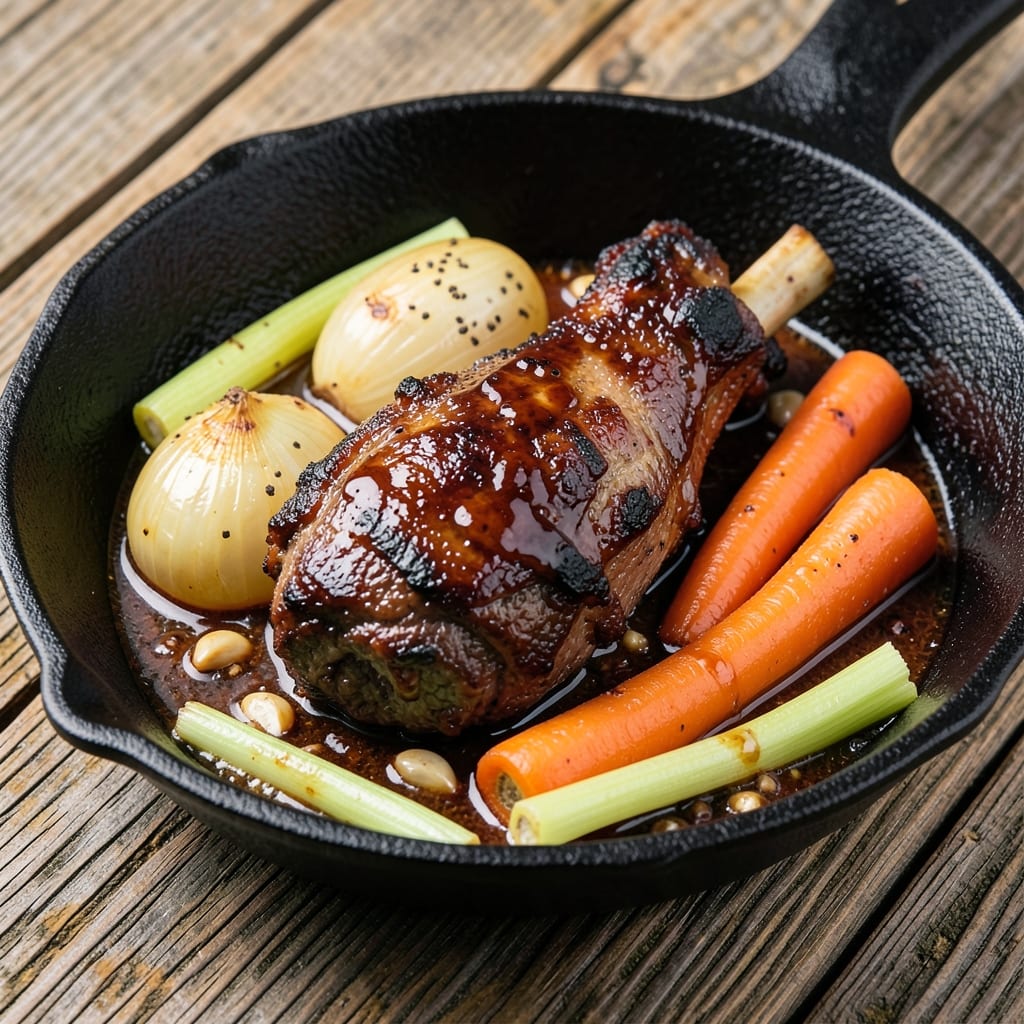
This BBQ beef shank recipe transforms tough cuts into melt-in-your-mouth tenderness through slow cooking and caramelized fond—just like my grandpa’s backyard pit. The key lies in patience and technique, letting the meat break down while developing deep, smoky flavors that’ll have everyone asking for seconds. I’ve perfected this method over years of slow-cooking ribs and shanks, blending classic French braising with my love for bold, smoky BBQ.
What makes this recipe special is the umami-packed marinade and the carmelized fond that forms at the bottom of the pot—a flavor bomb that elevates every bite. You’ll start with a dry rub of coffee, smoked paprika, and garlic, then slow-cook the shank until it’s fork-tender. The result? Rich, fall-apart meat with a glossy, caramelized crust that’s impossible to resist.
The beauty of this dish is its versatility—it works equally well on the grill, in a Dutch oven, or even a slow cooker. Serve it with roasted potatoes, crusty bread, or a simple coleslaw to soak up that delicious sauce. Whether you’re feeding a crowd or treating yourself to a hearty meal, this recipe delivers restaurant-quality results with minimal effort.
Here’s the secret: low and slow is the name of the game. The longer you cook it, the more tender and flavorful the meat becomes. Trust the process, and you’ll end up with a dish that’s worth every minute of waiting. Let’s get started!
Ingredients for bbq beef shank
Six ingredients transform tough beef shank into melt-in-your-mouth BBQ perfection through slow cooking magic.
| Ingredient | Amount | Notes |
|---|---|---|
| Beef Shank 🥩 | 3 lb | Bone-in, cut into 2-inch pieces |
| Yellow Onion 🧅 | 1 whole | Chopped into 1-inch pieces |
| Carrot 🥕 | 4 whole | Cut into 2-inch chunks |
| Celery Stalks 🌿 | 4 whole | Cut into 2-inch pieces |
| Garlic Cloves 🧄 | 8 cloves | Smashed, not minced |
| Instant Coffee Granules ☕ | 2 tbsp | For deep umami flavor |
| Smoked Paprika 🌶️ | 2 tbsp | For smoky depth |
| Kosher Salt 🧂 | 2 tbsp | Diamond Crystal preferred |
| Ground Black Pepper 🌶️ | 1 tbsp | Freshly cracked |
| Tomato Paste 🍅 | ½ cup | High-quality canned |
| Red Wine 🍷 | 1 cup | Bold dry red like Cabernet |
| Beef Broth 💧 | 4 cups | Homemade or high-quality store-bought |
| Olive Oil 🫒 | 2 tbsp | For searing |
| Fresh Thyme 🌿 | ¼ cup | Leaves only, stems removed |
| Fresh Rosemary 🌿 | ⅛ cup | Chopped, stems removed |
The beef shank is the star here—look for cuts with good marbling at Whole Foods or your local butcher. Costco often has great deals on bone-in shanks, which add extra flavor. If you can't find bone-in, don't stress—just ask for a well-marbled cut. The coffee granules are non-negotiable for that deep umami punch (the good stuff, not instant drip). Fresh thyme and rosemary? Trader Joe's has great bundles—just grab a sprig and strip the leaves yourself. The tomato paste should be canned, not the tube kind—San Marzano if you want to splurge, but regular works too.
No red wine? Beef broth with a splash of balsamic vinegar gets you close—just add 1 tbsp balsamic to the broth. Smoked paprika out of stock? Regular paprika plus a pinch of cayenne mimics the smokiness. Fresh herbs wilted? Dried thyme at half the amount works in a pinch. The beef broth can be homemade (simmer bones with veggies), but store-bought like Kitchen Basics is fine if you're short on time. And for the love of BBQ, don't skip the coffee—it's what makes this dish sing.
This braise tastes even better the next day (trust me on that). Keeps 4-5 days in the fridge, freezes for 3 months if you portion it properly. I always make a double batch—one for dinner, one for leftovers. The sauce thickens as it sits, so add a splash of broth when reheating. Serve with crusty bread to soak up every last drop of that caramelized fond—it's liquid gold.
Why You'll Love This Recipe
- One-Pot Magic: I swear by this recipe when I’m too tired to juggle multiple pans. Toss the shank, onions, carrots, and celery into one pot with the garlic, cover it with broth, and let it do its thing—minimal chopping, zero fuss.
- Flavor Bomb: That slow-cooked shank? It practically melts in your mouth, rich and tender with just the right smoky-sweet balance. The onions caramelize right in the pot, and the garlic? Oh, it’s there—layered in every bite.
- Leftovers I Actually Love: Between us, this is the only recipe where I want leftovers. The beef gets even more fall-apart good the next day, and I’ll reheat it straight from the fridge for sandwiches or pasta—no one complains.
- Budget-Friendly Feast: Shank is cheap, but it feels fancy. I feed my whole family (plus my picky teenager) for under $20, and the veggies stretch the meal further. Honestly, it’s my go-to when I need to stretch a grocery run.
Step-by-step instructions for braising beef shank
Here's how to transform tough beef shank into melt-in-your-mouth perfection with rich, caramelized flavors.
Sear the Beef Shank for Deep Flavor
Heat the 2 tablespoons olive oil in a heavy Dutch oven over medium-high heat until shimmering. Pat the 3 lb beef shank completely dry with paper towels—this ensures maximum browning. Working in batches if needed, sear the shank pieces for 3-4 minutes per side until deeply browned and crispy in spots.
Don't rush this step. You want that caramelized crust, which forms the flavor foundation for your braise. Once all pieces are seared, remove them from the pot and set aside on a plate. The browned bits left in the pot will become your precious fond—don't wipe them out!
Build the Aromatic Base
In the same Dutch oven, add the 1 whole yellow onion, 4 whole carrots, and 4 whole celery stalks—all cut as specified. Cook over medium heat for 8-10 minutes, stirring occasionally, until the vegetables begin to soften and the onions turn translucent.
Add the 8 smashed garlic cloves, 2 tablespoons smoked paprika, 2 tablespoons kosher salt, and 1 tablespoon ground black pepper. Stir everything together for 1 minute to toast the spices and let their aromas bloom. This is where the deep, smoky flavors develop that will infuse your beef.
Deglaze and Develop the Fond
Pour in the 1 cup red wine and scrape up all those browned bits from the bottom of the pot with a wooden spoon. This deglazing step captures all the concentrated flavors you worked so hard to create. Let the wine simmer for 3-4 minutes until reduced by half.
Stir in the 0.5 cup tomato paste and cook for another 2 minutes to cook off the raw taste. Then sprinkle in the 2 tablespoons instant coffee granules—this might seem unusual, but it adds a deep umami punch that complements the beef beautifully. Add the 4 cups beef broth and bring everything to a gentle simmer.
Braise Until Fork-Tender
Return the seared beef shank to the pot, along with the 0.25 cup fresh thyme and 0.125 cup fresh rosemary. The liquid should come about halfway up the shanks. Cover the pot with a tight-fitting lid and transfer it to a 325°F oven.
Braise for 2.5-3 hours until the beef is fork-tender and nearly falls apart. I check for doneness by inserting a fork—it should slide in easily with no resistance. The vegetables should also be completely tender. If the liquid reduces too much before the beef is done, add a splash of water or broth to maintain moisture.
Rest and Serve with Rich Sauce
Remove the pot from the oven and let the beef rest for 15-20 minutes before serving. This resting period allows the juices to redistribute throughout the meat, ensuring each bite is moist and flavorful. The sauce should have thickened into a glossy, caramelized consistency with visible herb garnishes.
Ladle the beef and sauce over your choice of mashed potatoes, crusty bread, or polenta. The rich, umami-packed braising liquid clings beautifully to each forkful, creating a dish that's equal parts comforting and sophisticated. Leftovers actually taste better the next day as the flavors continue to meld!
Pro Tips For Making Bbq Beef Shank
- SEAR THE SHANK FIRST: High heat. Seriously, crank it up to medium-high and let that beef shank develop a deep brown crust before you even think about adding liquid. I used to skip this, and my shanks always ended up tough—now they melt like butter.
- CUT VEGETABLES UNIFORM: Dice the onion, carrot, and celery into ½-inch chunks—no smaller, no larger. Big pieces turn to mush; tiny pieces burn. My grandmother swore by this, and she was right: consistent size means even cooking and no surprises.
- DON’T SKIP THE DEGLAZE: After searing, splash in a splash of liquid (broth, wine, or even water) and scrape every last bit of fond from the pan. That browned crust packs flavor, and skipping it means missing out on the richest part of the dish.
- SIMMER LOW AND SLOW: Once everything’s in the pot, reduce heat to a bare simmer—just enough to keep tiny bubbles breaking the surface. I learned this the hard way: boiling turns shanks rubbery, while a gentle simmer makes them fork-tender. Patience pays off.
Storing and reheating your bbq beef shank
Fridge Storage
Let your braised beef shank cool completely before transferring to an airtight container—I use glass Pyrex with a snap-on lid. Store at 40°F or below for up to 5 days, though I find the flavors deepen beautifully after 24 hours as the sauce continues to meld. The key is to keep the sauce covered with a layer of beef to prevent a skin from forming. When reheating, add a splash of broth to restore the sauce's velvety texture. 🥩
Freezer Prep
For longer storage, portion the beef and sauce into freezer-safe bags or glass containers, leaving 1-inch headspace for expansion. I like using quart-sized bags because they're easy to thaw just what I need. Label with the date—this braise stays delicious for 3 months without losing its rich, caramelized depth. When ready to eat, thaw overnight in the fridge before reheating. Never microwave straight from frozen—it ruins the texture. ❄️
Stovetop Reheating
My preferred method is stovetop because it preserves the sauce's consistency. Transfer the beef and sauce to a heavy-bottomed pot (I use my Lodge Dutch oven) over medium-low heat. Add ¼ cup water or beef broth to prevent sticking, then simmer gently for 10-15 minutes, stirring occasionally. The sauce should thicken back to its original glossy state. Taste and adjust seasoning—it often needs a pinch of salt after reheating. 🔥
Slow Cooker Option
For hands-off reheating, transfer the beef and sauce to a slow cooker on low heat for 2-3 hours. This method is perfect for busy days because it requires zero attention. Stir occasionally to prevent sticking, and add a splash of broth if the sauce becomes too thick. The slow cooker maintains the sauce's richness while gently reheating the beef to perfection. 💫
Microwave Shortcut
When I'm in a rush, I use the microwave for individual servings. Transfer a portion to a microwave-safe dish, cover loosely with a paper towel, and heat on 50% power for 2-3 minutes. Stir halfway through, then continue in 30-second intervals until reaching 165°F. Add a splash of broth if the sauce looks too thick—this method works best for quick lunches when you're short on time. ⏰
Sauce Rescue Tips
If your reheated sauce seems too thick, thin it with 1-2 tablespoons of beef broth or red wine (the same you used in the recipe). For extra richness, stir in 1 teaspoon of butter or a dollop of sour cream at the end. The sauce should coat the back of a spoon but still be smooth. I also like adding a pinch of smoked paprika to freshen up the smoky flavors. This braise tastes even better the second day—plan ahead! 💡
Nutrition facts
Frequently asked questions
Why does this recipe use coffee in the marinade?
The 2 tablespoons instant coffee adds a deep umami richness that complements the beef beautifully. Coffee enhances the natural flavors of the meat while adding complexity—it’s a classic French technique for beef dishes. Think of it as a secret weapon for that restaurant-quality depth.
Can I substitute bone-in beef shank for boneless?
Yes, but expect slightly different results. Bone-in shanks develop more flavor and stay more moist during braising. If using boneless, reduce cooking time by 20-30 minutes since it cooks faster. The meat will still be tender, just less structurally complex.
What if my sauce becomes too thin during cooking?
Simmer uncovered for 5-10 minutes to reduce the liquid naturally. If it’s still too thin, remove the beef and reduce the sauce on its own over medium-high heat until slightly thickened. Never rush this—patience ensures a glossy, caramelized finish.
How do I know when the beef shank is fully cooked?
The meat should be fork-tender with no resistance—insert a fork and it should slide in easily. The internal temperature should reach 203°F for perfect tenderness. If it’s still slightly firm, return it to the oven for another 30 minutes. The sauce will thicken as it cools, so don’t overcorrect.
Can I make this recipe in a slow cooker?
Sear the shank first, then transfer everything to a slow cooker and cook on low for 8-10 hours or high for 5-6 hours. The slow cooker’s gentle heat breaks down collagen beautifully. Just add ½ cup extra broth to account for evaporation. The result is just as tender and flavorful!