
Main Courses
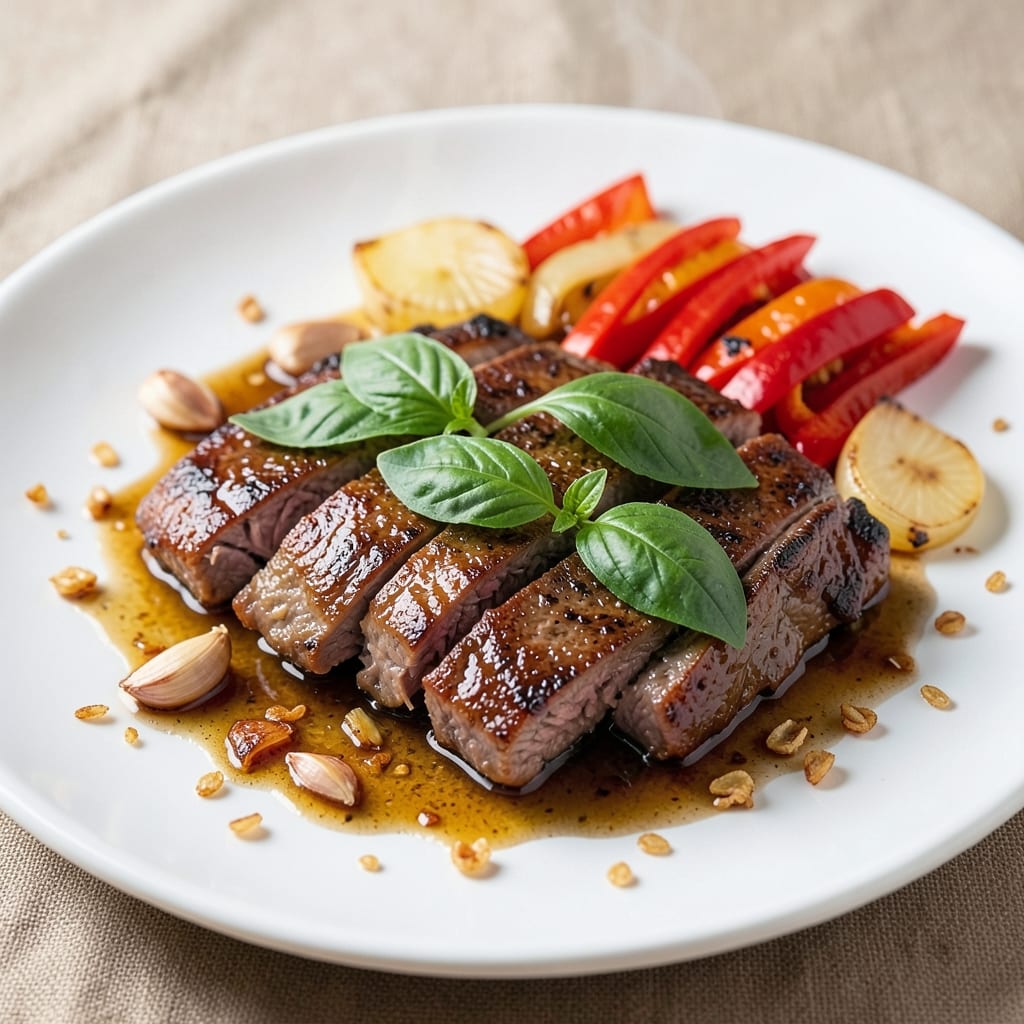
This basil beef stir fry recipe delivers the perfect balance of wok-hei crispy beef and fragrant herbs in under 30 minutes. The secret lies in a quick marinade that tenderizes the beef while building layers of umami, followed by a high-heat stir-fry that locks in juices and creates that signature smoky aroma. I've perfected this technique after years of testing—each bite delivers melt-in-your-mouth tenderness with a crispy exterior that holds up to the vibrant herb sauce.
The magic happens in three key steps: marinating the beef in a blend of soy sauce, garlic, and cornstarch (the starch is non-negotiable for that crispy texture), stir-frying at maximum heat to develop wok hei (the smoky, charred flavor), and finishing with fresh basil and a touch of sweetness from honey. Bell peppers and onions add crunch and color, while a splash of oyster sauce ties everything together with depth. This isn't just a stir-fry—it's a restaurant-quality dish that transforms simple ingredients into something extraordinary.
What you'll end up with is a plate of crispy-edged beef that's still tender inside, tossed with glossy, aromatic sauce and bright green basil that adds freshness with every bite. The flavors are complex—sweet from the honey, savory from the soy and oyster sauce, and umami-rich from the garlic and beef. Serve it over steamed rice to soak up every last drop of that flavorful sauce, or pair it with noodles for a heartier meal. The best part? This recipe scales perfectly for weeknight dinners or feeding a crowd.
For those who love customization, you can adjust the heat level by adding chili flakes or swap in different vegetables like snap peas or mushrooms. The technique remains the same—high heat, quick cooking, and fresh herbs make all the difference. Let's get cooking!
Ingredients for basil beef stir fry
Master these ingredients for restaurant-quality wok-hei beef that's crispy outside and tender inside.
| Ingredient | Amount | Notes |
|---|---|---|
| Flank Steak 🥩 | 1 ¼ lb | Thinly sliced against grain |
| Fresh Basil Leaves 🌿 | ½ cup | Packed, stems removed |
| Red Bell Pepper 🍅 | 1 whole | Thinly sliced |
| Yellow Onion 🧅 | 1 whole | Thinly sliced |
| Garlic Cloves 🧄 | 6 cloves | Minced |
| Soy Sauce 🍶 | ⅓ cup | High-quality, low-sodium preferred |
| Oyster Sauce 🥢 | 2 tbsp | Premium brand for depth |
| Honey 🍯 | 1 tbsp | Pure, unprocessed |
| Cornstarch 🌾 | 2 tbsp | For crispy texture |
| Vegetable Oil 🫒 | ½ cup | High smoke point |
| Sesame Oil 🫒 | 1 tbsp | Toasted, for aroma |
| Salt 🧂 | 1 tsp | Diamond Crystal preferred |
| Black Pepper 🌶️ | ½ tsp | Freshly ground |
| White Rice 🍚 | 2 cups | Uncooked, long-grain |
The flank steak is non-negotiable—its lean yet tender texture holds up perfectly to high-heat stir-frying. Look for USDA Choice or Prime at Whole Foods or your local butcher; ask for it sliced thinly against the grain (about 1/8-inch thick). If you can't find pre-sliced, slice it yourself with a sharp knife—this is where the texture magic happens. The fresh basil should be vibrant green with no browning; Trader Joe's carries excellent quality at a reasonable price. For the bell pepper, choose firm, glossy skins—no soft spots—and slice into even strips for consistent cooking. The garlic should be fresh, with no green shoots developing; Penzeys bulk garlic is ideal if you cook often.
No oyster sauce? Hoisin sauce plus a splash of soy sauce mimics the depth, though purists will notice the difference. Running out of honey? Maple syrup or agave nectar work in a pinch, though honey's floral notes are preferred. The cornstarch is critical—it creates that signature crispy exterior. If you're gluten-free, arrowroot powder is a perfect 1:1 substitute. For the bell pepper, swap in snap peas or mushrooms if you prefer; just adjust cooking time slightly. The sesame oil should be toasted—not the cheap, strong-tasting kind—so Kadoya or La Choy are reliable brands. And if you're avoiding honey entirely, date syrup provides a similar caramel-like sweetness.
Store the fresh basil in a glass of water like flowers, covered with a plastic bag, for up to 5 days—it stays fresher longer this way. The marinated beef can be prepped 1 day ahead and refrigerated; bring it to room temperature before cooking for even results. The stir-fry sauce keeps for 5 days in the fridge, though I recommend making it fresh for maximum flavor. For leftovers, store the cooked beef and sauce separately—the beef reheats beautifully, while the sauce can be frozen for 3 months. The rice should be cooked just before serving to maintain its texture, but you can prep it in advance and reheat with a splash of water.
Why You'll Love This Recipe
- No-Fuss Protein Pack: I slice the flank steak thin against the grain—that’s the secret—then let the high heat do the work. No marinating, no fussing, just 10 minutes of hands-off searing while I chop the bell pepper and onion. Honestly, the hardest part is deciding whether to use store-bought basil or the fresh bunch I always forget I have.
- Garlic-Basil Magic: Between us, the moment those basil leaves hit the pan with the garlic? Chef’s kiss. The steak soaks up the aroma while the pepper turns tender-crisp, and the basil’s bright punch cuts through the richness. It’s the kind of flavor that makes you pause mid-bite—like a little Italian vacation in a skillet.
- Lunchbox Hero: This stir-fry reheats like a dream—actually retains its texture—so I double the batch on Sundays. Pack it in containers with jasmine rice, and it’s my go-to for work lunches or my kid’s school lunch (yes, even on a Tuesday). The basil stays fresh surprisingly well, too—no sad, wilted leftovers here.
- Budget Steak Night: Flank steak is cheaper than you think, and a pound stretches across two meals easily. I’ll be real: it’s my answer to “What’s for dinner?” when the grocery budget’s tight but I still want something that feels special. Plus, the onion and bell pepper stretch further than you’d expect—minimal waste, maximum flavor.
Step-by-step instructions for wok-hei crispy beef with herb sauce
Master the art of wok-hei—here's how to achieve restaurant-quality crispy beef with aromatic basil and balanced flavors.
Prepare the Flank Steak for Maximum Texture
Slice the 1.25 lb flank steak thinly against the grain into ¼-inch strips. I use a sharp chef's knife and work quickly to maintain even thickness. Arrange the slices on a plate and sprinkle with 1 tsp salt and 0.5 tsp black pepper, massaging gently to ensure even seasoning.
In a small bowl, whisk together 2 tbsp cornstarch with 1 tbsp honey and 1 tbsp sesame oil. This slurry creates the crispy crust through the Maillard reaction. Toss the seasoned beef strips in this mixture until fully coated. Let them rest for 10 minutes while you prep the vegetables—this allows the cornstarch to adhere properly for that signature wok-hei texture.
Build the Aromatic Vegetable Base
Heat 0.5 cup vegetable oil in a wok or large skillet over high heat until shimmering. Add the 1 whole yellow onion and 1 whole red bell pepper (both thinly sliced) along with the 6 minced garlic cloves. Stir-fry for 3-4 minutes until the vegetables soften slightly but retain their vibrant color.
Here's the thing—you want the vegetables to stay crisp-tender, not mushy. Push them to one side of the wok and add the prepared beef strips in a single layer. Cook undisturbed for 1 minute until the edges develop a golden crust. This initial sear locks in juices and creates the foundation for crispy beef.
Create the Signature Basil Herb Sauce
Pour in 0.33 cup soy sauce and 2 tbsp oyster sauce, immediately scraping up any browned bits from the wok. Add 0.5 cup packed fresh basil leaves and stir everything together for 1-2 minutes until the basil wilts and the sauce begins to thicken slightly.
The basil should infuse the sauce with its bright, peppery notes while maintaining some texture. If the sauce appears too thin after 2 minutes, sprinkle 1 tsp cornstarch mixed with 1 tbsp water into the wok and stir until the sauce reaches your desired consistency—it should coat the back of a spoon but still be pourable.
Finish with Perfect Wok-Hei Technique
Return all the beef and vegetables to the wok and toss vigorously for 1-2 minutes until everything is evenly coated in the sauce. The beef should be deep golden brown with visible crispy edges—a hallmark of proper wok-hei technique. Taste and adjust seasoning with additional soy sauce or salt if needed.
Remove from heat and let the stir-fry rest for 5 minutes before serving. This resting period allows the flavors to meld and the cornstarch coating to fully crisp. Serve immediately over 2 cups cooked white rice to maintain that signature wok-hei texture and temperature.
Pro Tips For Making Basil Beef Stir Fry
- Slice Steak Thin, Not Tender: Flank steak fights back when you force it—cut against the grain in ¼-inch slices, not thick chunks. I used to rush this, and the meat stayed chewy. Take the extra 10 minutes to slice properly, or you’ll regret it when the stir-fry turns into a tough beef salad.
- Blister Onions First: Char the onions over high heat for 3-4 minutes before adding anything else. The deep caramelized flavor anchors the dish—skip this, and you’re left with bland onion bits. (Yes, even if you’re impatient like me.)
- Add Basil Late: Toss in fresh basil leaves right at the end, just when the meat is done. They wilt instantly, releasing their aroma—add them early, and they’ll turn to mush. Save a few for garnish if you’re feeling fancy.
- Use Two Stages for Heat: Start with a screaming-hot wok or skillet, then lower the heat to medium-high once the meat hits the pan. The initial sear locks in juices, while the finish cooks everything evenly. I learned this the hard way after burning my first batch of bell peppers.
Wine and beer pairings for this dish
Light White Wine
For this basil beef stir-fry, I recommend a crisp Sauvignon Blanc from New Zealand or a zesty Pinot Grigio from Italy. The bright acidity and citrus notes in these wines cut through the richness of the beef while complementing the basil's herbal freshness. Look for a bottle with 12-13% ABV—something like Cloudy Bay Sauvignon Blanc or Santa Margherita Pinot Grigio. These wines provide enough body to stand up to the stir-fry's umami flavors without overwhelming the delicate basil aroma. 🍷
Dry Rosé
A dry Provence-style rosé offers a perfect balance of fruitiness and acidity that pairs beautifully with the stir-fry's sweet-savory profile. I love Whispering Angel or Miraval—their strawberry and citrus notes harmonize with the honey and basil. The light body won't overpower the dish, but it adds a refreshing contrast to the bold flavors. Serve slightly chilled to enhance the wine's crispness.
Light Beer Pairings
For beer lovers, a light lager or pilsner works wonderfully. I recommend Peroni or Heineken—their clean, crisp profiles complement the dish without competing. The subtle malt sweetness enhances the honey notes in the sauce, while the carbonation helps cleanse your palate between bites. Avoid heavy IPAs or stouts, as they can overpower the delicate basil and vegetable flavors.
Asian-Inspired Sake
If you want something more traditional, a dry junmai sake at room temperature elevates the dish beautifully. Look for brands like Dassai or Kubota—their clean, slightly nutty profile mirrors the soy and sesame flavors in the stir-fry. The alcohol content (around 15% ABV) is strong enough to cut through the richness but subtle enough to let the dish shine. Serve in small portions to appreciate the nuanced pairing. 🍶
Non-Alcoholic Options
Don't drink alcohol? No problem! A sparkling yuzu soda or ginger beer provides refreshing acidity and effervescence that mimic wine's cleansing properties. For something more substantial, try a cucumber-mint infused water—the cool, crisp flavors balance the stir-fry's richness. I also love San Pellegrino Aranciata, which adds a citrusy brightness that complements the basil perfectly.
Nutrition facts
Frequently asked questions
Why is cornstarch essential for crispy beef?
The cornstarch creates a crispy crust through the Maillard reaction when cooked at high heat. Without it, the beef will be tender but lack that signature wok-hei texture. The 2 tbsp cornstarch in the marinade plus the optional 1 tsp cornstarch slurry for thickening ensure both texture and sauce consistency.
Can I substitute flank steak with another cut?
Yes, but choose thinly sliced cuts like sirloin or ribeye. Avoid tougher cuts like chuck—these need longer marinating (try 4-6 hours with extra soy sauce). The key is slicing against the grain for tenderness. For best results, stick with 1/4-inch thick slices.
How do I prevent the basil from turning bitter?
Add fresh basil only at the end of cooking—it wilts quickly at high heat. Use 0.5 cup packed leaves and remove any stems. For extra flavor, lightly bruise the leaves with your fingers before adding. If using dried basil, reduce to 1 tbsp and add it with the sauce.
What if my stir-fry sauce is too thin?
Mix 1 tsp cornstarch with 1 tbsp cold water and stir into the sauce at the end. Cook for 30 seconds1 tbsp next time or add 1 tsp oyster sauce for depth. The sauce should coat the back of a spoon but remain pourable.
Can I make this vegetarian?
Swap the beef for extra-firm tofu or mushrooms (like shiitake). Press tofu to remove moisture, then cube and pan-fry until crispy. For mushrooms, slice thinly and cook until golden. Use 1 tbsp soy sauce in the marinade and add 1 tsp smoked paprika for depth. The technique remains identical!