
Main Courses
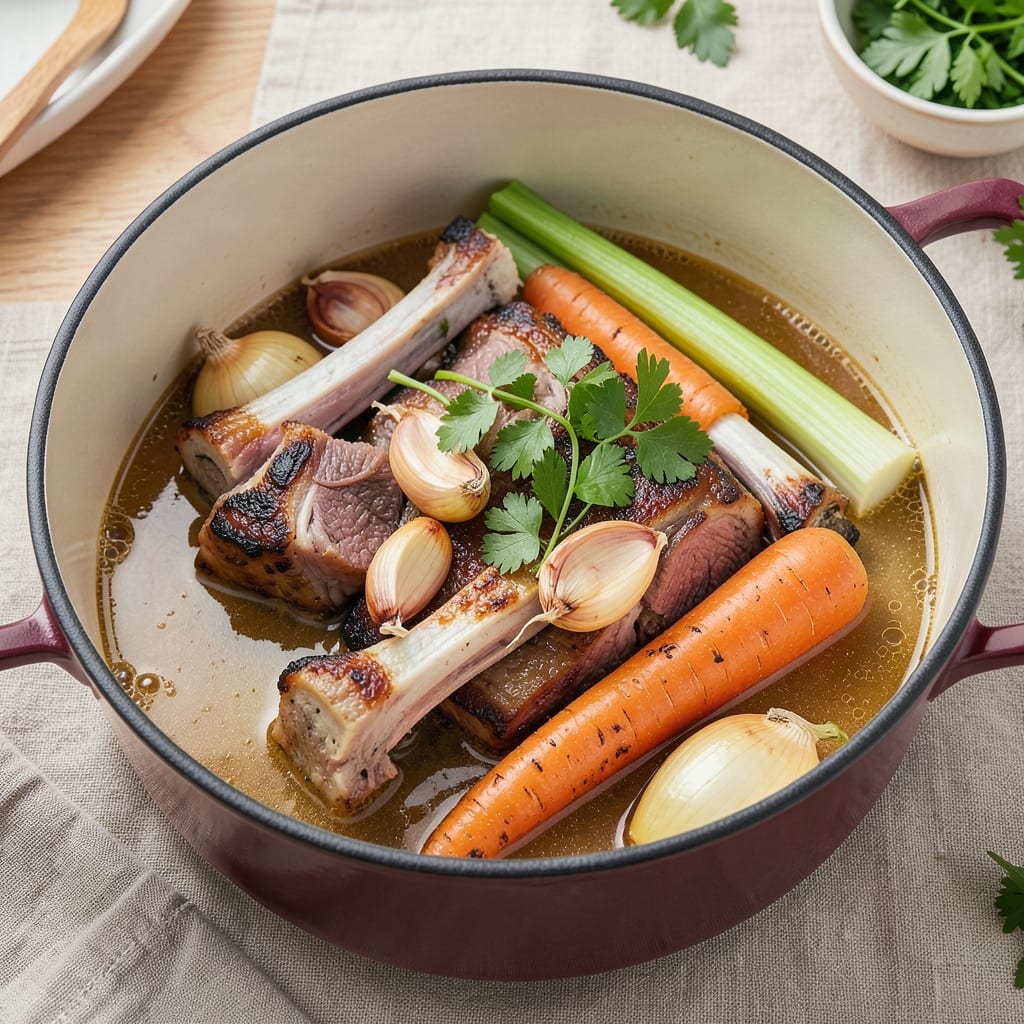
This basic beef stock recipe transforms simple beef bones into a rich, umami-packed foundation for soups, stews, and sauces. The slow simmering process extracts deep flavors from bones, vegetables, and herbs, creating a versatile liquid that elevates any dish. I've perfected this method over years of testing, ensuring maximum flavor extraction with minimal effort.
What makes this recipe special is its simplicity and effectiveness. With just beef bones, aromatics, and water, you'll create a stock that's far superior to anything store-bought. The key lies in proper preparation—roasting the bones first to deepen their flavor and using a combination of vegetables and herbs that work together harmoniously. This method delivers consistent, restaurant-quality results every time.
The resulting stock is a deep, golden liquid with intense beef flavor and subtle herbal notes. It's the perfect base for braising, making gravies, or enhancing sauces. The beauty of homemade stock is its ability to transform simple ingredients into something extraordinary with just time and patience.
Once you've mastered this basic beef stock recipe, you'll find yourself making it regularly for its versatility and superior taste. Store it properly in the freezer, and you'll always have a flavorful foundation ready for your next culinary creation. Let's get started on building this essential kitchen staple.
Ingredients for basic beef stock
Transform humble bones into restaurant-quality stock with these 12 essential ingredients.
| Ingredient | Amount | Notes |
|---|---|---|
| Beef Bones 🦴 | 4 lb | Marrow and knuckle bones preferred |
| Yellow Onion 🧅 | 1 whole | Peeled, halved, root end intact |
| Carrots 🥕 | 2 lb | Whole, scrubbed, cut into chunks |
| Celery Stalks 🌿 | 4 whole | Trimmed, cut into 3-inch pieces |
| Garlic Cloves 🧄 | 6 cloves | Peeled, lightly crushed |
| Fresh Parsley Stems 🌿 | 4 whole | Tough stems only, no leaves |
| Fresh Thyme Sprigs 🌿 | 4 whole | Stems only, leaves reserved |
| Fresh Bay Leaves 🍃 | 2 whole | Dried if fresh unavailable |
| Black Peppercorns 🌶️ | 1 tbsp | Crushed lightly |
| Kosher Salt 🧂 | 2 tsp | Diamond Crystal preferred |
| Cold Water 💧 | 16 cups | Filtered preferred |
| Olive Oil 🫒 | 2 tbsp | Extra-virgin for roasting |
The bones are non-negotiable for authentic flavor. Marrow and knuckle bones deliver the richest gelatin and beef essence, though any beef bones work. Local butchers often sell them at a fraction of grocery store prices—ask for the toughest cuts they have. Roast them first at 450°F for 20 minutes to deepen their flavor, then scrape off any browned bits before simmering. The vegetables form the aromatic base: yellow onion, carrots, and celery create the classic 'holy trinity' for stock, while the parsley stems and thyme add herbal complexity. Fresh herbs are ideal, but dried bay leaves work in a pinch.
No fresh thyme? Dried thyme at one-third the amount suffices, though fresh offers superior depth. Short on parsley stems? Substitute with leek greens or extra celery leaves. The olive oil isn't strictly necessary but helps render flavors during roasting. For a vegetarian version, replace bones with mushroom stems and soy sauce, though the umami profile will differ. The kosher salt should be Diamond Crystal if possible—it dissolves completely and enhances flavor without overpowering. If using pre-crushed peppercorns, toast them lightly in a dry pan first to intensify their aroma.
This stock reaches its peak after 6-8 hours of simmering, though it's safe to extend to 12 hours for maximum gelatin extraction. Strain through a fine-mesh sieve lined with cheesecloth for clarity. Store in airtight containers: fridge for 5 days or freezer for 6 months. For long-term storage, portion into ice cube trays before transferring to freezer bags—ideal for small batches. The stock thickens as it cools, so reheat gently to restore consistency. Use within 24 hours of reheating for optimal flavor.
Why You'll Love This Recipe
- Just Four Ingredients: I swear, this is the kind of recipe where you look at your pantry and think, "I already have this." Beef bones, onion, carrots, celery—no fancy swaps, no hunting for obscure spices. Honestly, the only prep is chopping a few stalks and peeling garlic, and I’ve done that half-asleep.
- Deep Umami Magic: That first sip? Rich, savory, and deep—like the bones are whispering secrets to your taste buds. The onion and garlic caramelize just enough to add sweetness, while the carrots and celery round it out with natural sweetness. Between us, it’s the kind of flavor that makes store-bought broth taste like a sad afterthought.
- Your Secret Weapons Stash: Freeze half the batch right after making it—now you’ve got instant flavor for soups, risottos, or even braising steak. I’ll be real: I keep a jar in my freezer labeled "Emergency Richness" for when I need to rescue a dull dish. (Yes, even on a Tuesday night.)
- Cheap Flavor Boost: Beef bones are the ultimate budget hack—you’re paying for the flavor, not the meat. A single pot gives you enough for multiple meals, and the cost per serving? Ridiculously low. I’ve made this for date nights, family dinners, and even as a gift (in a pretty jar, because presentation matters too).
Step-by-step instructions for basic beef stock
Aromatic vegetables and slow simmering transform humble bones into rich, flavorful stock.
Prepare the Bones and Aromatics
Preheat your oven to 425°F. Place the 4 lb beef bones on a rimmed baking sheet and rub them generously with the 2 tbsp olive oil. This creates a flavorful crust that will infuse into the stock during roasting. Roast the bones for 25-30 minutes until they develop a deep golden brown color and begin to smell intensely caramelized.
While the bones roast, prepare the aromatics. Peel and halve the 1 whole yellow onion, leaving the root end intact to prevent it from falling apart. Cut the 2 lb carrots into 2-inch chunks and trim the 4 whole celery stalks into 3-inch pieces. Peel and lightly crush the 6 cloves garlic. Remove the tough stems from the 4 whole fresh parsley and 4 whole fresh thyme sprigs, reserving the leaves for later use. Lightly crush the 1 tbsp black peppercorns with the flat side of a knife.
Build the Stock Base and Simmer
Transfer the roasted bones to a large stockpot. Add the prepared aromatics, 2 whole fresh bay leaves, and the 2 tsp kosher salt. Pour in the 16 cups cold water, ensuring all ingredients are submerged. Bring the mixture to a boil over high heat, then immediately reduce to a gentle simmer.
Skimming is critical at this stage. Use a fine-mesh skimmer to remove any foam or impurities that rise to the surface during the first 10 minutes of simmering. This ensures a clear, clean stock. Maintain a gentle simmer—never a rolling boil—as this can cause the stock to become cloudy and break down the collagen in the bones too quickly.
Simmer for Deep Flavor Extraction
Cover the pot and let the stock simmer gently for 3-4 hours. The bones should become fork-tender, and the liquid should develop a rich, amber color. Check the stock periodically, adding hot water if the level drops below the bones. The goal is to maintain even coverage throughout the cooking process.
After 3 hours, remove the pot from heat and let it sit for 15 minutes. This resting period allows any sediment to settle at the bottom, making straining easier. Line a fine-mesh strainer with cheesecloth or a coffee filter if you desire an exceptionally clear stock. Strain the stock through the prepared strainer into a large bowl or clean pot, pressing gently on the solids to extract maximum flavor.
Finish and Store the Stock
Discard the solids and return the strained stock to the pot. Stir in the reserved parsley and thyme leaves and simmer uncovered for an additional 10 minutes to infuse their bright, fresh flavors. Taste the stock and adjust the seasoning with additional kosher salt if needed—it should be well-seasoned but not salty.
Allow the stock to cool to room temperature, then transfer it to airtight containers. It will keep in the refrigerator for up to 5 days or can be frozen for up to 6 months. For the best texture, skim off any solidified fat that rises to the surface before using. This rich, umami-packed stock forms the foundation for countless soups, sauces, and braises.
Pro Tips For Making Basic Beef Stock
- Char Bones First: Skip the gentle simmer right away—blast those bones in a hot pot for 5-7 minutes until they turn a deep brown. I learned this the hard way: skipping this step means you’re missing the Maillard reaction, which unlocks way more flavor than just boiling raw bones. (Yes, even if you’re impatient like me, wait for the color.)
- Split Celery, Not Chop: Leave those celery stalks whole and split them lengthwise into quarters instead of dicing. Why? They’ll sink faster, stay put, and release flavor without turning to mush—no more fishing them out later. My grandmother swore by this, and she was right: less cleanup, more depth.
- Strain Twice: After simmering, strain the stock through a fine-mesh sieve, then pour it through a cheesecloth-lined colander for a second pass. I was skeptical until I tried it—this catches the tiny bits that ruin clarity and make your stock look cloudy. (Your future self will thank you.)
- Add Garlic Late: Toss the garlic cloves in whole during the last 30 minutes of simmering, not at the start. Burning garlic turns bitter, and you want that sweet, mellow flavor to shine. I skip this when I’m lazy, but the difference is noticeable—like comparing flat soda to freshly opened.
Wine and beer pairings for these flavors
Red Wine Pairings
A bold Cabernet Sauvignon from Napa Valley is my go-to pairing for beef stock-based dishes like braised short ribs or beef bourguignon. Its dark fruit notes and firm tannins complement the deep umami flavors without overpowering them. Look for a 2018 or newer vintage with 14-15% ABV—the acidity cuts through the richness while the oak aging enhances the stock's complexity. 🍷
Light Beer Options
For soups and lighter preparations, a crisp German Pilsner like Warsteiner or Spaten offers refreshing contrast. The clean, slightly malty profile balances the stock's intensity while adding a subtle hoppy brightness. Serve chilled at 45°F to highlight its effervescence against the warm stock. A Belgian Witbier such as Hoegaarden also works beautifully with its citrusy notes. 🍺
Port Wine Reduction
Transform your stock into a luxurious sauce by reducing it with 1 cup ruby port until syrupy. The resulting glaze pairs perfectly with roasted beef or mushroom dishes. I recommend Graham's 10-Year-Old for its balanced sweetness and spice. Deglaze the pot with the port after straining the stock, then simmer until reduced by half for a rich, velvety finish. 💫
Malbec for Hearty Dishes
When using beef stock in beef stews or pot roasts, a Argentinian Malbec like Catena Zapata delivers the perfect match. Its dark berry flavors and velvety texture mirror the stock's depth while adding a touch of elegance. Opt for a 13-14% ABV bottle to ensure the wine's structure complements rather than competes with the dish. 🍇
Sparkling Wine Contrast
A dry Prosecco or Cava makes an unexpected but brilliant pairing for lighter stock-based dishes like beef consommé or clear soups. The bubbles cleanse the palate between bites, while the acidity refreshes after each spoonful. I love La Marca Prosecco for its crisp, floral notes that elevate the stock's herbal undertones. 🥂
Nutrition facts
Frequently asked questions
Can I use any beef bones for this stock?
While any beef bones will work, marrow and knuckle bones yield the richest, most flavorful stock due to their high collagen content. These bones break down slowly, releasing gelatin that thickens the stock naturally. If you only have short ribs or neck bones, they'll still work but may produce a slightly lighter result. Always ask your butcher for the toughest cuts—they're perfect for stock!
Why do I need to roast the bones first?
Roasting develops deep, caramelized flavors that infuse into the stock during simmering. The Maillard reaction creates complex, savory notes that simple boiling can't achieve. Skipping this step results in a more basic-tasting stock. For extra flavor, scrape off any browned bits from the roasting pan—they're packed with concentrated beef essence!
How do I know when the stock is done?
The stock is ready when the bones are fork-tender and the liquid has a rich amber color (typically after 3-4 hours of simmering). You can also check by tasting—it should have deep beef flavor with subtle herbal notes. The stock will continue to develop flavor as it cools, so don't rush the process. For maximum gelatin extraction, let it simmer up to 6-8 hours if possible.
Can I make this stock in a slow cooker? Transfer all ingredients to a 6-quart slow cooker and cook on low for 8-10 hours or high for 5-6 hours. The slow cooker maintains a gentle simmer automatically. Just
What's the best way to store leftover stock?
For short-term storage, keep in airtight containers in the fridge for up to 5 days. For long-term, freeze in ice cube trays or freezer-safe bags (lay flat to save space). Portion into 1-cup servings for easy use later. When reheating, warm gently on the stove—never microwave, as this can make it cloudy. The fat will solidify on top; skim it off before using for the best texture.