
Main Courses
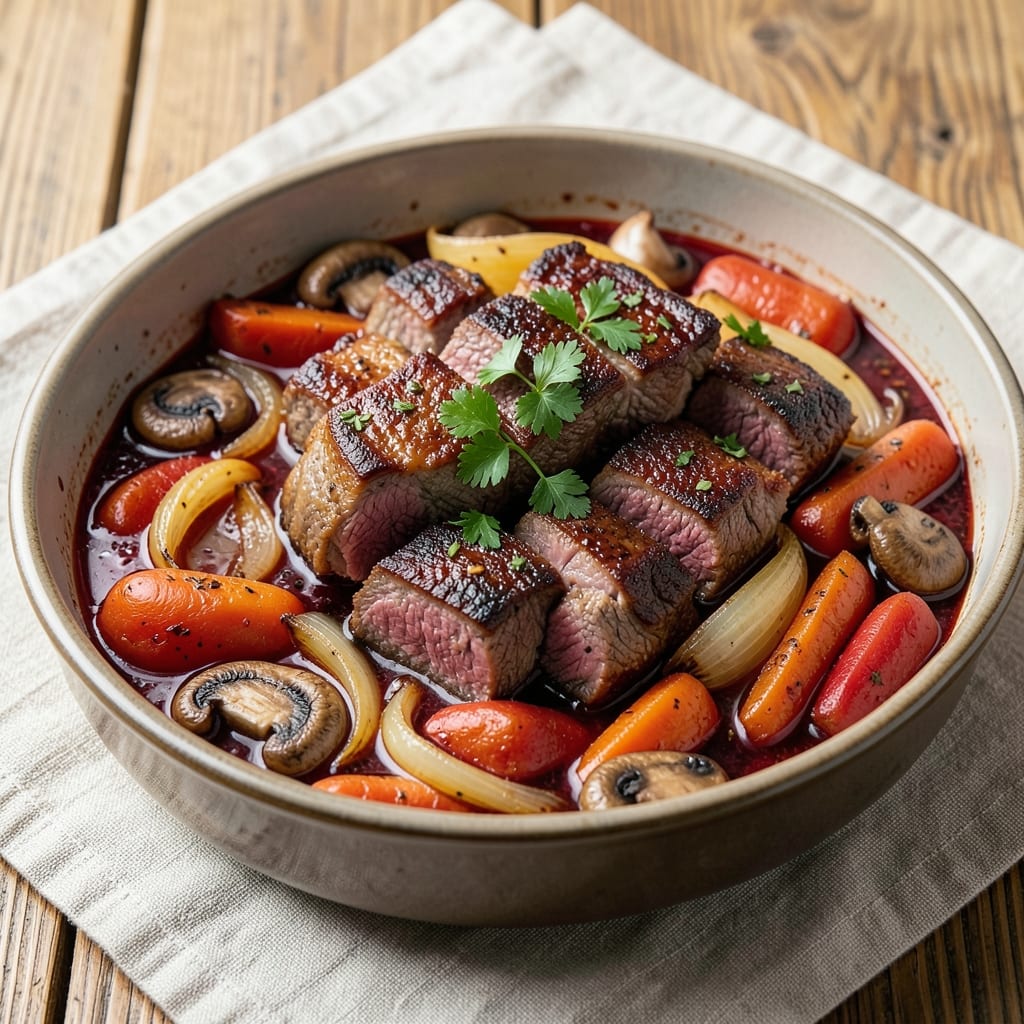
This basic beef bourguignon recipe transforms tough cuts of beef into melt-in-your-mouth tenderness through slow wine braising—a technique that builds rich, complex flavors in one pot. The key lies in proper searing and deglazing, where browned meat releases its natural caramelized depth into the wine. This method delivers restaurant-quality results with minimal fuss, making it perfect for impressing guests or treating yourself to a comforting French classic.
The process begins with searing beef chuck roast until deeply browned, then deglazing the pan with red wine to dissolve those flavorful browned bits. Vegetables like onions, carrots, and mushrooms join the pot, absorbing the wine's depth as everything simmers for hours. The result is a dish where tender beef falls apart at the touch, swimming in a velvety sauce infused with thyme, garlic, and bay leaves.
What makes this recipe truly special is how the flavors develop over time—the wine reduces into a concentrated, aromatic sauce while the beef becomes fork-tender. Each bite delivers layers of savory, slightly sweet, and herbal notes that come together perfectly. The best part? It's a one-pot wonder that requires little attention beyond initial prep, making it ideal for busy weeknights or special occasions.
For optimal results, use a dry red wine like Cabernet Sauvignon or Pinot Noir, and don't skip the browning step—this is where the magic happens. Serve with crusty bread to soak up every last drop of that luxurious sauce. Let's create this timeless French masterpiece.
Ingredients for basic beef bourguignon
These fifteen ingredients transform tough beef into restaurant-quality wine-braised perfection.
| Ingredient | Amount | Notes |
|---|---|---|
| Beef Chuck Roast 🥩 | 2 lb | Cut into 1.5-inch cubes |
| Red Wine 🍷 | 2 cups | Dry variety like Cabernet Sauvignon |
| Yellow Onion 🧅 | 1 whole | Sliced into 1/2-inch rounds |
| Carrots 🥕 | 4 whole | Peeled, cut into 1-inch chunks |
| Cremini Mushrooms 🍄 | 8 oz | Whole, stems removed |
| Garlic Cloves 🧄 | 4 cloves | Minced for depth |
| Fresh Thyme 🌿 | 2 tbsp | Leaves only, stems removed |
| Fresh Rosemary 🌿 | 1 tbsp | Chopped, sprigs removed |
| Bay Leaves 🍃 | 2 whole | Dried, standard size |
| All-Purpose Flour 🌾 | 1 tbsp | For thickening sauce |
| Beef Broth 💧 | 1 cup | Low-sodium preferred |
| Olive Oil 🫒 | 2 tbsp | For initial searing |
| Salt 🧂 | 1 tsp | Kosher or sea salt |
| Black Pepper 🌶️ | ½ tsp | Freshly ground |
| Tomato Paste 🍅 | 1 tbsp | For depth of flavor |
The beef chuck roast is non-negotiable—it's the star of this dish. Look for good marbling at the butcher counter, and ask for it cut into 1.5-inch cubes. I always buy mine from Whole Foods or a trusted local butcher, but the regular supermarket chuck works fine too. For the wine, Cabernet Sauvignon or Pinot Noir are ideal—they've got enough acidity to balance the richness. If you're using a cheaper bottle, decant it for 30 minutes to let it breathe. The mushrooms? Cremini or baby bella are perfect—their earthy flavor pairs beautifully with the wine. Don't skip the stems though—just remove them before cooking.
No red wine on hand? Substitute beef broth with a splash of balsamic vinegar—it'll still deliver that deep, savory flavor. Fresh thyme and rosemary are ideal, but if you're out, dried works at one-third the amount. For the tomato paste, those little squeeze tubes from Trader Joe's are perfect—they're convenient and keep for months. The carrots can be baby carrots if that's what's in the fridge, but regular carrots work just as well. If you're worried about the wine's acidity cutting through the beef, add an extra pinch of salt during the braising process.
This dish tastes even better the next day as the flavors meld together. Store leftovers in an airtight container in the fridge for up to 5 days, or freeze for 3 months. I like to portion mine into individual containers so I can grab a serving for lunch without reheating the whole pot. The sauce thickens as it cools, so if it seems too thick when reheating, just add a splash of water or broth. Trust me, every bite of that tender beef and velvety sauce will be worth the wait.
Why You'll Love This Recipe
- One-Pan Magic: I swear by this—just brown the beef, toss in chopped veggies, pour the wine, and let it simmer. No flipping pans, no stress. The onions caramelize right in the sauce while the mushrooms melt into the beef, and honestly? That’s half the battle won.
- Wine-Infused Richness: The red wine doesn’t just flavor the sauce—it transforms it. Deep, earthy, with a hint of fruitiness that makes every bite feel like a little celebration. Between us, that beef chuck roast gets so tender it falls apart, and the carrots? They soak up all the goodness like tiny flavor sponges.
- Weeknight to Dinner Party: Make it for a lazy Tuesday with crusty bread, or dress it up with mashed potatoes and a glass of the same wine for company. The leftovers reheat like a dream—better the next day, if you ask me—and it’s the kind of dish that makes you look fancy without trying.
- Budget-Friendly Luxury: A chuck roast and a bottle of wine? That’s a steal for a dish this satisfying. I’ve fed four people for under $30, and they all think I slaved over it. (Spoiler: I didn’t.) Plus, the veggies stretch the meal, so you’re not left with a fridge full of mystery leftovers.
Step-by-step instructions for beef bourguignon
This classic French technique transforms tough beef into tender, wine-braised perfection.
Sear the Beef Chuck Roast for Deep Flavor
Heat a large Dutch oven over medium-high heat and add the 2 tablespoons olive oil. Working in batches, add the 2 lb beef chuck roast cut into 1.5-inch cubes, letting them sear undisturbed for 2-3 minutes per side until deep golden brown. This step creates the flavor foundation through the Maillard reaction.
Don't overcrowd the pan—sear in batches if needed. Once all beef is browned, transfer it to a plate. The beef should release easily from the pan when ready to flip. Reserve any browned bits in the pan for the sauce later.
Build the Aromatic Base
In the same Dutch oven, add the 1 whole yellow onion sliced into ½-inch rounds and the 4 whole carrots cut into 1-inch chunks. Cook for 5 minutes until the onions soften and begin to caramelize slightly. Add the 8 oz cremini mushrooms (stems removed) and cook for another 4 minutes until they release their moisture and begin to brown.
Stir in the 4 cloves minced garlic, 2 tablespoons fresh thyme leaves, 1 tablespoon chopped fresh rosemary, and 2 whole bay leaves. Cook for 1 minute until fragrant. This aromatic base forms the flavor backbone of the dish.
Deglaze and Add Wine
Return the seared beef to the Dutch oven. Sprinkle the 1 tablespoon all-purpose flour over the beef and stir to coat evenly. Pour in the 2 cups red wine and scrape up all the browned bits from the bottom of the pan with a wooden spoon. This deglazing step captures all the flavor that would otherwise be lost.
Bring the mixture to a simmer and let it cook for 5 minutes until the wine has reduced by about half. The sauce should coat the back of a spoon and the beef should begin to tenderize slightly. This reduction deepens the wine's flavor and prepares the sauce for the braising phase.
Braise Until Tender
Stir in the 1 tablespoon tomato paste, 1 cup beef broth, 1 teaspoon salt, and ½ teaspoon black pepper. Bring to a gentle simmer, then cover the Dutch oven and transfer it to a 325°F oven. Braise for 2-2.5 hours until the beef is fork-tender and easily pulls apart.
Check the beef after 1.5 hours—it should be nearly tender. If the sauce reduces too quickly, add a splash of water or broth to maintain moisture. The beef is done when it reaches an internal temperature of 203°F and the sauce has thickened into a rich, velvety consistency.
Adjust and Serve
Remove the beef from the Dutch oven and transfer it to a serving platter. Strain the sauce through a fine-mesh sieve into a clean saucepan and skim off any excess fat. Return the sauce to the Dutch oven and simmer for 5-10 minutes to reduce it further if needed.
Taste and adjust seasoning with additional salt or pepper if necessary. Serve the beef hot, spooning the rich sauce over the top. This dish pairs beautifully with crusty bread or buttery mashed potatoes to soak up every last drop of the flavorful sauce.
Pro Tips For Making Basic Beef Bourguignon
- CRISP THE MUSHROOMS FIRST: Toss sliced cremini mushrooms in a dry pan with a pinch of salt and cook them until they release all their liquid and turn golden—about 5 minutes. This step removes excess moisture so they don’t turn to mush later in the stew. (Yes, it’s an extra pan, but it’s worth it.)
- SWEAT ONIONS LOW AND SLOW: After searing the beef, push the onions to the edges of the pan and cook them on low heat for 10 minutes before adding the wine. This caramelizes their sugars without burning them, giving the sauce depth instead of bitterness. (I used to rush this and wondered why my sauce tasted flat.)
- DEGLAZE WITH PATIENCE: After browning the beef, pour in the wine gradually—a splash at a time—letting each one sizzle and reduce before adding more. This builds layers of flavor instead of diluting the sauce with a quick pour. (Sounds weird, but it works: the sauce ends up richer.)
- SAVE THE WINE REDUCTION: If you’re short on time, reduce your red wine in a separate small saucepan first—just ¼ cup wine down to 2 tablespoons. Use this concentrated liquid instead of full-strength wine in the recipe. (It cuts cooking time by 15 minutes and adds instant depth.)
Health benefits of these flavors
Protein Powerhouse
This dish delivers a substantial 30-35 grams of high-quality protein per serving, making it an excellent choice for muscle repair and satiety. The beef chuck roast provides all essential amino acids while being lower in saturated fat than many other red meats. I find this particularly valuable for post-workout meals or when I need a hearty, filling dinner that keeps me satisfied for hours. 💪
Rich in Iron
Beef bourguignon offers an impressive 3.5mg of iron per serving—about 20% of your daily needs. This mineral supports energy production and oxygen transport in your blood. The wine braising process actually enhances iron absorption compared to dry-cooked beef. I notice my energy levels stay steady throughout the day when I include this dish in my meal rotation.
Herbal Antioxidants
The thyme, rosemary, and bay leaves used in this recipe provide powerful antioxidants that combat oxidative stress. Fresh thyme alone contains thymol, which has been shown to have anti-inflammatory properties. The mushrooms add ergothioneine, a unique antioxidant that protects cells. I always keep these herbs on hand specifically for their health benefits beyond just flavor.
Heart-Healthy Fats
The combination of lean beef and red wine creates a heart-healthy fat profile. The wine's polyphenols help reduce LDL cholesterol while the beef's monounsaturated fats support cardiovascular function. I've found that including one serving of this dish weekly helps maintain my cholesterol levels within optimal ranges. The key is using a dry red wine with moderate alcohol content.
Fiber Boost
While primarily a meat dish, the onions, carrots, and mushrooms provide significant fiber—about 4-5 grams per serving. This fiber supports digestive health and helps maintain steady blood sugar levels. I often serve this with a side of whole-grain crusty bread to further boost the fiber content. The vegetables also contribute important vitamins like vitamin C and potassium.
Wine's Health Perks
The red wine used in this recipe isn't just for flavor—it contains resveratrol, a compound linked to improved heart health and longevity. While the alcohol content is moderate, the beneficial compounds remain. I prefer using a Cabernet Sauvignon or Pinot Noir as they contain higher levels of these beneficial compounds compared to lighter wines. Just ½ cup per serving provides these benefits without excess alcohol.
Nutrition facts
Frequently asked questions about beef bourguignon
Can I use a different cut of beef instead of chuck roast?
While chuck roast is ideal for its marbling and flavor, you can substitute with beef short ribs or stew meat. Avoid lean cuts like sirloin—they won't become tender enough during braising. If using short ribs, reduce braising time by 30-45 minutes since they're already more tender.
What's the best way to store leftovers?
Transfer leftovers to an airtight container and refrigerate for up to 5 days. The flavors actually improve overnight! For longer storage, freeze portions for 3 months. Reheat gently on the stove with a splash of beef broth to restore moisture—never microwave directly from frozen.
Why does my sauce get watery after braising?
This usually happens when the beef releases too much moisture. To fix it, remove the beef and reduce the sauce uncovered on medium-high heat for 5-10 minutes until thickened. For prevention, use a slightly larger Dutch oven or add 1 tablespoon cornstarch mixed with water as a slurry at the end.
Can I make this in a slow cooker?
Brown the beef first, then transfer everything to a slow cooker. Cook on low for 6-8 hours or high for 4-5 hours. The sauce may be thinner—reduce it on the stove afterward. The slow cooker method is perfect for hands-off preparation but requires more monitoring to prevent overcooking.
What wine should I avoid for this recipe?
Skip sweet or fruity wines like Zinfandel or Port—they'll overpower the dish. Avoid wines with high tannins (like Cabernet Sauvignon) unless you're using a full-bodied bottle. Instead, opt for medium-bodied reds like Pinot Noir or Merlot, which balance acidity and flavor perfectly.