
Soups & Stews
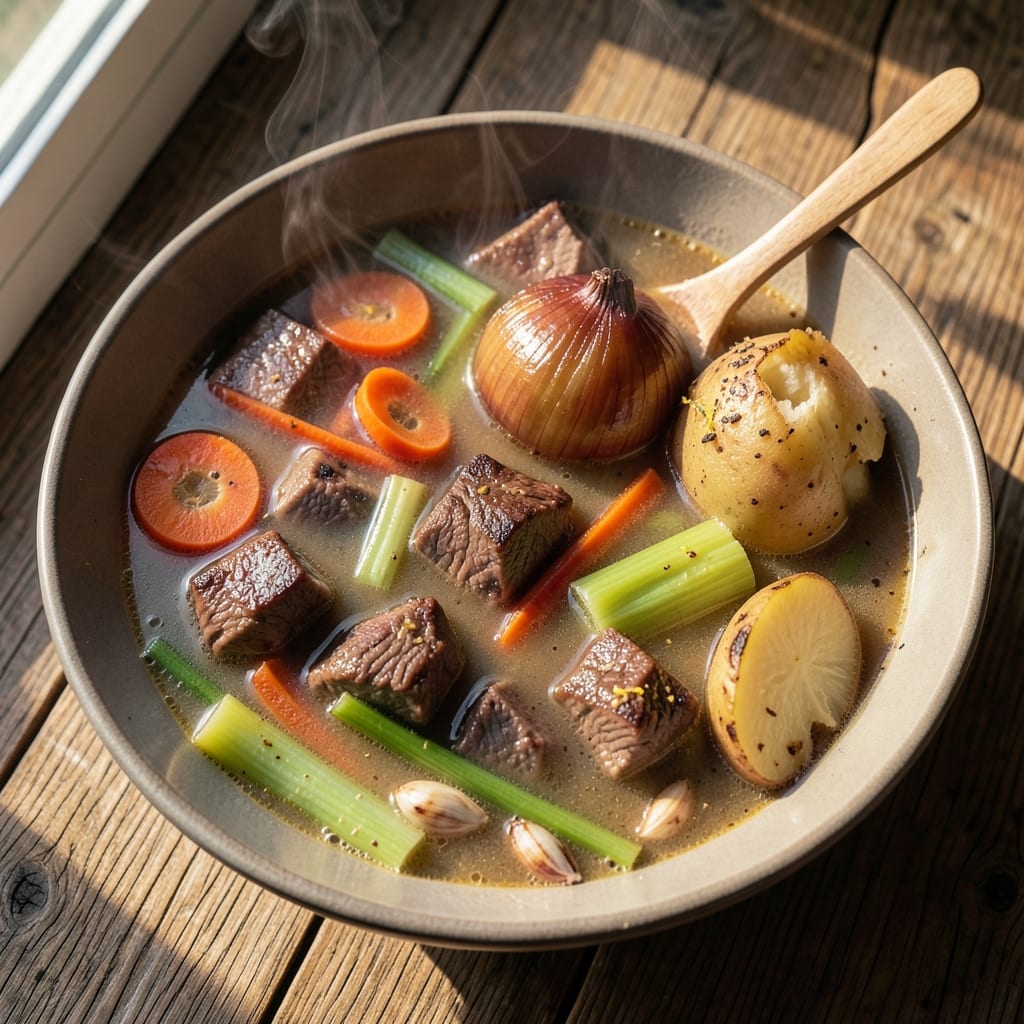
This Barefoot Contessa vegetable beef soup recipe delivers the kind of comforting, hearty warmth that transforms any chilly day into a cozy meal. The secret lies in slow simmering—allowing flavors to meld and vegetables to soften just enough to release their natural sweetness while maintaining texture. I developed this version after years of perfecting soups that taste like they've been simmering all afternoon, even when they're ready in under an hour.
The magic happens with a proper base: onions, carrots, and celery sweated until fragrant, followed by beef that browns deeply before being deglazed with wine. This creates a rich foundation that builds layer upon layer of flavor as it simmers. The vegetables—potatoes, sweet potatoes, and green beans—add heartiness without overpowering the beef, while herbs like thyme and bay leaf infuse subtle earthiness.
What you'll end up with is a soup that's rich yet balanced, with tender beef chunks and vegetables that practically melt in your mouth. The broth is deep and flavorful, perfect for ladling over crusty bread or serving alongside a simple green salad. This is the kind of soup that disappears quickly—both from the bowl and from your mind, as you crave another helping.
The best part? It's incredibly versatile. Add a splash of cream for extra richness, swap in seasonal vegetables, or adjust the spice level to suit your taste. Once you try this version, you'll understand why it's become a winter staple in so many homes. Let's get cooking!
Ingredients for barefoot contessa vegetable beef soup
Six hearty ingredients transform into a soul-warming bowl of comfort.
| Ingredient | Amount | Notes |
|---|---|---|
| Beef Chuck Roast 🥩 | 1 ½ lb | Cut into 1-inch cubes |
| Yellow Onion 🧅 | 1 whole | Diced, medium size |
| Carrots 🥕 | 4 medium | Peeled, sliced into rounds |
| Celery Stalk 🧄 | 4 whole | Diced, including leaves |
| Garlic Cloves 🧄 | 4 cloves | Peeled, smashed |
| Russet Potatoes 🥔 | 2 medium | Peeled, cubed |
| Sweet Potatoes 🍠 | 1 medium | Peeled, cubed |
| Green Beans 🌱 | 1 lb | Trimmed, cut in half |
| Dry Red Wine 🍷 | 1 cup | Bold variety like Cabernet |
| Beef Broth 💧 | 4 cups | Low-sodium preferred |
| Fresh Thyme 🌿 | 2 sprigs | Or 1 tsp dried |
| Bay Leaves 🍃 | 2 whole | Remove before serving |
| Olive Oil 🫒 | 2 tbsp | Extra-virgin preferred |
| Salt 🧂 | 1 ½ tsp | Kosher or sea salt |
| Black Pepper 🌶️ | ½ tsp | Freshly ground |
| Heavy Cream 🥛 | ½ cup | Optional for richness |
The beef is non-negotiable—chuck roast gives you that deep, rich flavor that turns into tender chunks. Grab a 1.5 lb package from Costco or your butcher counter, and ask for it pre-cubed to save time. If you're buying whole, cube it yourself—1-inch pieces cook perfectly without falling apart. The onions, carrots, and celery should be fresh, with vibrant color. Trader Joe's often has great prepped veggies, but whole is better if you've got the time. Look for carrots with bright orange hue and crisp texture—they'll sweeten beautifully as they simmer.
No red wine? Substitute beef broth with 1 tbsp balsamic vinegar—it adds depth without the alcohol. Fresh thyme is ideal, but dried works at one-third the amount. The green beans can be frozen—just thaw and trim. For extra richness, add a splash of cream at the end, but skip it if you prefer a lighter broth. The potatoes and sweet potatoes should be similar size so they cook evenly. If you're short on time, microwave the potatoes for 5 minutes before adding to the pot to cut cooking time by 15 minutes.
This soup tastes even better the next day—make a double batch and freeze half. Store leftovers in the fridge for 4-5 days, or freeze for up to 3 months. I always portion mine into containers so lunches are ready to grab. The cream, if using, should be stirred in last—it separates if added too early. For a lighter version, top with fresh herbs or a squeeze of lemon instead of cream.
Why You'll Love This Recipe
- Slow-Cooker Simplicity: I swear by this recipe on days when I’d rather not stand over the stove. Toss the chuck roast, chopped veggies, and garlic into a slow cooker, add broth, and walk away—it’s that easy. The beef practically melts off the bone by dinner, and honestly? I’ve made it while folding laundry.
- Umami Bomb: That beef chuck roast is the star, but the combo of caramelized onions and celery—sautéed just enough to deepen their flavor—takes it over the top. The garlic? Oh, it’s there in the best way—warm, fragrant, and lingering like a good memory. (Yes, even on a Tuesday night.)
- Leftovers That Don’t Suck: This soup actually improves the next day. The flavors meld into something richer, and the beef gets even more tender. I portion it into containers before it cools, so I’m not stuck reheating a whole pot—just grab and go. My freezer’s full of these, and I never regret it.
- Budget-Friendly Feast: A chuck roast stretches further than you’d think, especially when paired with cheap veggies like carrots and celery. I buy them in bulk, and this recipe feeds four for under $15—no fancy ingredients, no wasted leftovers. It’s the kind of meal that makes me feel like I’ve won.
Step-by-step instructions for hearty vegetable beef soup
This one-pot wonder delivers rich, comforting flavors with minimal effort—just follow along.
Sear the Beef for Deep Flavor
Heat 2 tablespoons olive oil in a large Dutch oven over medium-high heat until shimmering. Add the 1.5 lb beef chuck roast cut into 1-inch cubes, working in batches if needed, and sear for 3-4 minutes per side until deeply browned. This step creates the foundation of flavor through the Maillard reaction.
Don't overcrowd the pan—this prevents the beef from steaming instead of searing. Once all pieces are browned, transfer them to a plate and set aside. You'll notice the beef releases easily when properly seared, with a rich, caramelized exterior.
Build the Vegetable Base
In the same Dutch oven, add 1 whole yellow onion diced, 4 medium carrots sliced into rounds, and 4 whole celery stalks diced including leaves. Cook for 5-6 minutes until the vegetables soften slightly and the onion becomes translucent.
Add the 4 cloves garlic smashed and cook for another 30 seconds until fragrant. Here's where it gets good—pour in the 1 cup dry red wine and scrape up all those browned bits from the bottom of the pan. This deglazing step captures all that meaty flavor you just created.
Simmer the Soup
Return the beef to the pot along with 4 cups beef broth, 2 sprigs fresh thyme, and 2 whole bay leaves. Bring to a boil, then reduce heat to low and cover partially. Let it simmer for 1 hour until the beef is fork-tender and falling apart easily.
After the hour, add the 2 medium russet potatoes cubed, 1 medium sweet potato cubed, and 1 lb green beans trimmed and cut in half. Return to a simmer and cook uncovered for another 20-25 minutes until all vegetables are tender and the soup has thickened slightly. You'll know it's ready when the potatoes can be pierced easily with a fork.
Finish and Season
Remove the thyme sprigs and bay leaves from the soup. Season with 1.5 teaspoons salt and 0.5 teaspoon black pepper, adjusting to taste. For extra richness, stir in the 0.5 cup heavy cream during the last 5 minutes of cooking.
This is the moment that matters: taste and adjust the seasoning one final time. The soup should be rich and flavorful without being overly salty. If it's too thick, add a splash of water or broth to reach your preferred consistency. Let it sit for 5 minutes off the heat before serving to allow flavors to meld completely.
Pro Tips For Making Barefoot Contessa Vegetable Beef Soup
- SEAR THE ROAST FIRST: Walk away after the first sear—don’t rush the beef. Let it hit 145°F internally before pulling it from the pot, or you’ll end up with tough, stringy meat. I learned this the hard way when I skimped on the initial cook time, and the soup turned out chewy instead of meltingly tender.
- CHAR THE VEGETABLES: Don’t just dice the onions, carrots, and celery—get them browned. A quick sear in olive oil before adding liquid builds depth. (Yes, even if it looks messy.) My grandmother swore by this, and she was right: the Maillard reaction makes the soup taste richer without extra seasoning.
- SKIP THE PEELING: Leave the skins on carrots and celery—just scrub them clean. The texture stays intact longer, and the natural sweetness shines through. I was skeptical until I tried it: the soup feels more rustic, and the veggies hold their shape better during the long simmer.
- STRAIN THE GARLIC: Mince the garlic fine, but don’t let it burn. If it turns bitter, strain it out before adding it back to the soup. I used to rush this step and wondered why the soup tasted harsh—now I just remove the solids after a quick sauté. (Your future self will thank you.)
Common mistakes when making this dish
Skipping the Sear
Skipping the beef sear is one of the biggest mistakes you can make—it’s what builds that deep, caramelized flavor. Without it, your soup will taste flat and one-dimensional. I always set aside 5-10 minutes just for this step, even if I’m in a hurry. Use a large Dutch oven and work in batches if needed to avoid overcrowding. The beef should develop a rich brown crust, which dissolves into the soup during simmering. 🔥
Using Pre-Cut Vegetables
Pre-cut vegetables often lack freshness and vibrancy, which directly impacts flavor. While they’re convenient, I recommend using whole vegetables whenever possible. For example, fresh carrots and celery will sweeten beautifully during the 5-6 minute cooking time, while pre-cut versions may release too much moisture too quickly. If you’re short on time, at least peel and chop your own potatoes and sweet potatoes—they make a world of difference. 🥕
Not Deglazing Properly
Deglazing—the step where you pour in the wine and scrape up browned bits—is non-negotiable for flavor. If you skip it or rush through it, you’re missing out on layers of richness. After searing the beef, let the pan cool for just 30 seconds before adding the wine. This helps the wine cling to the browned bits instead of just pooling at the bottom. Use a wooden spoon to scrape vigorously—this is where the magic happens. 🍷
Adding Potatoes Too Early
Potatoes and sweet potatoes need time to absorb flavors from the beef and broth. If you add them at the beginning, they’ll turn mushy and water down the soup. Wait until after the beef has simmered for 1 hour to tenderize. This ensures they’re creamy but still hold their shape. Pro tip: If you’re really short on time, par-cook them in the microwave for 5 minutes before adding to the pot. 🥔
Over-Salting the Soup
It’s easy to overdo it with salt, especially when adding broth and other seasonings. Taste as you go—start with 1 teaspoon salt and adjust gradually. Remember, the broth itself may already be salty, so err on the side of caution. I always taste the broth before adding the potatoes and adjust seasoning right after removing the herbs. A little goes a long way, and you can’t fix oversalting later. 🧂
Ignoring the Resting Time
Letting the soup rest for 5 minutes off the heat allows flavors to meld and the broth to thicken slightly. Skipping this step means serving a soup that’s still "cooking" in your bowl. During this time, the starches from the vegetables release, creating a naturally thicker consistency. Trust me, that extra 5 minutes makes a noticeable difference in texture and taste. ✨
Nutrition facts
Frequently asked questions
Can I make this soup without red wine?
Replace the 1 cup red wine with 1 cup beef broth plus 1 tablespoon balsamic vinegar for similar depth. The balsamic adds a touch of acidity that mimics wine's effect. For a completely alcohol-free version, use 1 cup beef broth with 1 teaspoon soy sauce—it enhances umami flavor beautifully.
How do I adjust the spice level?
This recipe is naturally mild, but you can easily customize it. For more heat, add ½ teaspoon red pepper flakes when searing the beef or 1 teaspoon smoked paprika to the vegetable base. If you prefer warmth without spice, stir in ½ teaspoon ground cumin during the final simmer. Always taste first—you can't remove excess spice later!
What's the best way to reheat leftovers?
Reheat gently on the stovetop over low heat with a splash of water or broth to prevent drying out. Stir frequently and keep the temperature below 165°F to avoid overcooking the vegetables. For microwave reheating, cover with a damp paper towel and heat in 1-minute intervals, stirring between each. The cream, if used, may separate slightly—just stir vigorously to re-emulsify.
Can I substitute other vegetables?
This soup is incredibly flexible! Swap green beans for zucchini or mushrooms> (add them with the potatoes) or replace sweet potatoes with butternut squash>. For more heartiness, add ½ cup diced kale> during the final 5 minutes>. Just ensure all vegetables have similar cooking times to maintain texture balance.
Why does my soup taste bland?
Blandness usually comes from skipping key flavor steps. Double-check you:
- Seared the beef properly>,
- Deglazed with wine>, and
- Simmered uncovered for at least 1 hour>. If it's still lacking, boost flavor by adding 1 teaspoon Worcestershire sauce> at the end or a pinch of MSG> (just ¼ teaspoon>). Fresh herbs like parsley or basil added at the end also brighten the dish.