
Main Courses
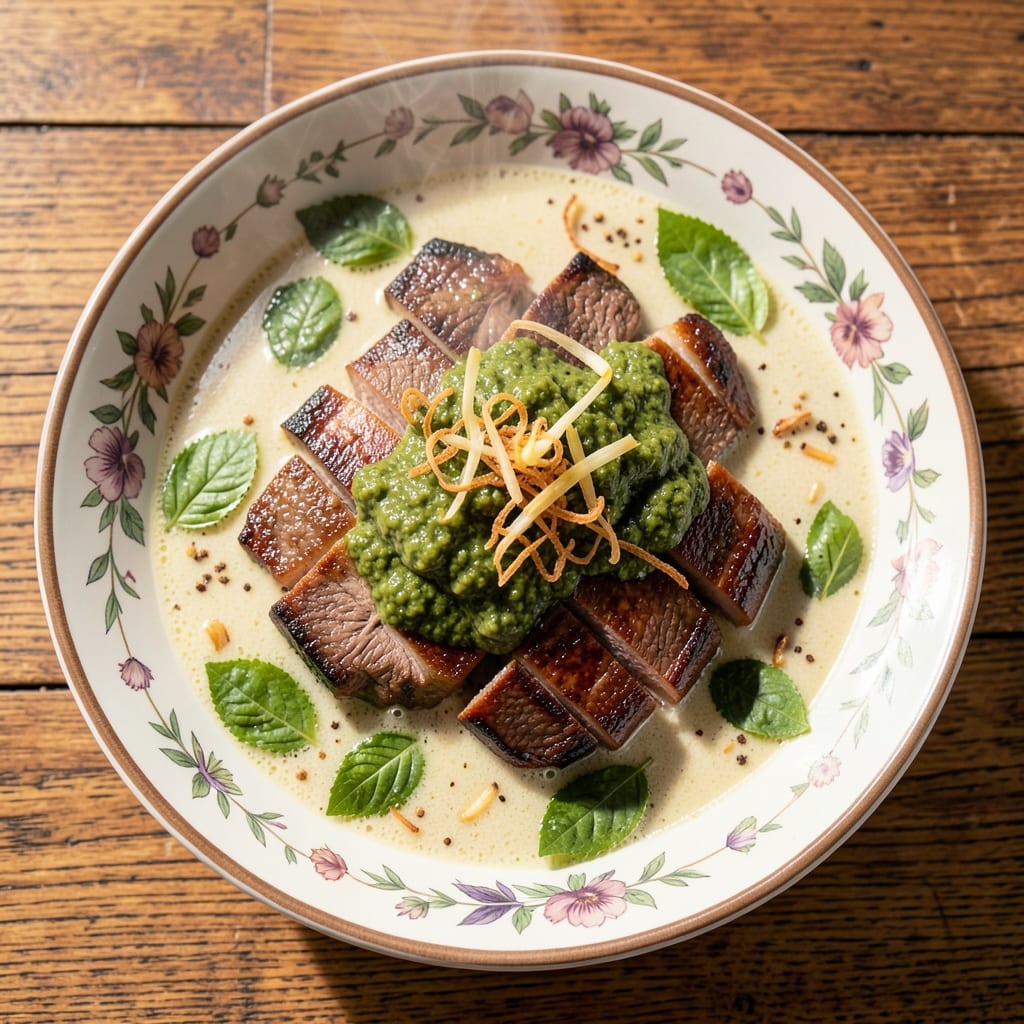
This authentic Thai green beef curry recipe transports you to Bangkok's bustling streets with every aromatic spoonful. The secret lies in balancing sweet, sour, spicy, and umami—traditional Thai basil, kaffir lime leaves, and green curry paste create a fragrant broth that tenderizes beef while coconut milk adds velvety richness. I've perfected this version after years of testing, ensuring the curry delivers restaurant-quality depth without shortcuts.
The magic happens through slow simmering, allowing flavors to meld into a harmonious blend. We'll start with a proper curry paste (store-bought works if homemade isn't an option), then build layers of complexity by adding coconut milk gradually and finishing with fresh herbs. The result is a curry where each ingredient shines—beef becomes fork-tender, basil adds freshness, and lime leaves contribute their signature citrus aroma.
What you'll achieve is a vibrant green curry with perfect balance: just enough heat from Thai chilies, sweetness from coconut milk, and acidity from lime juice. The beef emerges tender yet flavorful, swimming in a sauce that's neither too thin nor too thick. This is the kind of dish that transforms a simple weeknight into a Thai feast, served best with steamed jasmine rice and a crisp cucumber salad.
Authenticity comes through every step—from proper simmering times to fresh herbs added at the end. The recipe scales beautifully for crowds while maintaining its restaurant-quality character. Let's create this fragrant, flavorful masterpiece that captures the soul of Thai cuisine.
Ingredients for authentic thai green beef curry
Authentic Thai flavors start with these 15 ingredients—herbs, spices, and tender beef for a fragrant curry.
| Ingredient | Amount | Notes |
|---|---|---|
| Thai Green Curry Paste 🌶️ | 2 tbsp | Store-bought or homemade, vibrant green |
| Beef Chuck Roast 🥩 | 1 ½ lb | Cubed, 1-inch pieces for even cooking |
| Coconut Milk 🥥 | 1 can (13.5 oz) | Full-fat for creaminess, not light |
| Galangal Root 🌿 | 1 inch | Fresh, peeled, thinly sliced (or 1 tbsp grated) |
| Thai Basil Leaves 🌿 | ½ cup | Fresh, stems removed for garnish |
| Kaffir Lime Leaves 🍋 | 2 whole | Fresh, torn into strips |
| Green Thai Chilies 🌶️ | 2 whole | Adjust for heat preference |
| Fish Sauce 🍶 | 1 tbsp | Red Boat brand preferred |
| Palm Sugar 🍯 | 1 tbsp | Or substitute brown sugar |
| Lime Juice 🍋 | 2 tbsp | Freshly squeezed, seeds removed |
| Garlic Cloves 🧄 | 4 cloves | Minced, aromatic base |
| Shallots 🧅 | 3 whole | Peeled, thinly sliced |
| Vegetable Oil 🫒 | 1 tbsp | High smoke point for searing |
| Salt 🧂 | ½ tsp | Diamond Crystal preferred |
| Black Pepper 🌶️ | ¼ tsp | Freshly ground for heat |
The curry paste is non-negotiable—Maesri or Thai Kitchen brands deliver authentic flavor. Galangal root (that citrusy, ginger-like rhizome) is the soul of this dish; Asian markets carry it fresh, or use ginger in a pinch (though it won't be identical). Thai basil and kaffir lime leaves? Buy fresh—dried versions won't cut it. The beef should be chuck roast for tenderness; Costco or Whole Foods have great cuts. If you can't find galangal, substitute ginger at half the amount, but trust me, the real stuff transforms this into a restaurant-quality curry.
No fish sauce? Soy sauce plus a splash of vinegar works, but it won't be authentic. Palm sugar unavailable? Brown sugar is fine, though it lacks that caramel depth. The green chilies can be swapped for serrano peppers if you prefer milder heat. Coconut milk? Full-fat only—light versions make the curry watery. For the lime leaves, torn, not chopped, so they infuse flavor without becoming bitter. The shallots and garlic should be minced finely—this is where the aromatic base builds. Pro tip: Toast the curry paste in oil for 30 seconds to deepen its flavor before adding liquids.
This curry tastes even better the next day as flavors meld. Store leftovers in an airtight container in the fridge for 4-5 days, or freeze for 3 months. For serving, keep the lime leaves and basil separate until ready to eat—toss them in at the last minute so they stay vibrant. Make a double batch: the second serving is always better. The curry reheats beautifully—just add a splash of water if it thickens too much. Serve with jasmine rice and a cucumber salad to cut through the richness.
Why You'll Love This Recipe
- One-Pot Magic: I swear by this recipe because it’s all in one pot—no chopping mountains of veggies, no extra pans, just the beef, the paste, and coconut milk doing their thing. The galangal and basil infuse into that rich coconut base while you stir, and honestly? That’s my kind of cooking.
- Flavor Bomb: The moment the green curry paste hits the pan, my kitchen smells like a Bangkok street stall. The beef gets tender and absorbs the herby, slightly spicy, creamy sauce—crisp Thai basil at the end ties it all together. It’s the kind of dish where the first bite makes you go, “Wait, is this really mine?”
- Weeknight Crowd-Pleaser: Between us, this feeds six but costs less than takeout for two. The leftovers? Even better the next day—just reheat and add a splash of water. My roommates fight over it, my picky friends actually finish their bowls, and my budget stays intact. (Yes, even on a Tuesday night.)
- Store-Cupboard Staple: I keep green curry paste and coconut milk on hand just for this. The beef chuck roast is cheap but transforms into something luxurious, and galangal (if you can’t find it, ginger works) adds that signature zing. It’s my go-to when I’m too tired to plan but still want to feel like I’ve cooked something special.
Step-by-step instructions for authentic Thai green beef curry
Here's how to create a vibrant, authentic Thai green curry with rich layers of flavor.
Prepare the Aromatic Base
Heat the 1 tablespoon vegetable oil in a heavy-bottomed pot over medium heat. Add the 3 whole shallots and 4 cloves garlic cloves, cooking for 3-4 minutes until the shallots turn golden and the garlic becomes fragrant. This is your flavor foundation—don't rush this step.
Add the 1 inch galangal root (thinly sliced) and 2 whole green Thai chilies (sliced lengthwise), cooking for another 2 minutes until the galangal softens slightly and the chilies release their aroma. The galangal should smell citrusy and slightly peppery—this is your signal to move forward.
Bloom the Curry Paste
Stir in the 2 tablespoons Thai green curry paste and cook for 2-3 minutes over medium heat. The paste will release its vibrant green color and develop a deep, earthy aroma. This is where all the complex flavors begin to meld—watch carefully as the paste can darken quickly.
Add 1 tablespoon palm sugar and 1 tablespoon fish sauce, stirring for 1 minute until the sugar dissolves and the mixture becomes glossy. You're building the balance of sweet, salty, and umami that defines authentic Thai green curry. The paste should coat the back of a spoon with a smooth, velvety texture.
Sear the Beef
Add the 1.5 lb beef chuck roast (cubed into 1-inch pieces) to the pot, stirring to coat evenly with the paste. Increase heat to medium-high and let the beef sear for 3-4 minutes until it develops a deep golden crust. This step is crucial—it locks in flavor and creates that signature caramelized texture.
Pour in 1 can (13.5 oz) coconut milk, stirring gently to combine. The curry will bubble vigorously—reduce heat to medium-low and let it simmer for 15 minutes uncovered. You want the coconut milk to reduce slightly and thicken, creating a luxurious, velvety sauce that clings to every bite of beef.
Simmer to Perfection
Add 2 whole kaffir lime leaves (torn into strips) and 0.5 cup Thai basil leaves, stirring to distribute evenly. Cover the pot and simmer for 45-50 minutes over low heat, until the beef is fork-tender and easily pulls apart. The sauce should coat the beef beautifully, with a glossy sheen that indicates proper reduction.
Season with 0.5 teaspoon salt and 0.25 teaspoon black pepper, then stir in 2 tablespoons lime juice. Taste and adjust—authentic Thai green curry balances sweet, sour, salty, and spicy. The lime juice should brighten the dish, cutting through the richness of the coconut milk and beef.
Finish and Serve
Remove the kaffir lime leaves and adjust the consistency if needed—add 1-2 tablespoons water if the curry is too thick. The final texture should be rich yet fluid, with a velvety mouthfeel that coats the tongue. Garnish with additional Thai basil leaves and serve immediately over jasmine rice for the full experience.
This curry delivers the perfect harmony of herbal heat, coconut cream, and tender beef—every bite should be a symphony of authentic Thai flavors. The aroma alone will transport you to the bustling streets of Bangkok, where street food vendors craft this dish with care.
Pro Tips For Making Authentic Thai Green Beef Curry
- Bloom the Paste First: I learned this the hard way—skip blooming the green curry paste in hot oil, and you’ll end up with a muddy, one-dimensional flavor. Fry it in 1-2 tablespoons of oil over medium heat for 3-4 minutes until it fragrant and slightly darkened (not burnt), then add the beef. This step unlocks the paste’s full depth—like waking up a sleeping giant.
- Cut Beef Against the Grain: Thick chuck roast slices? You’re fighting the texture battle before it starts. Slice ¼-inch thick against the grain, then cut each slice diagonally into strips. This ensures tender bites that melt in your mouth—no one wants to chew leather, especially in a rich curry where the sauce should do the work.
- Stir the Coconut Milk: After adding the coconut milk, give it a gentle but firm stir with a wooden spoon to break up the cream layer that rises to the top. If you skip this, you’ll end up with a curry that’s creamy in spots and watery in others—like a lazy chef’s compromise. Stir once, then let it simmer; the milk will naturally emulsify.
- Toast the Galangal: Peel the galangal root first, then slice it lengthwise into thin strips (no need to dice—it’s tough, not delicate). Toast the slices in the same pot where you bloomed the paste for 30 seconds before adding the beef. This caramelizes the natural oils and mutes the raw, medicinal bite—trust me, your taste buds will notice the difference.
Essential equipment for perfect results
Heavy-Bottomed Pot
Invest in a 5-6 quart heavy-bottomed pot with a tight-fitting lid—this is non-negotiable for even heat distribution. I use my Le Creuset Dutch oven (5.5 qt) because it maintains consistent temperatures during the 45-50 minute simmer and prevents scorching when building the aromatic base. A lighter pot will cause hot spots, leading to unevenly cooked beef or burnt curry paste. 🔥
High-Quality Wok or Skillet
For the initial searing of beef and aromatics, a carbon steel wok or cast iron skillet (like my Lodge 10.25-inch) works best. These materials conduct heat quickly and create that perfect caramelized crust on the beef. If you don't have either, a stainless steel pan with high sides will do—just avoid nonstick, as it can't handle the high heat needed for proper searing.
Curry Paste Storage
Store-bought curry paste should be kept in the refrigerator for up to 3 months or frozen for 6 months in an airtight container. I like to portion Maesri brand paste into small jars (about 2 tbsp per serving) so I can grab exactly what I need without opening the whole jar. Freshly made paste? Use within 1 week—it loses potency quickly. The vibrant green color is your quality indicator.
Kaffir Lime Leaf Tool
Tearing kaffir lime leaves can be tricky—their tough stems make them hard to cut with regular scissors. I use kitchen shears to snip them into ¼-inch strips before adding to the curry. For extra convenience, keep a small glass jar in your fridge filled with fresh leaves—just tear what you need as you cook. Never skip this step; the leaves contribute citrusy aroma that defines authentic Thai green curry.
Fish Sauce Dispenser
A small squeeze bottle or shot glass makes measuring 1 tbsp fish sauce precise and mess-free. I keep Red Boat brand in my pantry—it's the gold standard for authentic umami. Avoid cheap brands that can taste overly salty or fishy. For the same reason, never substitute with soy sauce—it lacks the complex fermented depth that fish sauce provides. 🍶
Tongs for Garnishing
Use long-handled tongs to transfer the curry to serving bowls while keeping the Thai basil leaves separate until the last minute. I like stainless steel tongs (like my OXO Good Grips) because they're heat-resistant and easy to clean. This keeps your herbs vibrant and prevents them from wilting into the sauce prematurely. Add them just before serving for that restaurant-quality freshness.
Nutrition facts
Frequently asked questions
Can I substitute beef with chicken or pork in this curry?
For chicken, use 1.5 lb boneless thighs or breasts (cut into 1-inch cubes) and reduce simmering time to 25-30 minutes—chicken cooks faster than beef. Pork works too, but choose lean cuts like shoulder and simmer for 40-45 minutes for tenderness. The key is adjusting cooking time to avoid dry meat while maintaining sauce consistency.
Why does my curry taste too salty or fishy?
This usually happens from overusing fish sauce or low-quality brands. Start with 1 tbsp Red Boat fish sauce and taste as you go—authentic Thai curries balance sweet, sour, salty, and spicy. If it's too strong, add 1 tbsp palm sugar or lime juice to cut the saltiness. Never skip the lime juice at the end—it brightens flavors and balances everything.
How do I adjust the spice level for kids or sensitive eaters?
Remove the seeds from green Thai chilies before slicing to reduce heat, or use 1 chili instead of 2. For milder heat, swap them for serrano peppers. Always taste the curry paste before adding beef—if it's too spicy, mix in 1 tsp brown sugar to balance. The coconut milk naturally mellows the heat, but fresh herbs add brightness without spice.
Can I make this curry in an Instant Pot or slow cooker?
Yes! For the Instant Pot, sauté aromatics and beef first, then add coconut milk and cook on High Pressure for 20 minutes. Release pressure naturally, then finish with herbs and lime. In a slow cooker, combine all ingredients (except fresh herbs) and cook on Low for 6-7 hours or High for 3-4 hours. The texture will be slightly thicker—add 2-3 tbsp water if needed before serving.
What's the best way to reheat leftovers?
Gently reheat on the stove over low heat with 1-2 tbsp water or coconut milk to prevent drying. Avoid microwaving—it makes the sauce watery. For best results, warm just until steaming (3-4 minutes), then garnish with fresh Thai basil and lime leaves. Leftovers actually improve as flavors meld, but never reheat more than once for food safety.