
Soups & Stews
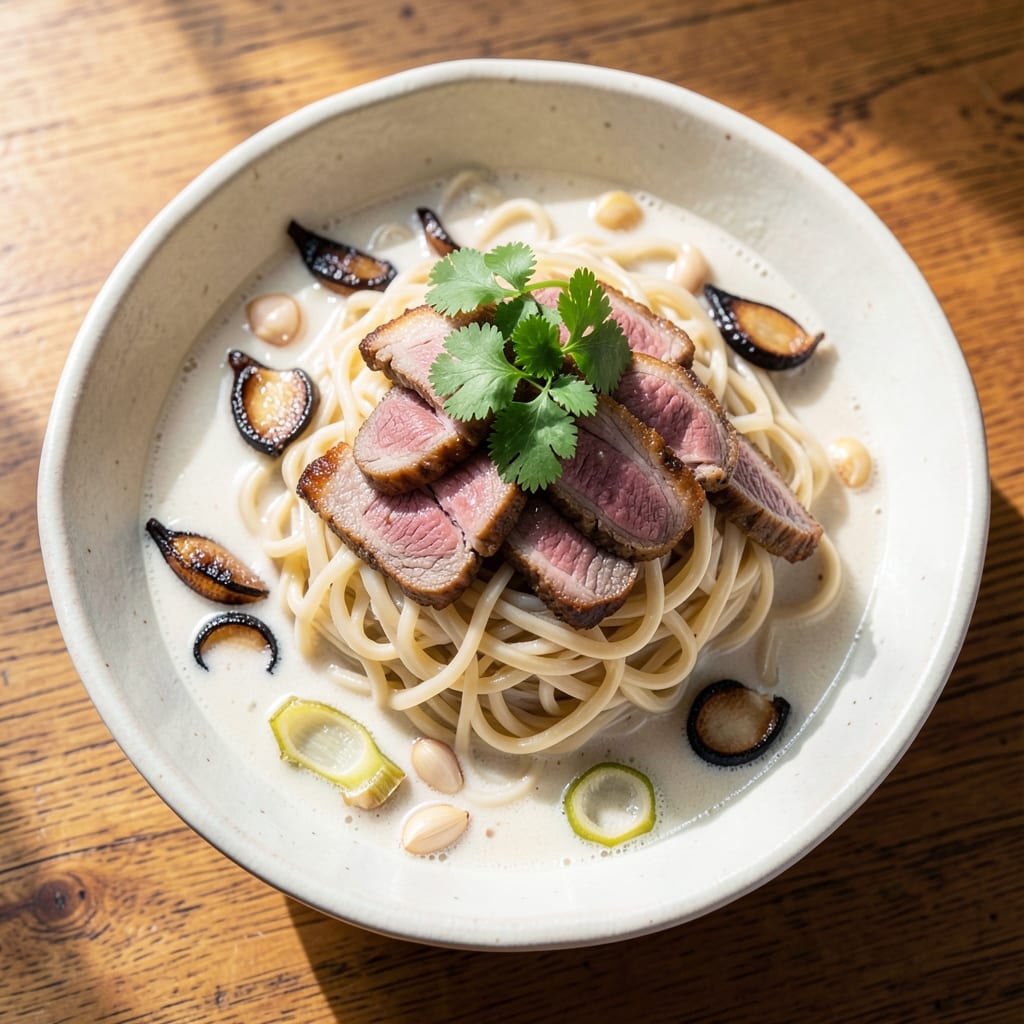
This authentic Thai beef noodle soup recipe delivers the fragrant coconut broth and wok-hei crispy beef that define street-food perfection. The secret lies in balancing fresh herbs—lemongrass, galangal, and kaffir lime leaves—with just the right amount of heat from Thai chilies. After years of perfecting this dish, I’ve streamlined the process without sacrificing authenticity, so you can recreate that first bite of restaurant-quality noodle soup at home.
The broth starts with a fragrant paste of shallots, garlic, and ginger, simmered until the aromatics dissolve into the coconut milk base. Thinly sliced beef tenderizes quickly in the hot broth, while rice noodles soak up the rich, umami-packed liquid. The crispy edges come from a quick sear in a wok, adding that signature wok-hei flavor that makes this dish irresistible.
What you’ll end up with is a bowl of soup that’s deeply aromatic, perfectly balanced, and packed with texture—tender beef, chewy noodles, and a broth that’s creamy yet light. The combination of sweet, sour, spicy, and savory flavors in every spoonful is what makes this recipe so special. It’s the kind of dish that feels like a warm hug, especially on a chilly evening.
Serve it with fresh herbs on the side and extra chili flakes for those who crave more heat. This recipe is designed to be both authentic and approachable, so you can enjoy the flavors of Thailand without the complexity. Let’s get cooking!
Ingredients for authentic thai beef noodle soup
Fresh herbs, tender beef, and fragrant coconut milk—this is your shortcut to restaurant-style Thai noodle soup.
| Ingredient | Amount | Notes |
|---|---|---|
| Thinly Sliced Beef Tenderloin 🥩 | 1 lb | Marinated for tenderness |
| Rice Noodles 🍜 | 8 oz | Flat, medium-width type |
| Coconut Milk 🥥 | 1 can | Full-fat, 13.5 oz can |
| Shallots 🧅 | 4 whole | Minced for aromatic base |
| Garlic Cloves 🧄 | 6 cloves | Peeled and smashed |
| Fresh Galangal 🌿 | 3 oz | Peeled and sliced thin |
| Kaffir Lime Leaves 🍋 | 4 whole | Torn into strips |
| Thai Bird's Eye Chilies 🌶️ | 3 whole | Adjust to taste |
| Fresh Lemongrass 🌿 | 1 stalk | Pounded and cut into 2-inch pieces |
| Fresh Ginger 🧅 | 2 tbsp | Finely grated |
| Fish Sauce 💧 | 2 tbsp | Red Boat brand preferred |
| Palm Sugar 🍯 | 2 tbsp | Or substitute brown sugar |
| Olive Oil 🫒 | 2 tbsp | For searing beef |
| Fresh Cilantro 🌿 | ¼ cup | Chopped for garnish |
| Lime Wedges 🍋 | 2 whole | For serving |
The galangal and kaffir lime leaves are non-negotiable for that authentic Thai aroma. Asian markets are your best bet for fresh galangal—look for firm, pale rhizomes with no dark spots. If you can't find galangal, ginger at double the amount works in a pinch, but it won't be the same. Lemongrass should be vibrant green and firm to the touch. Trader Joe's carries pre-pounded lemongrass, which saves time. For the beef, thinly sliced tenderloin stays tender while developing crispy edges when seared. If you can't find tenderloin, sirloin works too—just slice it against the grain.
No fish sauce? Soy sauce plus a splash of Worcestershire mimics the umami, though it won't be identical. Palm sugar unavailable? Brown sugar or coconut sugar are perfect swaps. The coconut milk should be full-fat for that creamy texture—no light versions here. Thai chilies are hot stuff; if you're sensitive to heat, wear gloves when handling them. Fresh herbs like cilantro and Thai basil (if you can find it) should be added at the very end to keep their bright flavors intact. The lime wedges? Mexican limes are ideal, but regular limes work too.
This soup tastes even better the next day as the flavors meld. Store leftovers in the fridge for up to 3 days, or freeze for 2 months—just reheat gently with a splash of water to restore creaminess. For meal prep, cook the broth separately and store it in the fridge while keeping the noodles and beef raw. Assemble bowls fresh to avoid soggy noodles. The broth freezes beautifully, so make extra for future quick lunches.
Why You'll Love This Recipe
- No Fuss Prep: I swear by the 10-minute prep rule here—just slice the beef paper-thin (or buy it pre-sliced), soak the noodles while you simmer, and boom. That’s it. The hardest part’s the garlic mincing, and honestly? I use a rock to crush those cloves now.
- Creamy Heat Balance: Between the coconut milk’s velvety richness and the garlic-shallot punch, every spoonful feels like a hug. The beef tenderizes in seconds, staying juicy with just a whisper of char—no tough, chewy bites here.
- Leftover Goldmine: This soup actually improves the next day. The flavors meld deeper, and I stretch it into lunch by adding a fried egg or extra herbs. My freezer’s full of portions because it reheats like a dream—no soggy noodles.
- Budget-Friendly Luxury: Thin beef tenderloin stretches far, and coconut milk makes it feel fancy without breaking the bank. I buy it in cans, and the rest? Pantry staples. Dinner for two or four? Same ingredients, just double the portions.
Step-by-step instructions for authentic Thai beef noodle soup
Here's how to build this fragrant, balanced bowl with perfect textures and flavors.
Prepare the Aromatic Base
Heat the 2 tablespoons olive oil in a large pot over medium heat. Add the 4 whole minced shallots and cook for 3 minutes until soft and translucent. This is your flavor foundation—don't rush this step or the aromatics won't develop properly.
Add the 6 cloves smashed garlic, 3 oz sliced galangal, and 2 tablespoons finely grated ginger. Stir constantly for 2 minutes until fragrant—you should smell the garlic mellowing and the galangal's citrusy bite emerging. This combination creates the signature Thai balance of sweet, sour, and spicy.
Toss in the 3 whole Thai Bird's Eye Chilies (seeds removed if you prefer less heat) and 4 torn kaffir lime leaves. Cook for 1 minute until the chilies darken slightly. The lime leaves will infuse their floral aroma into the oil, giving that authentic Thai brightness.
Build the Coconut Broth
Pour in the 1 can coconut milk and stir well to combine with the aromatics. Add 2 tablespoons palm sugar and 2 tablespoons fish sauce, then bring to a gentle simmer over medium-low heat. Let it cook uncovered for 10 minutes, stirring occasionally, until the mixture reduces slightly and thickens—you want it to coat the back of a spoon.
Here's the thing—this isn't just a coconut milk soup. The reduction process concentrates the flavors and creates that signature velvety texture. If you taste it now, you should detect sweetness from the palm sugar, saltiness from the fish sauce, and a subtle floral note from the lime leaves.
Add the 1 stalk lemongrass cut into 2-inch pieces and simmer for another 5 minutes. The lemongrass will infuse its citrusy aroma while keeping the broth's delicate balance. Don't overcook it or it'll become bitter.
Cook the Crispy Beef
While the broth simmers, heat a separate wok or skillet over high heat until smoking hot. Add the 1 lb thinly sliced beef tenderloin in batches (don't overcrowd) and sear for 30-45 seconds per side until edges are deep golden brown and crispy. This wok-hei technique is crucial—it creates that signature smoky aroma and tender yet crispy texture.
Transfer the seared beef to a plate and set aside. The beef should be cooked through but still tender—it'll finish cooking in the broth. If any of the beef releases its juices into the wok, scrape them up with a spatula and add them to the broth.
Real talk: the beef should be almost translucent in the center when you slice it—this means it's tender but still holds its shape. If it's overcooked, it'll turn tough. The high heat sear seals in juices while keeping the interior perfectly tender.
Assemble the Soup
Return the seared beef to the pot with its juices and stir gently to combine. Add the 8 oz rice noodles and 1 cup hot water (from the pot's heat source). Let it cook for 3-4 minutes until the noodles are tender but still slightly chewy—they should have a pleasant bite when you test one.
Taste and adjust seasoning: add more fish sauce if it needs saltiness, or more palm sugar if it needs sweetness. The broth should be balanced—sweet, salty, sour, and spicy all at once. This is where the magic happens.
Divide the soup among bowls and garnish each serving with 0.25 cup chopped cilantro and a lime wedge. The cilantro adds freshness while the lime brightens every bite. Serve immediately while the noodles are hot and the beef is crispy.
Serve with Confidence
Each bowl should have tender rice noodles, perfectly seared beef with crispy edges, and a fragrant coconut broth that coats your spoon. The aromatics should be present but not overpowering—just enough to transport you to a street-side Thai noodle stall.
Don't skip the lime wedge. Squeeze it over your soup just before eating—this final acid note cuts through the richness and balances all the flavors. The contrast between the warm soup and bright lime is what makes this dish truly authentic.
I know it seems like a lot of steps, but each one builds on the last. The aromatic base carries through the entire dish, the coconut milk adds richness without heaviness, and the crispy beef gives that satisfying texture contrast. Trust the process—this is how Thai street food chefs create their legendary bowls.
Pro Tips For Making Authentic Thai Beef Noodle Soup
- STIR-FRY THE BEEF FIRST: I learned this the hard way—skipping the quick stir-fry in hot oil makes the beef turn to mush when the coconut milk hits. Sear the slices in a screaming-hot wok or pan with a splash of coconut milk before adding the rest. The high heat locks in tenderness, and you’ll get that smoky aroma that defines the dish.
- USE FULL-FAT COCONUT MILK: Light coconut milk? Save it for smoothies. The creaminess in full-fat (400ml cans) actually carries the flavors better and prevents a watery broth. If you’re worried about richness, balance it with a splash of beef or chicken stock—just don’t cut corners here.
- SOAK NOODLES JUST UNTIL PLIABLE: Over-soaked rice noodles turn to glue, and under-soaked ones stay chewy. Test them by bending a strand—it should snap with a slight bend, not flop like wet spaghetti. Drain and rinse with cold water right before serving to stop cooking.
- BUILD FLAVOR IN LAYERS: Don’t dump all the aromatics at once. Sauté shallots and garlic until fragrant (about 30 seconds), then add lemongrass, galangal, and kaffir lime leaves—let them bloom for 30 seconds before pouring in the coconut milk. This stops the broth from tasting flat or one-dimensional.
Serving suggestions for leftovers
Garnish Like a Pro
Fresh herbs elevate this soup from good to unforgettable. I always finish each bowl with ¼ cup chopped cilantro—its bright, citrusy notes contrast beautifully with the rich coconut broth. For extra authenticity, add Thai basil leaves (if available) and a sprinkle of crushed dried shrimp for umami depth. 🌿
Crispy Toppings
Add texture with crispy fried shallots or toasted coconut flakes—both available at Asian markets. These toppings provide a satisfying crunch that cuts through the creamy broth. For a smoky touch, try crispy fried garlic—just fry 2 extra garlic cloves in oil until golden and sprinkle on top.
Spice Control
Serve Thai chilies on the side in a small bowl with tongs so everyone can adjust heat to their preference. I keep 2-3 whole Thai chilies chopped and ready for those who crave extra spice. For milder versions, offer chili oil or Sriracha as alternatives. 🌶️
Bread Pairings
Thai beef noodle soup pairs perfectly with steamed rice or Thai-style garlic bread. For the bread, toast a baguette with butter, minced garlic, and a sprinkle of parsley. The garlic bread soaks up any remaining broth beautifully, making it a perfect companion.
Drink Recommendations
Balance the richness with a Thai iced tea or coconut water to refresh your palate. For something stronger, a light lager like Singha or San Miguel complements the dish without overpowering it. Avoid heavy beers—they'll clash with the delicate coconut flavors.
Leftovers Strategy
Store leftovers in airtight containers for up to 3 days in the fridge. When reheating, add 1-2 tablespoons water to prevent the broth from becoming too thick. For meal prep, cook the broth separately and store it while keeping noodles and beef raw—assemble fresh to maintain perfect texture. ❄️
Nutrition facts
Frequently asked questions
Can I substitute galangal if I can't find it?
Yes, but expect some flavor differences. Use double the amount of ginger (about 4 tablespoons) as a substitute—it won't be identical, but it'll add warmth. For a closer match, blend 1 tablespoon ginger + 1 tablespoon turmeric to mimic galangal's citrusy, peppery notes. The dish will still taste delicious, just slightly different.
How do I make the beef extra crispy like street food?
Slice the beef paper-thin against the grain and marinate in 1 tablespoon fish sauce + 1 tablespoon lime juice for 20 minutes before cooking. Sear in a smoking-hot wok or cast-iron skillet with just ½ tablespoon oil—don't overcrowd! Cook in 30-second batches until edges are deep brown and slightly charred. The high heat creates that signature wok-hei crispiness.
Can I make this soup without coconut milk?
For a lighter version, replace the coconut milk with 2 cups beef or chicken broth and add 1 tablespoon soy sauce + 1 teaspoon sugar to mimic the umami-sweet balance. For a creamy alternative, use ½ cup Greek yogurt + 1 cup broth, but adjust seasoning—it'll be tangier. The broth will be thinner but still packed with flavor.
Why does my broth taste too bitter?
Overcooking the aromatics (especially lemongrass or galangal) or reducing the broth too long causes bitterness. Keep the broth at a gentle simmer and remove lemongrass stalks after 5 minutes—they turn bitter if left too long. If it's already bitter, balance it with more palm sugar or a splash of lime juice. A pinch of salt can also help mask bitterness.
Can I use dried herbs instead of fresh?
Fresh herbs are ideal for authentic flavor, but you can use dried in a pinch. For kaffir lime leaves, use ½ teaspoon dried lime zest (if available). For galangal, ½ teaspoon ground ginger + ¼ teaspoon turmeric works. Dried herbs lack the bright, floral notes, so add them twice the amount and adjust seasoning—you may need extra fish sauce for depth.