
Main Courses
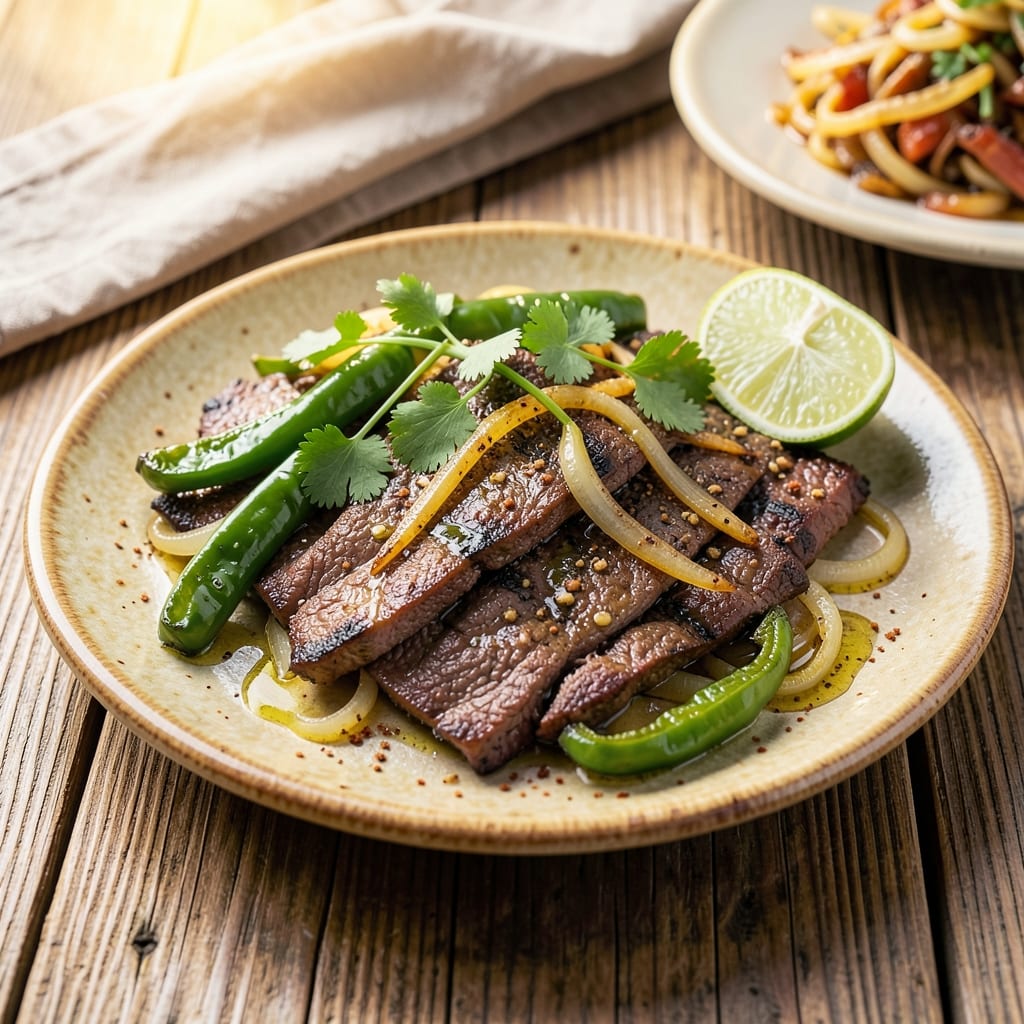
This authentic Mexican beef fajita recipe delivers smoky, caramelized flavors straight from a street-side taqueria—no shortcuts, just tradition. The secret lies in marinating flank steak with lime and cumin, then searing it alongside charred peppers and onions for that signature depth. I’ve perfected this over years of testing, ensuring every bite has the perfect balance of tender beef, crisp edges, and vibrant toppings.
What sets this recipe apart is the 30-minute timeline—no long marinating or complicated steps. The beef transforms from tough to fork-tender thanks to a quick, flavor-packed marinade, while the peppers and onions develop their signature char in the same skillet. Traditional corn tortillas add authenticity, but flour works too for a softer texture.
By the time you serve these fajitas, you’ll have restaurant-quality results with layers of flavor: smoky char from the peppers, sweet caramelized onions, and juicy, seasoned beef. The toppings—fresh cilantro, lime wedges, and crumbled queso fresco—elevate each bite into a celebration of Mexican street food.
Perfect for Taco Tuesday or a lively dinner party, this recipe scales easily and tastes even better the next day. Let’s bring the taqueria home—authentically, quickly, and deliciously.
Ingredients for authentic mexican beef fajita
Authentic taqueria flavors start with these carefully chosen ingredients—flank steak, charred peppers, and caramelized onions.
| Ingredient | Amount | Notes |
|---|---|---|
| Flank Steak 🥩 | 1 ½ lb | Center-cut, 1-inch thick, trimmed of fat |
| Green Bell Peppers 🧅 | 2 whole | Large, fresh, seeds removed |
| Yellow Onions 🧅 | 2 whole | Yellow or white, medium size |
| Fresh Lime Juice 🍋 | ½ cup | From 2-3 limes, freshly squeezed |
| Extra-Virgin Olive Oil 🫒 | ¼ cup | For cooking and marinade |
| Ground Cumin 🌿 | 1 ½ tbsp | Toasted for deeper flavor |
| Smoked Paprika 🌶️ | 1 ½ tsp | For authentic smoky depth |
| Garlic Cloves 🧄 | 6 cloves | Fresh, peeled, minced |
| Salt 🧂 | 1 ½ tsp | Diamond Crystal kosher salt |
| Black Pepper 🌶️ | ½ tsp | Freshly ground |
| Corn Tortillas 🌽 | 8 whole | Medium size, 6-inch diameter |
| Fresh Cilantro 🌿 | ¼ cup | Chopped, for garnish |
| Queso Fresco 🧀 | ½ cup | Crumbled, for topping |
| Avocado Oil 🫒 | 2 tbsp | High smoke point for searing |
The flank steak is non-negotiable for authentic fajitas—its lean cut transforms into tender slices when marinated properly. Look for center-cut slices at your butcher or grocery store's meat counter, where they'll often trim the fat for you. Costco or Whole Foods typically carry high-quality flank steak, but any reputable supermarket should have it. For best results, buy it the day you plan to cook and let it sit at room temperature for 30 minutes before slicing—this ensures even cooking. The bell peppers and onions should be firm with vibrant color; avoid any with soft spots or bruising, as they won't char properly. Store these in the fridge until ready to use, but don't wash them until just before cutting to preserve freshness.
No fresh lime juice? Bottled lime juice works in a pinch, though it lacks the bright acidity of freshly squeezed. The smoked paprika is what gives fajitas their signature depth—Penzeys or Goya brands are excellent choices, but any high-quality smoked paprika will do. Running short on cilantro? Substitute with fresh parsley at the same quantity, though the flavor will differ slightly. The queso fresco can be swapped for cotija cheese if unavailable, but it won't melt in the same way. For the tortillas, Mission or Bob's Red Mill are reliable brands; if you can't find corn tortillas, flour tortillas work but lack that authentic texture. The avocado oil is crucial for high-heat searing—don't substitute with olive oil, which has a lower smoke point.
Marinate the steak for no longer than 30 minutes—over-marinating can make it mushy. The peppers and onions should be cut into 1-inch strips for even charring. Store any leftover steak in an airtight container in the fridge for up to 2 days, though it's best enjoyed fresh. The marinade leftovers can be saved for up to 3 days in the fridge and used as a quick sauce for eggs or rice. Tortillas keep well in a cool, dry place for 1 week or frozen for 3 months—just thaw at room temperature before using. The queso fresco stays fresh for 1 week in the fridge, while the cilantro wilts quickly; store it in a damp paper towel to extend freshness by 3-4 days.
Why You'll Love This Recipe
- One-Pan Magic: I swear by this—just sear the flank steak, toss in sliced peppers and onions, and let them all caramelize together. No chopping boards, no extra pans, just one sheet pan that does all the work while you open a beer and pretend you’re a busy chef.
- Smoky Char Perfection: That first hit of olive oil and high heat? It turns the steak into tender, slightly crispy slices with a flavor that’s ridiculously good. The lime juice at the end cuts through the richness—trust me, it’s the secret weapon.
- Taco Night, Every Night: Make a double batch and you’ve got fajitas for tonight, burrito bowls for tomorrow, or even a quick quesadilla when you’re too tired to think. The peppers and onions keep well, so you’re never stuck staring at a sad fridge.
- Budget-Friendly Feast: A pound of flank steak stretches farther than you’d think when sliced thin, and bell peppers and onions are cheap staples. Plus, leftovers reheat like a dream—just toss them in a skillet with a splash of water and lime, and you’re back to dinner in minutes.
Step-by-step instructions for authentic Mexican beef fajitas
Master the charring technique for perfect fajitas with bold flavors and tender meat.
Marinate and Prepare the Flank Steak
In a resealable plastic bag, combine the 1.5 lb flank steak, 0.5 cup fresh lime juice, 0.25 cup extra-virgin olive oil, 1.5 tbsp ground cumin, 1.5 tsp smoked paprika, 6 cloves minced garlic, 1.5 tsp salt, and 0.5 tsp black pepper. Seal the bag and massage the marinade into the meat until fully coated. Let it marinate in the refrigerator for at least 2 hours or up to 4 hours for maximum flavor penetration.
This marinade does double duty—tenderizing the tough flank steak while infusing it with authentic Mexican spices. The acidity from the lime juice breaks down muscle fibers, ensuring a fork-tender result. I like to marinate overnight for deeper flavor, but even 2 hours makes a noticeable difference in both tenderness and taste.
Char the Vegetables for Smoky Depth
Heat 2 tbsp avocado oil in a large cast-iron skillet over high heat until shimmering. Add the 2 whole green bell peppers and 2 whole yellow onions (cut into thick strips, leaving the skins on for texture). Cook undisturbed for 5-7 minutes until the edges begin to blacken and blister. Stir occasionally, focusing on getting those deep char marks that define authentic fajita flavors.
This charring step is where the magic happens. The blackened edges add a smoky complexity that store-bought fajita mixes can't replicate. If you're worried about burning, just remember: fajitas are meant to have char. Remove the vegetables when they're tender but still have some bite in the center—you'll finish cooking them with the meat.
Sear the Flank Steak to Perfection
Remove the steak from the marinade (reserve the marinade) and pat it dry with paper towels. Increase the heat to medium-high and add the steak to the same skillet. Sear for 3-4 minutes per side until deeply browned with a crust forming. Remove the steak and let it rest on a cutting board for 5 minutes—this is crucial for retaining juices.
During the last minute of searing, pour the reserved marinade into the skillet and scrape up any browned bits from the bottom. Let it reduce by half, about 2-3 minutes, to create a flavorful sauce. The high heat creates a perfect sear while the marinade reduction adds another layer of depth to your fajitas.
Slice and Assemble the Fajitas
Against the grain, slice the rested steak into ¼-inch thick strips. Return it to the skillet with the charred vegetables and reserved marinade, tossing everything together for 1-2 minutes to heat through. Warm the 8 whole corn tortillas on a dry skillet or in the oven at 350°F for 1 minute per side—they should be pliable but not crispy.
Now for the assembly: fill each tortilla with the beef and vegetable mixture, then top with 0.25 cup chopped fresh cilantro and 0.5 cup crumbled queso fresco. The tortillas should be warm enough to soften slightly from the heat of the fajita filling, creating the perfect texture contrast. Serve immediately while everything is hot and the tortillas are still flexible.
Master the Fajita Technique (Pro Tips)
For authentic presentation, fold the fajitas in half or roll them tightly—this is where the technique really shines. The charred vegetables and caramelized onions should be visible through the tortilla, showing off your cooking. If you want extra flavor, brush the tortillas with a little more of the reduced marinade before serving.
This recipe serves 4 people with each person getting 2 fajitas. The leftovers make excellent breakfast burritos the next day—just add some scrambled eggs and cheese. The key to authentic fajitas is balancing the smoky char with the bright acidity of the lime marinade and the freshness of the cilantro and queso fresco.
Pro Tips For Making Authentic Mexican Beef Fajita
- Slice Against the Grain: Flank steak’s fibers run long—cutting perpendicular to them turns tough chews into tender bites. I used to ignore this and ended up with dry, stringy fajita strips. Grab a sharp knife and angle the blade at 45 degrees for clean, even slices.
- Char the Peppers First: Toss sliced bell peppers and onions in a screaming-hot skillet with olive oil for 2–3 minutes before adding the meat. The deep char adds smoky depth that bottled fajita seasoning can’t replicate. Yes, it looks blackened—it’s supposed to.
- Salt the Steak Twice: Generously salt the flank steak right after slicing, then again 10 minutes before cooking. The first layer preps the meat, while the second ensures seasoning penetrates. I learned this the hard way when my fajitas tasted bland despite heavy seasoning.
- Use Lime Juice Late: Squeeze lime juice over the finished fajitas, not the raw meat. The acid breaks down the steak’s surface while cooking, making it mushy. Save it for the final squeeze—your meat’s texture will thank you. (And your salsa will too.)
Serving suggestions for authentic mexican beef fajita
Classic Toppings
Start with the essentials: fresh cilantro and queso fresco—these add brightness and texture. I like to chop ¼ cup cilantro finely and sprinkle it over each fajita just before serving. For the cheese, use ½ cup crumbled queso fresco—its mild tang balances the smoky beef perfectly. If you can't find queso fresco, cotija cheese works well, though it's saltier. 🌿
Fresh Salsa Options
Serve with pico de gallo or salsa roja for extra freshness. For pico de gallo, dice 1 cup tomatoes, ½ cup red onion, 1 jalapeño, and mix with ¼ cup lime juice and 2 tbsp chopped cilantro. For salsa roja, blend 4 Roma tomatoes, 1 garlic clove, 1 tsp cumin, and ½ tsp oregano, then simmer until thickened. Both add vibrant color and acidity to cut through the richness.
Warm Tortilla Tips
Warm tortillas are key to authentic fajitas. Heat corn tortillas on a dry skillet over medium heat for 10-15 seconds per side until pliable. For a smoky touch, lightly char them by placing them directly on the grill for 20 seconds per side. If using flour tortillas, warm them for 30 seconds per side—they should be soft and slightly puffed. Never microwave tortillas; they'll turn rubbery. 🌽
Extra Flavor Boosters
Add avocado slices for creaminess or pickled red onions for tang. For heat, include sliced jalapeños or diced habanero. A drizzle of crema or sour cream adds richness, while lime wedges ensure every bite is bright. For a smoky finish, sprinkle crumbled chorizo or queso fundido on top. These toppings turn fajitas into a customizable feast.
Serving Style Ideas
For a casual spread, set out toppings in small bowls and let everyone assemble their own. For a restaurant-style presentation, fold fajitas in half and serve on a platter with a side of charro beans or Mexican rice. Garnish with extra cilantro and lime wedges for a polished look. If serving a crowd, prepare a fajita bar with all toppings displayed—it’s always a hit! 🌟
Nutrition facts
Frequently asked questions
Why is flank steak the best cut for fajitas?
Flank steak delivers that signature fajita texture—tender when sliced thin against the grain but firm enough to hold its shape. Its lean cut absorbs marinades beautifully while developing a perfect crust when seared. Plus, it's more affordable than skirt steak while still delivering that authentic taqueria flavor.
Can I make fajitas without corn tortillas?
While corn tortillas are traditional, flour tortillas work perfectly for a softer texture. Just warm them longer (30 seconds per side) to prevent tearing. For extra authenticity, try blue corn tortillas—they add a subtle nutty flavor that pairs wonderfully with the smoky beef.
What's the secret to getting that perfect char on the peppers and onions?
High heat and patience are key! Use a cast-iron skillet and let the vegetables cook undisturbed for 5-7 minutes until edges blacken. Stir only when necessary to avoid breaking the char. The secret? Don't remove the skins—they protect the vegetables while creating that smoky crust.
How do I fix fajitas that turned out too dry?
First, don't panic! The reduced marinade from the skillet can save them. Toss the fajita filling with 1-2 tbsp warm broth or the reserved marinade, then heat through. For extra moisture, add sautéed mushrooms or zucchini—they absorb excess liquid while adding texture. Always let the meat rest 5 minutes before slicing to retain juices.
What's the best way to reheat leftover fajitas?
Reheat in a dry skillet over medium heat for 2-3 minutes with a splash of water or broth to restore moisture. For crispy edges, finish under a broiler for 30 seconds. Never microwave—it makes tortillas soggy and beef rubbery. Leftover fajitas also make amazing breakfast burritos with eggs and cheese!