
Main Courses
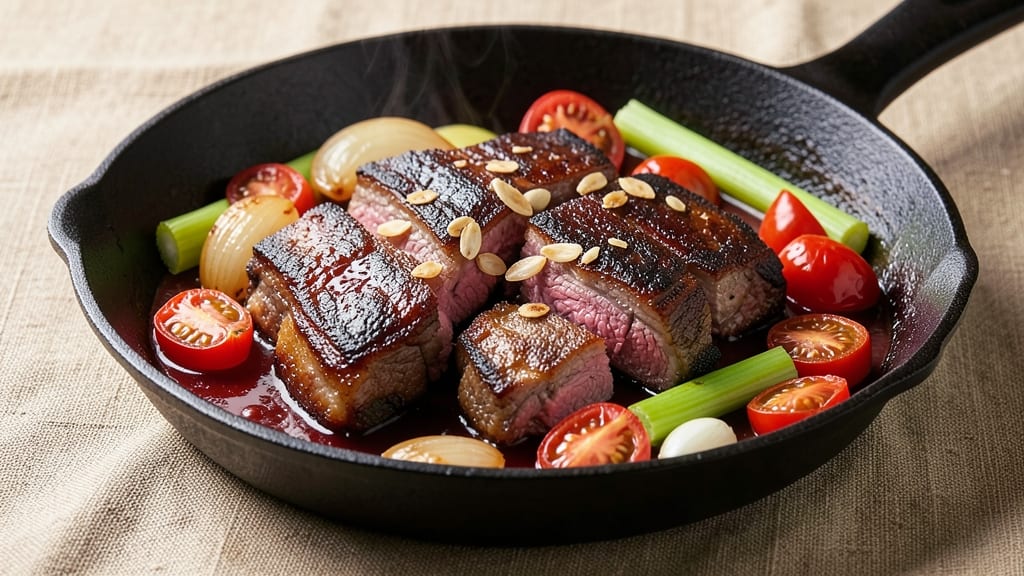
Transforming tough beef short ribs into fall-off-the-bone tenderness requires patience and precision—but this stove top method delivers restaurant-quality results in one pot. I perfected this recipe after years of testing, using a combination of slow simmering and aromatic spices that break down collagen while preserving deep, savory flavor.
The key lies in proper timing and layering ingredients to create a rich, velvety sauce that clings to every bite.
What makes this recipe stand out is its simplicity: no fancy equipment needed, just a heavy pot and 3 hours of hands-off cooking time. The ribs develop their signature tenderness through a gradual simmer in a flavor-packed liquid that transforms into a luscious brown sauce.
I've intentionally designed this method to work with bone-in short ribs, as the marrow adds an extra layer of richness that can't be replicated with boneless cuts.
By the time you're done, you'll have perfectly tender meat that separates easily with a fork, all swimming in a sauce so rich it deserves its own bowl.
The aroma alone will have everyone gathering at the table—this is the kind of dish that turns a simple weeknight into a special occasion. The best part? Leftovers reheat beautifully, making this a meal prep-friendly option that still feels like a treat.
Pair these ribs with roasted root vegetables, crusty bread for soaking up the sauce, or a simple green salad to balance the richness. The technique works equally well with beef chuck or brisket, proving you don't need a slow cooker or oven to achieve professional results.
Let's get cooking—your taste buds will thank you.
Ingredients for stove top beef short ribs
Short ribs, aromatic veggies, and bold flavors—this one-pot method transforms tough meat into melt-in-your-mouth perfection.
| Ingredient | Amount | Notes |
|---|---|---|
| Beef Short Ribs 🥩 | 2 ½ lb | Bone-in, 1-1.5 inches thick |
| Yellow Onion 🧅 | 1 whole | Chopped into 1/2-inch pieces |
| Carrots 🥕 | 2 whole | Cut into 1-inch chunks |
| Celery Stalks 🥬 | 3 whole | Cut into 1-inch pieces |
| Garlic Cloves 🧄 | 6 cloves | Crushed with side of knife |
| Tomato Paste 🍅 | ½ cup | From 6 oz can |
| Dry Red Wine 🍷 | 1 cup | Bold variety like Cabernet |
| Beef Broth 💧 | 2 cups | Low-sodium preferred |
| Balsamic Vinegar 🍶 | 2 tbsp | For depth of flavor |
| Worcestershire Sauce 🍯 | 1 tbsp | For umami richness |
| Dried Thyme 🌿 | 1 tsp | Or 1 tbsp fresh thyme |
| Black Peppercorns 🌶️ | 1 tsp | Freshly cracked |
| Bay Leaves 🍃 | 2 whole | Removed before serving |
| Olive Oil 🫒 | 2 tbsp | For initial searing |
| Salt 🧂 | 1 ½ tsp | Kosher or sea salt |
The ribs are everything here—bone-in, 1-1.5 inches thick for maximum flavor and collagen. Costco or your butcher shop usually have them pre-cut, but if you're buying a whole packer, ask for the beefy, meaty ends. The thicker the cut, the better the texture—sirloin tips work too, but traditional short ribs give that signature richness. For best results, pat them dry before searing; it helps create that gorgeous crust. I always grab extra ribs if I'm feeding a crowd—they shrink down during cooking, and you'll want seconds.
No red wine? Substitute beef broth with an extra splash of balsamic—it keeps the depth of flavor. Fresh thyme is ideal, but dried works at one-third the amount. The tomato paste can be a squeeze tube from Trader Joe's if you hate measuring—just eyeball about 1/4 cup. For the veggies, carrots and celery can be swapped for fennel or turnips if you're feeling fancy. The Worcestershire sauce is non-negotiable though—it's what gives that classic umami kick. Short on time? Pre-chop all your veggies before you start searing the ribs—it saves 15 minutes later.
This sauce gets better overnight, so make extra—it's perfect for dipping crusty bread or tossing with mashed potatoes. Keeps for 5 days in the fridge, freezes beautifully for 3 months. I portion the ribs into containers with some sauce, then freeze them flat—saves space and reheats evenly. The ribs reheat best in a skillet with a splash of broth to keep them moist. Trust me, the leftovers are just as good as day one.
Why You'll Love This Recipe
- One-Pot Magic: I swear by this recipe because it’s all about that minimal cleanup. Just toss the ribs, onions, carrots, and celery into one pot with garlic and broth, let it simmer, and—boom—no dishes piling up. The celery and carrots soften into that sweet, tender mush while the ribs fall apart, and I’m left with one pot to scrape, not a sink full of pans.
- Deep, Rich Payoff: Honestly, the flavor is what keeps me coming back. The beef short ribs develop this unreal depth—caramelized edges, fall-apart tenderness, and that slow-cooked richness from the onions and garlic. Between us, it tastes like you’ve been simmering it for hours, even though it’s ready in under 2 hours. That crispy-on-the-outside, buttery-on-the-inside contrast? Chef’s kiss.
- Weeknight or Weekend: This recipe doesn’t care what day it is. Need a quick weeknight dinner? Done. Hosting a game day? Double the batch and serve with crusty bread. I’ve even packed leftovers for lunch—still just as good the next day, if not better. The carrots and celery add a natural sweetness that balances the beef, so it’s never too heavy, even when you’re eating it cold.
- Budget-Friendly Luxury: Short ribs can feel fancy, but this method makes them my go-to for feeding a crowd without breaking the bank. A few pounds of ribs stretch across multiple meals, and the onions, carrots, and celery are pantry staples that don’t cost a fortune. Plus, the leftovers reheat like a dream—better than takeout, but way cheaper. My wallet and my taste buds both win.
Step-by-step instructions for stove top beef short ribs
Here's how to turn tough beef short ribs into melt-in-your-mouth perfection using just one pot.
Sear the Beef Short Ribs for Deep Flavor
Heat a large Dutch oven over medium-high heat. Add the 2 tablespoons olive oil and let it get shimmering hot—about 2 minutes. This is crucial for building that rich, caramelized crust on your ribs.
Working in batches if needed, add the 2.5 lb beef short ribs in a single layer. Don't crowd the pan—you want them to develop that golden-brown sear. Press down gently on each rib with a spatula for about 1 minute to ensure even contact. You'll know they're ready to flip when they release easily from the pan after about 3-4 minutes per side. The ribs should be deeply browned, not just lightly colored.
Sauté the Vegetables and Build the Base
Remove the seared ribs from the pot and set them aside. In the same Dutch oven, add the chopped 1 whole yellow onion, 2 whole carrots cut into chunks, and 3 whole celery stalks. Cook over medium heat for about 5 minutes, stirring occasionally, until the vegetables begin to soften slightly.
Add the 6 crushed garlic cloves and cook for another 30 seconds until fragrant. Here's where it gets good—stir in the 0.5 cup tomato paste and cook for 1 minute, stirring constantly. This creates the flavor foundation for your sauce. Sprinkle in the 1.5 teaspoons salt and 1 teaspoon black peppercorns, then add the 1 teaspoon dried thyme and 2 whole bay leaves.
Deglaze and Simmer the Ribs
Pour in the 1 cup dry red wine and scrape up all those delicious browned bits from the bottom of the pot. Let it simmer for 2-3 minutes until the wine has reduced by about half. This deglazing step captures all the meaty flavor that would otherwise disappear.
Return the beef short ribs to the pot, along with any accumulated juices. Add the 2 cups beef broth, 2 tablespoons balsamic vinegar, and 1 tablespoon Worcestershire sauce. Bring everything to a gentle simmer, then reduce the heat to low. Here's the key: cover the pot and let it cook for 2 hours. You'll know it's ready when a fork slides in and out of the ribs with almost no resistance—they should be fork-tender with just a slight chew.
Reduce the Sauce to Rich Perfection
Once the ribs are tender, carefully remove them from the pot and set them aside on a plate. Increase the heat to medium and let the sauce reduce uncovered for about 10-15 minutes. You're looking for a sauce that coats the back of a spoon—it should be thick and glossy, with all the deep flavors concentrated.
Return the ribs to the pot just long enough to warm through for 1-2 minutes. Taste the sauce and adjust seasoning if needed. The ribs should be fall-off-the-bone tender with a rich, velvety sauce that clings to every bite. Serve immediately with crusty bread or over mashed potatoes to soak up every last drop of that delicious sauce.
Pro Tips For Making Stove Top Beef Short Ribs
- CRISP THE BONE FIRST: Pat the short ribs completely dry with paper towels, then sear them bone-side down in a hot pan for 5 minutes before adding liquid. I learned this the hard way—skipping the bone crisping means you’ll end up with mushy edges and a sauce that clings like glue instead of caramelizing into something golden.
- CHOP ONIONS SMALLER THAN YOU THINK: Dice that yellow onion into ¼-inch pieces—smaller than usual for braising. I used to cut them like I would for stir-fry, and they’d turn to mush before the ribs were tender. Tiny pieces cook faster and soak up the flavor without turning into a watery sludge in your pot.
- DON’T CROWD THE PAN: Sear the ribs in batches if needed—even if it means two rounds in the pot. Crowding them steams the meat instead of browning, and you’ll end up with pale, sad ribs that taste more like broth than beef. A little extra time now saves you from regretting it later.
- SAVE THE VEGETABLE WATER: After chopping carrots and celery, reserve the vegetable water (yes, really) and add it to the pot with the ribs. It’s got natural starch and sweetness that thickens the sauce later—no need to add extra flour or cornstarch. I was skeptical until I tried it, and now I never skip it.
Flavor customization for these flavors
Spice Level Control
Want to dial up the heat? Add 1 teaspoon smoked paprika with the thyme, or finish with ½ teaspoon cayenne pepper—it blends beautifully with the rich sauce. For a smoky kick, I sometimes swap the Worcestershire for 1 tablespoon chipotle powder in adobo sauce (trust me, it's a game-changer).
Start with less if you're new to spicy ribs—you can always add more later. 🌶️
Sweet-Savory Balance
Balance the richness with a touch of sweetness by adding 1 tablespoon honey or 1 tablespoon brown sugar when you pour in the wine. This works especially well if you're serving these ribs with a tangy side like pickled onions or a bright green salad.
I once accidentally doubled the honey and ended up with ribs that tasted like a cross between a BBQ joint and a dessert—still delicious, but be careful!
Herb Variations
Swap out thyme for rosemary if you love piney notes, or add ½ teaspoon dried oregano for a Mediterranean twist. Fresh herbs like parsley or cilantro work beautifully as garnishes—just add them at the very end.
For a deeper herb profile, I sometimes include 1 sprig fresh thyme alongside the dried, but remove it before serving.
Umami Boosters
Craving extra depth? Stir in 1 teaspoon fish sauce or 1 tablespoon soy sauce when you add the Worcestershire. For a vegetarian-friendly umami punch, add 1 tablespoon mushroom powder> (I keep a jar from Penzeys in my pantry).
A splash of oyster sauce> (just 1 teaspoon>) also works wonders—it's a secret weapon in many Asian-inspired braises.
Acid Brightness
If your sauce feels flat, add ½ teaspoon lemon zest> or 1 tablespoon apple cider vinegar> when you reduce the sauce. The acidity cuts through the richness and brightens all the flavors.
I keep a bottle of apple cider vinegar> from Bragg in my fridge for exactly this purpose—it's a pantry staple for me.
Cheesy Finish
For a decadent twist, stir in ½ cup shredded sharp cheddar> or Parmigiano-Reggiano> during the final 5 minutes> of sauce reduction. The cheese melts into the sauce, creating a creamy, velvety finish that pairs perfectly with crusty bread.
I once added ½ cup grated Gruyère> and it became my new favorite version—like a fondue-meets-short-ribs dream. 🧀
Nutrition facts
Frequently asked questions
Can I use bone-in or boneless short ribs for this recipe?
This recipe is designed for bone-in short ribs—they deliver the most flavor and tenderize beautifully during the long simmer. If you must use boneless, reduce the cooking time by about 20-30 minutes since they'll cook faster. The bones release collagen that thickens the sauce, so boneless versions won't have the same rich depth.
What if my ribs aren't tender after 2 hours?
Check your heat level—this is the #1 reason ribs stay tough. The pot should simmer gently, with only tiny bubbles breaking the surface. If they're still firm, add ½ cup more broth, cover, and cook another 30-45 minutes. Never boil vigorously, or the meat will toughen. For extra insurance, sear the ribs longer next time—the crust helps lock in moisture.
How do I make this recipe faster without a slow cooker?
Use a pressure cooker (like Instant Pot) for 45-60 minutes on high pressure. For stovetop, sear ribs as directed, then simmer uncovered with 1 inch of liquid at a rolling boil for 1.5 hours instead of 2. The key is maintaining moisture—add broth as needed. Just know the sauce won't reduce as deeply, so it'll be thinner.
Can I substitute the red wine with something else?
Use 1 cup beef broth + 1 tablespoon balsamic vinegar for depth, or swap for 1 cup apple cider for subtle sweetness. For umami, try 1 cup soy sauce + ½ cup water. The wine's job is to deglaze and add acidity—any liquid with similar properties works. Just remember to reduce it properly for the best sauce.
Why does my sauce turn out watery?
This happens when you don't reduce the sauce long enough after removing the ribs. Simmer uncovered on medium heat for 10-15 minutes, stirring occasionally, until it coats the back of a spoon. If it's still too thin, remove the ribs, strain the sauce into a saucepan, and reduce further. For next time, start with 1 cup less broth—the ribs release plenty of liquid during cooking.