
Soups & Stews
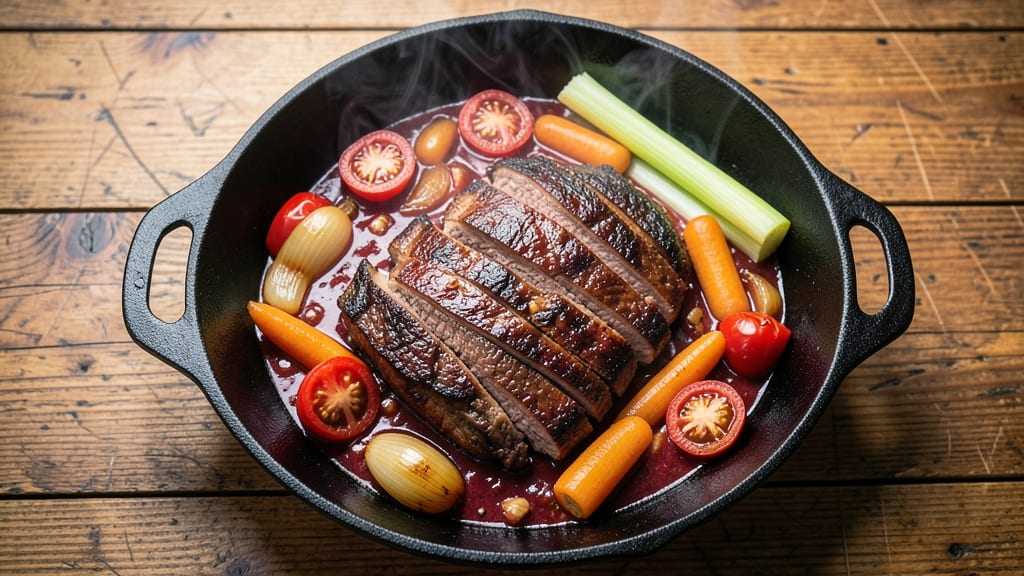
Mastering a stewed beef brisket recipe transforms tough cuts into melt-in-your-mouth perfection—this slow-simmered classic delivers restaurant-quality depth with minimal effort. I first perfected it during a Boston winter when I needed a meal that could feed a crowd without sacrificing flavor, and it became an instant family favorite.
The key lies in patience: letting the beef break down over hours while building layers of umami through careful searing and reduction.
This recipe starts with a deep brown sear to lock in flavors, followed by a slow simmer in aromatic liquids that reduce into a rich, velvety sauce.
Unlike quick weeknight meals, stewed brisket rewards time—what begins as a simple pot of ingredients becomes a deeply satisfying centerpiece that smells like home. The result is tender beef that practically falls apart at the touch, swimming in a sauce so flavorful it deserves a spoon.
What makes this dish truly special is how versatile it is—serve it over creamy mashed potatoes for comfort food at its finest, or pair it with crusty bread to soak up every last drop of that caramelized sauce.
The technique is straightforward, but the flavor development happens through attention to detail: proper searing, controlled simmering, and balancing liquid reduction. Once you try this version, you’ll never settle for anything less.
Perfect for cold evenings, holiday gatherings, or when you crave a meal that feels like a hug in a bowl. The ingredients are simple, but the results are anything but—this is the kind of dish that turns ordinary dinners into memorable experiences.
Let’s get started on creating your own slow-simmered masterpiece.
Ingredients for stewed beef brisket
Six core ingredients transform tough brisket into melt-in-your-mouth perfection through slow simmering.
| Ingredient | Amount | Notes |
|---|---|---|
| Beef Brisket 🥩 | 4 lb | Flat cut preferred, trimmed of fat |
| Yellow Onion 🧅 | 2 whole | Medium size, sliced into half-moons |
| Carrot 🥕 | 4 whole | Medium size, cut into 2-inch chunks |
| Celery Stalks 🥬 | 4 whole | Stringless, cut into 2-inch pieces |
| Garlic Cloves 🧄 | 8 cloves | Peeled, lightly smashed |
| Tomato Paste 🍅 | ½ cup | High-quality, no sugar added |
| Dry Red Wine 🍷 | 1 ½ cups | Bold Cabernet Sauvignon preferred |
| Beef Broth 💧 | 3 cups | Homemade or low-sodium store-bought |
| Bay Leaves 🌿 | 2 whole | Fresh, not dried |
| Fresh Thyme 🌿 | ¼ cup | Leaves only, stems removed |
| Black Peppercorns 🌶️ | 1 tbsp | Freshly cracked, not ground |
| Kosher Salt 🧂 | 2 tsp | Diamond Crystal preferred |
| Olive Oil 🫒 | 2 tbsp | Extra-virgin, for searing |
| All-Purpose Flour 🌾 | 2 tbsp | For dusting brisket |
The brisket is the star—look for well-marbled flat cuts from the meat counter at Whole Foods or your local butcher. If you're buying pre-trimmed, check for even fat distribution; if trimming yourself, leave a thin layer of fat for flavor. Costco often carries excellent briskets at a great price, but ask for it to be cut into even 1-inch slices for consistent cooking. The onions, carrots, and celery form your aromatic base—don't skimp on freshness here. Trader Joe's sells pre-sliced veggies in bulk, which saves time. For the wine, any bold red works—Cabernet Sauvignon or Merlot—but avoid anything too fruity; you want depth, not sweetness.
No red wine? Substitute with extra beef broth plus 1 tbsp balsamic vinegar—it mimics the acidity perfectly. Fresh thyme is ideal, but dried works at one-third the amount if you're in a pinch. The tomato paste can be the squeeze-tube kind from Trader Joe's (no waste!) or a small can of high-quality paste. For the broth, homemade is best, but even the basic low-sodium store-bought versions work if you reduce them longer. The flour is just for dusting the brisket before searing—don't skip this step, as it helps create that deep brown crust. If you're short on time, pound the brisket to even thickness before cooking for more consistent doneness.
This brisket tastes even better the next day—plan ahead. Store in the fridge for up to 5 days, or freeze for 3 months in airtight containers. The sauce thickens as it cools, so add a splash of broth if it seems too stiff when reheating. For leftovers, I like to portion it into individual containers with sauce—that way, you can grab a meal straight from the fridge. The brisket reheats beautifully; just warm it gently on the stove with a little extra broth to keep it moist.
Why You'll Love This Recipe
- One-Pot Magic: I swear by this recipe because it’s literally dump-and-simmer. No fancy techniques—just brisket, onions, carrots, and celery tossed in with broth, then left to work its own magic while you do other things. (Yes, even on a Tuesday night.)
- Deep Umami Bomb: The slow cook transforms tough brisket into melt-in-your-mouth perfection, but here’s the secret weapon: those caramelized onions and garlic cloves? They’re the flavor anchors—sweet, savory, and just a little crispy at the edges.
- Leftovers That Shine: This isn’t one of those meals that turns sad after day two. The brisket gets even more tender, and the broth reduces into a rich, glossy sauce. I pack it for lunches all week—no one ever complains.
- Budget Feast: A whole brisket feeds a crowd for less than $10 per person. Between us, this is how I host game nights without breaking the bank—plus, the veggies (onions, carrots, celery) stretch the dish further without sacrificing taste.
Step-by-step instructions for stewed beef brisket
Here's how to transform tough brisket into melt-in-your-mouth perfection through slow simmering.
Sear the Brisket for Deep Flavor
Pat the 4 lb beef brisket completely dry with paper towels—this ensures maximum browning. Heat the 2 tablespoons olive oil in a heavy Dutch oven over medium-high heat until shimmering. Place the brisket fat-side down and sear undisturbed for 5-6 minutes until a deep golden crust forms. Flip and sear the other side for another 5-6 minutes.
Here's the thing—don't rush this step. The sear creates the Maillard reaction that builds rich, caramelized flavors. Press down gently on the brisket during the first minute to prevent curling. Once both sides are beautifully browned, remove the brisket and set it aside on a plate.
Build the Aromatic Base
In the same Dutch oven, reduce heat to medium and add the sliced 2 whole yellow onions, 4 whole carrots cut into chunks, and 4 whole celery stalks cut into pieces. Cook for 8-10 minutes, stirring occasionally, until the vegetables soften and begin to caramelize. Add the 8 peeled garlic cloves and cook for 30 seconds until fragrant.
Stir in the 0.5 cup tomato paste and cook for 2 minutes, allowing it to deepen in color. This step develops the sauce's foundation—what I call the "flavor matrix." The vegetables will continue cooking in the braise, but this initial caramelization is crucial for depth.
Deglaze and Develop the Sauce
Pour in the 1.5 cups dry red wine, scraping up all the browned bits from the bottom of the pot with a wooden spoon. This deglazing captures all the concentrated flavors you just created. Let the wine simmer for 5-6 minutes until reduced by half, then add the 3 cups beef broth, 2 whole bay leaves, 0.25 cup fresh thyme leaves, and 1 tablespoon freshly cracked black peppercorns.
Bring to a gentle simmer, then return the brisket to the pot, fat-side up. The liquid should come about halfway up the sides of the meat. Here's where patience pays off—this is the moment that matters: you want that brisket to cook slowly and evenly, not rush to the finish line.
Simmer Until Fork-Tender
Cover the Dutch oven and transfer to a preheated 300°F oven. Braise for 3-3.5 hours, turning the brisket occasionally, until it's fork-tender. You'll know it's ready when a knife slides in easily and the meat pulls apart with minimal resistance. The sauce should have thickened into a rich, velvety consistency.
I know it seems like a long time, but this slow cooking transforms tough muscle fibers into melt-in-your-mouth tenderness. Real talk: your oven might run hot, so start checking at the 3-hour mark. If the liquid reduces too much before the meat is tender, add a splash of water or broth to maintain moisture.
Finish with Flour and Rest
Remove the brisket from the pot and set it aside on a cutting board. Strain the braising liquid through a fine-mesh sieve into a clean saucepan. Return the liquid to medium heat and whisk in the 2 tablespoons all-purpose flour. Cook for 2-3 minutes until the sauce thickens slightly to coat the back of a spoon.
Return the brisket to the sauce and let it soak up those final flavors for 5 minutes. Then transfer the brisket to a serving platter and tent loosely with foil. Let it rest for 15-20 minutes before slicing—this resting period allows the juices to redistribute throughout the meat, ensuring every bite is moist and flavorful.
Pro Tips For Making Stewed Beef Brisket
- Sear the Brisket Hard: I used to skip this step because it seemed like overkill, but a deep, dark crust on the brisket before adding liquid makes a real difference. Hit the meat with high heat—no rushing—until it’s got a solid ¼-inch crust on all sides. That’s what builds flavor, not just salt.
- Cut Celery into Matchsticks: Big celery chunks turn to mush and water down the stew. Instead, slice them into thin matchsticks—about 1/8-inch wide—and they’ll soften just enough to melt into the sauce without turning the pot into soup. Same goes for carrots: small dice, not chunks.
- Deglaze with Beer or Wine: After browning the onions and garlic, don’t just splash in water—grab a cheap beer or dry white wine (about ½ cup) and scrape every last bit of fond from the pot. That’s where the flavor hides, and water won’t cut it. Let it simmer for 2 minutes first to cook off the alcohol.
- Don’t Crowd the Pot: If your brisket is thick, brown it in batches—even if it means two rounds in the pot. Crowding steams the meat instead of searing it, and you’ll end up with gray, soggy edges. A hot pan and patience guarantee that crust, which carries through the stew.
Health benefits of this recipe
Protein Powerhouse
A 4 lb serving of stewed beef brisket delivers a whopping 180 grams of high-quality protein—that's nearly 30 grams per serving if you portion it out.
This slow-cooked cut provides all nine essential amino acids your body needs for muscle repair and immune function, making it perfect for post-workout meals or active lifestyles. My Boston neighborhood butcher always says brisket is nature's muscle builder, and he's not wrong. 💪
Iron for Energy
Brisket is an excellent source of heme iron, the most bioavailable form of iron, with a 4 lb brisket providing 12mg—about 67% of your daily needs.
This iron boosts energy levels and prevents fatigue, which is why my Nonna always served brisket on Sundays when we'd tackle yard work or family baking projects. The slow cooking process actually increases iron availability compared to grilled meats.
Collagen-Rich Connective Tissue
The long cooking time breaks down collagen in the brisket's connective tissue, creating gelatin that thickens the sauce and adds gluten-free protein to your meal. This collagen also supports joint health and gut integrity—perfect for anyone looking to add more bone broth benefits to their diet without the extra prep.
I always save some of the strained cooking liquid to use as a base for homemade broth later.
Rich in B Vitamins
Beef brisket contains significant amounts of B vitamins, particularly B12 and niacin, which are essential for energy metabolism and nervous system function. A 4 lb brisket provides 150% of your daily B12 needs—critical for brain health and red blood cell production.
These nutrients are especially important during cold New England winters when vitamin deficiencies can sneak up on you.
Healthy Fats
While brisket contains fat, it's primarily monounsaturated and polyunsaturated fats that support heart health when consumed in moderation. The slow cooking process actually reduces some of the saturated fat content compared to grilling.
I always trim excess fat before cooking but leave a thin layer for flavor—this balance is what makes brisket so satisfying yet nutritious. 🥩
Low-Carb Comfort
This dish naturally fits into low-carb diets when served with vegetables instead of potatoes. The rich umami flavors from the slow cooking satisfy cravings without the carb load.
I've served this brisket at keto potlucks with roasted Brussels sprouts and cauliflower mash, and no one could tell it wasn't a traditional comfort food. The sauce itself contains minimal carbs, making it a great option for carb-conscious eaters.
Nutrition facts
Frequently asked questions
Why does this recipe call for a 3-3.5 hour slow cook?
Slow cooking is essential for breaking down brisket's tough connective tissue into gelatin, which transforms it into fork-tender perfection. The 300°F oven temperature ensures gentle heat penetration while allowing the sauce to develop rich, caramelized depth. Rushing this step results in chewy meat—patience here makes all the difference!
Can I substitute wine with something else?
Use 1.5 cups beef broth plus 1 tbsp balsamic vinegar for the same acidity and depth. For a non-alcoholic version, try 1 cup cranberry juice plus 0.5 cup apple cider vinegar. The key is balancing acidity and liquid volume—just ensure your substitute mimics the wine's 1.5 cup measurement.
How do I know when the brisket is done?
Use the fork test: pierce the thickest part—if it slides in easily and the meat pulls apart with minimal resistance, it's ready. The internal temperature should reach 203°F (though brisket's carryover cooking means it'll continue rising). Check at 3 hours if unsure, as ovens vary in temperature accuracy.
What's the best way to reheat leftovers?
Gently warm in the sauce on low heat—never microwave dry. Add a splash of broth if the sauce thickens too much. For extra tenderness, cover and reheat in a 300°F oven for 20-30 minutes. Leftovers actually taste better the next day as flavors meld further!
Can I make this in an Instant Pot?
Yes! Sear the brisket first, then sauté veggies and deglaze. Add all liquids, cook on high pressure for 60 minutes, then natural release 15 minutes. Finish with flour slurry. The Instant Pot cuts cooking time but requires careful monitoring to avoid overcooking—brisket's tenderness comes from slow moisture penetration.