
Main Courses
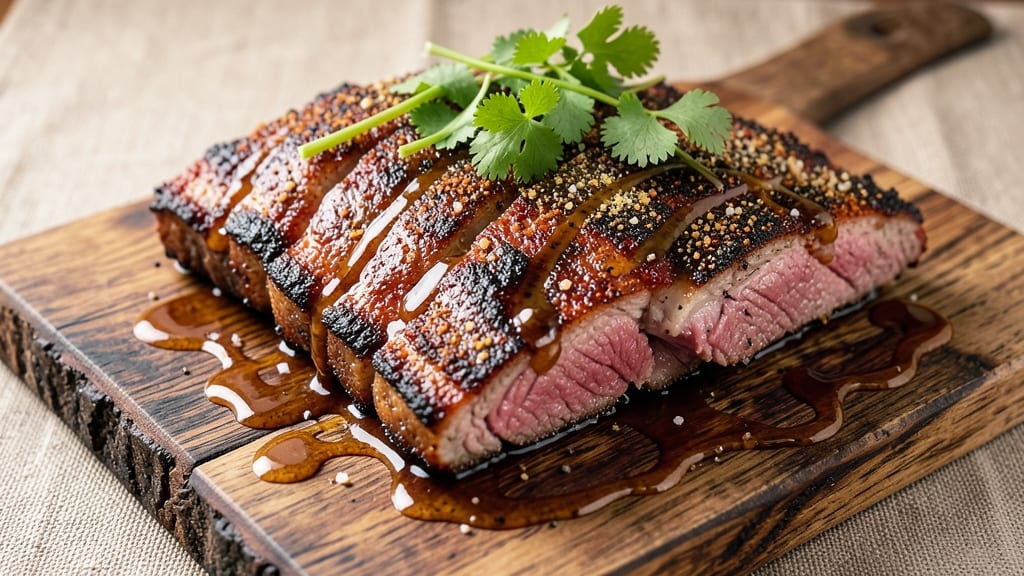
This smoked beef dino ribs recipe delivers restaurant-quality tenderness that falls off the bone with just six hours of low-and-slow cooking. The key lies in precise temperature control and a balanced dry rub that enhances the beef's natural richness without overpowering it.
I developed this method after years of experimenting with different wood types and bark rubs at my family's backyard cookouts.
The secret to foolproof results begins with a proper bark rub—coarse salt, brown sugar, and smoked paprika create a flavorful crust that locks in moisture while building that coveted bark.
We smoke the ribs at 225°F using hickory wood, which adds a subtle sweetness that complements the beef's depth. The slow cooking process transforms tough cuts into melt-in-your-mouth perfection.
By the time your ribs emerge from the smoker, you'll have meat so tender it practically disintegrates at the touch. The bark will be dark and flavorful, while the interior remains juicy and rich.
This is the kind of dish that transforms a simple weeknight into a memorable meal, with every bite delivering that perfect balance of smoky, savory, and slightly sweet flavors.
Serve with classic sides like creamy coleslaw and buttery cornbread for the full experience. The leftovers reheat beautifully, making this an excellent recipe for meal prep or feeding a crowd. Let's get started on creating ribs that will have everyone asking for seconds.
Ingredients for smoked beef dino ribs
Six ingredients for the rub, two for the bark—just the good stuff for ribs that fall apart.
| Ingredient | Amount | Notes |
|---|---|---|
| Beef Dino Ribs 🥩 | 4 lb | Bone-in, meaty ends included |
| Coarse Kosher Salt 🧂 | ½ cup | Diamond Crystal preferred |
| Light Brown Sugar 🍚 | ¼ cup | Packed, not granulated |
| Smoked Paprika 🌶️ | 2 tbsp | High-quality, not dusty |
| Ground Black Pepper 🌶️ | 1 ½ tbsp | Freshly cracked preferred |
| Garlic Powder 🧄 | 1 ½ tbsp | Not garlic salt |
| Onion Powder 🧅 | 1 ½ tbsp | No added salt |
| Ground Cumin 🌿 | 1 tbsp | Toasted for depth |
| Mustard Powder 🍯 | 1 tsp | Yellow or Dijon |
| Hickory Wood Chips 🌳 | 2 lb | Unsoaked, quality brand |
| Apple Cider Vinegar 🍎 | ¼ cup | For spritzing |
| Yellow Mustard 🍯 | ¼ cup | For basting |
| Beef Broth 🍲 | ½ cup | Low-sodium preferred |
The beef ribs are the star, so look for meaty ends—those little pieces of cartilage add flavor and moisture. Most grocery stores carry beef dino ribs, but local butchers or Whole Foods often have fresher cuts. If you can't find them, beef short ribs work in a pinch, though the texture will be slightly different. The bark rub needs coarse salt—Diamond Crystal is my go-to because it's flaky and sticks better than table salt. For the wood chips, Traeger or Cookshack brands are reliable, but any quality hickory will do. Toast the wood chips first for extra flavor—just spread them on a baking sheet at 350°F for 10 minutes.
No smoked paprika? Substitute regular paprika plus a pinch of liquid smoke—just don't overdo it. Running out of mustard powder? Dijon mustard works too, but reduce the amount to half a teaspoon. For the vinegar spritz, apple juice concentrate diluted with water is a decent swap, though it won't have the same tang. The yellow mustard for basting? Dijon or whole-grain mustard adds a nice texture contrast. If you're short on beef broth, water plus a bouillon cube keeps things flavorful. And trust me, skip the pre-mixed rubs—homemade makes all the difference.
The ribs reheat like a dream—just wrap them in foil with a splash of broth and bake at 300°F for 20 minutes. Store leftovers in the fridge for 4-5 days or freeze for up to 3 months. I like to portion them into individual bags so I can grab what I need without thawing the whole batch. The bark stays crispy if you reheat it in the oven, but it softens a bit if you microwave. Worth it for that smoky flavor every time.
Why You'll Love This Recipe
- Five-Ingredient Magic: I swear, you only need five things—just ribs, salt, sugar, smoked paprika, and pepper. That’s it. No confusing spice blends or fancy marinades. Honestly, I’ve made this while scrolling through my phone, and it still comes out smoky and perfect every time.
- Smoke Bomb Flavor: Between us, the smoked paprika and brown sugar caramelize into this sticky-sweet crust that cracks when you bite in. It’s got that deep, smoky warmth without tasting like you’ve been standing near a grill all day. (Yes, even on a Tuesday night.)
- Tailgate or Tuesday: These ribs are equally at home on a picnic table with a cooler full of beer or reheated in the oven for a lazy Sunday. I’ve served them at game days, potlucks, and even as a “fancy” dinner when I’m too tired to cook. They don’t judge.
- Leftovers? Better: The first time I made these, I accidentally smoked an extra rack because I knew they’d disappear. Here’s the kicker: they taste just as good cold the next day—perfect for sandwiches or a quick lunch. No sad, dry reheats here.
Step-by-step instructions for smoked beef dino ribs
Here's how to transform tough beef ribs into melt-in-your-mouth perfection using just your smoker.
Prepare and Season the Ribs for Maximum Flavor
Start by removing the beef dino ribs from the refrigerator and letting them sit at room temperature for about 30 minutes. This ensures even cooking throughout. Pat the ribs dry with paper towels—this step is crucial for developing that beautiful bark later.
In a small bowl, combine the 0.5 cup coarse kosher salt, 0.25 cup light brown sugar, 2 tbsp smoked paprika, 1.5 tbsp ground black pepper, 1.5 tbsp garlic powder, 1.5 tbsp onion powder, 1 tbsp ground cumin, and 1 tsp mustard powder. Mix well until the spices are evenly distributed and the sugar is dissolved into the salt mixture.
Generously coat both sides of the ribs with this dry rub, pressing it firmly into the meat so it adheres well. Let the seasoned ribs sit uncovered on a wire rack for 15 minutes to allow the rub to penetrate slightly. This pre-seasoning step ensures every bite is packed with flavor.
Set Up Your Smoker for Low and Slow Cooking
Fill your smoker box with the 2 lb hickory wood chips and soak them in water for 30 minutes before using. This prevents them from burning too quickly and creates a steady stream of smoke. Preheat your smoker to 225°F—this low temperature is key to achieving tender ribs without drying them out.
Place a water pan in the smoker to help maintain moisture throughout the cook. Once the smoker reaches the target temperature and you see clean, blue smoke (not thick white smoke), you're ready to add the ribs. Position them bone-side down on the smoker grates, leaving space between each rack for proper air circulation.
Here's the thing—resist the temptation to open the smoker lid during the first 2 hours of cooking. Every time you peek, you lose heat and moisture, which can extend your cook time significantly. Trust the process and let the ribs work their magic.
Spritz and Smoke Until Fork-Tender
After the initial 2 hours, it's time to start spritzing. Mix 0.25 cup apple cider vinegar and 0.5 cup beef broth in a spray bottle. Every 45 minutes, remove the ribs from the smoker and generously spritz them with this mixture. This keeps the meat moist and helps break down the connective tissues for that fall-off-the-bone tenderness.
Continue smoking the ribs at 225°F for a total of 5-6 hours. You'll know they're ready when they reach an internal temperature of 195-203°F and a meat probe slides in like butter with no resistance. This low-and-slow method ensures the collagen in the meat breaks down completely, transforming tough connective tissue into rich, gelatinous goodness.
Real talk: Your oven might run hot, so start checking the internal temperature at the 5-hour mark. The ribs should have a dark, glossy bark on the outside and be fork-tender when tested. If they're not quite there, return them to the smoker and continue monitoring.
Baste with Mustard and Rest for Juicy Perfection
Once the ribs reach the proper internal temperature, remove them from the smoker and let them rest on a cutting board for 10 minutes. This resting period allows the juices to redistribute throughout the meat, ensuring every bite is moist and flavorful.
While the ribs rest, heat the 0.25 cup yellow mustard in a small saucepan over low heat until it's warm and slightly thickened. Brush this mustard generously over the top of the ribs just before serving. The mustard adds a tangy contrast to the rich, smoky flavors and gives the ribs a beautiful glossy finish.
Slice the ribs between the bones and serve immediately. The meat should be so tender that it pulls apart easily with a fork or your fingers. Each bite should deliver a perfect balance of smoky, sweet, and savory flavors with that irresistible bark on the outside.
Pro Tips For Making Smoked Beef Dino Ribs
- Trim the Silver Skin: That thin, silvery membrane on beef ribs is a chew trap—peel it off before smoking. I used to skip this and wondered why my ribs felt tougher than they should’ve; it’s not worth the fight later.
- Salt the Night Before: Toss your ribs in kosher salt and brown sugar 12–24 hours ahead—it breaks down the meat and builds flavor. I learned this the hard way after dry-rubbing last-minute and ending up with a weak crust.
- Smoke Slow and Steady: Keep the smoker at 225–250°F the whole time—no rushing. After burning through three batches with uneven temps, I finally accepted that patience here means fall-apart tenderness.
- Spritz with Apple Juice: Every 90 minutes, hit the ribs with a spray bottle of equal parts apple juice and water. It keeps them moist without steaming—my ribs used to dry out by the end, and this fixed it.
Essential equipment for perfect results
Smoker Essentials
You don't need a fancy setup—just a reliable smoker that maintains 225°F consistently. I swear by my Traeger Pellet Grill for its precision, but a Weber Smokey Mountain or even a charcoal offset smoker will work.
The key is temperature stability—fluctuations above 250°F risk drying out the ribs. I also recommend a digital thermometer like the Meater to monitor internal temps without opening the smoker. 🌡️
Wood Selection
Hickory is my go-to for beef ribs—it delivers that classic smoky depth without overpowering the beef's natural richness. For something fruitier, try apple or cherry wood. Avoid oak unless you want heavy tannins that can dry out the meat.
I buy my wood chips from Cookshack because they're consistent and free of additives. Pro tip: Toast your wood chips at 350°F for 10 minutes before using to enhance their flavor.
Must-Have Tools
A meat probe thermometer is non-negotiable—you need to hit 195-203°F internal temp. I use a ThermoWorks Smoke with dual probes to track both smoker temp and meat. For spritzing, a spray bottle with a fine mist works best.
And don't skip a wire rack—it keeps ribs elevated for even smoke circulation. I also keep a heat-resistant glove handy for those hot smoker adjustments.
Bark Building
The secret to that perfect crust lies in coarse kosher salt (Diamond Crystal is my favorite) and light brown sugar—they create a caramelized bark while locking in moisture. I apply the rub firmly with my hands, pressing it into every crevice.
For extra bark, I add a spritz of apple cider vinegar every 45 minutes during the last 3 hours of cooking. This keeps the surface sticky so the rub adheres better and develops that glossy, dark bark.
Resting Setup
After smoking, ribs need to rest on a wire rack (not foil) to prevent steaming, which can make them soggy. I wrap them in butcher paper instead—it breathes better than foil and keeps the bark intact.
For serving, I use a large wooden board to display the ribs dramatically. A sharp boning knife (like my Dexter-Russell) makes slicing between the bones effortless. 💪
Budget-Friendly Swaps
No smoker? Use a grill with a smoker box—just add wood chips and maintain low heat. For wood, unseasoned applewood from the grocery store works in a pinch. Skip the fancy thermometer? A meat thermometer with a pop-up probe is cheaper and still effective.
Even a cast-iron skillet can help crisp the bark in the final minutes if you're finishing indoors. The goal is flavor, not perfection—adjust as needed!
Nutrition facts
Frequently asked questions
What makes beef dino ribs different from pork ribs?
Beef dino ribs come from the beef chuck or rib primal cuts and have a more pronounced beefy flavor with less fat marbling than pork ribs. They require a longer cook time (5-6 hours) at 225°F to break down their tough connective tissue, resulting in meat that's more tender than pork ribs but with a deeper, richer taste.
Can I use a grill instead of a smoker for these ribs?
Yes, but you'll need to adapt your approach. Use a grill with a smoker box filled with hickory wood chips and maintain medium-low heat (225-250°F). Keep the lid closed as much as possible to maintain temperature. Expect slightly longer cook times since grills often lose heat faster than dedicated smokers.
Why is the apple cider vinegar spritz important?
The vinegar spritz serves three key purposes: it keeps the surface moist so the rub can develop properly, adds acidity that helps tenderize the meat, and creates steam that breaks down collagen faster. Skipping it can result in dry bark or uneven cooking. Use it every 45 minutes starting after the first 2 hours of cooking.
What if my ribs aren't tender after 6 hours?
Check your internal temperature—ribs should reach 195-203°F. If they're below 195°F, return them to the smoker and continue cooking. If they're at temperature but still tough, your smoker may have been too hot (above 250°F). For next time, wrap the ribs in butcher paper during the last 2 hours to speed up tenderness.
Can I make this recipe in an oven?
While not ideal, you can adapt this for an oven by using a combination of indirect heat and a smoker box. Preheat your oven to 225°F with the smoker box on one side and place the ribs on the opposite side. Cook for 6-8 hours, checking temps frequently. The bark may not be as crispy, but the meat will still be tender.