
Main Courses
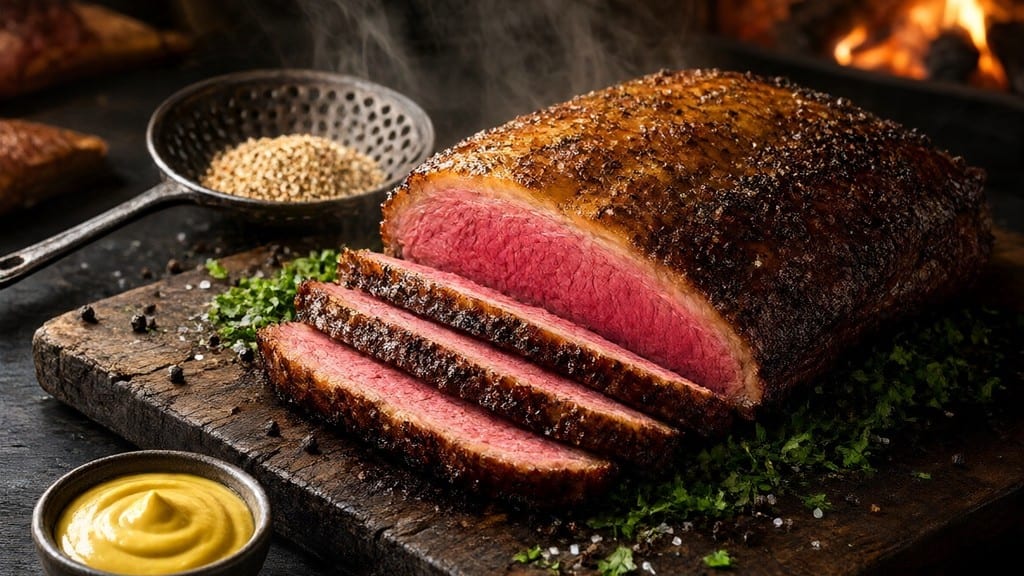
Mastering slow-smoked beef brisket transforms tough cuts into melt-in-your-mouth perfection, and the key lies in that perfect bark-to-meat ratio. This method delivers restaurant-quality results with a deep smoky flavor and tender texture that falls apart at the touch.
I've refined this process over countless hours in the pit, ensuring every step—from wood selection to final resting—yields consistent, show-stopping brisket.
The secret begins with low-and-slow smoking at 225°F, using a blend of hickory and oak wood for that classic BBQ aroma. The Texas crutch technique—spritzing the brisket every 90 minutes—keeps the bark crispy while maintaining moisture.
A meat probe reveals when internal temperature hits 203°F, signaling the perfect moment for wrapping in butcher paper to lock in juices.
What you'll end up with is a brisket so tender it practically shreds itself, crowned with a dark, crackling bark that's irresistible. The flavor profile balances smoky depth, savory richness, and a subtle sweetness from the wood.
This isn't just a recipe—it's a method that builds confidence with every bite, guaranteed to impress even the most discerning BBQ enthusiasts.
Serve with classic sides like cornbread, tangy coleslaw, and smoky baked beans to complete the meal. The leftovers reheat beautifully, making this the ultimate centerpiece for gatherings or cozy weeknight dinners. Let's get started on your next pitmaster-worthy brisket.
Ingredients for slow smoked beef brisket
Eight pounds of brisket, a perfect bark-to-meat ratio, and wood-fired magic create this legendary centerpiece.
| Ingredient | Amount | Notes |
|---|---|---|
| Beef Brisket 🥩 | 8 lb | Whole packer cut, good fat cap |
| Yellow Mustard 🍯 | ¼ cup | For initial bark formation |
| Coarse Kosher Salt 🧂 | ½ cup | Diamond Crystal preferred |
| Black Peppercorns 🌶️ | 3 tbsp | Freshly cracked, coarse grind |
| Garlic Powder 🧄 | 2 tbsp | Not garlic salt |
| Onion Powder 🧅 | 2 tbsp | For dry rub complexity |
| Smoked Paprika 🌶️ | 1 tbsp | High-quality, not sweet |
| Brown Sugar 🍚 | ½ cup | Light or dark, packed |
| Apple Juice Concentrate 🍎 | ¼ cup | For spritz, not syrup |
| Water 💧 | ¼ cup | For spritz dilution |
| Butcher Paper 📄 | 1 sheet | Heavy-duty, 50 lb test |
| Hickory Wood Chips 🌳 | 4 lb | Food-grade, 100% hickory |
| Oak Wood Chips 🌳 | 2 lb | Food-grade, complement hickory |
| Beef Tallow 🧈 | ½ cup | Optional for extra bark |
The brisket is non-negotiable—packer cut with a thick fat cap is essential for that melt-in-your-mouth texture. Snelling or Iowa Beef Processors are my go-tos for consistent quality, but any reputable butcher with a good reputation will do. Look for vibrant color and good marbling. The wood chips? Traeger or Cookshack brands are reliable, but avoid anything with additives. Pro tip: soak your wood chips for 30 minutes before using to prevent flare-ups. The mustard and brown sugar aren't just flavor—they're the foundation of that iconic bark. French's or Hellmann's for the mustard, and Domino brand sugar for consistent results.
No hickory wood? Mesquite or pecan works in a pinch, but the flavor profile changes. Running short on apple juice concentrate? White grape juice is a solid substitute—just reduce the water by half since it's already sweet. The butcher paper is crucial—no foil! It allows the bark to form while locking in moisture. For the dry rub, if you can't find smoked paprika, regular paprika plus a pinch of liquid smoke gets you close. And if you're feeling fancy, add a teaspoon of ground coriander to the rub for depth. The peppercorns should be freshly cracked—pre-ground loses potency fast.
This brisket is a 3-day project, so plan ahead. The rub can be prepped 24 hours in advance and stored in an airtight container. The wood chips stay fresh for 6 months in a cool, dry place. Once smoked, let the brisket rest 2 hours before slicing—this is where the magic happens. The leftovers reheat beautifully in the oven at 300°F for 30 minutes, covered with foil. Freeze portions for up to 3 months in vacuum-sealed bags. Trust me, the second day is often better than the first.
Why You'll Love This Recipe
- No-Fuss Rub Job: I swear by that yellow mustard base—just slather it on, sprinkle the garlic powder and cracked peppercorns, then hit it with a generous coating of kosher salt. No fancy mixing bowls or measuring cups here; my hands do the work while I sip coffee and wait for the smoker to heat up.
- Smoke-Kissed Magic: That slow smoke transforms tough brisket into melt-in-your-mouth perfection—crispy bark outside, tender enough to cut with a fork inside. Honestly, the way the garlic powder infuses into the meat while it smokes? It’s like a flavor hug you can’t resist.
- Leftovers for Days: Between us, this brisket always makes more than we eat in one sitting. I wrap the leftovers in foil and freeze them—perfect for quick sandwiches or tacos later. No sad, dried-out meat here; it stays juicy and rich for at least a week.
- Budget-Friendly Feast: A whole packer of brisket feeds my family for days—way cheaper than takeout or pre-made BBQ. The secret? Buying in bulk, letting the smoker do the work, and turning one cut into multiple meals. My wallet (and my taste buds) thank me every time.
Step-by-step instructions for slow smoked beef brisket
Here's the method that delivers competition-level brisket with a perfect bark-to-meat ratio every time.
Prepare the Brisket and Create the Dry Rub
Begin by trimming the fat cap of the 8 lb beef brisket to about ¼-inch thickness using a sharp boning knife. This thickness ensures proper bark formation while allowing smoke penetration. Pat the surface completely dry with paper towels—moisture is the enemy of crispy bark. Here's where the magic starts: in a medium bowl, combine the 0.5 cup coarse kosher salt, 3 tbsp freshly cracked black peppercorns, 2 tbsp garlic powder, 2 tbsp onion powder, 1 tbsp smoked paprika, and 0.5 cup brown sugar. Mix thoroughly until evenly distributed.
Apply this dry rub generously to all sides of the brisket, pressing firmly so it adheres well. The rub should form a visible crust on the meat. Place the rubbed brisket on a wire rack set over a rimmed baking sheet and refrigerate uncovered for 12-24 hours. This resting period allows the rub to penetrate deeply and develop flavor compounds. I know it's tempting to skip this step, but trust me—it makes all the difference in the final texture and flavor.
Set Up the Smoker and Prepare the Spritz
Combine the 0.25 cup apple juice concentrate and 0.25 cup water in a small bowl to create your spritz mixture. This will be used every 2-3 hours during smoking to keep the bark moist and prevent it from becoming too hard. Meanwhile, set up your smoker by filling the wood chip tray with 4 lb hickory wood chips and 2 lb oak wood chips. Soak the wood chips in water for 30 minutes before adding them to the smoker.
Preheat your smoker to 225°F using the soaked wood chips. You'll know it's ready when you see thin, blue smoke (not thick white smoke) wafting from the chimney. Place a water pan in the smoker to maintain humidity and prevent the brisket from drying out during the long cook. Here's the thing—your smoker might run hot or cold, so start checking the temperature after 30 minutes and adjust the vents as needed to maintain that 225°F target.
Smoke the Brisket and Spritz Regularly
Place the brisket fat-side up on the smoker grate. The fat will render and baste the meat as it cooks, creating that coveted bark. Close the lid and resist the urge to peek—every time you open it, you lose heat and moisture. Smoke the brisket undisturbed for 6-8 hours, or until the internal temperature reaches 165-170°F. This is when you'll hit "the stall"—the point where the temperature stops rising as moisture evaporates.
Here's the critical part: every 2-3 hours, remove the brisket from the smoker and generously spritz both sides with the apple juice concentrate mixture. This keeps the bark tender and prevents it from becoming too hard. Return the brisket to the smoker fat-side up after each spritz. Don't be tempted to flip it—fat-side up is key for that perfect bark. Your brisket should develop a beautiful dark mahogany crust during this phase.
Wrap and Finish the Cook
Once the internal temperature hits 165-170°F, it's time to wrap the brisket. Remove it from the smoker and wrap it tightly in the 1 sheet butcher paper, leaving the fat cap exposed. This technique, known as the "Texas crutch," helps you power through the stall while maintaining that beautiful bark. Return the wrapped brisket to the smoker and continue cooking until the internal temperature reaches 200-205°F, which should take another 4-6 hours.
Here's where the beef tallow comes into play for that extra bark. After the brisket reaches 200°F, remove it from the smoker and brush the exposed fat cap with the 0.5 cup beef tallow. Return it to the smoker fat-side up and cook for an additional 30-60 minutes. This final step creates that incredible bark-to-meat ratio that pitmasters covet. The brisket is done when it's probe-tender—when a meat probe slides in like butter with no resistance.
Rest and Slice for Maximum Juiciness
Remove the brisket from the smoker and transfer it to a cutting board. Tent loosely with foil and let it rest for at least 1 hour, but I prefer 2 hours. This resting period allows the juices to redistribute throughout the meat, ensuring every slice is moist and flavorful. During this time, the internal temperature will rise another 5-10 degrees due to carryover cooking.
Once rested, locate the grain direction by looking for the lines running through the meat. Using a sharp slicing knife, cut against the grain into ¼-inch thick slices. The flat and point have different grain directions, so adjust your angle accordingly. Serve immediately with your favorite sides. Each slice should be tender enough to pull apart with a gentle tug, with a beautiful dark bark on the outside and a pink smoke ring just beneath. This is the moment you've been working toward—perfectly smoked brisket with that ideal bark-to-meat ratio.
Pro Tips For Making Slow Smoked Beef Brisket
- Trim the Fat Cap: If your brisket has a thick fat cap (over ¼ inch), trim it down to ⅛ inch—this prevents uneven cooking where the fat stays cold and rubbery while the meat cooks. I learned this the hard way after serving a guest a slice with a greasy, uncooked fat layer. Use the trimmed fat for fries or cornbread instead.
- Mustard First, Then Salt: Slather the yellow mustard on before you salt the brisket—it helps the dry rub stick and adds a subtle tang that cuts through the saltiness. After rubbing, let it sit uncovered in the fridge for at least 4 hours (or overnight). Skipping this step means your rub will slide off like it’s trying to escape.
- Spritz Like a Pro: Every 90 minutes after the first 4 hours, spritz the brisket with a mix of apple juice or cider and a splash of yellow mustard (about ¼ cup liquid per spritz). This keeps the surface moist without steaming the meat—my smoker’s bark used to turn soggy until I started this. Use a spray bottle, not a cup, to avoid drowning it.
- Check Internal Temp Twice: Use a meat thermometer to probe the thickest part of the flat and the point (where the deckle meets the flat)—they cook at different rates. Pull the brisket when the point hits 195°F and the flat is around 203°F. I’ve walked away too early and served a brisket where one side was still tough as a boot. Patience here makes all the difference.
Storing and reheating your slow smoked beef brisket
Refrigerator Storage
After your brisket reaches 203°F and rests for 2 hours, store leftovers in an airtight container with a tight-fitting lid. I use glass Pyrex containers because they maintain flavor better than plastic. Place the brisket in a single layer to cool quickly—never stack hot meat.
Refrigerate at 40°F or below for up to 4 days. The flavors actually deepen overnight as the spices meld together. 💫
Freezer Storage
For longer storage, portion brisket into quart-sized freezer bags or vacuum-sealed bags. Squeeze out excess air to prevent freezer burn, and label with the date. Brisket freezes beautifully for up to 3 months without significant quality loss.
Thaw overnight in the refrigerator—never at room temperature. For quick meals, reheat directly from frozen using the oven method below. ❄️
Oven Reheating
This is my preferred method because it maintains the perfect bark-to-meat ratio. Preheat your oven to 300°F, then place slices or portions on a baking sheet. Cover loosely with aluminum foil and reheat for 15-20 minutes until reaching 165°F internal temperature.
Add 1-2 tablespoons beef broth to the pan to prevent drying. The bark stays crispy while the meat remains juicy. 🔥
Slow Cooker Method
For a hands-off approach, place brisket pieces in a slow cooker on low heat with ½ cup beef broth. Cover and cook for 3-4 hours, adding broth as needed to keep moist.
Stir occasionally to distribute heat evenly. This method works best for shredded brisket sandwiches or tacos. Add 1 teaspoon smoked paprika to the broth for extra flavor. 💡
Microwave Safety
When short on time, microwave brisket in 1-minute intervals on 50% power to avoid drying out. Cover with a damp paper towel to retain moisture. Stir between intervals until reaching 165°F internal temperature.
Add a splash of water or apple juice concentrate to restore moisture if needed. This method is best for quick lunches. ✨
Reheating Tips
Always reheat brisket until it reaches 165°F internal temperature to ensure food safety. I recommend reheating only what you'll eat immediately to maintain quality. For the best results, combine oven and slow cooker methods—start in the oven, then finish in the slow cooker for even heating.
The key is patience: never rush the process, or you'll lose that perfect texture. 💪
Nutrition facts
Frequently asked questions
What's the best wood blend for smoking brisket?
A classic hickory and oak mix (4:2 ratio) delivers that authentic BBQ flavor. Hickory adds bold, smoky depth while oak provides a sweeter, more balanced note. For a fruitier profile, substitute 1 lb of cherry wood for half the oak. Avoid softwoods like pine—they burn too hot and taste bitter.
How do I know when the brisket is done?
Use a meat probe to check internal temperature—203°F in the thickest part (usually the flat) is your target. The probe should slide in like butter with no resistance. Look for a pink smoke ring just beneath the bark, and the point should pull apart easily. Never judge by time alone—every smoker behaves differently.
Why did my brisket turn out tough?
Common causes include cooking too fast (above 250°F), not wrapping at 165-170°F, or skipping the rest. The Texas crutch (wrapping in butcher paper) is key to breaking down collagen. Also, check your fat cap—it should be ¼-inch thick to baste the meat naturally. If all else fails, slow-cook the slices in broth for 3-4 hours to rescue them.
Can I use a gas smoker instead of charcoal?
Gas smokers work great if you maintain 225°F consistently. Use wood pellets (hickory or oak) for authentic flavor. The advantage? Easier temperature control and less cleanup. Just avoid direct flame—keep the heat source below the cooking grate. For best results, preheat the smoker for 30 minutes before adding the brisket.
What are the best sides to serve with smoked brisket?
Classic pairings include creamy coleslaw (cuts through the richness), smoky baked beans (adds depth), and buttery cornbread (for soaking up juices). For a modern twist, try grilled peach slices or pickled jalapeños. Pro tip: Serve the brisket at room temperature—it tastes best when the meat and sides are both relaxed.