
Snacks
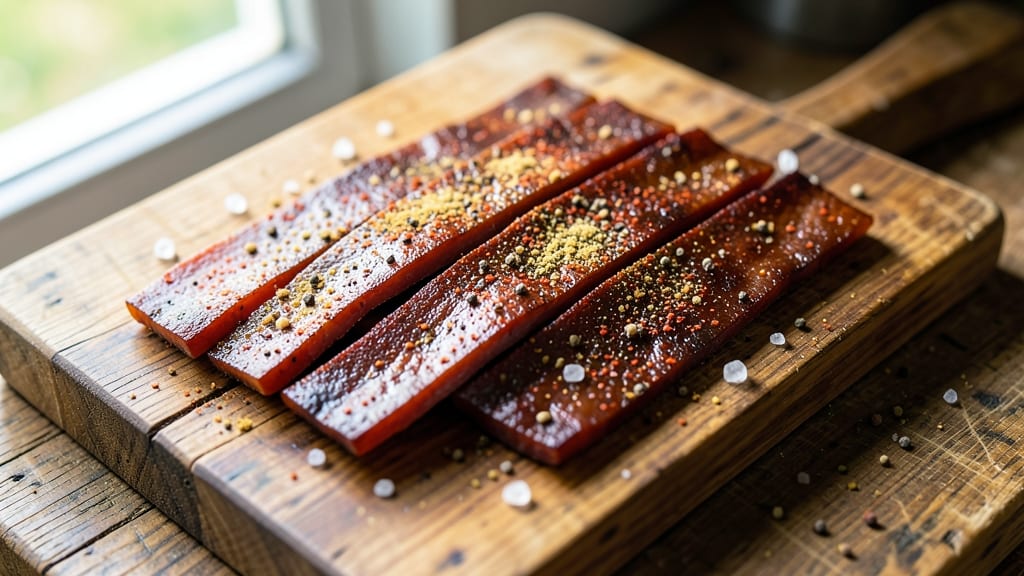
This original beef jerky recipe transforms lean beef into a smoky, spiced protein that stays fresh for months—ideal for camping, hiking, or snacking on the go. The process combines precise curing with traditional dehydration, ensuring tender yet firm jerky every time.
I’ve perfected this method over years of experimentation, balancing bold flavors with food safety best practices.
What sets this recipe apart is the three-stage curing process: first with salt and sugar to draw out moisture, then a smoky-spiced marinade that penetrates deeply, and finally dehydration until it’s perfectly chewy.
Unlike store-bought versions, this jerky delivers restaurant-quality texture and flavor without preservatives. The key lies in patience—rushing the drying step leads to rubbery results.
By the end, you’ll have bold, aromatic jerky with crisp edges and a tender bite, ready to store for up to six months. The smoky-sweet seasoning clings to every slice, making it a standout for trail mixes, gifts, or emergency pantry staples.
Let’s get started with the step-by-step method that guarantees success.
This recipe works with any lean cut (top round, flank steak, or even venison) and accommodates both dehydrator and oven-drying methods. Whether you’re a beginner or a seasoned jerky maker, the clear instructions and safety tips ensure foolproof results every time.
No special equipment is needed—just time and attention to detail.
Ingredients for original beef jerky
Lean beef, precise curing salts, and bold spices transform into restaurant-quality jerky lasting months.
| Ingredient | Amount | Notes |
|---|---|---|
| Lean Beef (Top Round or Flank Steak) 🥩 | 2 lb | Sliced against grain into 1/4-inch strips |
| Kosher Salt (Non-Iodized) 🧂 | ½ cup | Diamond Crystal preferred for precise measurement |
| Granulated Sugar 🍚 | ¼ cup | White or brown, fine grain preferred |
| Ground Black Pepper 🌶️ | 2 tbsp | Freshly ground for optimal flavor |
| Smoked Paprika 🌶️ | 1 tbsp | High-quality for authentic smokiness |
| Garlic Powder 🧄 | 1 tbsp | Freshly ground preferred |
| Onion Powder 🧅 | 1 tbsp | For balanced depth of flavor |
| Ground Cumin 🌿 | 1 tsp | Toasted for enhanced aroma |
| Cayenne Pepper 🔥 | ½ tsp | Adjust for desired heat level |
| Worcestershire Sauce 🍯 | 1 tbsp | High-quality for umami depth |
| Liquid Smoke (Optional) 💨 | 1 tsp | For enhanced smokiness without heat |
| White Vinegar 🍶 | 1 tbsp | For tenderizing and acid balance |
| Cornstarch (For Dusting) 🌾 | 2 tbsp | Prevents sticking during dehydration |
The quality of your beef is non-negotiable. Top round or flank steak from a trusted butcher yields the best results—look for cuts with visible marbling and a vibrant red color. Costco or local meat markets often carry vacuum-sealed beef at competitive prices, while Whole Foods offers organic options for those seeking premium quality. The grain direction matters: slicing against the grain ensures tenderness. For large batches, freeze the beef in single-serving portions to prevent freezer burn and maintain texture. Avoid pre-cut jerky beef from grocery stores, as it often contains preservatives that interfere with the curing process.
Substitutions are possible but require adjustments. Venison or turkey breast can replace beef, though cooking times may vary—venison dries faster. For the curing salt, salt and sugar in a 2:1 ratio works if Diamond Crystal isn't available, but measure carefully to avoid imbalance. Liquid smoke is optional but recommended for that authentic campfire aroma; Trader Joe's or Penzeys carry high-quality versions. If you lack Worcestershire sauce, soy sauce or balsamic vinegar provide umami depth, though the flavor profile shifts slightly. Always use freshly ground spices—pre-ground spices lose potency within months, compromising the final product's complexity.
Proper storage extends shelf life dramatically. Once fully dehydrated, vacuum-seal the jerky in oxygen-free bags or store in an airtight container with silica gel packets to absorb moisture. In a cool, dark pantry, it remains safe for 6-12 months, though flavor peaks within the first 3 months. For longer storage, freeze in portions—jerky retains texture well when thawed properly. Label containers with the date to track freshness. Avoid refrigeration unless storing for short-term use, as condensation accelerates spoilage. The curing process naturally preserves the jerky, but always follow food safety guidelines to prevent bacterial growth.
Why You'll Love This Recipe
- Five-Ingredient Magic: I swear by this combo—just salt, sugar, pepper, smoked paprika, and beef. No fancy rubs or weird additives, just pure, bold flavor that sticks with you.
- Crispy Without Fuss: The sugar caramelizes into a sweet, smoky crust while the black pepper adds just enough heat. Honestly, it’s the kind of jerky that disappears in minutes.
- Tailgate or Snack Attack: Perfect for game day, hiking trips, or when you’re craving something savory between meals. I’ve even thrown slices into salads when I’m feeling fancy.
- Zero Waste, All Gain: That leftover flank steak? Turn it into jerky instead of tossing it. It’s budget-friendly, keeps for weeks, and saves me from food waste every time.
Step-by-step instructions for smoky-spiced beef jerky
This method transforms tough beef into tender, shelf-stable protein using precise dehydration techniques.
Prepare the Beef for Maximum Tenderization
Begin by slicing the 2 lb lean beef (top round or flank steak) against the grain into ¼-inch thick strips. This cut ensures the muscle fibers break down during dehydration, creating a tender final texture. Arrange the strips on a baking sheet lined with parchment paper and refrigerate for 30 minutes to firm up slightly before handling.
While the beef chills, combine the 0.5 cup kosher salt (non-iodized), 0.25 cup granulated sugar, 2 tbsp ground black pepper, 1 tbsp smoked paprika, 1 tbsp garlic powder, 1 tbsp onion powder, 1 tsp ground cumin, 0.5 tsp cayenne pepper, 1 tbsp Worcestershire sauce, and 1 tbsp white vinegar in a large mixing bowl. The sugar and salt work together to draw moisture out of the beef while the spices create a complex flavor profile. If using, add the 1 tsp liquid smoke (optional) to deepen the smoky character without added heat.
Marinate the Beef for Deep Flavor Penetration
Remove the beef strips from the refrigerator and pat them dry with paper towels to remove excess moisture. This step is critical—wet surfaces prevent the cornstarch from adhering properly and can lead to uneven drying. Transfer the strips to a resealable plastic bag and pour the marinade over them, ensuring each piece is fully coated. Seal the bag and massage the marinade into the beef, pressing out air pockets. Refrigerate for 12 to 24 hours, turning the bag occasionally to ensure even distribution.
Here's the thing—longer marinating times yield more tender jerky, but even 12 hours will produce excellent results. The acidity from the white vinegar begins breaking down the muscle fibers during this time, while the sugar and salt create an osmotic environment that pulls moisture outward, preparing the beef for dehydration. Do not skip this step; it's the foundation of texture and flavor.
Dust with Cornstarch to Prevent Sticking
After marinating, remove the beef strips and drain them in a colander, allowing excess marinade to drip off. Transfer the strips to a clean baking sheet lined with parchment paper. Using a fine-mesh sieve, dust the 2 tbsp cornstarch (for dusting) evenly over the strips, gently tossing them to coat all surfaces. The cornstarch creates a barrier that prevents the strips from sticking to each other or the dehydrator trays during the long drying process.
Work quickly but carefully—cornstarch can clump if overhandled. Arrange the strips in a single layer on the parchment, leaving ¼-inch space between each piece. This spacing ensures even air circulation, which is essential for consistent drying. If any strips appear particularly wet, pat them dry with a fresh paper towel before proceeding.
Dehydrate at Low Temperature for Optimal Texture
Preheat your dehydrator to 160°F and place the cornstarch-dusted beef strips on the trays, ensuring they don't overlap. If using an oven, prop the door open with a wooden spoon and place a baking sheet on the middle rack. Dehydrate for 4 to 6 hours, checking periodically. The jerky is ready when it's no longer pliable and has a leathery texture—press a piece between your fingers; it should feel firm but not brittle.
Monitor the process closely, especially in humid conditions. If condensation forms on the dehydrator or oven walls, increase the temperature slightly to 165°F to maintain proper airflow. The goal is to reduce the moisture content to 15% or lower, which creates a shelf-stable product. For best results, rotate the trays halfway through the drying time to ensure even exposure to heat.
Test for Doneness and Store Properly
Once the jerky reaches the proper texture, remove it from the dehydrator and let it cool completely on a wire rack. Test for doneness by piercing a strip with a sharp knife—if it comes out clean and dry, the jerky is ready. If any pieces feel slightly moist, return them to the dehydrator for an additional 30 minutes. The final product should be flexible but not sticky, with a deep, smoky aroma and a slightly chewy bite.
Store the jerky in an airtight container or resealable bag in a cool, dark place. When properly dehydrated, it will keep for up to 6 months without refrigeration. For longer storage, vacuum-seal the jerky to extend its shelf life to 1 year. This method preserves all the bold flavors while creating a protein-rich snack that's perfect for hiking, travel, or emergency preparedness.
Pro Tips For Making Original Beef Jerky
- Trim Thin, Not Thick: Cut your beef slices against the grain into ¼-inch strips—no thicker, or they’ll chew like boot leather. I used to eyeball it and ended up with uneven jerky; now I measure with a ruler. Yes, it’s tedious, but the texture makes all the difference.
- Salt First, Then Wait: Sprinkle kosher salt 30 minutes before marinating—this breaks down the meat slightly and helps the sugar stick. I learned this the hard way after my jerky came out bland and sticky. Let it sit uncovered in the fridge; the crust will form faster.
- Skip the Crowding: If dehydrating, arrange slices single-layer with space between them. I used to stack them like lasagna, and the bottom half turned soggy while the top stayed dry. A wire rack over a baking sheet solves this—no special equipment needed.
- Mix Sugar Last: Toss in granulated sugar right before dehydrating—it burns fast and turns bitter if added too early. I was skeptical until I tried it: the jerky stayed sweet without a hint of caramelized ashes. Keep the sugar in a separate bowl until the final step.
Regional styles of this dish
Texas-Style Smoky
Texas jerky makers prioritize bold, smoky flavors with a touch of sweetness—think mesquite-infused spices and a hint of brown sugar. I swap smoked paprika for 1 tbsp mesquite powder (available at Penzeys) and add 1 tbsp molasses to the marinade.
The result is a deep, charred flavor reminiscent of Texas BBQ pits. For extra authenticity, use post oak wood chips in your dehydrator or smoker to infuse natural smoke. 🌶️
Carolina Heat
Southern Carolina jerky leans into heat with a vinegar-forward marinade and cayenne kick. I boost the cayenne to 1 tsp and add 1 tbsp apple cider vinegar plus ½ tsp red pepper flakes. The combination creates a tangy, fiery profile that pairs perfectly with sweet tea.
For texture, I lightly brush the dried jerky with melted peanut butter before the final dehydrating stage—this adds a sticky, nutty contrast that’s a Carolina BBQ staple.
Midwest Spice Rub
In the Midwest, jerky often features hearty, savory rubs with less heat. I reduce the cayenne to ¼ tsp and add 1 tbsp mustard powder and ½ tsp celery salt for depth. The marinade also includes 1 tbsp soy sauce for umami richness.
This style works exceptionally well with top round beef and yields a jerky that’s ideal for game-day snacks or lunchboxes. The key is a longer marinade—24 hours—to let the flavors meld.
Southwest Chili-Lime
For a zesty Southwest twist, I blend 1 tbsp chili powder, 1 tsp ground coriander, and ½ tsp lime zest into the marinade. The lime zest brightens the smoky flavors, while the chili powder adds warmth.
After dehydrating, I drizzle the jerky with a mix of 1 tbsp lime juice and 1 tsp honey for a tangy-sweet finish. This variation is perfect for tacos or as a topping for nachos. 💛
Northern European Dry-Cured
Inspired by Scandinavian traditions, this style skips the marinade and focuses on a dry cure with 1 tbsp juniper berries (crushed) and ½ tsp allspice.
The beef is coated in a mix of 0.5 cup salt, 0.25 cup sugar, and the spices, then dried for 8-10 hours at 145°F. The result is a subtly herbal, slightly sweet jerky with a firmer bite—ideal for those who prefer a more restrained flavor profile.
Store in a cool place for up to 8 months.
Nutrition facts
Frequently asked questions
Can I use any cut of beef for this recipe?
For best results, stick to lean cuts like top round or flank steak—they have the right fat-to-lean ratio for jerky. Avoid fatty cuts like ribeye, as excess fat can spoil during dehydration. Venison or turkey breast also work well, but adjust drying times since game meats dehydrate faster. If using pre-packaged jerky beef from the store, check for added preservatives, which can interfere with the curing process.
How do I know when the jerky is fully dehydrated?
The jerky is done when it’s flexible but not sticky and has a leathery texture. Press a piece between your fingers—it should hold its shape without feeling moist. A sharp knife test works too: pierce a strip and check for dryness. If it’s still pliable after 6 hours, extend drying by 1-2 hours at 165°F. Over-drying makes jerky brittle, while under-drying risks spoilage. Humidity affects drying time, so monitor closely in damp conditions.
Can I make jerky without a dehydrator?
Use an oven set to 175°F with the door propped open slightly for airflow. Place strips on a wire rack over a baking sheet to allow heat to circulate. Check every 2 hours—it may take 6-8 hours total. For a smokier flavor, try a smoker set to 160°F with indirect heat. Avoid high-heat methods like the grill, as they can cook the jerky instead of dehydrating it evenly.
Why did my jerky turn out rubbery?
Rubbery jerky usually means it was over-dehydrated or sliced with the grain instead of against it. Always slice strips ¼-inch thick against the grain for tenderness. Check your dehydrator’s temperature—if it’s too hot (170°F+), the jerky cooks instead of drying properly. For extra tenderness, marinate the beef for 24 hours and avoid rushing the drying process. If it’s slightly chewy but not rubbery, it’s still safe to eat!
How long can I store homemade jerky?
Properly dehydrated jerky lasts 6-12 months in an airtight container or vacuum-sealed bag at room temperature. For longer storage, freeze it for up to 1 year. The key is reducing moisture to 15% or lower—test by pressing a piece; if it feels dry and doesn’t leave residue on your fingers, it’s shelf-stable. Avoid refrigeration unless storing short-term, as condensation can cause spoilage. Label containers with the date to track freshness.