
Main Courses
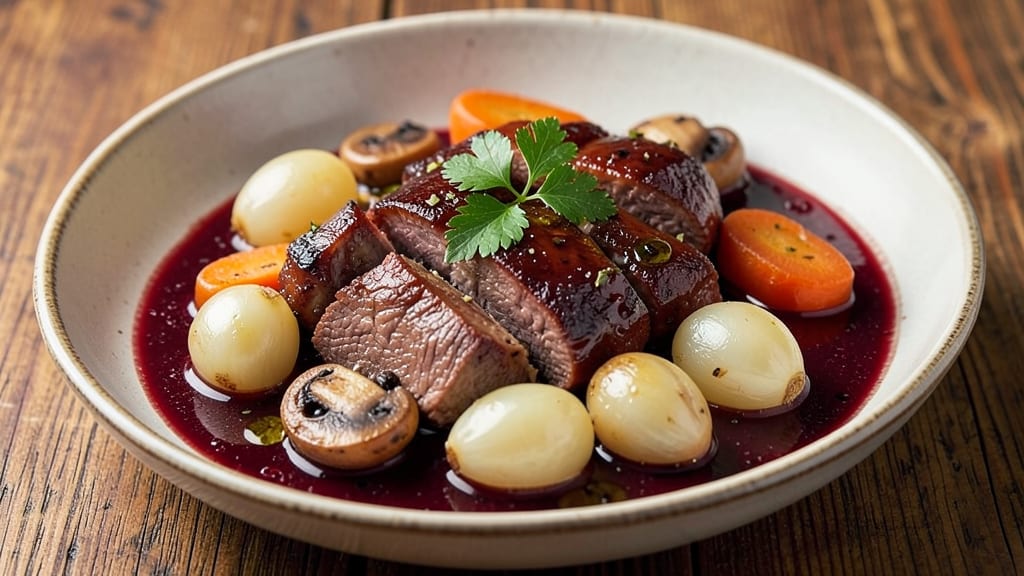
Julia Child’s beef bourguignon original recipe brings the essence of classic French country cooking to your kitchen with its rich, wine-infused depth and tender beef. This iconic dish transforms tough cuts into melt-in-your-mouth perfection through slow braising, a technique Julia mastered with precision and passion.
The secret lies in proper searing, deglazing, and patient simmering—each step building layers of flavor that make every bite unforgettable.
What makes this recipe truly special is its balance of technique and tradition. Julia insisted on using quality ingredients—red wine that’s bold enough to stand up to the beef, fresh herbs for brightness, and aromatic vegetables to round out the dish.
The slow cooking process allows the meat to absorb the deep, caramelized flavors of the wine reduction, creating a sauce so rich it practically melts on your tongue. This isn’t just a recipe; it’s a celebration of French culinary heritage.
By the time you serve this dish, you’ll have a steaming pot of beef bourguignon with tender chunks of meat swimming in a glossy, wine-infused sauce. The aroma alone will have everyone gathered around the table, and the first bite will transport you straight to a Parisian bistro.
Julia’s signature touches—like the perfect wine selection and timing—ensure restaurant-quality results at home, every time.
Pair it with crusty baguette to soak up every last drop of that luxurious sauce, and don’t forget a glass of the same red wine used in the recipe.
This is comfort food at its finest, a dish that feels like a hug on a plate. Let’s get cooking—your taste buds will thank you.
Ingredients for julia child's beef bourguignon original
Sixteen ingredients that honor Julia Child’s legacy with rich wine and tender beef.
| Ingredient | Amount | Notes |
|---|---|---|
| Beef Chuck Roast 🥩 | 3 lb | 2-inch cubes, trimmed of fat |
| Dry Red Wine 🍷 | 2 cups | Bold, full-bodied like Cabernet Sauvignon |
| Beef Broth 🥫 | 2 cups | Homemade or high-quality store-bought |
| Shallots 🧅 | 2 whole | Minced, about 0.5 cup total |
| Garlic Cloves 🧄 | 6 cloves | Minced, fresh preferred |
| Carrots 🥕 | 2 whole | Cut into 1-inch chunks |
| Celery Stalks 🌿 | 3 whole | Cut into 1-inch pieces |
| Pearl Onions 🧅 | 1 lb | Peeled, halved lengthwise |
| Fresh Thyme 🌿 | 2 tbsp | Leaves only, stems removed |
| Fresh Parsley 🌿 | ¼ cup | Chopped, for garnish |
| Tomato Paste 🍅 | 2 tbsp | Smooth, not chunky |
| Flour 🌾 | 2 tbsp | All-purpose, for dredging |
| Butter 🧈 | 4 tbsp | Unsalted, for searing |
| Olive Oil 🫒 | 2 tbsp | Extra-virgin, for deglazing |
| Salt 🧂 | 1 ½ tsp | Kosher or sea salt |
| Black Pepper 🌶️ | 1 tsp | Freshly ground |
The beef is non-negotiable—chuck roast with good marbling transforms into melt-in-your-mouth perfection. Whole Foods or your local butcher will have the best cuts, but any reputable grocery store’s pre-cubed chuck works. Look for vibrant color and avoid any pieces with grayish tinge, which signals age. The wine? Julia used what she loved—Cabernet Sauvignon or Merlot—so whatever bold red you drink is perfect. If you’re unsure, Trader Joe’s carries affordable French wines that work beautifully. Fresh herbs are critical: thyme and parsley should smell bright and green, never wilted or brown.
No red wine? Beef broth with 1 tbsp balsamic vinegar mimics the depth, though the sauce will lack complexity. Pearl onions can be swapped for whole shallots if unavailable, but they’re worth seeking out—they stay intact and add elegant texture. The tomato paste? Trader Joe’s squeeze tubes are ideal—they’re concentrated and last months. For the flour, King Arthur all-purpose is my go-to, but any quality brand works. If you’re short on time, the carrots and celery can be pre-chopped (just rinse them first). The key is to keep the vegetables uniform in size so they cook evenly alongside the beef.
This dish tastes even better the next day—Julia’s secret was patience. Store leftovers in an airtight container in the fridge for up to 5 days, or freeze portions for 3 months. The sauce thickens as it cools, so a splash of warm water or broth revives it beautifully. For serving, keep the beef and sauce together—never separate them. The aromatics (onions, carrots, celery) can be prepped ahead and refrigerated for 2 days, saving you time on cooking day. Garnish with fresh parsley just before serving—it adds that final touch of brightness Julia insisted on.
Why You'll Love This Recipe
- Here’s what sold me: the next day’s slices are even better. Reheat gently, and that sauce thickens into a glorious glaze. Budget-friendly? Absolutely. Waste-free? Even more so. My freezer’s always stocked with portions.
- One-Pot Magic: I swear by this recipe—just brown the beef, toss in the shallots and garlic, then let the wine and broth do their thing. No extra pans, no fuss, and honestly? That deep, savory aroma while it simmers is worth every second.
- Wine-Infused Richness: Between us, the red wine isn’t just for flavor—it tenderizes the beef chuck roast like nothing else. That first bite? Juicy, fall-apart perfection with a velvety sauce that’s dangerously addictive.
- Weeknight to Dinner Party: Throw it together on a Tuesday, or impress guests on Saturday—same recipe, different vibes. The slow-cooked depth makes it feel special, but the prep is so simple I’ve served it at both potlucks and quiet family dinners.
Step-by-step instructions for Julia Child's beef bourguignon original recipe
Mastering this classic French braise requires patience and precision—every step builds rich, wine-infused flavor.
Prepare the Beef and Vegetables
Cut the 3 lb beef chuck roast into 2-inch cubes, trimming excess fat to keep the dish elegant. Season each piece generously with 1.5 tsp salt and 1 tsp black pepper, rubbing it into the meat so it adheres evenly. This seasoning step is critical—it ensures every bite carries deep flavor.
While the beef rests at room temperature for 30 minutes, prepare the vegetables. Peel and halve the 1 lb pearl onions lengthwise. Cut the 2 whole carrots and 3 whole celery stalks into 1-inch chunks. Peel and finely mince the 2 whole shallots and 6 cloves garlic cloves—this creates a smooth, flavorful base for the sauce. Set all vegetables aside until ready to use.
Sear the Beef and Build the Base
Heat a large Dutch oven over medium-high heat and add 2 tbsp olive oil and 4 tbsp butter. Once the butter foams, add the seasoned beef in batches, ensuring not to overcrowd the pan. Sear each piece for 2-3 minutes per side until deeply browned—this caramelization forms the foundation of the dish. Remove the beef and set it aside.
In the same pot, add the 2 tbsp tomato paste and cook for 1 minute until it darkens slightly. This step deepens the sauce's richness. Immediately pour in the 2 cups dry red wine, scraping up any browned bits from the bottom of the pot. Let it simmer for 5 minutes until reduced by half—this concentrates the wine's flavor and removes alcohol sharpness.
Braise the Beef and Vegetables
Return the seared beef to the pot. Add the prepared vegetables, 2 tbsp fresh thyme, and 2 cups beef broth. Bring to a gentle simmer, then reduce heat to low. Cover and cook for 2.5 hours, stirring occasionally, until the beef is fork-tender and the vegetables are soft. The dish should develop a thick, velvety sauce as it braises.
Here's the thing—don't rush this step. The slow cook transforms tough beef into melt-in-your-mouth tenderness. If the sauce reduces too much, add a splash of broth or wine to maintain the right consistency. The aroma alone will tell you when it's ready.
Finish and Garnish
Once the beef is tender, uncover the pot and increase heat to medium. Simmer for an additional 10-15 minutes to thicken the sauce slightly. Taste and adjust seasoning with more salt or black pepper if needed. The sauce should coat the back of a spoon and cling beautifully to the beef.
Remove the beef and vegetables, then strain the sauce through a fine-mesh sieve into a clean pot. Return the beef and vegetables to the sauce, stirring gently to coat. Garnish with 0.25 cup chopped fresh parsley just before serving. This classic dish is best enjoyed immediately, with crusty bread to soak up every last drop of sauce.
Pro Tips For Making Julia Child'S Beef Bourguignon Original
- Sear the Roast Hard: Julia didn’t just "brown" the beef—she seared it until the bottom crust was deep amber, almost black in spots. Use a heavy pot (Dutch oven) and leave it alone for 3-4 minutes per side. I learned this the hard way—rushing it means flavorless chunks instead of rich, caramelized depth.
- Sweat Shallots Slow: Don’t rush the shallots. Cook them in butter over medium-low heat until they’re translucent and just starting to turn golden, about 8-10 minutes. High heat makes them bitter, and Julia’s recipe relies on their sweetness to balance the wine’s acidity. (Yes, even if you’re impatient like me.)
- Deglaze with Wine Now: As soon as the beef comes out, pour in the full wine and scrape every last bit of fond from the pot—don’t wait. That browned crust holds more flavor than the wine itself. I used to pour it in later, and the sauce always tasted duller. (Your future self will notice.)
- Reduce Broth Early: Simmer the broth down to about 1 cup before adding the mushrooms and herbs. Julia’s original relies on a concentrated base—if you skip this, the sauce will taste watery. Sounds weird, but it works: thicken it first, then build the layers.
Health benefits of this recipe
Protein Powerhouse
Beef bourguignon delivers a high-quality protein punch—each 6-ounce serving contains about 35 grams of protein, perfect for muscle repair and satiety. The slow braising process preserves amino acids, making this dish a hearty option for active lifestyles or post-workout meals.
Julia’s method ensures the beef remains tender while retaining its nutritional integrity. 💪
Heart-Healthy Fats
The dish balances lean protein with healthy fats from the beef’s natural marbling and olive oil. A 3-lb chuck roast provides about 12 grams of fat per serving, primarily monounsaturated and polyunsaturated fats, which support heart health when consumed in moderation.
The red wine adds antioxidants like resveratrol, further benefiting cardiovascular function.
Rich in Iron
Beef bourguignon is an iron-rich meal, with one serving offering 3.5 mg of iron—about 20% of your daily needs. This mineral is crucial for oxygen transport and energy levels, making this dish ideal for those with active lifestyles or dietary iron needs.
Pair it with vitamin C-rich sides (like roasted Brussels sprouts) to enhance iron absorption.
Vegetable-Packed Nutrition
The braised vegetables—carrots, celery, and pearl onions—add fiber, vitamins A and K, and antioxidants. A 1-cup serving of the vegetable mix provides 4 grams of fiber and 30% of your daily vitamin C needs. These nutrients support digestion, immunity, and skin health, rounding out the dish’s nutritional profile. 🥕
Wine’s Antioxidant Boost
The red wine used in bourguignon isn’t just for flavor—it’s packed with polyphenols and flavonoids that act as antioxidants. Studies show these compounds reduce inflammation and may lower the risk of chronic diseases. Julia’s use of bold reds like Cabernet Sauvignon maximizes these benefits while adding depth to the sauce.
Low-Carb Comfort
Despite its richness, beef bourguignon is surprisingly low in carbohydrates—each serving contains only 8 grams of carbs, most from the vegetables. This makes it a great option for those monitoring carb intake or following a low-carb or keto-friendly diet.
The hearty beef and wine sauce keep you full without the carb load. 🌟
Nutrition facts
Frequently asked questions
Can I substitute wine with another liquid in Julia Child's beef bourguignon?
You can use beef broth plus 1 tbsp balsamic vinegar as a non-alcoholic substitute, but the flavor won't be identical. Julia relied on red wine for its depth and acidity—without it, the sauce will lack complexity. If using wine, choose a bold Cabernet Sauvignon or Merlot that you'd enjoy drinking, as the flavor carries through.
How do I know when the beef is fully tender in bourguignon?
The beef should be fork-tender—meaning it should pierce easily with a fork and pull apart cleanly. After 2.5 hours of braising, check by testing a piece. If it still feels slightly firm, cook 30 more minutes. Overcooking can make it mushy, so aim for tender but still slightly resistant. The sauce should coat the beef beautifully.
What's the best way to reheat beef bourguignon?
Reheat gently on the stovetop over low heat with a splash of broth or wine to prevent drying. Never microwave, as it can make the sauce watery. If the sauce thickens too much, stir in 1-2 tbsp extra broth while warming. This dish tastes even better the next day—Julia's secret was letting flavors meld overnight.
Can I make this recipe in a slow cooker?
Yes! Brown the beef first in a skillet, then transfer everything to the slow cooker. Cook on low for 6-7 hours or high for 3-4 hours. The slow cooker method works well but may yield slightly less caramelized flavors. For best results, use the stovetop for searing and deglazing, then transfer to the slow cooker.
Why does Julia Child's original recipe call for flour?
The 2 tbsp flour creates a light roux with the tomato paste, thickening the sauce and adding body. It also helps emulsify the wine and beef juices, creating that signature velvety texture. Skip it only if avoiding gluten, but the flavor will be noticeably different. Julia used it to elevate the dish's richness.