
Main Courses
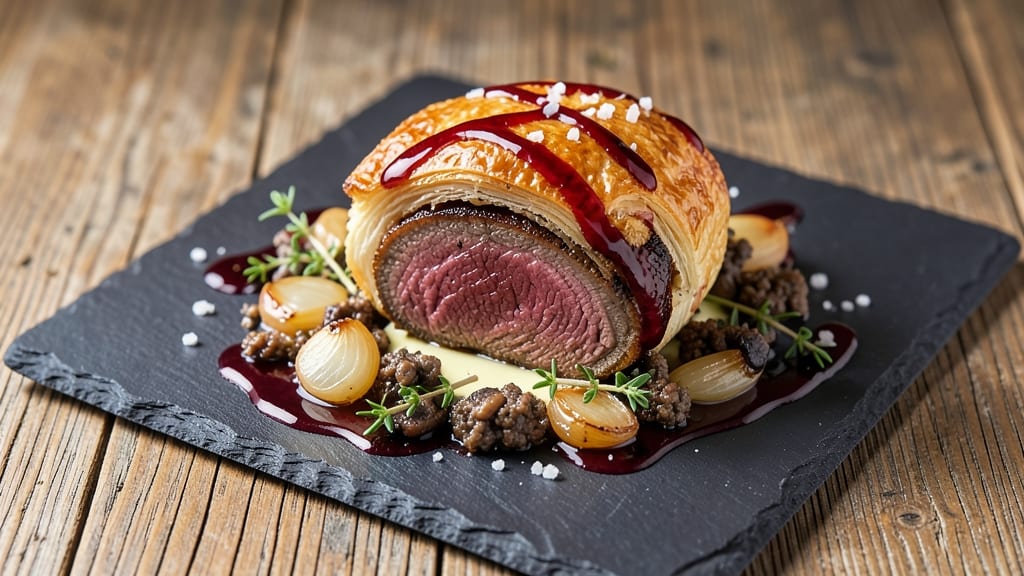
Mastering Jamie Oliver’s Beef Wellington recipe means achieving that perfect balance—crisp golden pastry encasing tender, juicy beef with a sear-smoked center. This isn’t just a dish; it’s a showstopper that transforms a weeknight into a special occasion.
The secret lies in precise technique: searing the beef to lock in flavor, crafting rich mushroom duxelles, and wrapping everything in delicate puff pastry that bakes up flaky yet sturdy.
What sets this recipe apart is Jamie’s signature approach to handling the beef—starting with a hot sear to develop a deep crust before gently cooking it to medium-rare. The duxelles, a finely chopped mushroom mixture, adds earthy depth, while the pâté layer ensures moisture and richness.
Puff pastry, rolled and brushed with egg wash, becomes the star of the presentation, encasing everything in a golden, crisp shell.
By following these steps, you’ll achieve a perfectly sear-smoked center that’s juicy and tender, surrounded by layers of flavorful duxelles and a pastry crust that’s impossibly crisp yet tender.
The aroma alone will have everyone gathering at the table, and the first bite will justify every minute spent perfecting this classic. This is the kind of dish that makes you feel like a professional chef.
Serve with roasted vegetables or a red wine reduction to complement the richness of the Wellington. The technique is precise, but the result is worth every effort—impressive enough for guests but simple enough for a weeknight dinner. Let’s get started on creating this restaurant-quality masterpiece at home.
Ingredients for jamie oliver beef wellington
Precision-crafted components transform simple ingredients into Jamie Oliver’s iconic Beef Wellington masterpiece.
| Ingredient | Amount | Notes |
|---|---|---|
| Center-Cut Beef Tenderloin 🥩 | 1 ½ lb | Evenly trimmed, 1-inch thick |
| Unsalted Butter 🧈 | ½ cup | Cold, cut into 8 pieces |
| Fresh Porcini Mushrooms 🍄 | 8 oz | Dried if fresh unavailable |
| Shallots 🧅 | 2 whole | Finely minced, 2 tbsp total |
| Garlic Cloves 🧄 | 4 cloves | Finely minced, skin removed |
| Fresh Thyme Leaves 🌿 | ¼ cup | Finely chopped, stems removed |
| Dijon Mustard 🍯 | 2 tbsp | High-quality, smooth texture |
| Duck or Chicken Liver Pâté 🍗 | ½ cup | Commercially prepared or homemade |
| Puff Pastry Sheets 🍞 | 1 sheet | High-quality, thawed if frozen |
| Large Eggs 🥚 | 1 whole | For egg wash, beaten |
| Diamond Crystal Kosher Salt 🧂 | 1 ½ tsp | For seasoning, fine grain |
| Freshly Ground Black Pepper 🌶️ | ½ tsp | Cracked peppercorns preferred |
| Extra-Virgin Olive Oil 🫒 | 2 tbsp | For searing beef and cooking mushrooms |
The beef tenderloin is non-negotiable—center-cut for even cooking and trimmed to an exact 1-inch thickness. Whole Foods Market or high-end butchers carry the best cuts, but even standard grocery stores stock quality tenderloin. Look for vibrant color and firm texture; avoid any with grayish edges. The mushrooms are the heart of the duxelles, so fresh porcini from specialty markets deliver unmatched depth, but high-quality dried mushrooms rehydrated in beef stock work beautifully. Thyme should be fragrant and bright green—Penzeys Spices carries excellent dried options if fresh isn’t available. For the pâté, Foie Gras or St. Moret brands offer restaurant-quality consistency without the fuss of homemade preparation.
Substitutions require careful balance: no fresh porcini? Cremini or shiitake mushrooms at double the quantity work, but texture will differ. Short on pâté? High-quality chicken liver mousse (like D’Artagnan) or even a blend of cream cheese and finely chopped prosciutto creates a serviceable alternative. The Dijon mustard should be smooth—Maille or Grey Poupon are industry standards. For the puff pastry, Alliance or Pepperidge Farm sheets provide the best balance of flakiness and stability, but avoid the thinner, more delicate varieties that can tear during wrapping. The egg wash must be beaten thoroughly—room temperature eggs incorporate more smoothly, preventing streaks in the final crust.
Beef should be used within 2 days of purchase for optimal tenderness, while pâté and duxelles components keep for up to 3 days in the fridge when properly sealed. Puff pastry, whether store-bought or homemade, should be wrapped in plastic and stored in the coldest part of the fridge to maintain its delicate layers. The assembled Wellington can be prepared a day ahead and refrigerated, but never frozen—the pastry loses its crispness. For presentation, brush the pastry with egg wash immediately before baking to achieve that signature golden sheen, and bake on a preheated tray to ensure even heat distribution throughout the delicate layers.
Why You'll Love This Recipe
- No Fuss Prep: The beef tenderloin needs zero fancy trimming—just a quick sear and rest. Meanwhile, the porcini mushrooms and shallots soften in minutes while you prep the puff pastry, so it’s basically hands-off magic.
- Umami Bomb: That earthy porcini paste (or fresh mushrooms) mixed with shallots and garlic? It’s the secret weapon—deep, rich, and so much better than store-bought Wellington flavors. The butter basting seals the deal.
- Weeknight to Dinner Party: Same recipe works for a lazy Tuesday with crusty bread or a fancy gathering with roasted potatoes and green beans. Honestly, I’ve served it both ways, and no one ever guessed it wasn’t a restaurant dish.
- Leftovers That Don’t Suck: Cold slices the next day are still juicy and delicious—slice thin, add a smear of Dijon, and you’ve got a killer sandwich. (Yes, even on a Tuesday.) The tenderloin’s generous portions mean fewer grocery trips too.
Step-by-step instructions for Jamie Oliver's beef Wellington
Master this classic technique for a showstopping centerpiece with tender beef and crispy pastry.
Prepare the Beef with Perfect Seasoning
Begin by trimming the 1.5 lb center-cut beef tenderloin to create an even 1-inch thick round. Use a sharp boning knife to remove any excess fat or silver skin, working carefully to maintain an even surface. The goal is a smooth, uniform shape that will cook evenly.
Pat the beef dry with paper towels—this step is critical for achieving a good sear later. Season generously with 1.5 tsp diamond crystal kosher salt and 0.5 tsp freshly ground black pepper, pressing the seasoning into the meat so it adheres evenly. Let the seasoned beef rest at room temperature for 30 minutes while you prepare the filling components. This resting period ensures even cooking and better flavor penetration.
Create the Mushroom-Dijon Paste
Heat 2 tbsp extra-virgin olive oil in a large skillet over medium heat. Add the 8 oz fresh porcini mushrooms, sliced into ¼-inch pieces, and cook for 8-10 minutes until they release their moisture and begin to brown. Stir occasionally to prevent sticking, but don't press down on the mushrooms—this releases too much water and steams instead of browning.
Add the 2 whole shallots and 4 cloves garlic cloves, both finely minced, to the skillet. Cook for an additional 3-4 minutes until the shallots are translucent and the garlic is fragrant. Remove from heat and transfer the mixture to a food processor. Add the 0.25 cup fresh thyme leaves and 2 tbsp dijon mustard, then pulse until you achieve a coarse, paste-like consistency—this should resemble a thick, chunky spread rather than a smooth puree.
Assemble the Wellington Filling
Spread the 0.5 cup duck or chicken liver pâté evenly over the center of the seasoned beef. The pâté should form a thin, even layer that will act as a flavorful barrier between the beef and the mushroom mixture. Next, spread the mushroom-dijon paste over the pâté, creating a ¼-inch thick layer that extends slightly beyond the edges of the beef. This creates a protective seal during baking.
Roll the beef tightly in plastic wrap, starting from one end and working toward the other. This pre-shaping step prevents the filling from spilling out when you wrap it in pastry later. Chill the wrapped beef in the refrigerator for 15 minutes to firm up slightly before proceeding. The cold temperature also helps the filling ingredients meld together, ensuring a cohesive package when wrapped.
Wrap in Puff Pastry with Precision
Preheat your oven to 400°F. Unwrap the chilled beef and place it on a sheet of puff pastry sheets, positioning it horizontally about 2 inches from one of the long edges. Fold the pastry over the beef, pressing gently to seal the edges. Trim any excess pastry with a sharp knife, leaving about ½-inch of overhang around the edges. This overhang will be folded under later to create a neat finish.
Brush the exposed pastry with the beaten 1 whole large egg, using a pastry brush to distribute the egg wash evenly. Fold the trimmed edges inward, pressing firmly to seal the Wellington completely. Place the assembled Wellington seam-side down on a parchment-lined baking sheet. The pastry should form a smooth, domed shape with no gaps. Bake for 35-40 minutes until the pastry is deep golden brown and the internal temperature of the beef reaches 125°F—this ensures a perfectly medium-rare center.
Rest and Slice for Maximum Juiciness
Remove the Wellington from the oven and transfer it to a cutting board. Tent loosely with foil and let it rest for 15 minutes before slicing. This resting period allows the juices to redistribute throughout the beef, preventing them from escaping when you cut into it. Use a sharp carving knife to slice the Wellington into ½-inch thick rounds, working carefully to maintain the integrity of the pastry and filling.
The result should be a beautifully presented dish with a crisp, golden pastry exterior, tender beef with a perfect pink center, and a rich, flavorful mushroom-dijon filling. Serve immediately with a classic red wine reduction or a simple green salad to complement the rich flavors of the Wellington.
Pro Tips For Making Jamie Oliver Beef Wellington
- Trim the Fat First: Jamie’s recipe works best with a leaner cut—trim all visible fat from the tenderloin before seasoning. I learned this the hard way: excess fat renders unevenly in the pastry, making the crust soggy instead of crisp. Use kitchen shears for speed, and don’t skimp—this isn’t about calories, it’s about texture.
- Sear in Batches: Crowding the pan drops the temperature fast, and you’ll end up with steamed beef instead of a golden crust. Sear the tenderloin in a single layer over high heat for 2–3 minutes per side, then set aside. Use that same pan for the shallots and mushrooms—just scrape up the browned bits first. They’re flavor gold.
- Soak Porcini Properly: Fresh porcini need a good soak (10–15 minutes in warm water) to soften their tough fibers before chopping. Drain and reserve the soaking liquid—strain it, reduce it by half, then use it to deglaze the pan after searing. Skipping this step leaves you with chewy mushrooms that won’t blend into the pâté as smoothly.
- Don’t Overwork the Pâté: The mushroom-shallot mixture should be finely chopped but not puréed—think rustic, not silky. Pulse it in a food processor just until it clumps, then fold in the butter by hand. Over-blending turns it into glue, and the texture loses that luxurious, handmade feel. Your future self will notice the difference.
Perfect pairings for this jamie oliver beef wellington
Red Wine Sauce
This classic pairing elevates the dish with its deep, velvety richness. I recommend a red wine reduction made with 1 cup dry red wine (like Cabernet Sauvignon or Merlot), 2 tbsp butter, 1 tbsp shallot, and 1 cup beef stock.
Simmer for 15 minutes until thickened to coat the back of a spoon. The acidity cuts through the pastry’s richness while the wine’s tannins complement the beef’s depth. 🍷
Roasted Root Vegetables
For a balanced plate, roast a mix of parsnips, carrots, and sweet potatoes with olive oil, salt, and thyme. Toss 1 lb vegetables in 2 tbsp olive oil, roast at 400°F for 30-35 minutes until caramelized.
Their natural sweetness contrasts beautifully with the Wellington’s savory layers. Garnish with fresh parsley for color.
Truffle-Inspired Mashed Potatoes
Creamy mashed potatoes add a luxurious touch. Use 2 lbs Yukon Gold potatoes, boiled until tender, then mashed with 4 tbsp butter, ½ cup warm milk, and a pinch of white truffle oil (just ½ tsp).
The earthy truffle aroma mirrors the Wellington’s mushroom filling. Serve immediately for the best texture. 🥔
Crisp Green Salad
A bright, peppery salad balances the dish’s richness. Toss 4 cups arugula with 1 tbsp lemon juice, 2 tbsp olive oil, and shaved Parmigiano-Reggiano. Add toasted walnuts for crunch. The acidity and crunch cleanse your palate between bites of the Wellington’s decadent layers.
Balsamic Glaze Drizzle
For a final flourish, drizzle the Wellington with a balsamic glaze before serving. Simmer ½ cup balsamic vinegar until reduced by half, then swirl into the sauce or drizzle directly over the pastry.
The tangy-sweet contrast enhances the beef’s smoky notes. Use a high-quality aged balsamic like Giusti for depth. 💫
Nutrition facts
Frequently asked questions
Why does Jamie Oliver's version use duck pâté instead of prosciutto?
Duck pâté adds a luxurious, gamey depth that complements the beef's richness without overpowering it. While prosciutto works in traditional recipes, duck pâté creates a smoother, more cohesive texture that blends seamlessly with the mushroom duxelles. The fat content also helps keep the beef juicy during baking.
Can I make the Wellington ahead of time?
Yes, but with key adjustments! Assemble the Wellington up to 24 hours ahead and refrigerate uncovered. Just brush with fresh egg wash and bake directly from the fridge (add 5-10 minutes to baking time). Never freeze it—the pastry loses its crispness. For best results, bake it fresh for maximum flakiness.
What's the secret to preventing the pastry from tearing?
Work with cold pastry and room-temperature beef to maintain structural integrity. Use a sharp knife to trim excess, and fold edges under gently. Chill the assembled Wellington for 15 minutes before baking to firm up the pastry. If it tears, cover with extra pastry strips and brush with egg wash to seal.
How do I know when the beef is perfectly cooked?
Use a meat thermometer to check for 125°F internal temperature—this ensures a medium-rare center. The pastry should be deep golden brown. If unsure, cut into a small test slice: juices should run clear, not pink. Let it rest 15 minutes before serving to allow juices to redistribute.
Can I substitute regular pastry for puff pastry?
Not recommended! Puff pastry's layers create that signature crisp, flaky texture. Shortcrust or pie pastry will be too dense and won't achieve the same golden finish. If you must substitute, use high-quality all-butter croissant dough—it's the closest alternative, though the texture will differ slightly.